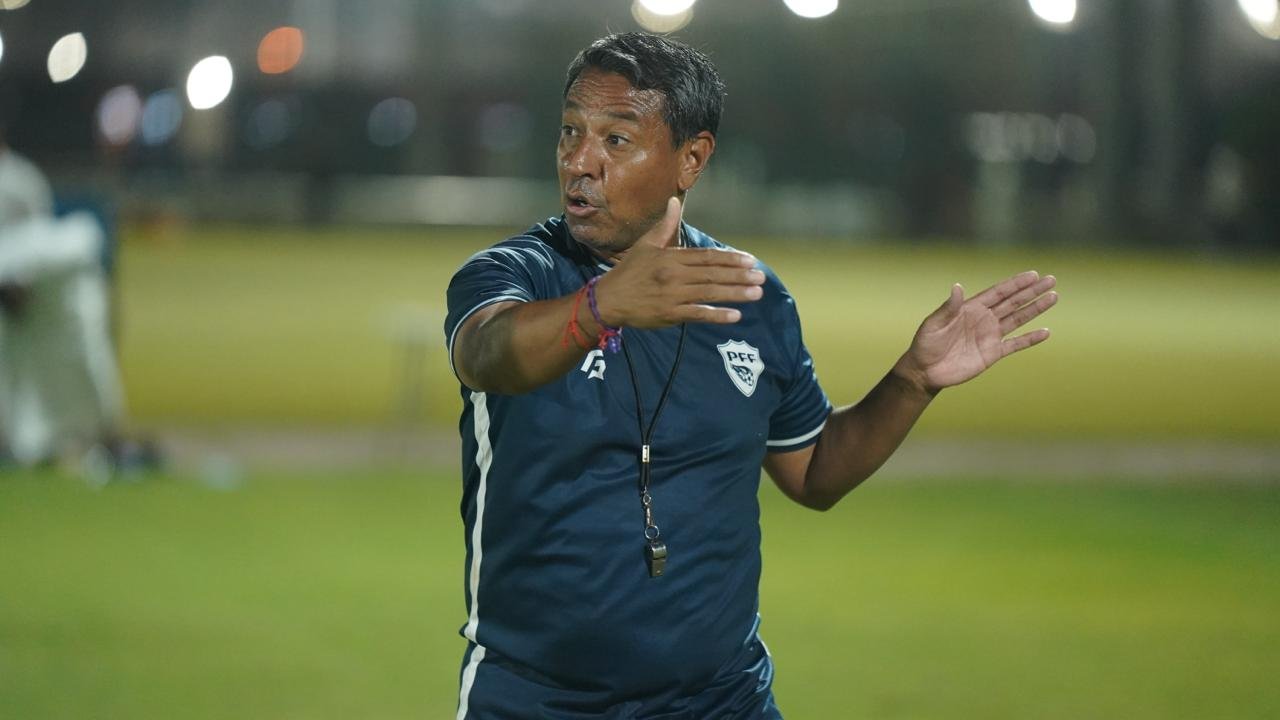
Colin Young tracks down the popular Peruvian as he swaps Tyneside for Islamabad
After leaving his native Peru to light up the Premier League with his tricky skills in the early noughties, revered Newcastle hero Nolberto Solano is now on a mission to revive football in the cricket-mad country of Pakistan.
Fifty-year-old Solano has just been hired as national coach of the men’s team by Mohsin Gilani, the Pakistan Football Federation’s new forward-thinking president, who is eager to change the perception of the sport in his country.
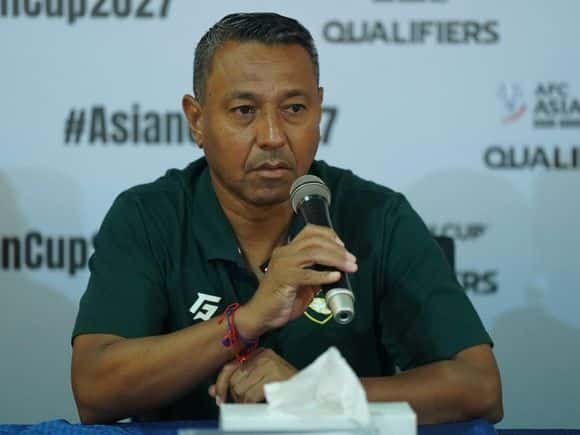
“I took up the challenge because I love football,” Solano tells Libero. “I know we have to start from scratch and that’s no problem. It’s part of the learning process. We are here to fight to get something established and see what happens in the future.”
Solano is currently in Islamabad to prepare his squad for a game against Syria on November 18 in the Asian Cup – but his mission extends beyond match results.
“We know it won’t be easy,” says Solano. “The first thing Gilani told me was this is not like other national teams in Asia because there aren’t many professional players, and because there is no domestic league here. In India, Oman, Cambodia, everywhere has its own national league.”
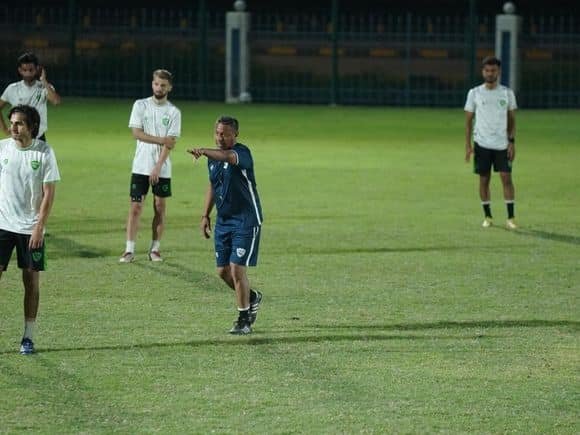
Pakistan recently served a string of FIFA suspensions, setting the domestic game back as other Asian countries have made remarkable progress to reach the newly expanded World Cup finals. This, therefore, is a project intended to transform football across the fifth most populous country in the world, with the critical introduction of a professional league and increased participation for boys and girls.
“There is talent,” says Solano, who has now had several weeks to run his expert eye over players at all levels. “100 per cent there’s talent. That’s why I give a chance to local kids –it gives them hope.”
PFF president Gilani is also eager to enhance women’s football in the country, the perfect inspiration provided by 34-year-old national captain Maria Khan, a Denver-born defender who qualified to play through her father.
“It’s great to have a role model like Maria. There will be players who, as they get older, become more realistic about whether they will play for the country of their birth, like England, or who will see an opportunity in playing for their country of origin.”
“My assistant Jorge Castañeira used to work with the women’s team and he told me they’ve improved terrifically. It is just as important to have a good national team for women, too.”
“The plan is to create a platform with the national teams, at U-21, U-20 and U-17 levels, and so on. It’s very important to have a professional league and good competition at youth level. We need well-organised, regular, competitive matches and tournaments from a young age to make it easier for the managers of the future.”
“If they see Pakistan improving, qualifying for the Asian Cup or achieving the massive dream of reaching the World Cup, we would have players knocking on the door tomorrow.”
Though cricket is the number one sport, Pakistan currently lie a lowly seventh in the ICC Test rankings of the 12 main national teams. Recently, Pakistan lost all three matches to cricketing rivals India, a sorry record dating back to 2017. While cricket is unlikely to lose its local popularity, poor performances may now open the door to football.
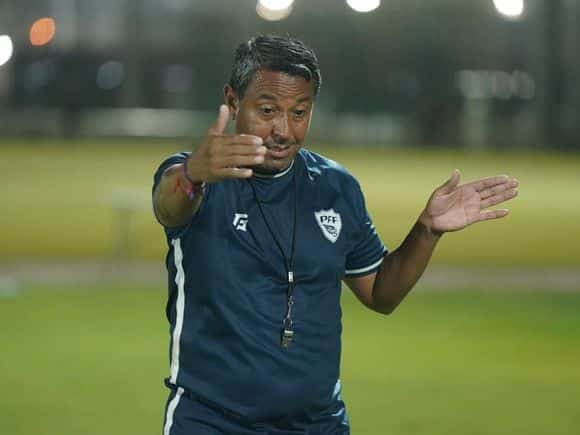
Solano believes that the global game can have its place in Pakistan. “Remember, cricket has been huge here for many years,” he says. “And field hockey is popular too, but football is slowly starting to gain ground. They play a lot of football here in the parks but as yet, this young talent doesn’t have a professional club to aim for or major players to look up to as heroes.”
Born and raised in the edgy port of Callao, just outside Lima, despite his long spell in England, Solano confesses to never having played cricket. “No, my friend,” he laughs. “God gave me the talent with my legs, not my hands. I knew Peru was a football country when I was growing up. If you’ve got the talent and the dream, you will want to go for it. That’s your dream, and that’s what I did.”
Ten years at the very highest level of the game and 95 appearances for his country point to one of the most successful South American players to have plied his trade in Europe. Since retiring from the field, Solano has coached in Peru, Canada, Sweden and England.
In 2018, he was Peru’s assistant coach when the national team qualified for the World Cup for the first time in 36 years. That summer, tens of thousands of fans spent their life savings, even sold their homes, to follow La Bicolor across Russia, from Yekaterinburg to Sochi.

“Young players here in Pakistan will all have the dream to play for their country, but they need to have the opportunity to join a club, to improve and develop,” says Solano, who knows first-hand what a little success at national level can do.
The amiable Peruvian has thrown himself into his new role, dividing his time between his Newcastle home with his wife and three boys, Islamabad and the PFF headquarters in Lahore.
He’s been scouring Europe, Asia and the United States for players with Pakistani heritage, already convincing Mansfield forward McKeal Aroon Abdullah and Blackburn Rovers’ U-21 keeper Adam Khan to join the squad. Team captain is Copenhagen-born Abdullah Iqbal, centre-back for recently crowned Swedish champions Mjällby.
Solano is convinced there are players with similar Pakistani backgrounds out there. He just needs to find them, coach them and integrate them into a squad which can be competitive.
One secret weapon up his sleeve is his adopted home of 25 years, North-East England. There, the sport-obsessed Pakistani diaspora is a tight-knit community with close ties to the homeland.

Indeed, it was a Newcastle taxi driver, friendly with Solano since he first arrived in England, who suggested that the Pakistan Football Federation was looking for a new coach. A personal contact at the PFF then put in a call to the Peruvian. Soon afterwards, Solano was flying to Lahore.
Meanwhile back home, Newcastle councillor Mehrban Sadiq, locally born to Pakistani parents, has helped set up the North East Pakistani Association in England, bringing together thousands of families from across the region.
As an experienced Tyne and Wear fireman, Mehrban set up the International Emergency Team, which provides disaster response teams worldwide. He travels to Pakistan regularly to assist training firefighters in the Rescue 1122 service across the country.
Mehrban has used football, in Pakistan and the UK, as a tool to educate youngsters, developing an eight-week course alongside the local Premier League teams’ foundations based at Newcastle and Sunderland. Mehrban and Solano plan to meet later this month.

“Football has the potential to make a difference to young people’s lives,” says Mehrban, whose 11-year-old daughter loves playing football. “In Pakistan, the game needs to be pushed and there is a huge mountain to climb. But I have seen here, across the North-East and in Pakistan, the difference that it can make to motivate people.”
“All youngsters need to get fit and stay healthy. There are serious issues in South Asian countries with diabetes and cardio-related illnesses – and football is the one thing we can promote to encourage activity and exercise.”
“We’re constantly checking games in England, the United States, across Asia,” says Solano, “because you have a lot of young kids with families from Pakistan, playing in League One, League Two and reserves.”
“As I said to the PFF president, to everyone here, the national team has to be open all the time – to the young players of 17 and 18, and to the older players of 35 and 36. It’s not like in England, where teams have five options for every position. It’s limited here, so everybody will be important, especially the young ones because they will take over in the future for Pakistan.”

“I tell my players, representing your country is the best thing you can do as a footballer, so you need to feel proud. They’re humble, they want to learn. You can tell straight away when you’re looking in their eyes, they listen, they want to learn, especially the local boys. They’ve responded and we’ve built a great relationship, even in a short time.”
“I don’t try to confuse them or play clever tactics, just make it easy for them and use a system that will suit them and try to play simple football.”
In September Solano and his Argentine assistant Jorge Castañeira took charge of the U-23 team, mainly with home-based players, using the three games as preparation for senior games this autumn. Pakistan lost 8-1 to Asian superpower Iraq before improving significantly to succumb to narrow 1-0 defeats against Oman and Cambodia.
According to Solano: “Gilani, the PFF president, is starting to make people inside Pakistani football realise that we need to give hope to young talent, to play professional football and maybe represent their country. We need to create a professional domestic league. If we can do that, everyone wins. How long it will take, I can’t say”.

“Syria is a massive game for us,” he says. “Not only for myself, for everyone; to see how far we can we can go, how much we can improve.”
Solano knows he is facing one of the biggest challenges of his career. This doesn’t mean to say he’s grim-faced. “Of course I’m enjoying it,” he says. “If I wasn’t here I would just be at home now playing my trumpet.”
As well as winning over locals with his music – the Peruvian set up the salsa band Geordie Latinos when he was still at Newcastle – Solano was known for playing with a smile on his face. He coaches the same way, and demands the same of his players. “You always have to smile. You have to enjoy giving a good pass, making a good tackle, scoring a goal.”
“Playing football comes with a massive responsibility, so play with discipline and listen to instructions, yes, but when you have the ball, breathe in, play with freedom and take in what you’re feeling during the match.”
Pakistan v Syria, AFC Asian Cup. Tuesday, November 18, 2pm local time. Jinnah Sports Stadium, Islamabad.