AlanDeamer visits Ligue 1 leaders Lens and finds an atmosphere like no other
You don’t just go to watch a match in Lens – you feel it before you even see the stadium. The noise, the colour and the songs drifting across this old mining town are your first sign you’re approaching something rare: a top-flight club that still beats entirely in time with its community.
Ligue 1 leaders RC Lens may now play modern, high-tempo football, but its heartbeat is still forged in coal dust, the hymn to Les Corons and the working-class pride of northern France.
For a traveller, few match-day experiences in Europe feel as authentic or as emotionally charged. Lens is small, warm, walkable – and when Bollaert-Delelis wakes up, the whole town shakes with it.
To understand Lens, you need to understand where it comes from. Founded in 1906 by locals playing on open patches between pitheads, RC Lens became the team of the gueules noires: the black-faced miners of the coalfields.
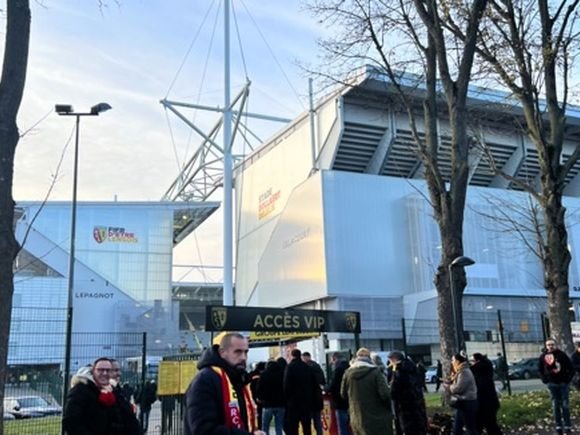
Stade Bollaert-Delelis/Alan Deamer
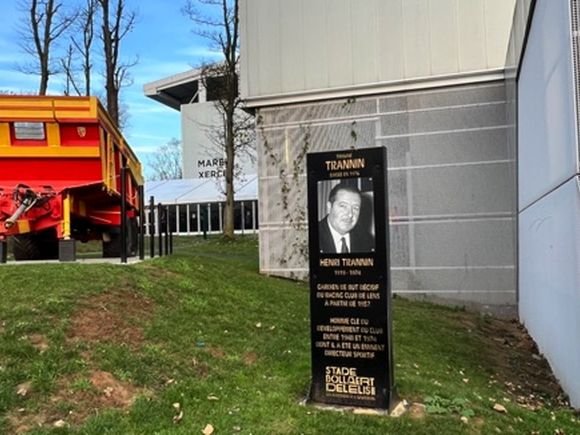
Stade Bollaert-Delelis/Alan Deamer
Stade Bollaert-Delelis/Alan Deamer
Match day at RC Lens/Alan Deamer
For decades, the club and the mining company were inseparable: the stadium, the training pitches, even the youth teams, belonged to the mines. Players often worked underground during the week and pulled on the blood-and-gold shirt at weekends.
When the pits closed in the 1960s, the shock ripped through the region. Communities collapsed, jobs disappeared and in 1969 Lens even lost its professional status. But this is where the story turns uniquely Lensois: the people stepped in.
Local mayor André Delelis, a lifelong supporter, believed the club could still bind the community together. He led the revival, and by 1976 the city had bought the stadium for a symbolic franc. Football, once the escape from the mines, became a symbol of survival after them.
Even today, long after the last shafts sealed shut, the identity endures. Many fans are descendants of miners of Polish heritage, whose families arrived in the 1920s and ’30s to work underground. Their flags still fly in the stands, their surnames still echo in the kop and their stories still shape the club’s sense of belonging.
Stade Bollaert-Delelis/Alan Deamer
Stade Bollaert-Delelis/Alan Deamer
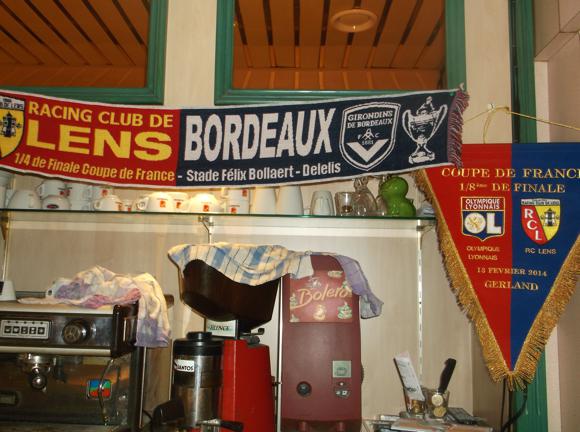
Le Reinitas/Peterjon Cresswell
Stade Bollaert-Delelis/Alan Deamer
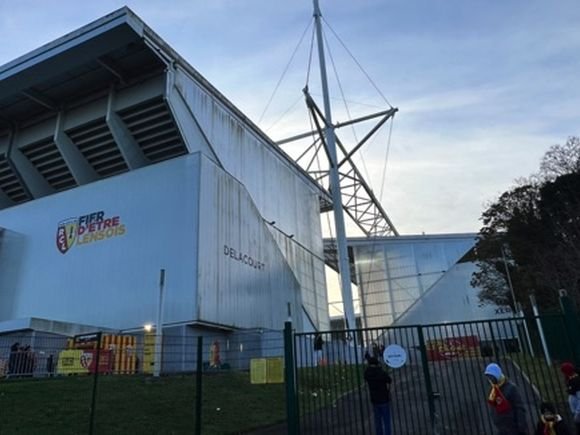
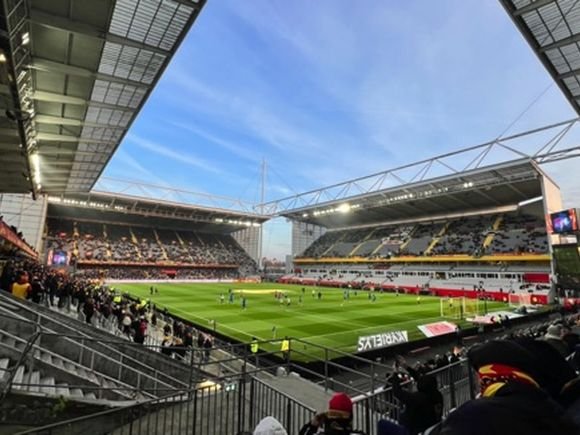
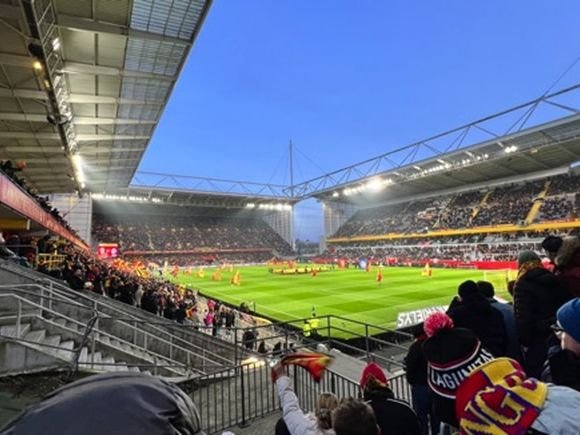
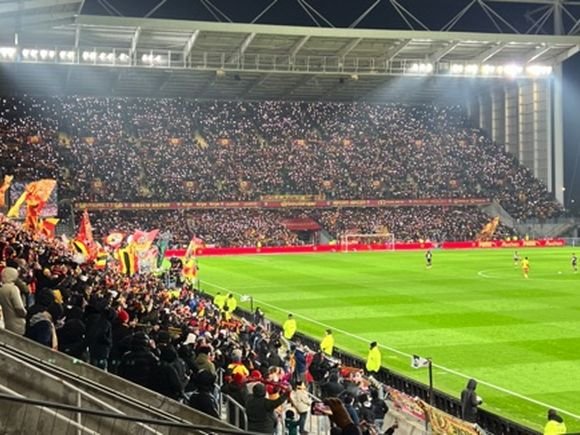
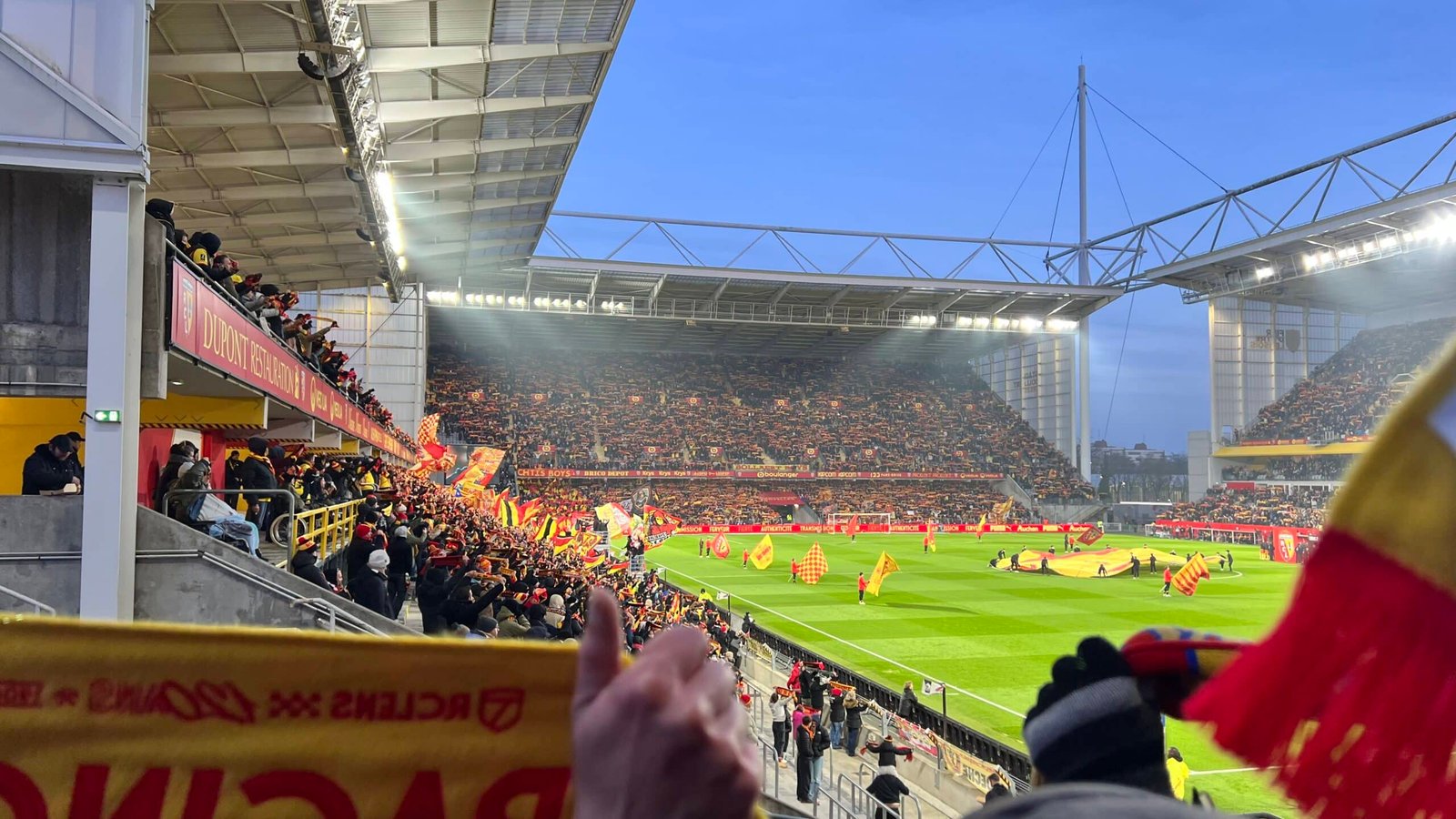
Stade Bollaert-Delelis is one of Europe’s great football arenas, not because of architectural drama, but because of what it represents. The sweeping terraces that run around three-quarters of the lower bowl give it a raw, old-school energy rare in modern football. Built by the mines, reclaimed by the city, the stadium remains the communal meeting point of the entire basin.
On match days it feels like a pilgrimage. Fans pour in from Liévin, Avion, Hénin-Beaumont, Billy-Montigny, the old pit towns that surround Lens. Some walk past memorials to mine disasters on their way to the ground.
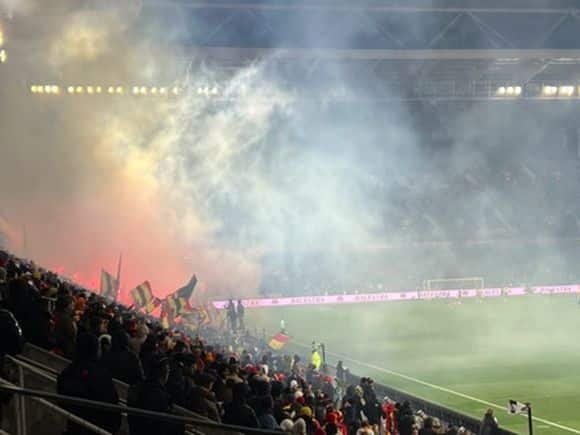
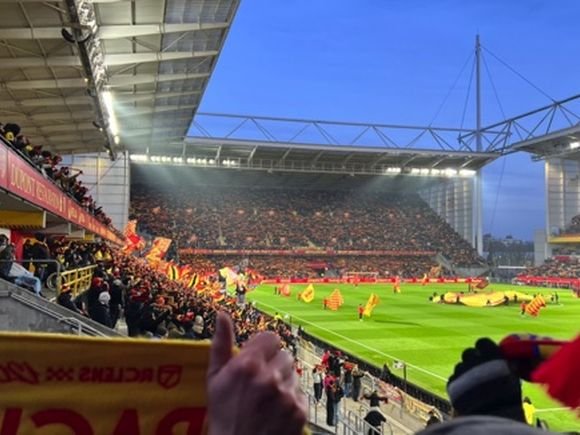
Others carry the red-and-white Polish flag among the Sang et Or. All of it feeds into the atmosphere inside, where the Marek Stand – the famous kop – roars from first whistle to last.
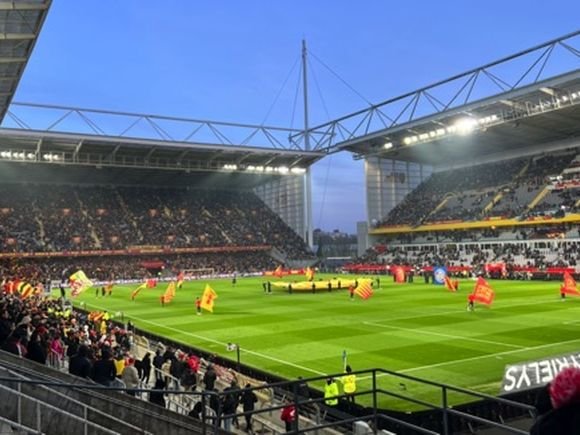
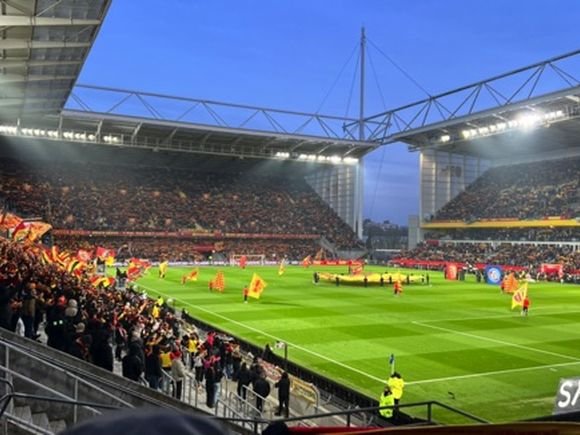
Before a ball is even kicked, there’s a moment that stops newcomers in their tracks: La Lensoise. Sung to the tune of La Marseillaise, this supporters’ hymn rises as the teams walk out.
Stade Bollaert-Delelis/Alan Deamer
RC Lens museum/Peterjon Cresswell
Stade Bollaert-Delelis/Alan Deamer
Stade Bollaert-Delelis/Alan Deamer
It feels half-national anthem, half-battle cry, a full-stadium chorus that makes the hairs on your neck stand up. It has been part of Lens culture for generations, a reminder that in this part of France, football is identity, memory and community rolled into one.
And then comes the ritual every neutral talks about: Les Corons. Sung at half-time, Pierre Bachelet’s tribute to the miners isn’t a chant – it’s a collective act of remembrance. Thirty-eight thousand voices rising together in honour of the men who worked, suffered and sometimes died underground. In European football, there is simply nothing else like it. The great thing about Lens is that you don’t have to hunt for atmosphere – it finds you.
Most fans start around the bars clustered in and around the old mining rows or along the approaches to Bollaert. Hearty northern dishes, busy café terraces and a hum of pre-match conversation set the tone.
Stade Bollaert-Delelis/Alan Deamer
Match day at RC Lens/Alan Deamer
Stade Bollaert-Delelis/Alan Deamer
RC Lens museum/Peterjon Cresswell
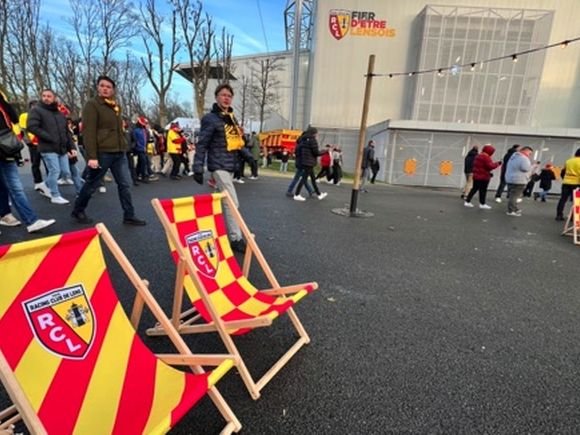
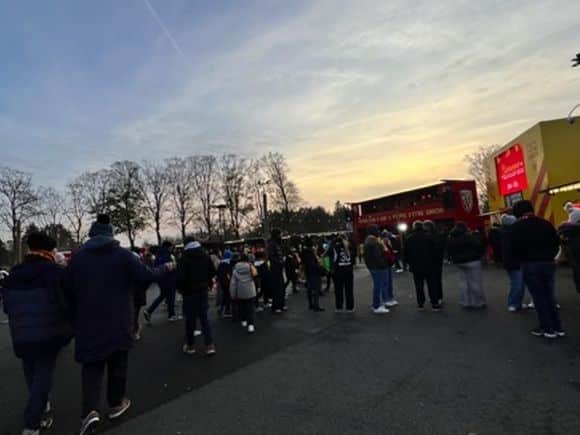
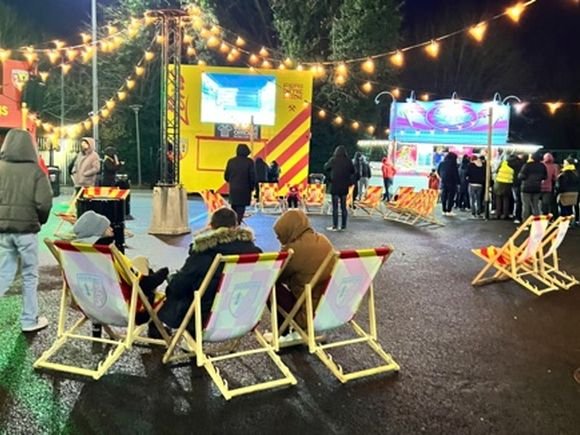
Behind the Delacour Stand, the club has created one of France’s best fan zones: deckchairs, a huge screen, live music, and a spread of food and drink vans serving frites, sandwiches, beer, local snacks, and cheap café-style plates. It’s vibrant but never chaotic – a place where families, ultras, old-timers and first-time visitors mix naturally.
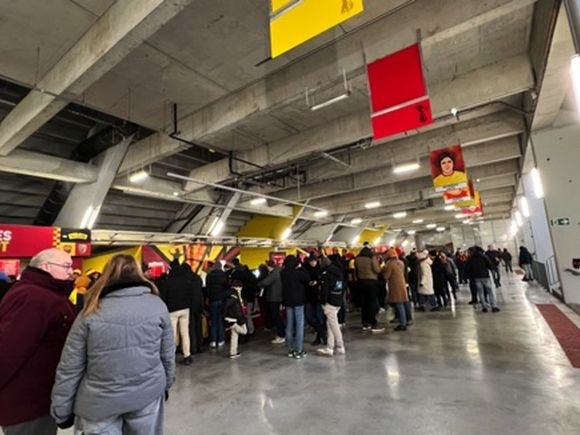
Near the entrances, you’ll find an ultras stall selling scarves, stickers, patches, and T-shirts. It’s a goldmine for anyone who prefers authentic supporter culture to glossy club-shop merch.
Inside, the stadium feels alive. Standing areas wrap around much of the lower tier, giving the ground that tight, human-density buzz most modern arenas lost long ago. In the Marek, songs don’t start up – they ignite, rolling across the terrace like they’ve been rehearsed for decades. When Lens score, the eruption is physical.
Stade Bollaert-Delelis/Alan Deamer
RC Lens outlets/Alan Deamer
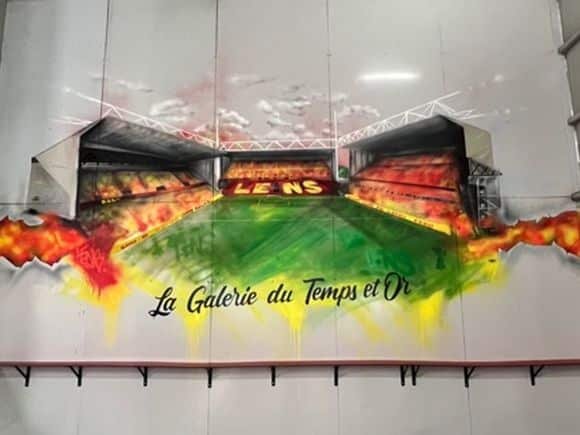
RC Lens mural/Alan Deamer
Match day at RC Lens/Alan Deamer
Recent seasons have seen RC Lens return to the top of French football, playing dynamic, fearless football and taking on Europe again. But the joy in Lens isn’t just about results – it’s about seeing the club flourish without losing its soul.
The town still carries the scars of mining. The club still carries the pride. And that’s why a trip to Bollaert doesn’t feel like another Ligue 1 day out – it’s like being welcomed into a community that has rebuilt itself, twice, and still sings about where it came from.
If you want a match day that mixes raw atmosphere with genuine warmth, Lens is almost unmatched. The town is easy to navigate, the stadium is a short stroll from the centre, and the experience blends modern comfort with the purest kind of football identity you can find in France.
Come early. Stay late. And don’t miss the moment the stadium rises for La Lensoise – and then for Les Corons. Those two songs are worth the journey alone.
RC Lens v OGC Nice, Stade Bollaert-Delelis. Sunday, December 14, 5.15pm.
We use cookies on our website to give you the most relevant experience by remembering your preferences and repeat visits. By clicking “Accept All”, you consent to the use of ALL the cookies. However, you may visit "Cookie Settings" to provide a controlled consent.
This website uses cookies to improve your experience while you navigate through the website. Out of these, the cookies that are categorized as necessary are stored on your browser as they are essential for the working of basic functionalities of the website. We also use third-party cookies that help us analyze and understand how you use this website. These cookies will be stored in your browser only with your consent. You also have the option to opt-out of these cookies. But opting out of some of these cookies may affect your browsing experience.
Necessary cookies are absolutely essential for the website to function properly. These cookies ensure basic functionalities and security features of the website, anonymously.
Cookie
Duration
Description
cookielawinfo-checkbox-analytics
11 months
This cookie is set by GDPR Cookie Consent plugin. The cookie is used to store the user consent for the cookies in the category "Analytics".
cookielawinfo-checkbox-functional
11 months
The cookie is set by GDPR cookie consent to record the user consent for the cookies in the category "Functional".
cookielawinfo-checkbox-necessary
11 months
This cookie is set by GDPR Cookie Consent plugin. The cookies is used to store the user consent for the cookies in the category "Necessary".
cookielawinfo-checkbox-others
11 months
This cookie is set by GDPR Cookie Consent plugin. The cookie is used to store the user consent for the cookies in the category "Other.
cookielawinfo-checkbox-performance
11 months
This cookie is set by GDPR Cookie Consent plugin. The cookie is used to store the user consent for the cookies in the category "Performance".
viewed_cookie_policy
11 months
The cookie is set by the GDPR Cookie Consent plugin and is used to store whether or not user has consented to the use of cookies. It does not store any personal data.
Functional cookies help to perform certain functionalities like sharing the content of the website on social media platforms, collect feedbacks, and other third-party features.
Performance cookies are used to understand and analyze the key performance indexes of the website which helps in delivering a better user experience for the visitors.
Analytical cookies are used to understand how visitors interact with the website. These cookies help provide information on metrics the number of visitors, bounce rate, traffic source, etc.
Advertisement cookies are used to provide visitors with relevant ads and marketing campaigns. These cookies track visitors across websites and collect information to provide customized ads.