Cultural heritage in peril as fans dig out old albums
After 50 years, Panini has come unstuck in Belgium. Alan Deamer looks back in awe
Think of Panini and you think of Italy, producer of the world’s most sought-after football stickers since 1961. Yet, in terms of regular seasonal collections, one country comes close to matching the founding fathers for longevity: Belgium.
Now, after more than half-a-century, this noble Lowland tradition is finally facing la fin/het einde. Panini Belgium confirmed that the 2026 Pro League edition will not be issued, bringing the run to an end. Collectors have launched petitions, calling the album, “A piece of cultural and sporting heritage”.
For the first time in at least two generations, Belgians won’t be flipping pages, exchanging swaps or obsessively checking missing squares where a sticker should be. Even the Pro League itself acknowledges the emotive heft of these albums and is exploring alternative ways to preserve this history.
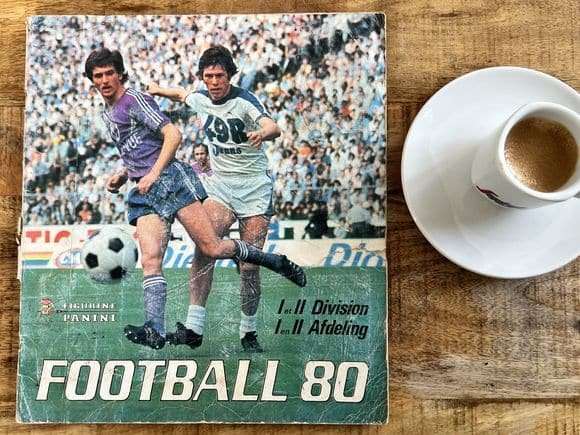
All a boy could wish for – Panini Belgium 80
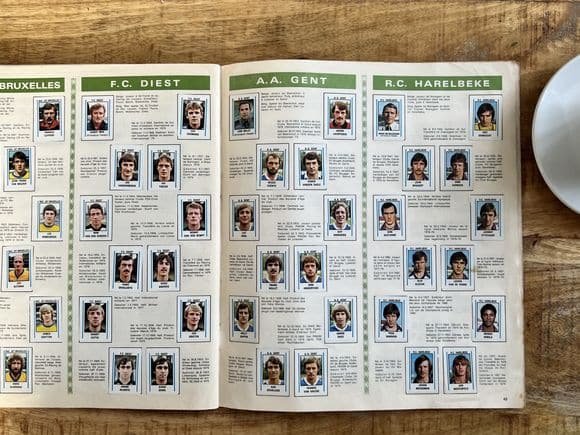
FC Diest first XI
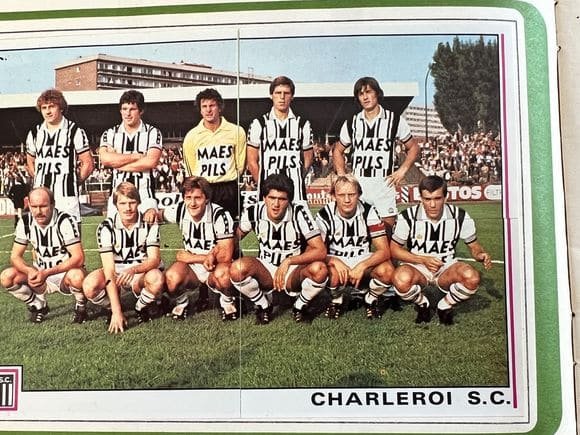
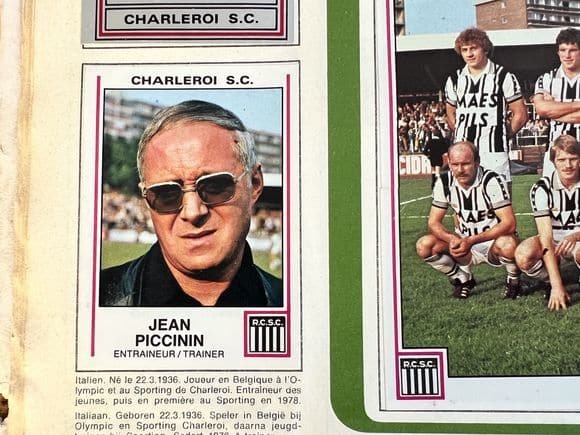
Charleroi Class of 1980
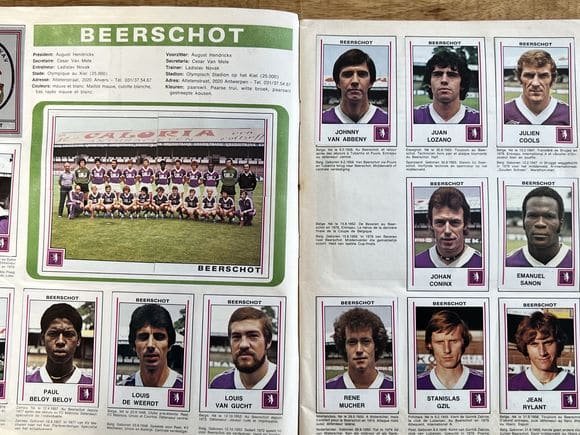
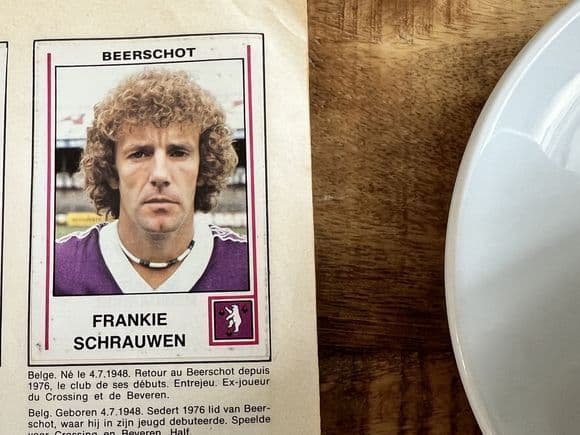
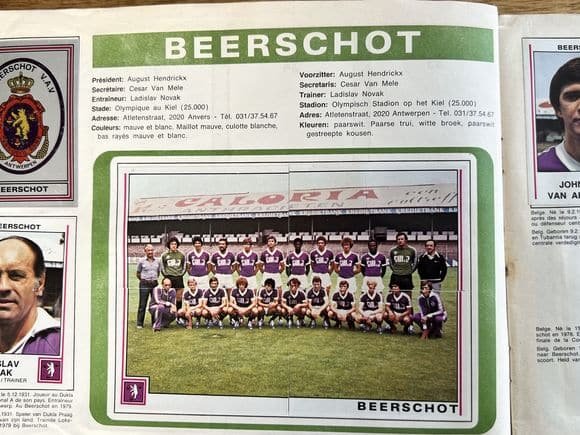
Beerschot pose for Panini
We can but hope. Belgium’s Panini tradition has always been exceptional. From the first album in 1972-73, Belgian football has been illustrated in a Panini collection every single season since.
In 2021-22, Panini celebrated the 50th edition with all 50 covers, every title-winning team since the inaugural season and a Golden XI of the past five decades. With a 55th seemingly not on the cards, many fans have been rummaging through their attics to rediscover their Panini past.
These albums now seem even more precious than ever. These aren’t just stickers; they are a portal into a world of international stars, local stalwarts, bold fashion choices and footballing eccentricities. They remind us that the game once belonged to the terraces, the towns and the people who showed up every weekend, regardless of division. As you scan these pages, it’s impossible not to smile, pause and marvel. This is football history at its quirkiest, its most authentic – and its most Belgian.
Frankie Schrauwen beams in from Planet Petrocelli
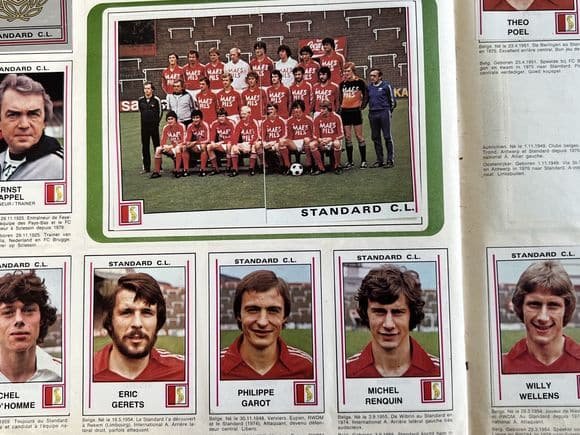
Standard rules OK
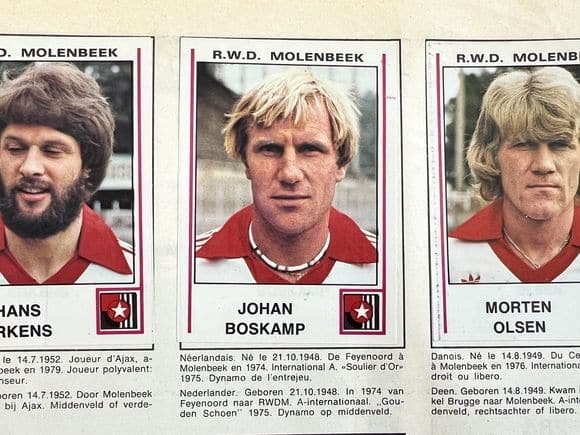
Danish legend Morten Olsen with his Molenbeek teammates
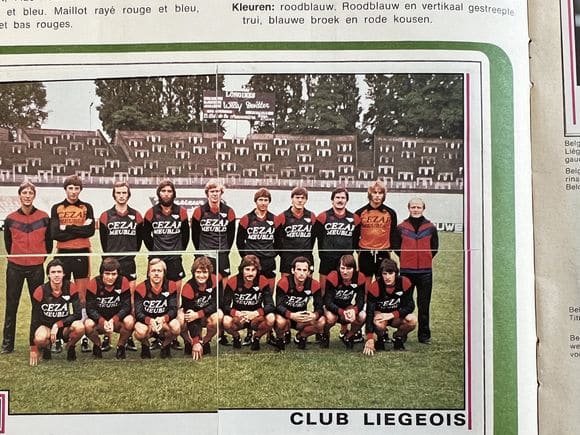
Terrace heroes – FC Liégeois
The 1980 album, for example, serves as a time capsule of a legacy that will no longer continue. Sometimes these portraits of men thrown together by chance, all drooping moustaches and inadvisable hairstyles, convey more meaning than the trophies they strived for or league tables they aimed to scale.
And in that mess, that odd, wonderful randomness, lies exactly why Belgian Panini albums – and the 1980 edition in particular – should always be cherished. Every page is a small absurdist delight. It’s random, it’s beautiful and it’s utterly, unrepentantly, Belgian.
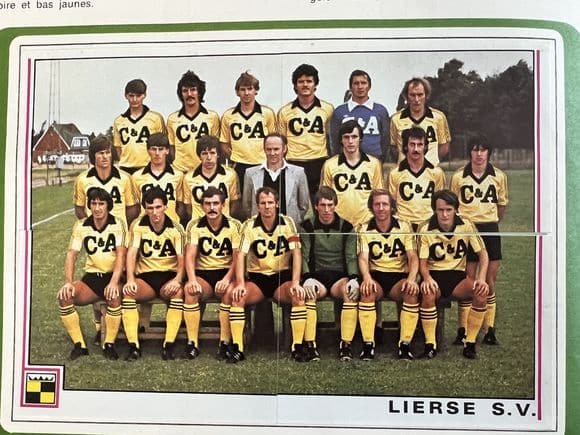
The kits alone are worth getting lost in. Oversized sponsors plaster every shirt (Lierse in C&A!), giving each sticker a primitive charm. Modern-day strips, with their slick global branding, simply won’t do. These feel lived-in, grounded and utterly of their time.
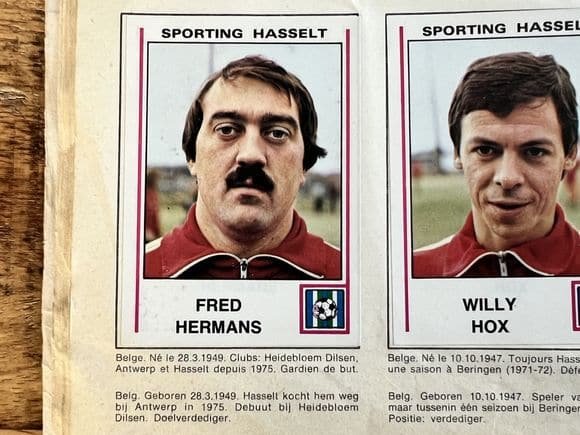
Don't mess with Fred Hermans
Beerschot good to go
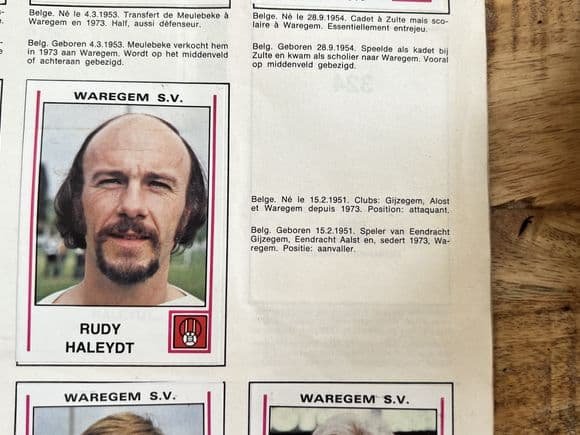
Rudy Haleydt – why didn't anyone tell him?
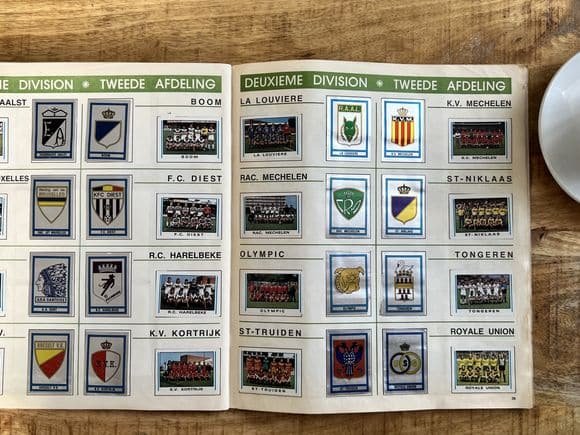
Stars of the Tweede Afdeling 1980
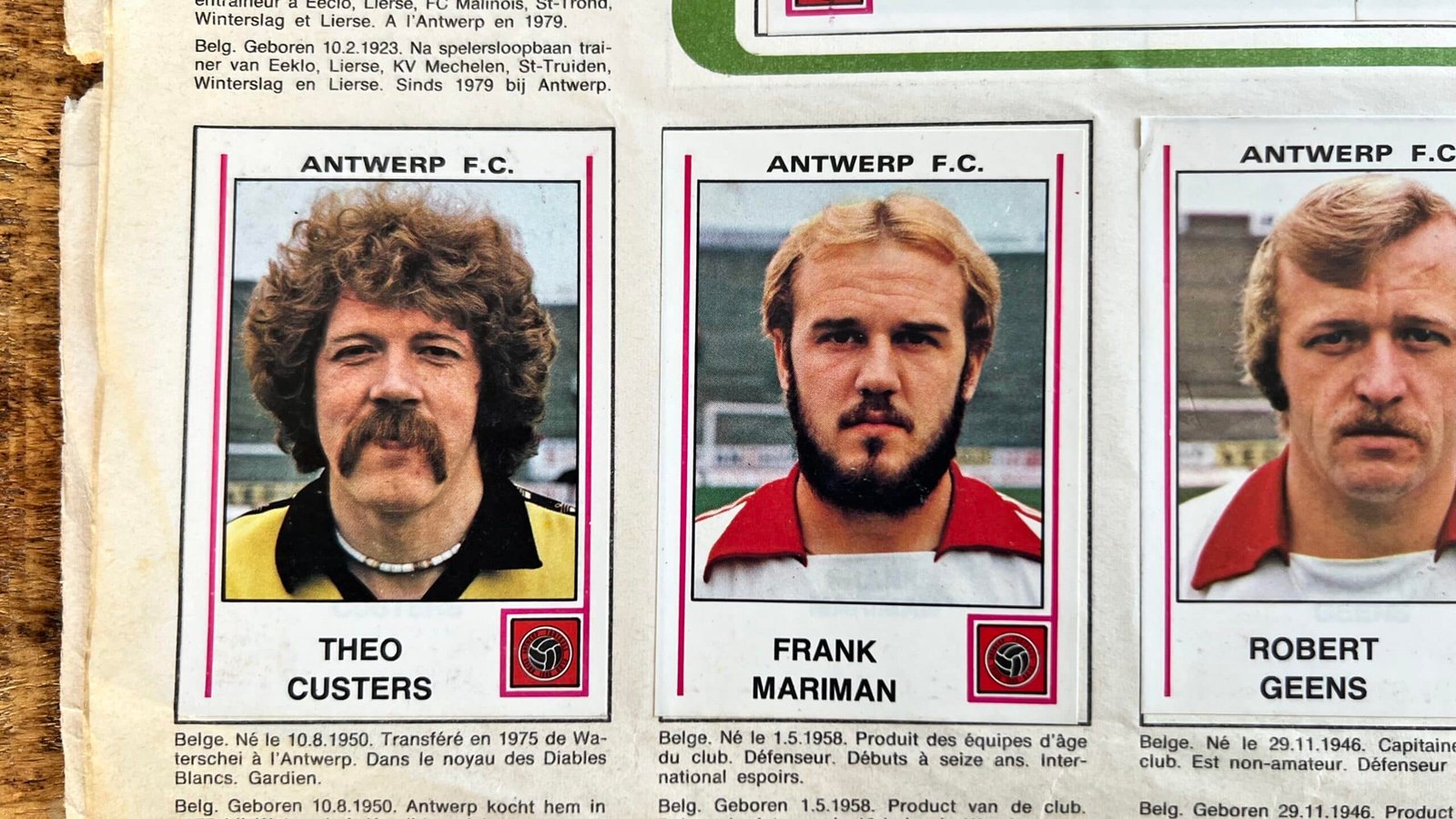
Then there are the personalities captured in each frame. Players look like people first, athletes second. Fred Hermans glares from the page like he’s sizing you up for the pot. Rudy Haleydt must be 20 years older than his listed age. Many sport chunky necklaces of coloured beads – fashion? superstition? a secret cult? – as if descended from another planet. Hair and moustaches reach levels of drama that would be borderline costume today.
And yet it all works. The album becomes more than a collection of footballers; it’s a gallery of expression, identity and the first tentative steps into the 1980s.
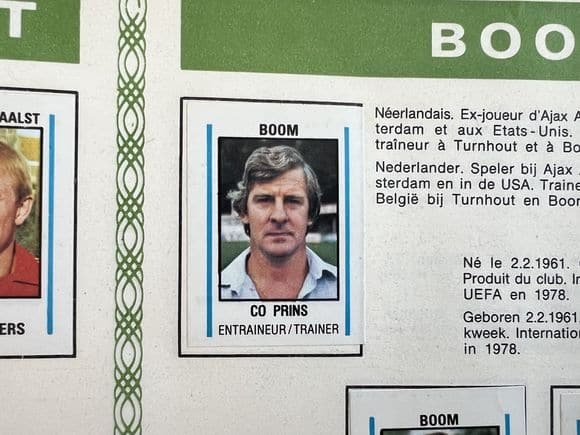
The album doesn’t just showcase the glamour of the top flight – there’s also the Second Division. Smaller stickers, but just as mighty. Co Prins appears here as a Boom Entranineur / Trainer (dual French/Flemish captions make it educational too!), who, in this summer of 1980, was Bobby Moore’s defensive partner in Escape to Victory (1981).
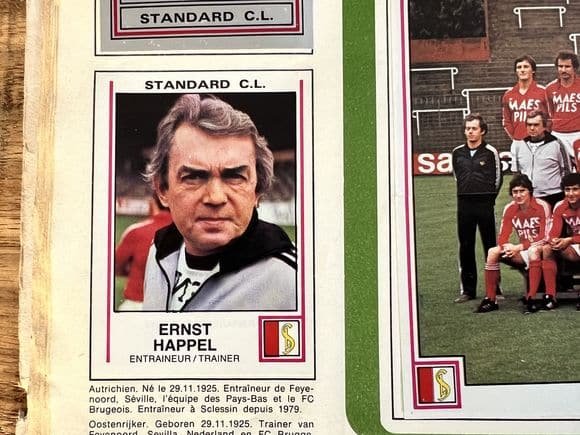
Entraineur/trainer/legend Ernst Happel
Bring back the Prins
Lierse SV – the men at C&A
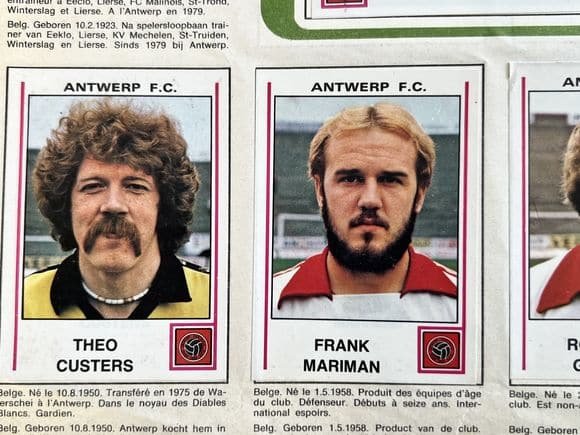
Yosemite Sam in goal for Antwerp FC
Charleroi casual – Jean Piccinin
Every sticker is a story – curios such as Eiður Guðjohnsen’s father Arnór, captured long before his son would light up Stamford Bridge. This is football history in its most tactile, human form.
Coaches like Ernst Happel cast a steely glance over their shoulder, as if he’s about to tell you to warm up. And then there’s a family-photo vibe from Charleroi’s Jean Piccinin in his sunglasses, looking like he’s just wandered in straight off the beach.
Even the backdrops are unforgettable. Terraces loom in the background of many stickers, offering a glimpse of the game before all-seater stadiums and corporate hospitality.
You might even call it a piece of cultural and sporting heritage.
We use cookies on our website to give you the most relevant experience by remembering your preferences and repeat visits. By clicking “Accept All”, you consent to the use of ALL the cookies. However, you may visit "Cookie Settings" to provide a controlled consent.
This website uses cookies to improve your experience while you navigate through the website. Out of these, the cookies that are categorized as necessary are stored on your browser as they are essential for the working of basic functionalities of the website. We also use third-party cookies that help us analyze and understand how you use this website. These cookies will be stored in your browser only with your consent. You also have the option to opt-out of these cookies. But opting out of some of these cookies may affect your browsing experience.
Necessary cookies are absolutely essential for the website to function properly. These cookies ensure basic functionalities and security features of the website, anonymously.
Cookie
Duration
Description
cookielawinfo-checkbox-analytics
11 months
This cookie is set by GDPR Cookie Consent plugin. The cookie is used to store the user consent for the cookies in the category "Analytics".
cookielawinfo-checkbox-functional
11 months
The cookie is set by GDPR cookie consent to record the user consent for the cookies in the category "Functional".
cookielawinfo-checkbox-necessary
11 months
This cookie is set by GDPR Cookie Consent plugin. The cookies is used to store the user consent for the cookies in the category "Necessary".
cookielawinfo-checkbox-others
11 months
This cookie is set by GDPR Cookie Consent plugin. The cookie is used to store the user consent for the cookies in the category "Other.
cookielawinfo-checkbox-performance
11 months
This cookie is set by GDPR Cookie Consent plugin. The cookie is used to store the user consent for the cookies in the category "Performance".
viewed_cookie_policy
11 months
The cookie is set by the GDPR Cookie Consent plugin and is used to store whether or not user has consented to the use of cookies. It does not store any personal data.
Functional cookies help to perform certain functionalities like sharing the content of the website on social media platforms, collect feedbacks, and other third-party features.
Performance cookies are used to understand and analyze the key performance indexes of the website which helps in delivering a better user experience for the visitors.
Analytical cookies are used to understand how visitors interact with the website. These cookies help provide information on metrics the number of visitors, bounce rate, traffic source, etc.
Advertisement cookies are used to provide visitors with relevant ads and marketing campaigns. These cookies track visitors across websites and collect information to provide customized ads.