Shaka Hislop returns to Newcastle 30 years after a racist incident, writes Colin Young
Soon after joining Kevin Keegan’s Newcastle ‘Entertainers’ in 1995, Shaka Hislop popped into a petrol station opposite St James’ Park. He was still in his NUFC tracksuit following a midweek game.
As he filled up his car, wife Desha was in the front, their eldest and recently born daughter Maalana, the first of their five kids, was in her child seat in the back. Approaching the overnight booth to pay, he noticed a group of teenage boys. Their decisions that night shaped the rest of his life.
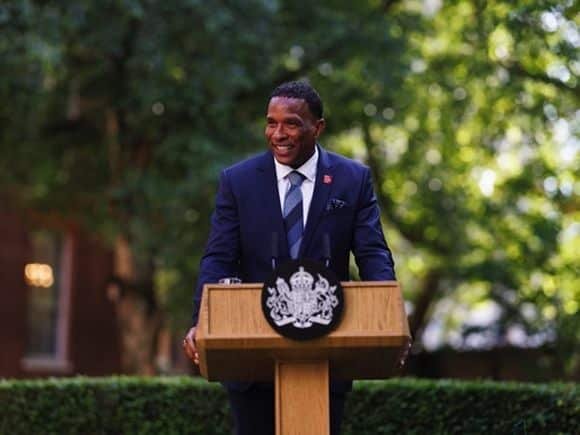
“It’s one of the stories I’ve told a lot,” says the 57-year-old former Trinidad and Tobago international, who is now Honorary President of the Show Racism the Red Card, which celebrates its 30th anniversary this year.
“It formed the foundation of why I got involved in Show Racism te Red Card,” he says. “When those three or four youths saw me, a black man, at a petrol station in Newcastle late at night, they started shouting racial abuse at me.”
“I was trying to ignore it, obviously mindful that my wife and daughter were sitting in the car. Then one of the kids recognised me as Shaka Hislop, a Newcastle United player, the tone changed and they came over and started to speak with me and asked for autographs.”
“And it’s an incident that set me back quite a lot, because on the one hand, I was thinking about my wife and daughter in the car, and me protecting them, and on the other, I felt desperately disrespected as a black man. And then it hit me – the power of the individual – and more so, the power of footballers.”
Shaka – better known by his first name – was born in Hackney and had starred for Steve Coppell’s exciting young Reading team when he was signed by Kevin Keegan. Sharing the No.1 role with equally popular Czech international Pavel Srniček was to be a feature of their time together on Tyneside under Keegan, who would lead his exciting team to second place in the Premier League – with a few agonising and amazing games along the way.
But that incident in the shadows of Newcastle United’s citadel had a profound impact. He approached Newcastle fanatic and political activist Ged Grebby, who had long been pestering the club to take on racists and fascists who had infiltrated the English and European game. Shaka gave him a voice and a donation to set up an organisation.
Shaka says: “I’ve told that story a number of times, and it never gets old. I also used it when I was speaking to my team-mates at Newcastle at the time, and a number of them came along and supported what we were doing. They understood how deeply that single incident had affected me, and they knew and understood their own power to also make that change. We travelled all over the north, speaking to schools.”
The first Show Racism the Red Card workshop was held at Gosforth High School in Newcastle. Magpies defender John Beresford went along with Shaka, as well as Ged Grebby. They just talked about their experiences in football and society at that time. Beresford may not have experienced racist abuse himself but he’d heard enough of it. The audience hung on their every word.
Thirty years later and these workshops have embraced the advances in technology and social media. They may not be there in person but Gareth Southgate, Harry Kane, Jordan Pickford, Trent Alexander-Arnold, Harry Maguire, Lauren James, Beth Mead and Eni Aluko are all part of the package and feature in recorded interviews.
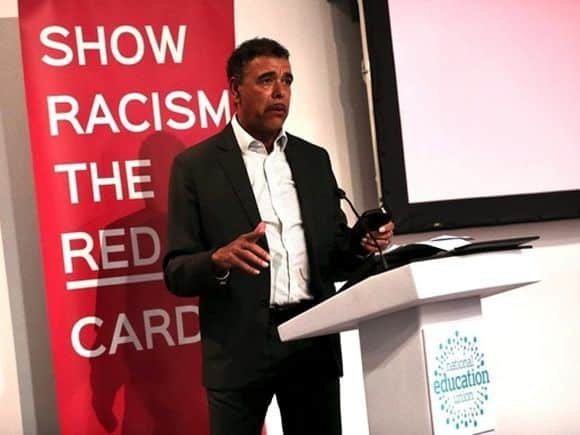
Ex-pros and managers such as Chris Kamara, Les Ferdinand and England’s first black international, Viv Anderson, are employed as the main presenters to the educational resources and platforms. The charity has now engaged with more than one million people across the UK. It currently presents to more than 50,000 a year and has five offices nationwide.
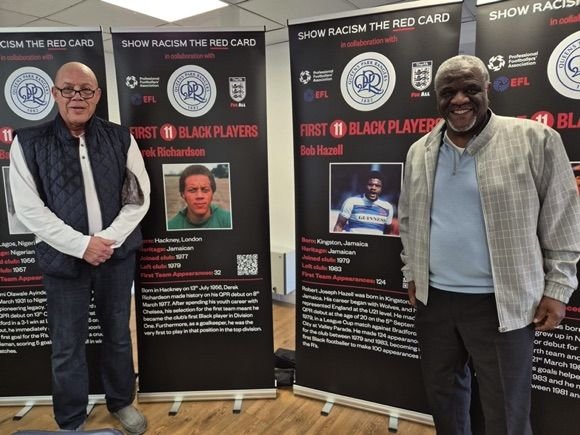
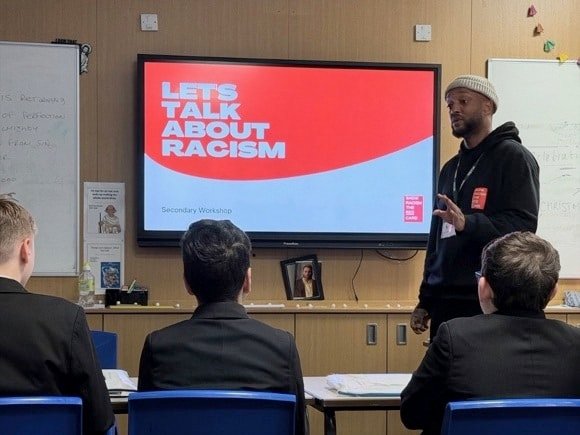
Ged says: “We continue to utilise the high-profile status of football and football players to help tackle racism in society and has expanded into other sports. The majority of our work involves the delivery of educational workshops to young people and adults in schools, workplaces and at events in football stadiums. SRtRC also produces educational resources and platforms, to challenge misconceptions, stereotypes and negative attitudes in society.”
This Saturday, April 18. another of Keegan’s former Entertainers, Andrew Cole, will return to St James’ Park. The sixth black player to represent Newcastle, Cole was in the Manchester United team which would deny his former club the title in 1996 because he’d been sold by Keegan the previous year.
Cole will be appearing with Tony Cunningham, a Newcastle No.9 ten years before Cole. The second black player to represent the club, the first to sign permanently, Cunningham is still remembered with affection despite a patchy career.
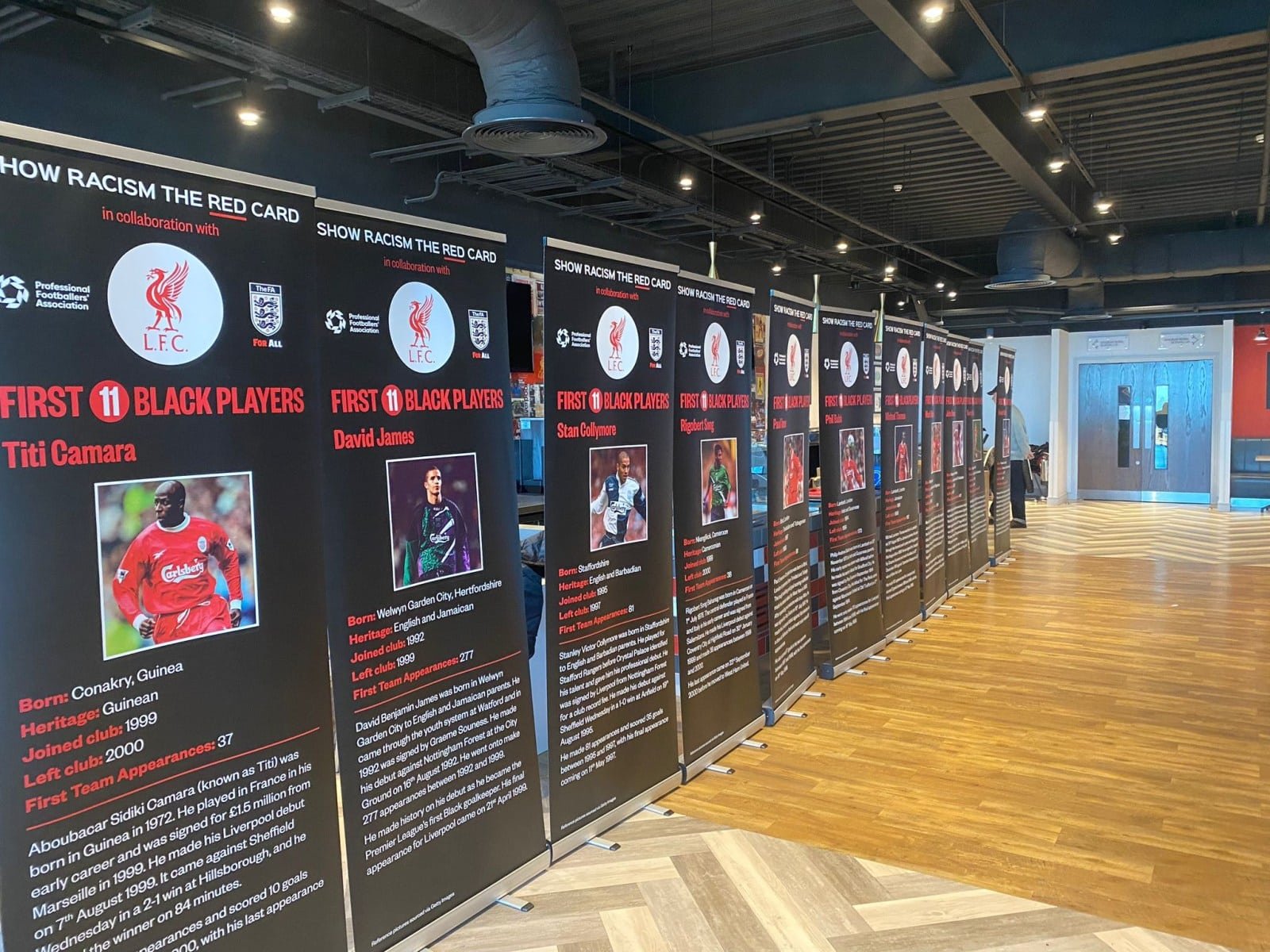
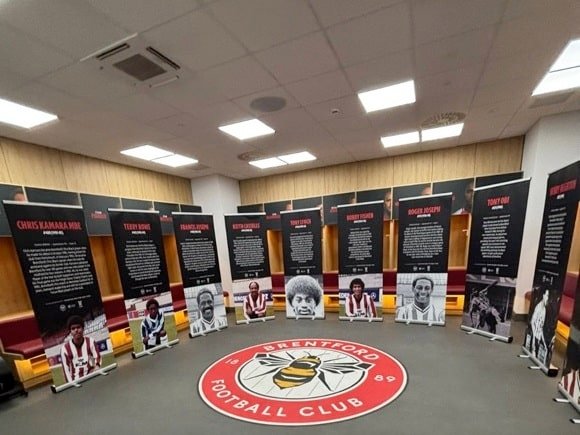
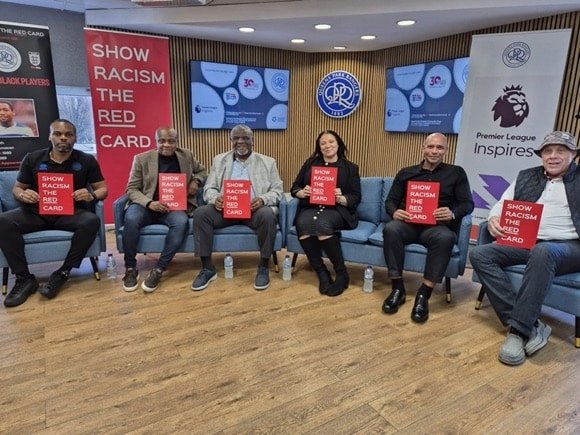
Since the start of the year, to mark the third decade of SRtRC, the First Black XI exhibitions have been celebrating black players across the UK. After unveiling Newcastle’s at St James’ Park, Cole and Cunningham will be on the pitch ahead of the Premier League clash against Bournemouth. You might also spot them if you’re near the posh seats during the game, along with club legends Beresford, Shola Ameobi, Steve Howey and former Ireland international and BBC Newcastle pundit John Anderson.
It promises to be emotional. Cole, Cunningham and Shaka will be commemorated with flags around the ground ahead of the game thanks to Wor Flags and the Newcastle United Supporters Trust.
Newcastle join Sunderland, Middlesbrough, Liverpool, Arsenal, Brentford, QPR and Derby, plus the Lionesses, in acknowledging their black players through this initiative. One for the England men’s team is planned.
Ged says: “As part of our 30th anniversary, what better way to commemorate such a milestone than by celebrating UK’s black history in football?”
“From the early trailblazers who broke barriers, to more recent stars who have inspired on and off the pitch, First XI Black Players shows how football’s history is intertwined with the wider narrative of diversity and inclusion.”
This March, a 45-year-old man from Gateshead was arrested following a report of racist abuse aimed at Sunderland player Lutsharel Geertruida during his club’s recent Tyne-Wear derby victory. It was the first time the Premier League’s anti-discrimination protocol was initiated. Referee Anthony Taylor made both captains and coaching teams aware of the incident, the game was paused and the Premier League-appointed match commander was informed.
The arrest on suspicion of a racially aggravated public order offence came nearly two weeks later. This season, two other Sunderland players have been abused online, Brian Bobbey and Romaine Mundle, which sparked SRtRC to hold an anti-racism flag display at the Stadium of Light before Sunderland’s game against Brighton.
After the derby incident, Ged Grebby found himself back in front of the local TV cameras condemning racist abuse. That day, he issued a statement: “There is never any excuse for racist abuse at a football match, or within any other walk of life, and the fact that this was an intense local derby provides no mitigation should the alleged behaviour be proven to be true.”
“Once again, we have seen another example of an individual allegedly using racist language to target a professional footballer who was simply doing their job. This latest incident is just weeks after four Premier League footballers were sent racist abuse online following their participation in two fixtures last month.”
“We are encouraged to see that the Premier League’s Anti-Discrimination Protocol was enacted, with the game stopped for three minutes allowing for communication between the referee, team captains and benches. That the incident was brought to the referee’s attention by players on the field is also a positive indication that protocols are well known and that players felt empowered to act.
“The statements from Newcastle United and Northumbria Police indicate that an investigation into this incident is being taken seriously. Should the incident be proven, we would welcome strong punishments to ensure that this individual suffers the consequences for their behaviour.
“Show Racism the Red Card will continue to work with partners at Newcastle United and Sunderland to offer support and guidance. We also campaign for greater regulation of hate speech online as we see this to be an area that is supporting the development and normalisation of racism within society.”
It’s not the first and it won’t be their last. Thirty years on, the fight to show racism the red card continues.