Teams, tales and tips – a guide to the local game
The easternmost city in Poland’s top-tier Ekstraklasa, Białystok is separated from the border with Belarus by primeval forest where bisons roam. This is where they handpick the bison grass that goes into Żubrówka vodka, the name most associated with Białystok – until the recent rise of flagship club Jagiellonia.
Polish champions in 2024, twice enjoying European campaigns into the New Year thereafter, Jagiellonia celebrate their centenary in 2020. Formed by soldiers when Białystok was being fought over by Soviet and Polish armies, Jagiellonia started out with military beginnings.
Pogroms, massacres and deportations feature heavily in the history of these borderlands – it’s probably no coincidence that LL Zamenhof created the universal language of Esperanto here in the hope of world peace.
The first football games that took place in Białystok involved the Tsar’s 64th Kazan Infantry Division whose barracks were on Traugutta north-east of town in the build-up to World War I.

Emerging from war and Russian rule, the city gained its independence later than the rest of the newly created Poland, so organised sport took much longer to set up. WKS 42 Pułk Piechoty Białystok – the 42nd Białystok Infantry Division –were among the first, the regiment moving into the barracks and using the football pitch left behind by the Russians on Traugutta.
Football in Białystok between the wars soon became as diverse as the city itself. At local level, Makabi and ŻKS Białystok represented the city’s significant Jewish community, the teams merging in 1935 but folding with the Soviet invasion of 1939. Friendly matches and city-wide competitions featured teams such as Cresovia Grodno and the 42nd Division, whose name would later be changed to Jagiellonia after the prestigious medieval dynasty.
The Royal Court was located in Vilnius, capital of present-day Lithuania, part of Poland between the wars, whose teams usually qualified for the final national play-offs from this eastern region until the creation of a single all-Poland Ekstraklasa in 1927.
A hero of World War I, who had been involved in the capture of Vilnius in 1919, Marian Zyndram-Kościałkowski was granted governorship of the Białystok region in 1930 and among his many measures was the creation of a Jagiellonia Białystok Sports Club in 1932, its crest centrepieced by a capital letter J in historic font, backdropped by the colours of cherry red and yellow.

Local teams, including the 42nd Białystok Infantry Division, their successors Jagiellonia, and Makabi ŻKS Białystok, played at the Zwierzyniecki Stadium by the park of the same name south of town. Opened as a multi-sports arena in 1926, it was renovated in 1934 then used by the Soviets, then the Nazis.
Fleeing Poland after 1939 and accused by the Polish government-in-exile of serious discrepancies that led to the country’s downfall, Zyndram-Kościałkowski was placed in an internment camp on the isle of Bute and died in 1946 in Brookwood, Surrey, where his grave can still be found today. Although his memory is somewhat tarnished, there is still a street named after him in north-east Białystok.
Another co-founder of Jagiellonia in 1932 was Julian Buchcik, who served in the 42nd Białystok Infantry Division during the Polish-Soviet War of 1920 and survived a Soviet prisoner-of-war camp. Returning to regiment to become company commander, Buchcik also coached and managed Jagiellonia’s football team during the 1930s.

The occupation of Białystok by Soviet forces in September 1939 led to Buchcik being recaptured, this time under Stalin, and was one of tens of thousands of Poland’s elite massacred by Soviet forces in the Katyn woods in April 1940. Ironically, it was the Nazis who identified him by his ID cards when they began exhuming the bodies in 1943. Buchcik’s statue now stands outside Jagiellonia’s Stadion Miejski.
Given the club’s proud military heritage, it lost several members to the Katyn massacre and struggled to rebuild after 1945. As the city emerged from the conflict, four local sports teams – PKS Włókniarz Fasty, WKS Orzeł, KS Włókniarz Sierżana and KS Pogoń Wasilków – supported by or including workers at the many textile factories in town merged to create Włókniarz Białystok in 1947. An entire sports complex was built at Antoniukowska 60 in the north-west of town, sports halls for basketball and volleyball surrounding a football pitch.
Although never rising above Poland’s second tier for one brief season, 1973-74, Włókniarz held on until the economic changes of the 1990s put paid to any further ambitions. They sold the land around Antoniukowska, which now forms part of the urban landscape of offices and retail outlets of dynamic, contemporary Białystok.

Jagiellonia, meanwhile, after several short-lived iterations, regained their original name in 1957 and moved back into the Zwierzyniecki. In 1963, a new stadium was built at Jurowiecka 21, near the city’s main railway station, the opening match notable for starring all-time Polish great Włodzimierz Lubański, in one of his last games for the national youth team. The main tenants, however, wouldn’t make the top tier until 1987.
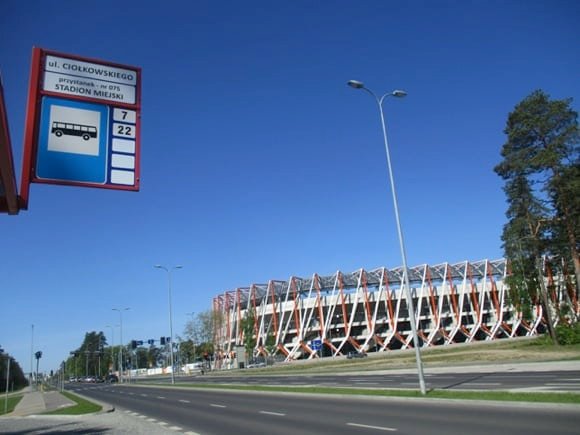
When a new stadium was built just beyond the Zwierzyniecki woods in 1971, it was for another army side, Gwardia, formed in 1948 and briefly second-tier competitors shortly afterwards. After 1989, Gwardia were renamed Hetman. In 2006, the City bought the Hetman Białystok Stadion and had it redeveloped, then rebuilt, as the Stadion Miejski, just as Jagiellonia began to stake a place in the elite Ekstraklasa.
Its long-term overhaul completed in 2014 has allowed Jagiellonia, who began to use this more impressive arena from the 1980s onwards, to stage European fixtures here. Recent visitors have included Ajax, Betis and Fiorentina.
Hetman Białystok still play local league fixtures nearby while the Zwierzyniecki is used for athletics, hosting the Polish national championships in 2017.
Getting Around
Arriving in town and local transport
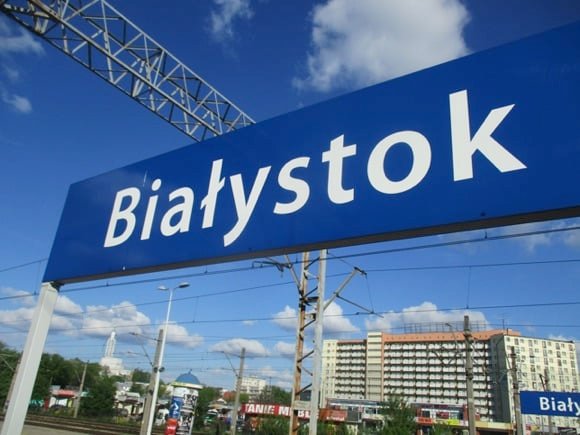
The nearest airports to Białystok serve Warsaw, just over 200km (130 miles) away, Chopin and Modlin. Flixbus runs a fairly regular direct service from Warsaw Chopin to Białystok bus station (around 50zł-90zł/€11-€20, journey time just over 3hrs), and indirect one via Warsaw West/Zachodnia from Modlin, around 130zł/€30, overall journey time 4.5-6hrs.
Inter-City trains leave Warsaw Central for Białystok (55zł/€12.75) every 2hrs and take 2hrs. Slower ones from Warsaw West/Zachodnia can be cheaper. Białystok bus and train stations are just west of the walkable city centre, the stadium far south.
A network of BKM buses covers the city, single tickets 5zł/€1.15, 24hr 16zł/€3.70. Local Moja Taxi (+48 733 401 401) based at the station has a set rate of 460zł/€107 to either Warsaw airport from Białystok – check the app (Apple) for rates from Warsaw.
Where to Drink
The best pubs and bars for football fans
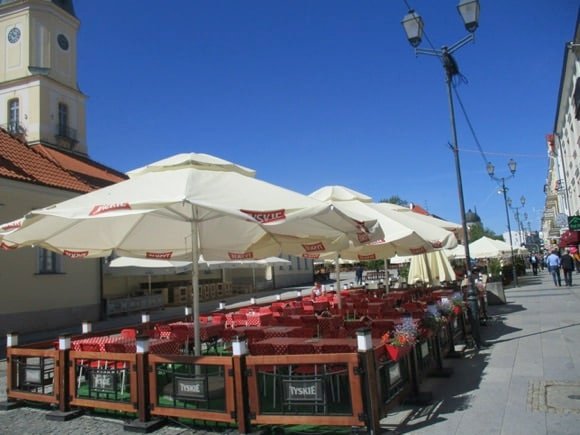
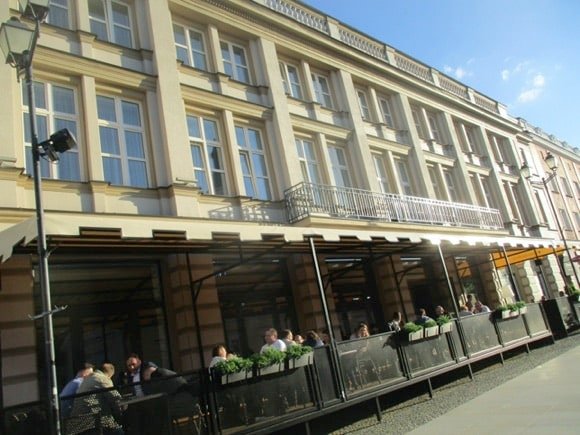
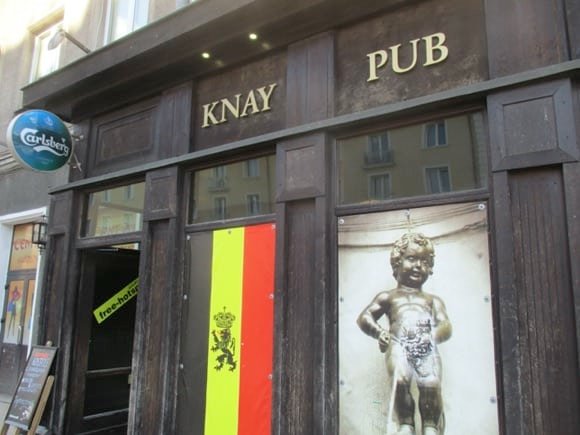
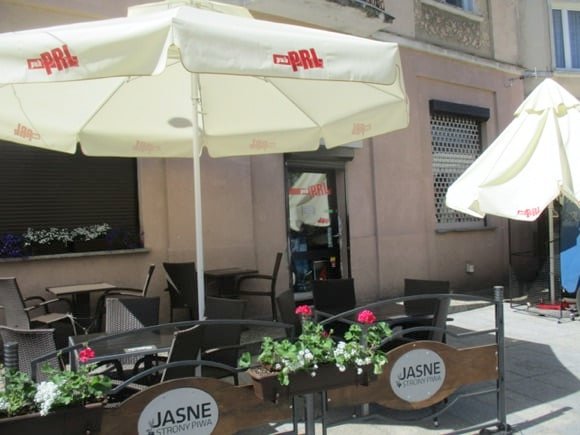
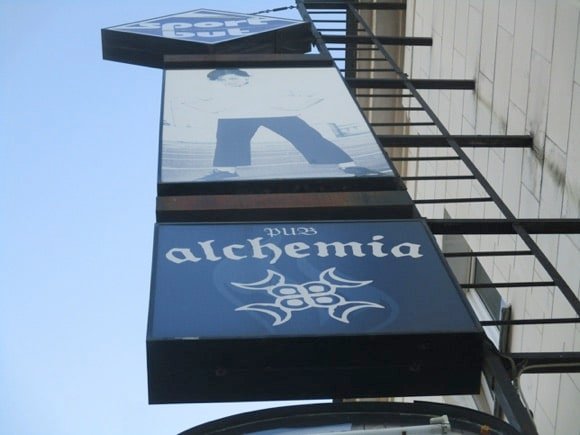
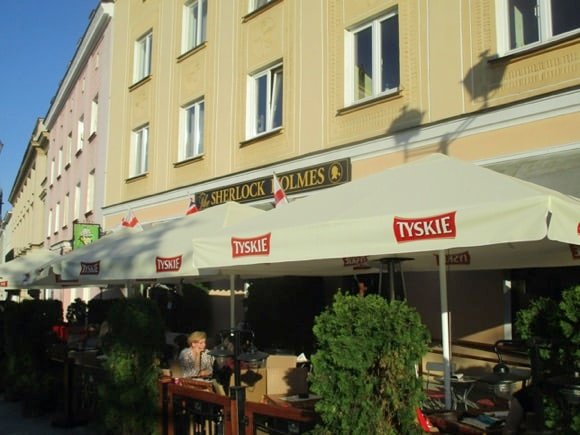
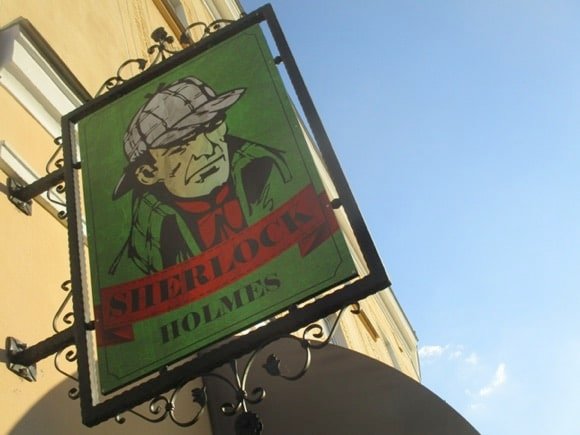
The main square, Rynek Kościuszki, has classier terrace venues on one side – the pub-like Sherlock Holmes, craft-brew bar Browar attached to the Royal Hotel – and contemporary bars for a younger clientele on the other. Sadly, the Strych closed with a wild party in the spring of 2026, but the late-opening Alchemia is still flying the flag, with its own-brewed beer and vast selection of spirits.
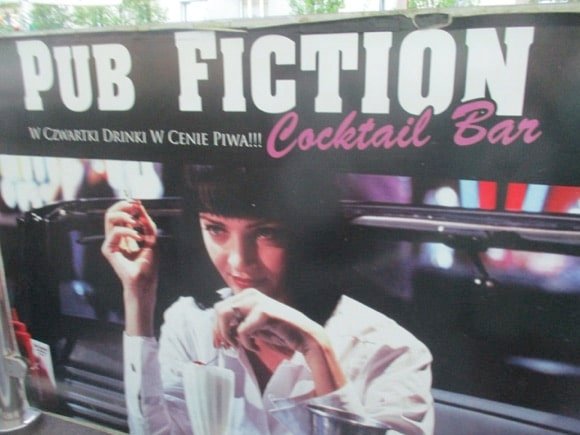
On the corner of Suraska, football-focused and wantonly retro PRL Lux, its name taken from a Communist-era acronym, is a prime contender for best bar in Białystok and also has a terrace. Close by, Pub Fiction is a student favourite, while many regulars gather at the Knay Pub over on Lipowa.
Where to stay
The best hotels for the stadium and city centre
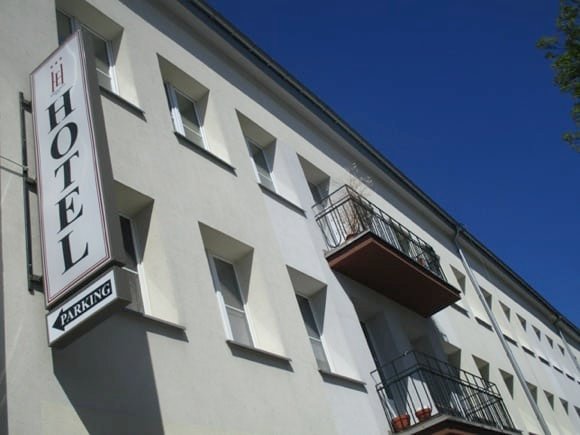
On the south-east, stadium side of the city centre, the three-star Esperanto on Legionowo takes its name from the language created by locally born LL Zamenhof. Proximity to the woods south of town and main roads leading out of Białystok means it has special prices for bikers.
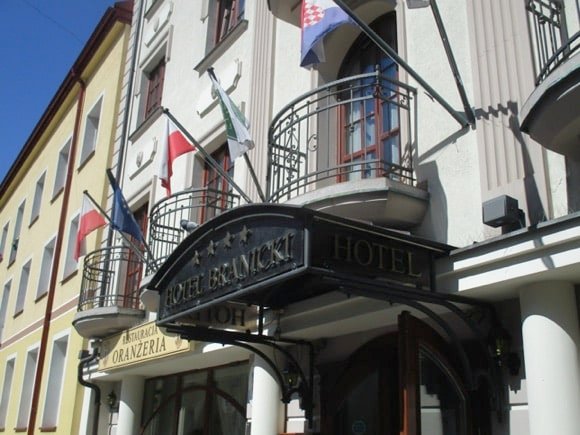
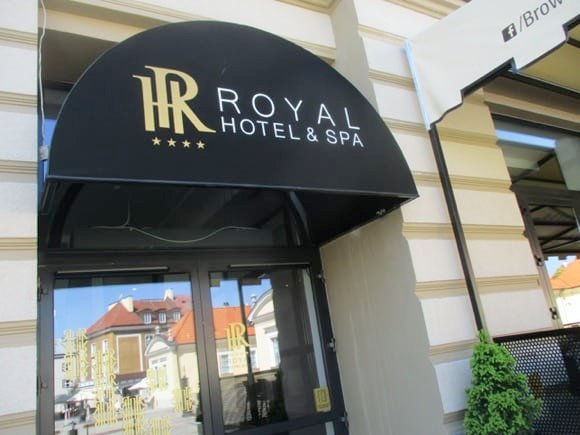
On nearby Zamenhofa, the classy four-star Branicki has a spa, cigar room and historic bar. Between the two on the main market square, the five-star Royal Hotel & Spa offers a pool and panoramic gym within its sauna complex, plus the popular Browar pub.
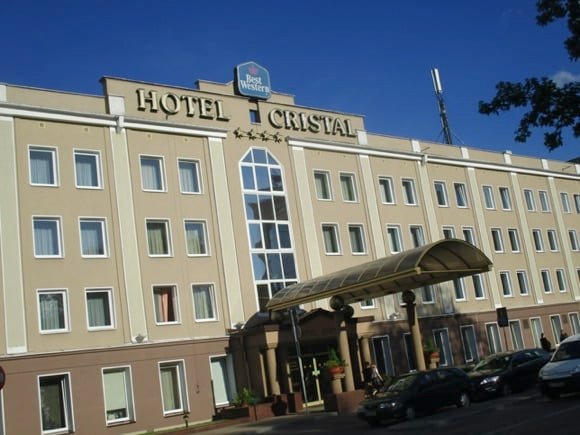
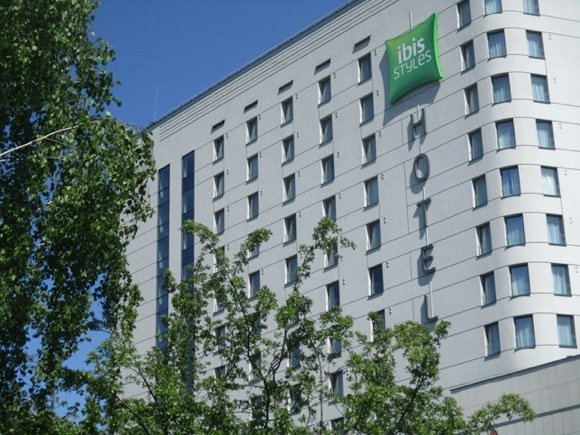
Close to the main square on Lipowa, the Cristal represents a solid, four-star choice with 70 years of hospitality under its belt, an extensive spa complex and salt cave, and classy restaurant. Nearer the Branicki on main aleja Józefa Piłsudskiego, the ibis Styles fills a contemporary tower with 129 mid-range rooms.
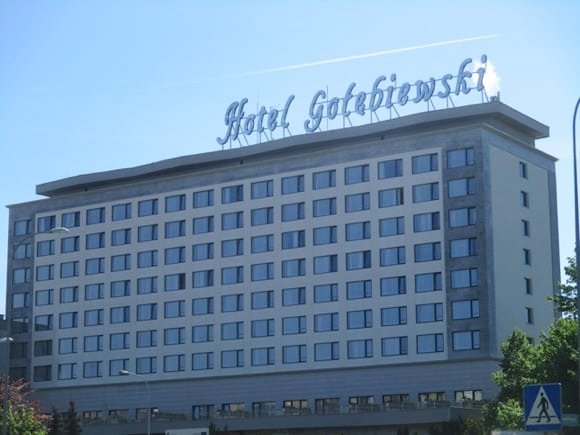
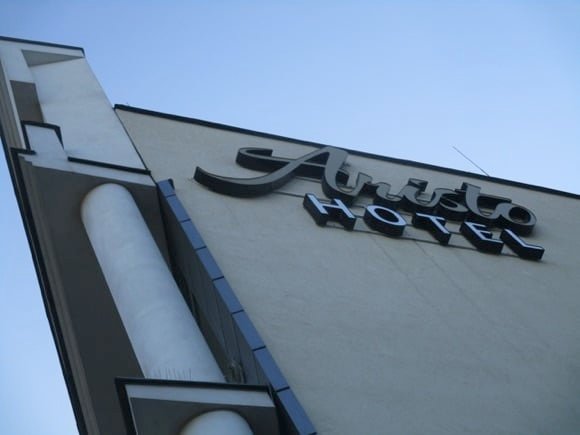
Further along the boulevard at a major roundabout, the four-star, family-friendly Hotel Gołębiewski has its own aqua park in the middle of town, plus restaurant, nightclub and 24hr reception. Slightly dearer but more central, in a tastefully revamped building dating back to 1897, the mid-range Aristo on Kilińskiego has a wine bar and restaurant to match its stylish surroundings.