Calcio's Marco Polo, Carlo Cartacci crosses Europe to create his fine books
Think of Como and you think of the lake and the local Serie A club. But near the waterfront works a chemist whose research into football grounds has taken him around East Germany, London, Scotland and the Balkans. The results are coffee-table masterpieces.
Tourists pour off the train at Como Lago, the little station facing the lake it’s named after, or hop off the bus at the quaint terminus alongside. Drawn by the eternal allure of this classic retreat, visitors are also coming in greater numbers to watch upwardly mobile Serie A club Como 1907 play at their unique Stadio Giuseppe Sinigaglia a waterfront stroll away.
Only those with a headache or sunburn will pop into an innocuous-looking pharmacy set between the two stations. Once they’ve bought their aspirins or balming cream, they’ll head out towards the sightseeing boats and terrace restaurants, none the wiser. Which is a shame, because serving them at the Farmacia Sant’Agostino might be one of Europe’s great football travellers and documentarists.
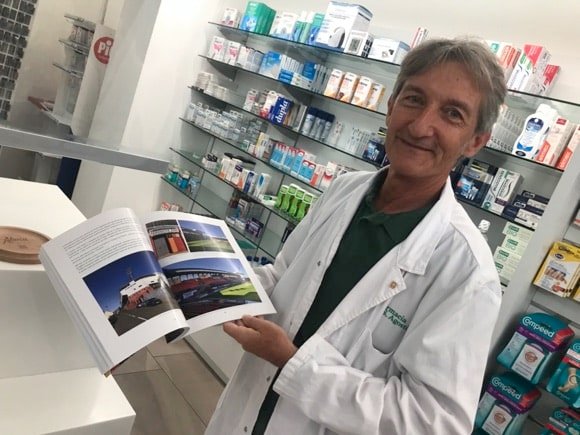
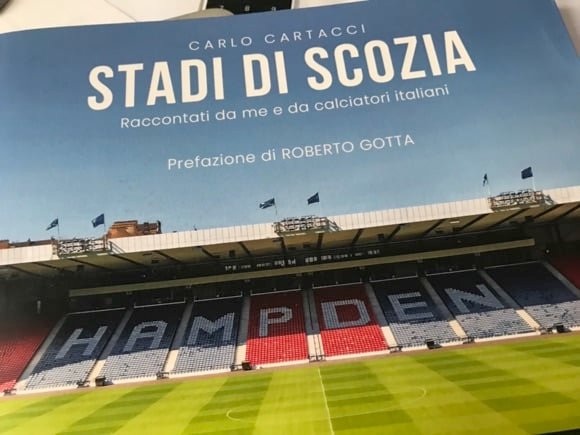
Writer/photographer Carlo Cartacci has published three books, with a fourth in the pipeline. The second, dealing solely with Scotland, from Hamilton to the Highlands, 300 pages of history, tales and gorgeous imagery. It’s a suitably niche follow-up to his initial adventure around former East Germany,
Stadi di Scozia was issued by Avellino-based Urbone Publishing, “dedicated to the world’s best writing, often overlooked by those with the most power and resources in this field”. This writing, of course, is in Italian, but their stylish books would embellish any coffee table, alongside thick bookazines extolling the virtues of interior design or casual menswear.
The Urbone website presents a patchwork portfolio of books dedicated to football in Palestine, the Tiraspol story and grim reportage of Santiago’s Estadio Nacional in 1973. Carlo’s editions are works of art, detailed travelogue dovetailing with wide-angle shots of Tynecastle and Tannadice.
So, who is the man in the immaculately white chemist’s coat? And what took him to Scotland?
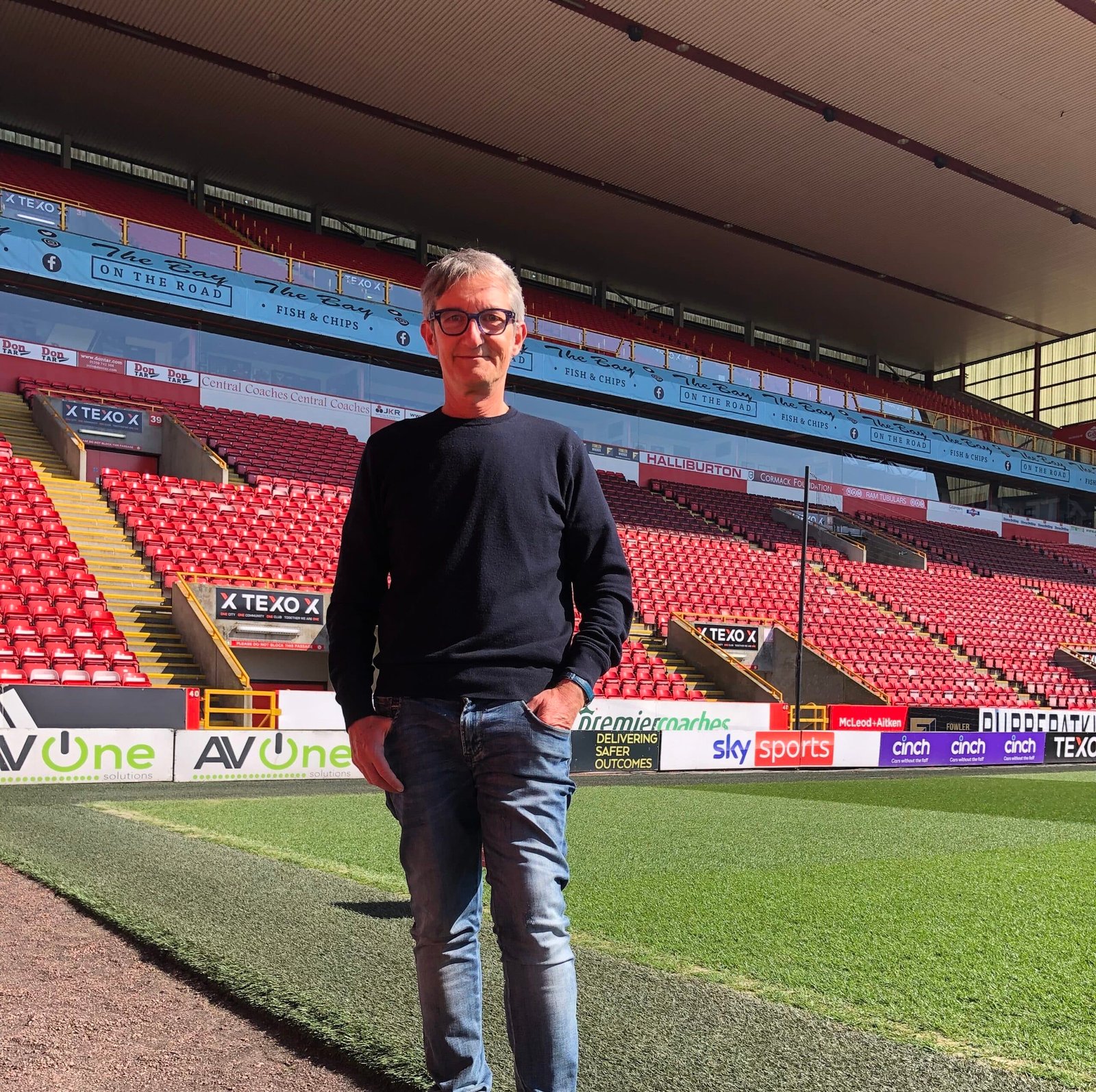
“I was born in 1968,” begins Carlo Cartacci, “and my first Serie A match was Como v Inter in 1975, with my father and my uncle, in Como, the city where I live and work today. After glorious seasons during the ’80s but also disappointments, relegations and failures, now Como 1907 are back in Serie A with one of the richest owners in the world, an ambitious manager in Cesc Fàbregas and big plans for the future”.
Carlo could also mention the aerodrome right beside the ground from which old seaplanes barrel out, and the nearby rowing and yachting clubs of similar vintage – this is Italy at its most romantic, with the Alps rising beyond. No wonder this pharmacist had a yen to wander.
“I have always loved traveling and photography. My passion for football has often been the excuse to plan trips to discover new cities, new stadiums and new experiences. Having collaborated for many years with Italian sport TV, I was often sent to cover Inter in Europe, and this has offered me the opportunity to interface with foreign clubs in a privileged way.”
“In my personal archive, I have more than 20,000 photographs and videos related to my trips around Europe to follow matches or visit stadiums. Since 2018, I have collaborated on Sportitalia TV, which showed my photos and videos to help our viewers understand the atmosphere. That was when I got the idea to create books from my travel, photography.”
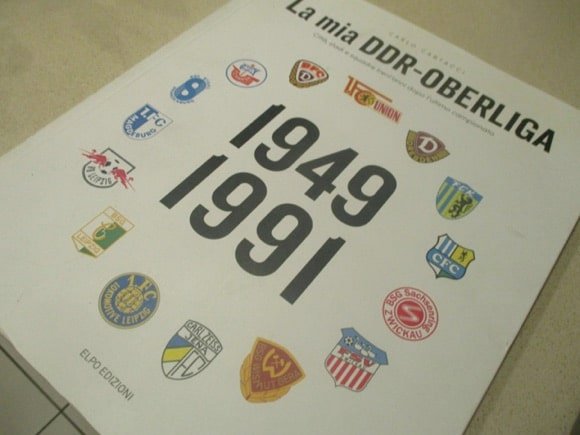
Rather than Switzerland on his doorstep or France close by, Carlo opted for somewhere that doesn’t actually exist: East Germany.
“My incredible trips to the territories of the former GDR weren’t easy because they were made during Covid,” says Carlo. “They were almost in secret, as if I were a spy in the Cold War.”
However clandestine his methods, the end result, La Mia DDR-Oberliga is a thing of beauty, capturing the essence of a rarefied yet still active football culture. Having hit the spot, Carlo now had a welcome dilemma. How do you follow up an acclaimed first album?
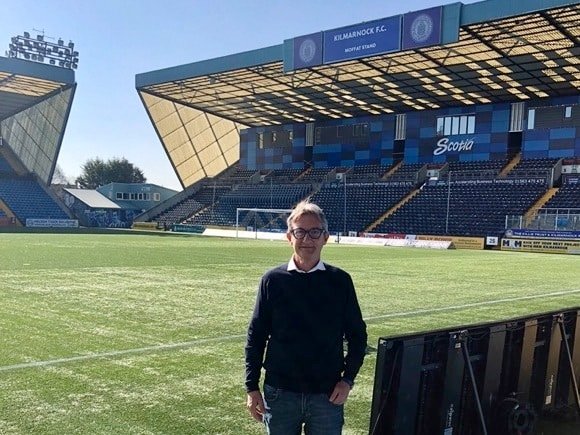
“I thought of changing course completely and started talking about Scotland, a nation and a football that have always fascinated me.”
But fascination alone didn’t bring this spy in from the cold. “Scotland’s is the most followed football in the world per capita, with the highest number of tickets sold to follow football every weekend at every level of the Scottish League in relation to the number of inhabitants of the nation.”
“I find this to be an incredible record. Football also has many of its origins in Scotland. Let’s not forget that the first leather balls and the first crossbars were used in Scotland, not in England!”
While the earliest origins of the crossbar are claimed either side of the border, it was the openness of the Scots that most struck soccer’s Marco Polo, in marked contrast to Rostock during lockdown.
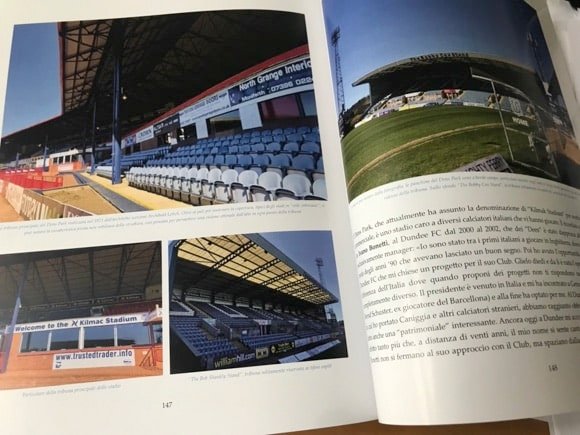
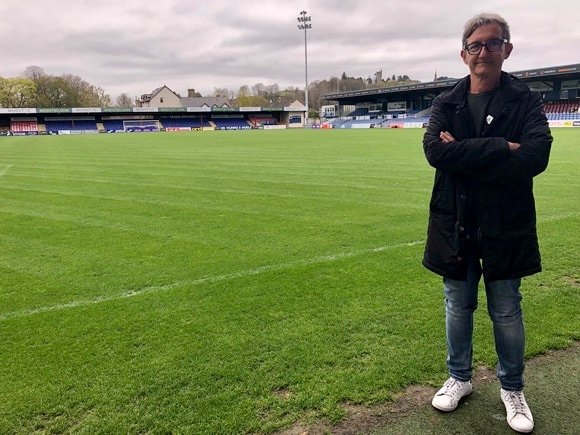
“I can say that I have always found the Scottish environment full of passion and special people. In April 2023, I went on an extraordinary tour that took me from Edinburgh to the Highlands, passing through Motherwell, Hamilton, Glasgow, Paisley, Kilmarnock, Dundee, Aberdeen, Inverness and Dingwall.”
“In Stadi di Scozia, I talk about 19 stadiums. There are some from the SPL but also fascinating grounds whose teams play in the lower leagues. Among these different levels, there was a common denominator: the kindness, complete availability and courtesy that each club reserved for me.”
“The book is enriched by anecdotes from many of my Italian footballer friends who have played in the Scottish divisions. It was wonderful to be able to see these incredible stadiums with my own eyes, and photograph them for Italian readers, reliving each player’s story.”
“I really liked every stadium I visited. I love Tynecastle because I have a particular sympathy for Hearts and it’s also where I attended a Scottish Cup match against Airdrieonians in January 2020. But if I have to choose one above them all, it would be Hampden, for its elegance and the history that emanates from the very first time you set eyes on it.”
“I think that the slope between the two long sides of Motherwell’s Fir Park is truly incredible! Both Marco Negri and Manuel Pascali had spoken to me about it, smiling, but seeing it in person was a real thrill.”
“Just as exciting was walking the 183 metres that separate Dens Park from Tannadice, thinking back to the stories of Ivano Bonetti who explained to me how the teams travel on foot from one pitch to the other for the Dundee Derby.”
With an album cover of a beautifully rolled pitch at Hampden, Stadi di Scozia complements images of stands, seats and terraces with shots of old programmes, plaques and statues, giving a flavour of the destination, too.
Apart from Kilmarnock stalwart Pascali and his family, few Italians beat a path to this East Ayrshire community – Carlo describes this terra incognita with touching affection.
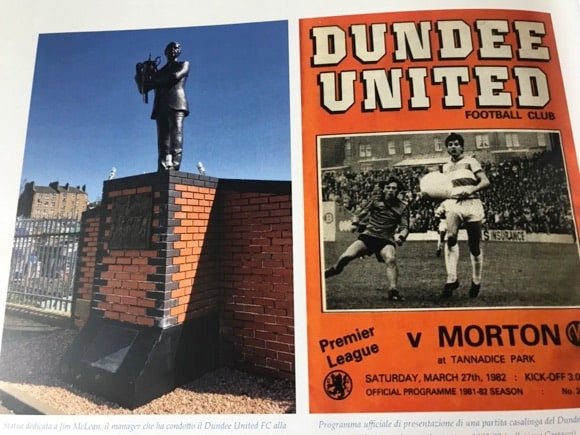
Now on a roll, from there he moved to the more familiar turf of London, where he had worked both as a sports agent as well as a TV commentator.
Fresh off the printers May 2025, Londra E I suoi Stadi carries the subtitle, “The football capital between football, pubs and music”, allowing Carlo to go off-piste and plug into his love of live music as well as traditional stadiums.
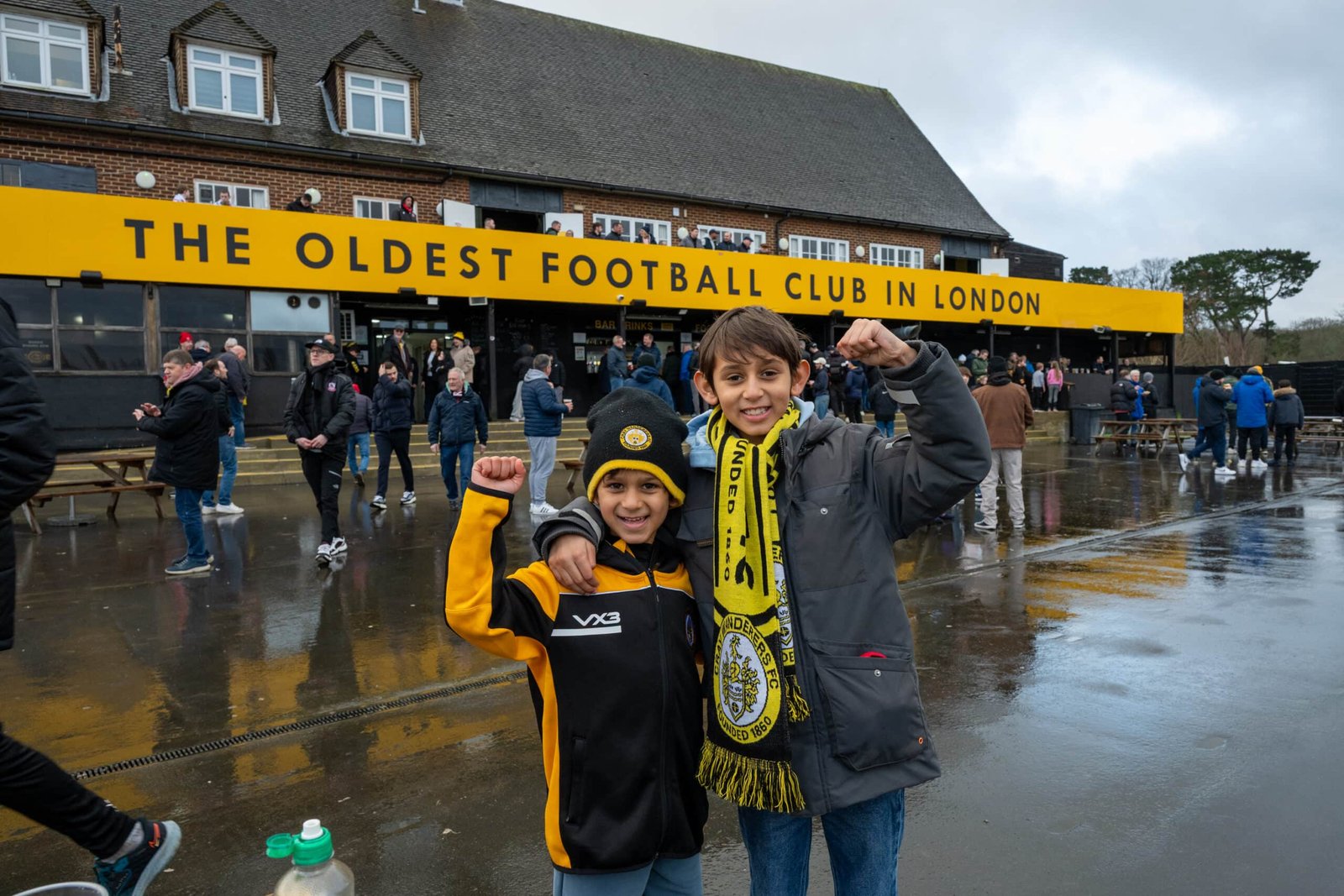
“I go to London very often, for work or pleasure, thanks to my work, I have many contacts at its many clubs, which made my job much easier. I talk about London as the football capital and I think I’m not wrong in thinking that of the more than 40 teams in the city and the more than 30 stadiums, most are owned by the clubs themselves.”
“Among the 400-plus photographs are many anecdotes about fans’ favourite pubs but the aspect that gave me the most satisfaction was talking about the connection between bands and the football clubs they support.”
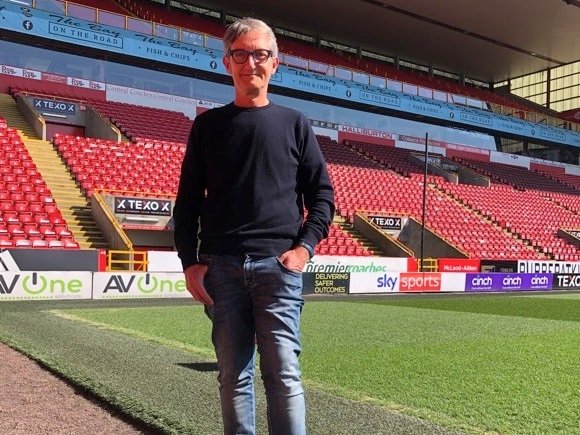
The book on London took Carlo around Italy for many months for launches and presentations. “This is the most beautiful and rewarding aspect for any writer,” he muses, before contemplating the storm after the calm. “Then, amid all this tranquillity, I will complete my book on the Balkans as best as I can.”
After Rostock, Kilmarnock and Shepherd’s Bush comes Montenegro. “In the next book, which I think will be published in autumn 2026, I will talk about football in and around former Yugoslavia, before and after Tito. It will be the culmination of some fantastic journeys I’ve been making among the new Balkan republics, where football carries the weight of history.”
Of course, Carlo is not stopping at Podgorica: “A dream on the back burner? To complete my series of books on stadiums by talking about Argentina!”.
Stadi di Scozia by Carlo Cartacci, available from Amazon. Published by Urbone Publishing.