Based in Baku since their city was destroyed, Euro stalwarts yearn for home
Long a familiar name on the international stage, having played every Euro season but one since 2010, Qarabag welcome Newcastle in the first knock-out round of the Champions League on February 18.
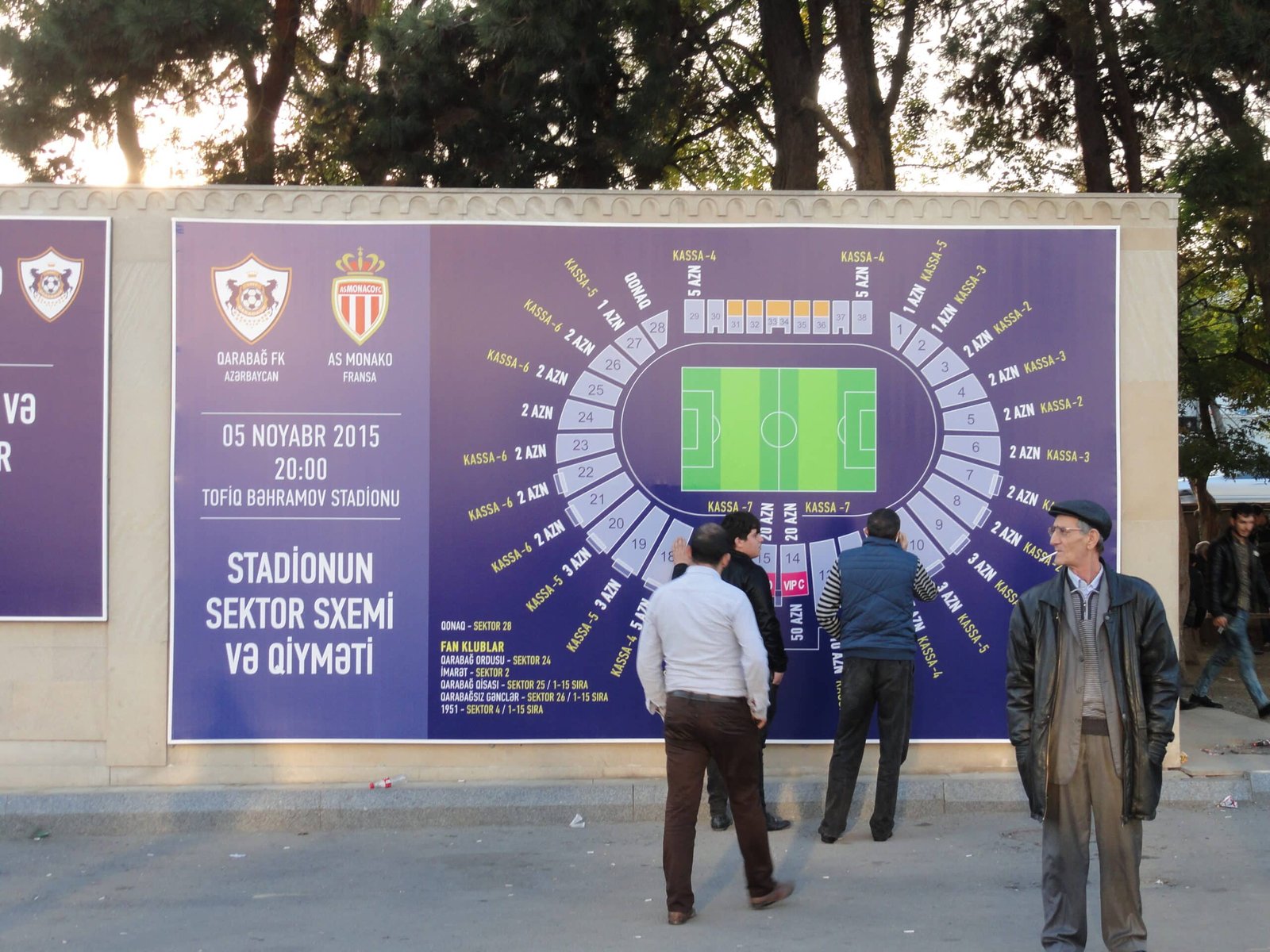
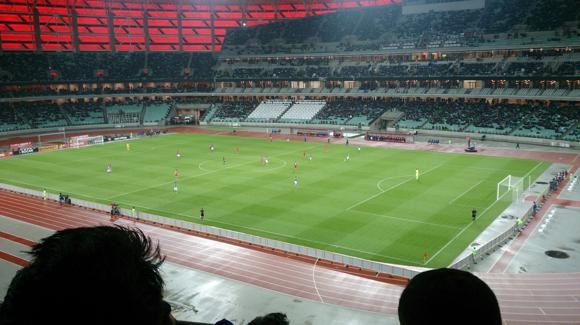
The host stadium carries another familiar name: Tofik Bakhramov, the Azeri linesman demonstrably involved in the 1966 World Cup Final. Overhauled and modernised in 2012, this 31,000-capacity arena is where Qarabag stage European ties, including against Chelsea earlier in the current campaign.
Other big Euro games, particularly earlier when star visitors were more a novelty for local fans, such as Arsenal in 2018, were played at the equally contemporary Olympic Stadium, where the Gunners returned for the Europa League final with Chelsea a year later.

Domestic fixtures take place at the 5,000-capacity Azersun Arena, funded by the large-scale holding company whose involvement transformed the club from Azerbaijan also-rans to European stalwarts.
All three stadiums are in Baku, booming capital of Azerbaijan. None are in Aghdam, Qarabag’s home town demolished by Armenian forces during the First Nagorno-Karabakh War of 1992, building by building, including the City Stadium.
Now, after decades of exile in the capital, the country’s most successful club is looking at returning home as the Azeri authorities reclaim and rebuild what was for 30 years a ghost town. Following Azerbaijan’s victory in the recent Second Nagorno-Karabakh War, the authorities have begun the huge clean-up of the provincial city, constructing schools, a railway station and residential housing.

Fully aware of Qarabag’s value in carrying the message of their exiled plight for three decades, they have given the football ground top priority. In September 2024, national president Ilham Aliyev laid the foundation stone for what will be the Imarat Stadium.
Four years before, only a week after Azeri forces had taken back control of the city in November 2020, the club’s board, coaching staff and players paid an emotional visit to the ruins of its predecessor. They even took part in a symbolic match, though the pitch still bore the scars of war.
In January 2026, the sports ministry signed a £26 million contract for the first stage of a UEFA category-four 11,700-capacity stadium, equipped with training pitches, media facilities and a museum. While no timeline has been announced, the aim is for UEFA to approve the staging of European matches here – though an extensive de-mining operation is still ongoing across town.

Until 1992, the mainly Azeri population of Aghdam was around 30,000. Built under Stalin in 1952 when Azerbaijan was part of the Soviet Union, the stadium witnessed Qarabag Aghdam win the Azerbaijan Republic League shortly before the USSR disintegrated in 1991.
By then, the conflict with Armenia was well under way, turning brutal by 1992. Qarabag relocated to Baku, but not before their revered head coach, Allahverdi Baghirov, was blown up by an anti-tank mine.
Initially struggling in a weak Azerbaijan league post-independence, Qarabag picked up speed in the early 2000s. First came financial support from Azersun Holding, whose activities centre on food production and processing, then came one of the most successful managers of the modern era anywhere in Eastern Europe. Until recently still the top scorer for the national side, former striker Gurban Gurbanov arrived as coach in 2008, his 800-plus games in charge yielding 11 national titles and 200-plus European fixtures.
Despite the huge riches flowing into the country, helping Baku to host European football finals, a Eurovision Song Contest and the Grand Prix, Qarabag’s budget has remained relatively modest. Gurbanov gets the most out of what he’s got. Though foreign players have come and gone, no big names have worn the Karabakh horse logo on Qarabag’s white shirts.
The original Karabakh khans once raced their own stallions on the land where the new stadium is being built, its name taken from the mansion (‘imarat’) that also once stood here.
As Gurbanov told the local press upon the club’s visit to Aghdam: ”We are returning to the lands we have longed after for years. I believe that the soul of Allahverdi Baghirov, who was both team captain and head coach… is happy. We await the first game we will play in Aghdam with great pride”.