From near ruination to Red Star Belgrade at Inver Park
A fan’s guide – the club from early doors to today
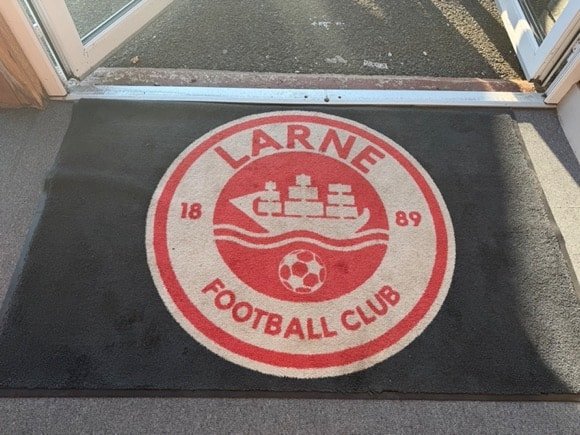
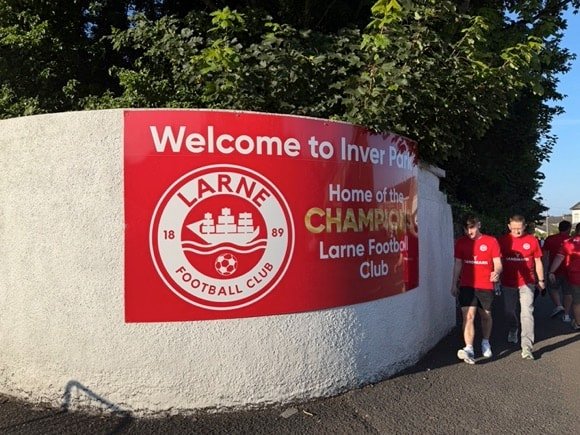
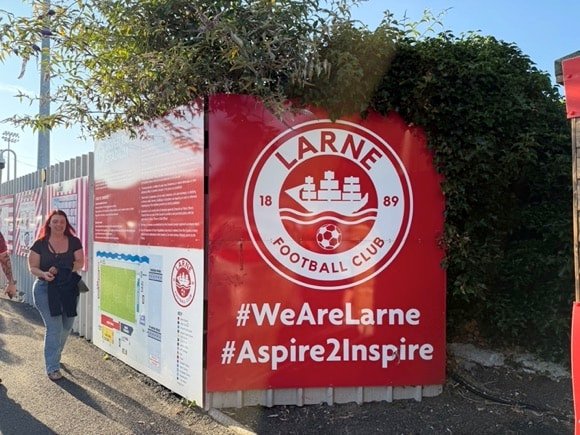
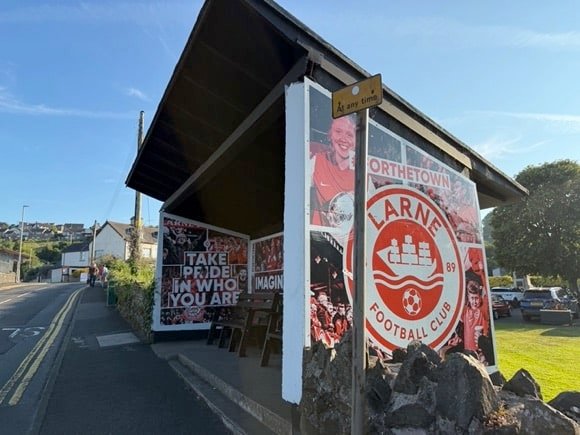
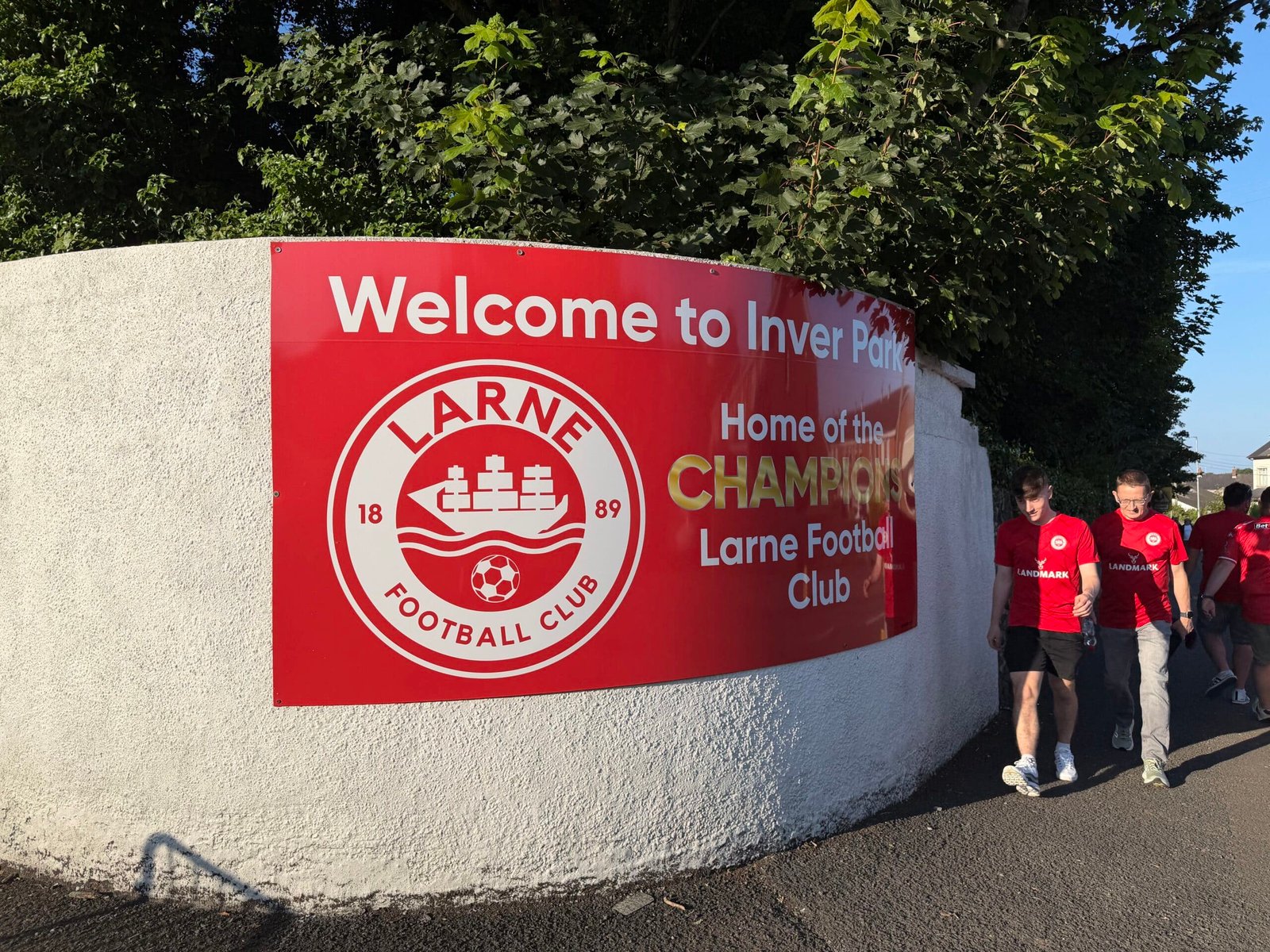
League champions for the third time of asking in 2026, Larne FC are the new football power in Northern Ireland. While the club crest displays the proud foundation date of 1889 around the image of a ship – Larne being a port city – it trod water in modest obscurity until its recent transformation.
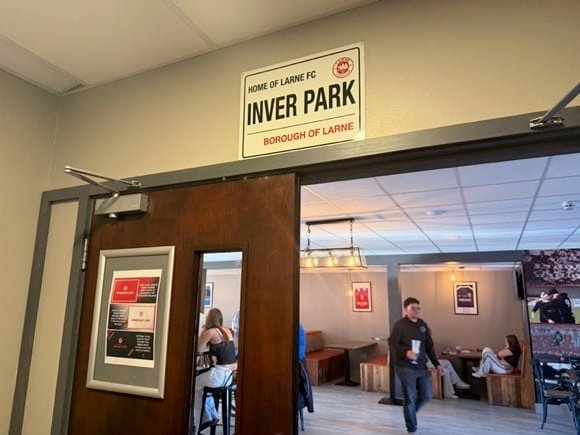
Based at Inver Park since 1918, Larne twice lifted the Ulster Cup before the competition disappeared in the late 1990s, and reached the final of the Irish Cup on few times. In the league, Larne never finished in the top three or qualified for Europe, dropping out of the top tier in 2007-08 when the division was being reduced to 12 teams and the club wasn’t granted a licence.
A decade of mediocrity later, Inver Park was in such condition that it had to be closed for certain games – and with Larne near bottom of the second-tier Championship, it was doubtful whether the club would continue at all. This was when Kenny Bruce stepped in. Having grown up in Larne though keeping his English accent, Bruce had become a millionaire overnight when he sold many of shares in his digital estate agents Purplebricks and was looking for a new project.
Inver Park/Mariia Makarova
Inver Park/Mariia Makarova
Inver Park/Mariia Makarova
Larne FC Superstore/Mariia Makarova
Perhaps the most persuasive voice among the Larne lobbyists suggesting he invest in the club was that of recently installed first-time manager, Tiernan Lynch. The Belfast-born ex-Cliftonville man had gained his coaching badges in America and was a keen supporter of the academy system. Financial backing of Larne FC would not only mean bringing in new players to push the club back up the table, most notably Larne-born veteran midfielder Jeff Hughes, but setting up an academy and revamping Inver Park.
First came promotion, goals from ex-Derry striker Davy McDaid helping the club to stitch together a 22-game unbeaten run to win the divisional title by a country mile in 2019. Duly becoming a full-time outfit, Larne were by no means overawed by the step up to the NIFL Premiership in the curtailed 2019-20 campaign, improving the following season to qualify for Europe for the first time. Goals from McDaid in each game in June 2021 pushed the Inver Reds past Glenavon and Cliftonville in the Conference League play-offs.
It took McDaid precisely two minutes to make his mark in Europe, scoring away against Bala Town of Wales, the 1-0 scoreline repeated at Inver Park to put Larne through to a clash with five-time Danish champions Aarhus. Three minutes in, McDaid struck again, and Larne held on for a famous victory, 2-1. An early red for the hosts in the second leg helped the European debutants soak up pressure to notch an unlikely aggregate victory, although Paços de Ferreira eventually put paid to Larne hopes in the next round.
Inver Park/Mariia Makarova
Inver Park/Mariia Makarova
Inver Park/Mariia Makarova
Inver Park/Mariia Makarova
The vital goal in Aarhus had come from another key striker, Ronan Hale. The former Ireland U-21 international had arrived from St Patrick’s Athletic during the pandemic summer of 2020, and by 2022 had hit his stride. Trailing Glentoran 2-0 in another Conference League play-off in Belfast, the Inver Reds struck back with four goals from Hale, the 23 year old hitting the last from the edge of his own penalty box in the dying embers of the game, opposition keeper Aaron McCarey at the wrong end of the pitch trying to force a vital equaliser. Rewarded with a tie against St Joseph’s of Gibraltar, Larne failed to take advantage in a home leg of red cards and disallowed goals.
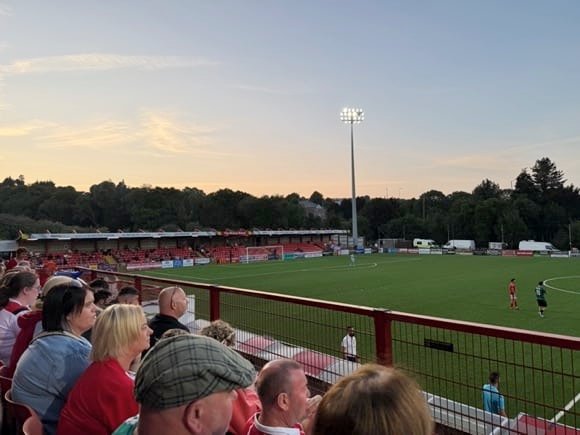
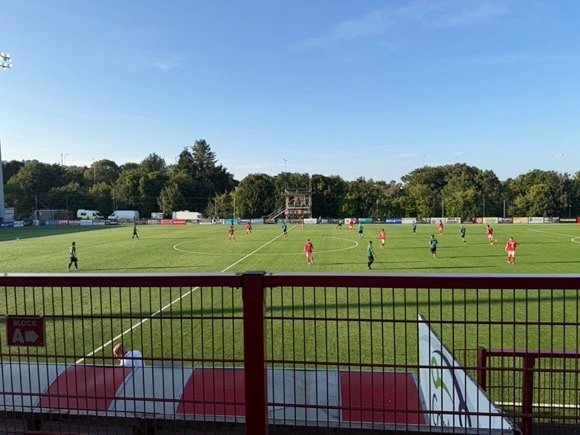
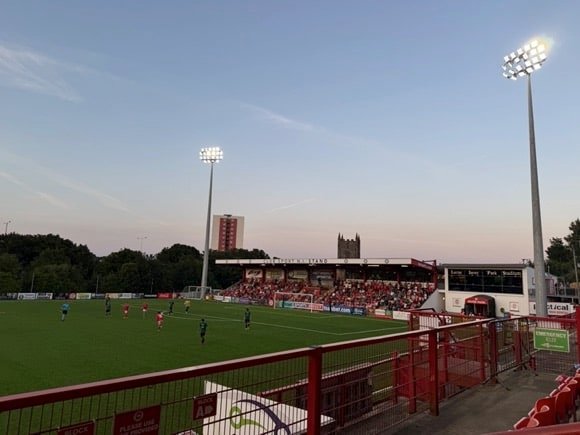
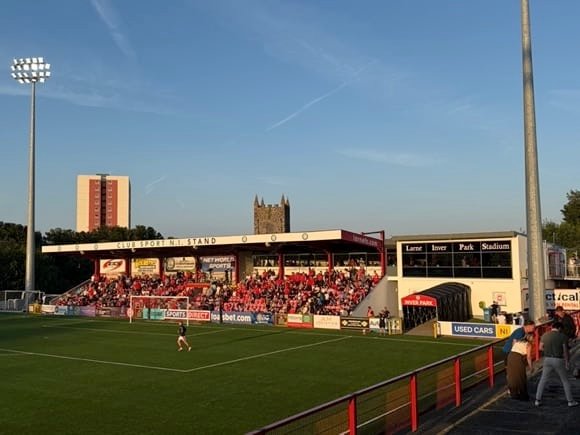
By then, that home of Inver Park had been equipped with floodlights, a new 3G pitch and new stands at each end of the pitch, not to mention a slightly revamped though not completely renovated main stand. Capacity had risen to 2,732, with 1,632 seats, average gates touching 2,000 in 2022-23 as Larne built an unbeaten run from early January 2023 to clinch a historic first league title. Without David McDaid or Ronan Hale, the Invermen relied on a strong defence and regular clean sheets from Scots goalkeeper Rohan Ferguson to see off record champions Linfield and take the crown out of Belfast for the first time since 2002.
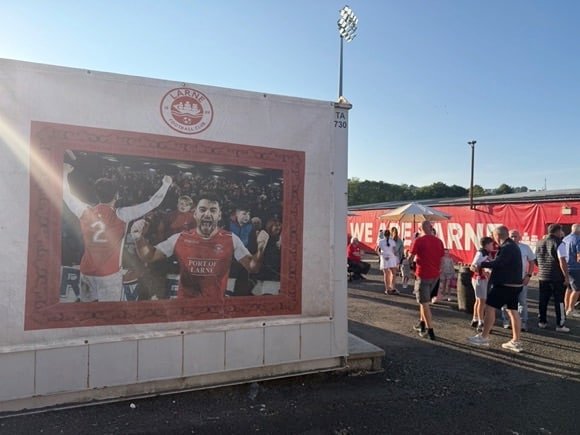
Victory had come at the cost of losing talismanic captain Jeff Hughes, seriously injured that January, though the ex-Northern Ireland international would stay at Inver Park as Head of Youth Development – 20 years after starting his senior career here. Hughes joined in the celebrations the week after the title had been sealed, coming on for the last minute of the subsequent home game when the Gibson Cup trophy would be presented.
Inver Park/Mariia Makarova
1889 Sports & Social Club/Mariia Makarova
Inver Park/Mariia Makarova
Inver Park/Mariia Makarova
Fittingly, the opposition was previously dominant Linfield, a 1-1 draw at Inver Park a fair result on the night but the significance of the moment not lost on any Larne fan singing Sweet Caroline and illuminating the darkness with their mobile. Nor was it lost on visiting supporters, knowing they no longer had a monopoly on the NIFL Premiership.
The opening goal that night had come from Andy Ryan, who had arrived halfway through the campaign, and the former Dunfermline striker would hit another 24 the following season as Larne defended their league crown. Ryan’s tireless work also kept the tie alive as Larne made their Champions League debut that summer against HJK Helsinki, an epic battle stretching to extra-time and eventual Finnish victory in the second leg at Cliftonville.
In the league, a low goals-against tally and keep Rohan Ferguson would be key to a second straight title win, not least in another gritty 1-1 draw with Linfield that all but sealed it, this time at Windsor Park. The subsequent European adventure proved to be just as dramatic as the previous one as Larne needed to overcome a 2-1 deficit at a packed Inver Park against Lincoln Red Imps of Gibraltar.
Inver Park/Mariia Makarova
Larne FC Superstore/Mariia Makarova
Inver Park/Mariia Makarova
Inver Park/Mariia Makarova
At stake was a group-stage berth, a first for any club from Northern Ireland, though it was the visitors who took the lead to stretch the aggregate. A hat-trick from Andy Ryan, two from penalties, then reversed the scoreline, the last breakaway goal at the death sending the home Church End wild. Of all the memorable occasions at Inver Park, this was surely the most magical, the scenes streamed live on the BBC.
By now, despite home ties switched to Windsor Park in a disappointing league phase, Larne were a national phenomenon, everyone’s favourite second club in Ireland, a Cinderella story with no ties to the recent polarised past. Lucrative marketing deals were cut with luxury global brands as curious football travellers began heading in this direction across the Irish Sea, reversing a decades-long trend.
But behind the scenes, there were major moves afoot. Academy players nurtured at Larne were now heading to Crystal Palace, a plus point that key backer Kenny Bruce could add to the portfolio as outside investors lined up to buy his remaining shares in the club. In the end, that 50% went to Redball Global, overseen by North American sports entrepreneurs Eric Perez and Nick Giannotti who had interests in several clubs across Europe.
Inver Park/Mariia Makarova
Larne FC match day/Mariia Makarova
Larne FC transport/Mariia Makarova
Larne FC tickets/Mariia Makarova
Manager Tiernan Lynch having already departed for Derry City, Larne eventually trailing champions Linfield by 22 poins in the NIFL Premiership by season’s end in the spring of 2025. After an unusual handover, Nathan Rooney taking over after working miracles at Bruno’s Magpies in Gibraltar only to lack the right qualifications to coach at European level, the managerial post passed to former Larne academy director Gary Haveron. The Larne-born coach had been assistant to Rooney, assuming the top job for the 2025-26 campaign.
Few expected Larne to wrest the title back from Linfield but with the champions way off the pace, Haveron’s men stayed the course to pick up a third Gibson Cup in four years. Rohan Ferguson’s defence conceded a mere 26 goals in 38 games to edge out Coleraine and embark upon a third Champions League campaign.
A plum tie with Red Star Belgrade was the reward for a routine win over Tre Fiori of San Marino, the former holders Larne’s 20th and most illustrious opponents since their European debut in 2021.
ground Guide
The field of dreams – and the story behind it
Inver Park/Mariia Makarova
Inver Park/Mariia Makarova
Inver Park/Mariia Makarova
Inver Park/Mariia Makarova
Inver Park/Mariia Makarova
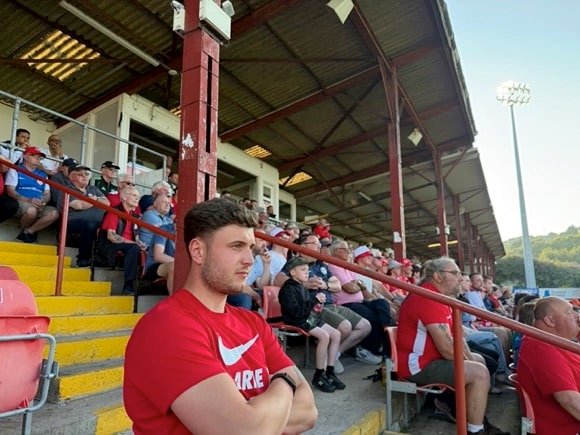
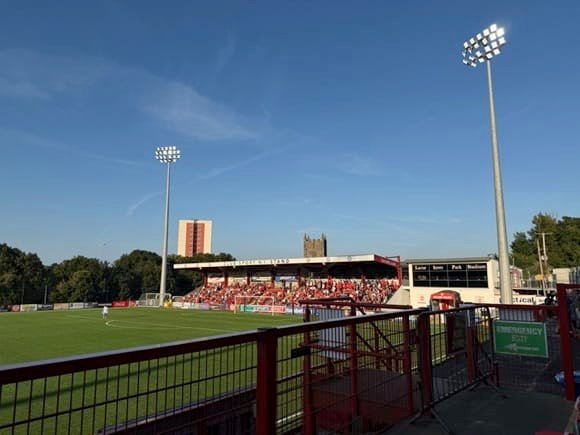
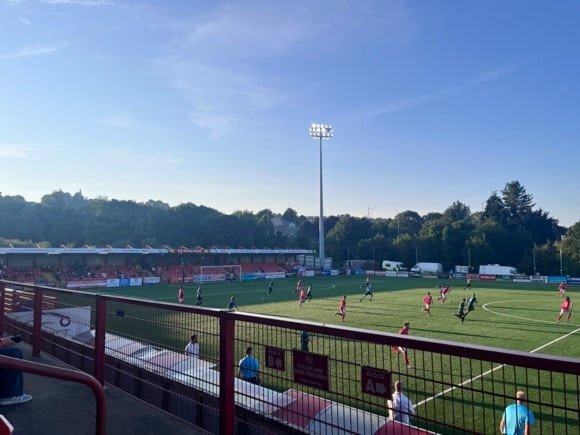
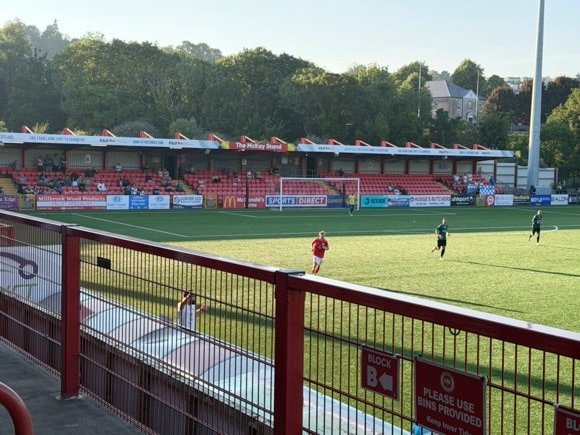
Sporting two impressive stands at the east and west ends, the stadium that Kenny Bruce rebuilt still lacks a complete Main Stand despite the £2 million-plus invested in the ground by the real-estate millionaire from 2017 onwards. The entrepreneur sold on his shares in 2025 expressing the hope that the incoming owners would be able to raise the capital or source the funding to see through the project to transform the Main Stand into a fully covered facility comprising VIP and corporate boxes, a beer garden, a car park and about a dozen rows of seating running most of the length of the pitch.
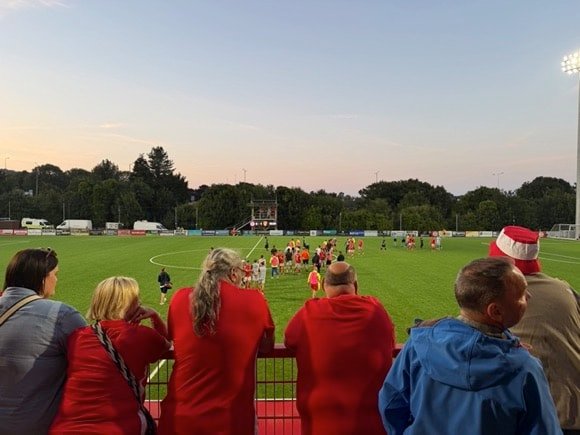
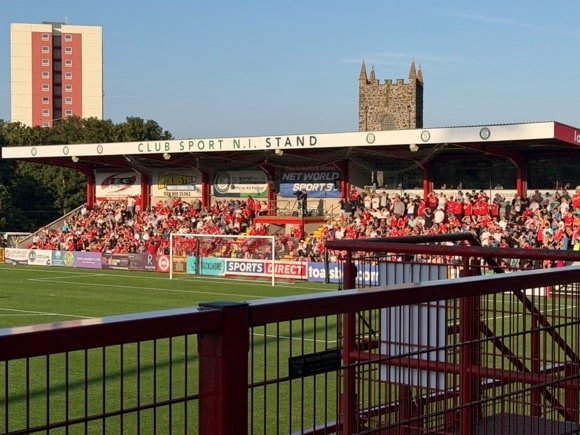
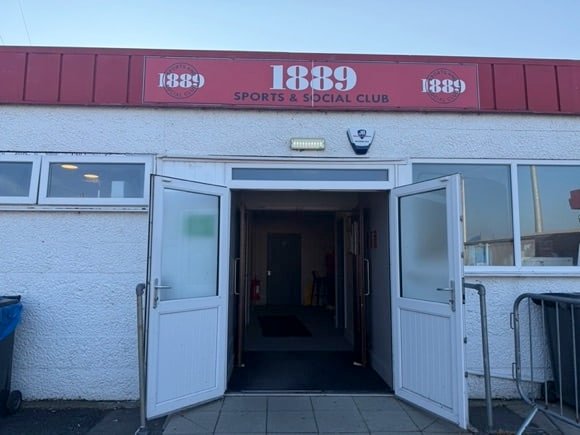
Until that happens, the Main Stand remains only partly covered, with a few hundred standing places to one side. Behind is the 1889 sports bar. Home fans gather at the Church End, aka Club Sport NI Stand, the tower of St Cedma’s Church rising above this east side of the stadium. Opposite, the McKay Stand usually accommodates visiting supporters.
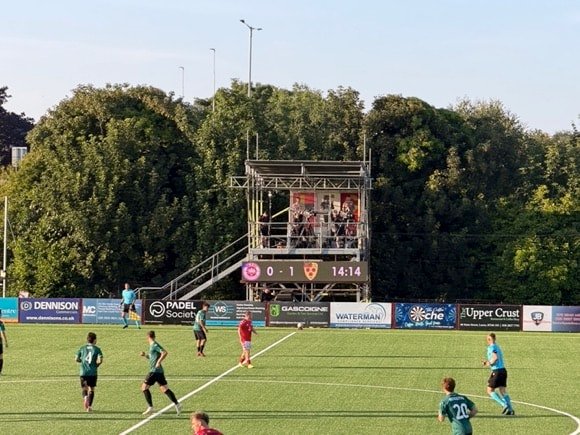
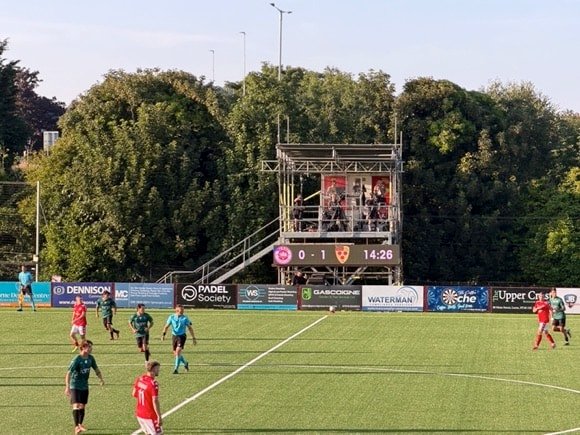
Opposite the Main Stand, alongside Church Road, is empty but for a row of trees and a TV gantry that doubles up as a scoreboard. Capacity is 2,732, with seating for 1,632 spectators.
getting here
Going to the ground – tips and timings
Larne FC transport/Mariia Makarova
Larne FC transport/Mariia Makarova
Larne FC transport/Mariia Makarova
Larne FC transport/Mariia Makarova
Larne FC transport/Mariia Makarova
Larne FC transport/Mariia Makarova
Larne FC transport/Mariia Makarova
Larne FC transport/Mariia Makarova
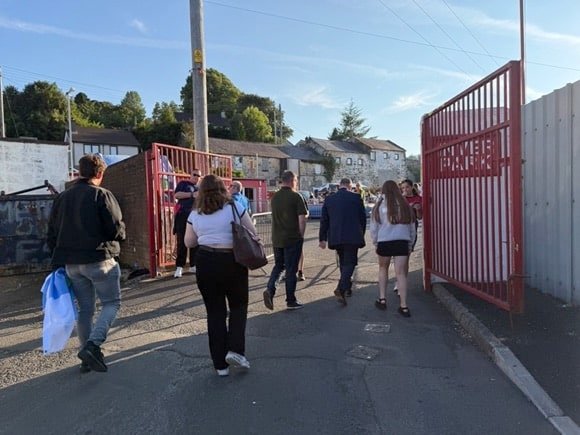
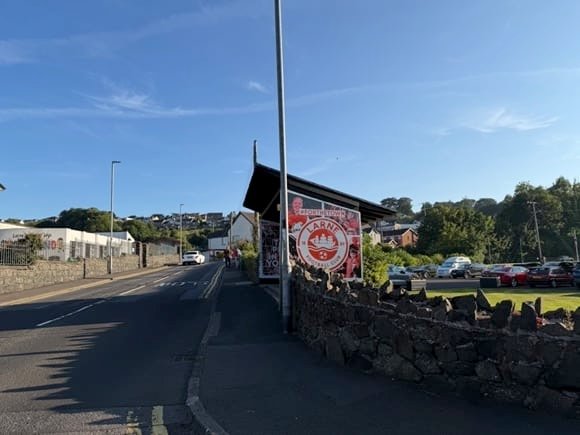
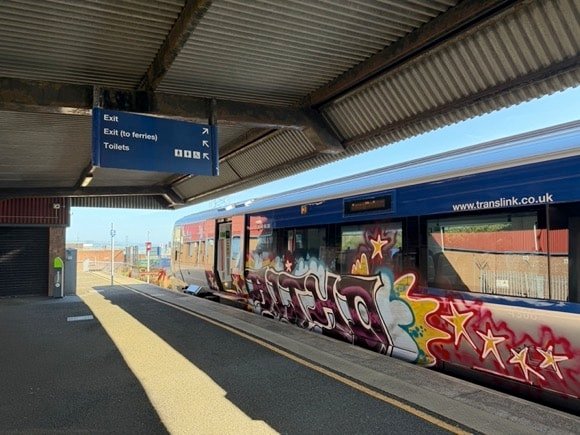
Hourly trains run from Belfast Grand Central station to Larne (town) station, journey time one hour. From there, head towards the roundabout, veer left and beneath the dual carriageway, where the road curves to the right. With a retail centre to your left, follow Station Road to the ground – it’s a 15min walk altogether.
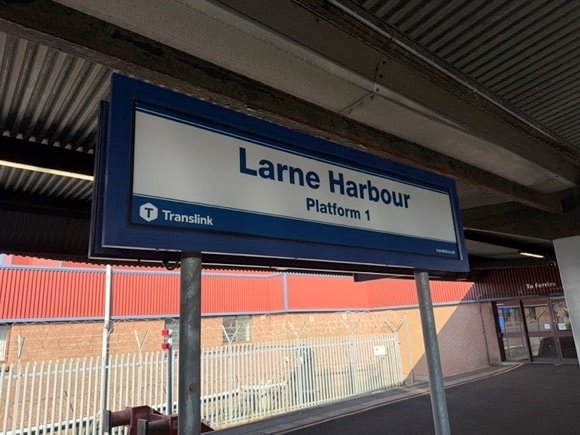
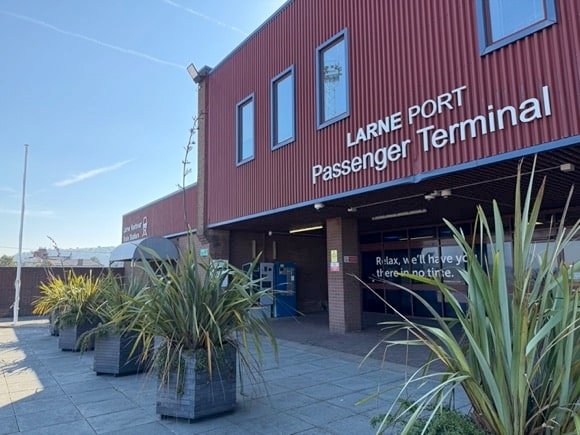
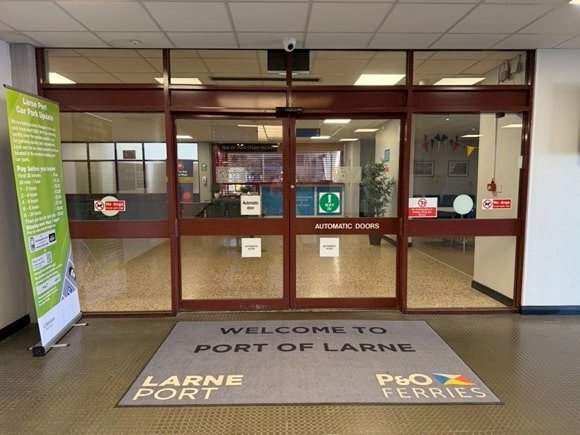
If you alight at Larne Harbour station, allow an extra 15mins or wait for the next service back to Larne town, one stop and 5mins away. The bus stop near the ground, Inver Bridge, is for the infrequent 162 route serving the nearby communities of Carnlough and Ballycastle.
Inver Park is located at 5 Inver Road, Larne BT40 3BW. There is no public parking there on match days. Free council-run car parks can be found at Inver Road (BT40 1LL) and Circular Road West (BT40 1HN).
getting in
Buying tickets – when, where, how and how much
Larne FC tickets/Mariia Makarova
Larne FC tickets/Mariia Makarova
Larne FC tickets/Mariia Makarova
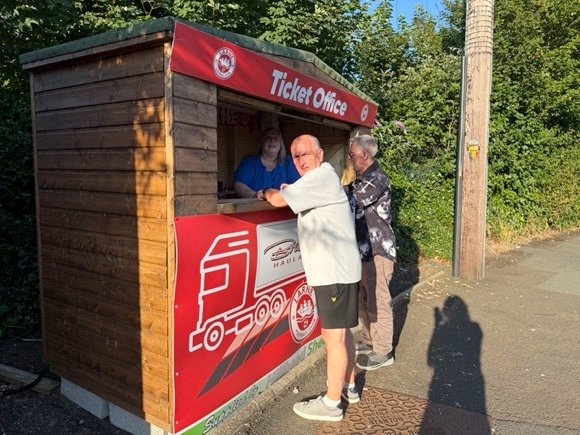
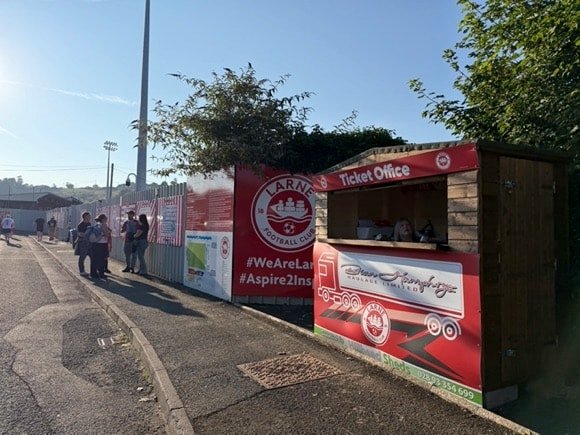
Tickets are distributed online and from the match-day kiosk outside the main entrance – only big European games and vital league matches with Linfield sell out. Standard admission is £15, £10 for over-60s and £5 for children in primary school.
what to buy
Shirts, kits, merchandise and gifts
Larne FC Superstore/Mariia Makarova
Larne FC Superstore/Mariia Makarova
Larne FC Superstore/Mariia Makarova
Larne FC Superstore/Mariia Makarova
Larne FC Superstore/Mariia Makarova
Larne FC Superstore/Mariia Makarova
Larne FC Superstore/Mariia Makarova
Larne FC Superstore/Mariia Makarova
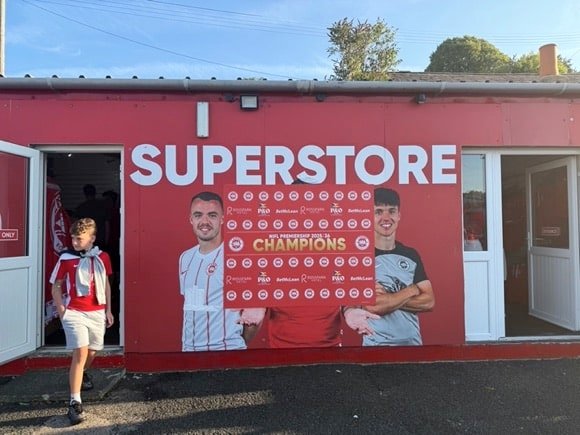
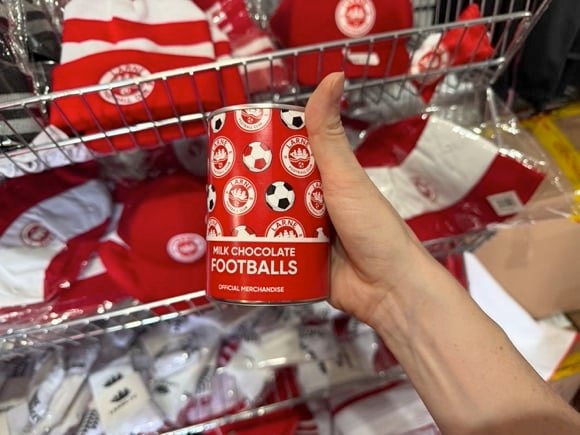
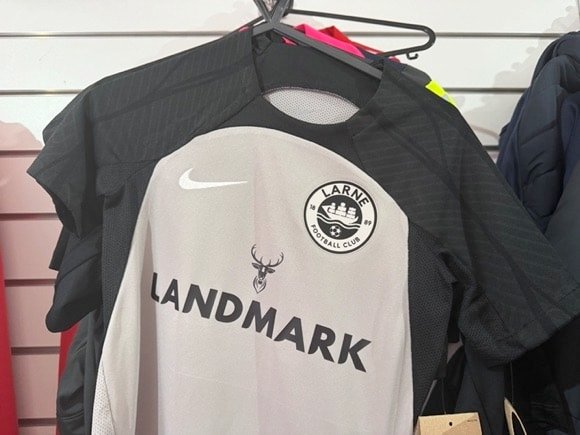
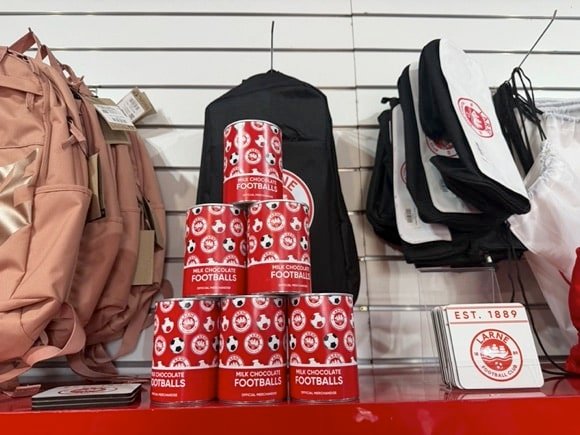
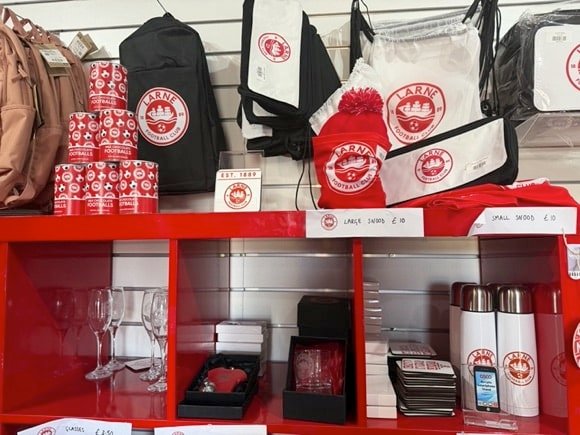
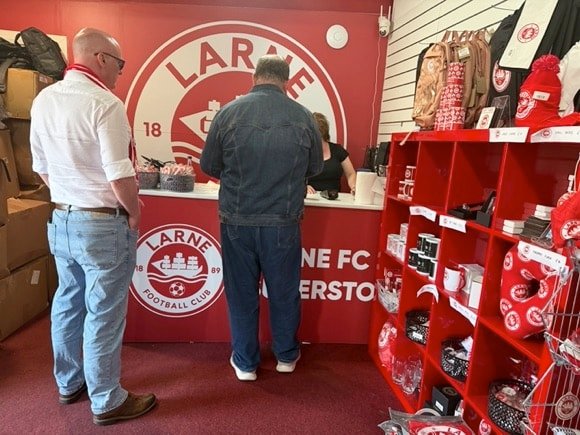
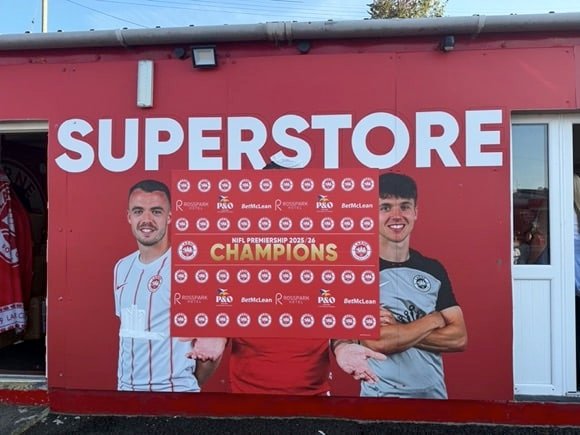
The club shop operates match day only by the Main Stand. The home shirt not only displays the sponsor’s name of P&O but the company’s classic four-colour flag, offset against the plain red of Larne FC.
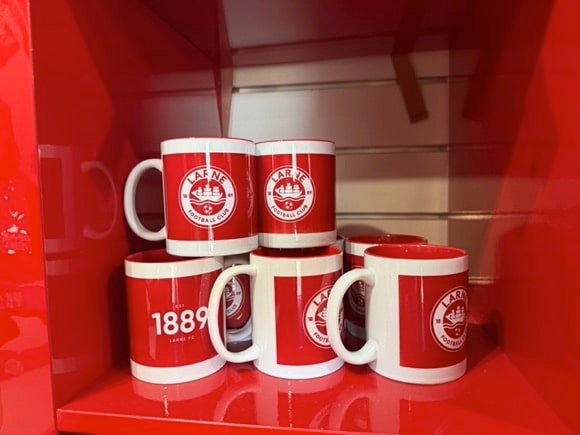
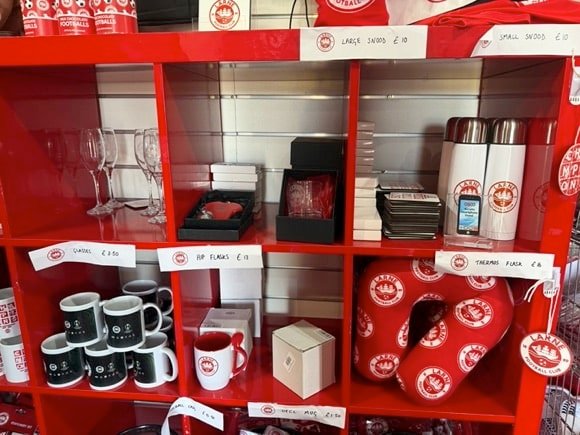
Change strip is blue, the shade changing according to season. Baseball caps, bucket hats and coffee mugs carry the Larne badge, a sailing ship framed by the club’s foundation date of 1889.
Where to Drink
Pre-match beers for fans and casual visitors
Larne FC FanZone/Mariia Makaova
1889 Sports & Social Club/Mariia Makarova
Genovate Lounge/Mariia Makarova
1889 Sports & Social Club/Mariia Makarova
1889 Sports & Social Club/Mariia Makarova
Larne FC FanZone/Mariia Makaova
1889 Sports & Social Club/Mariia Makarova
1889 Sports & Social Club/Mariia Makarova
1889 Sports & Social Club/Mariia Makarova
Genovate Lounge/Mariia Makarova
1889 Sports & Social Club/Mariia Makarova
1889 Sports & Social Club/Mariia Makarova
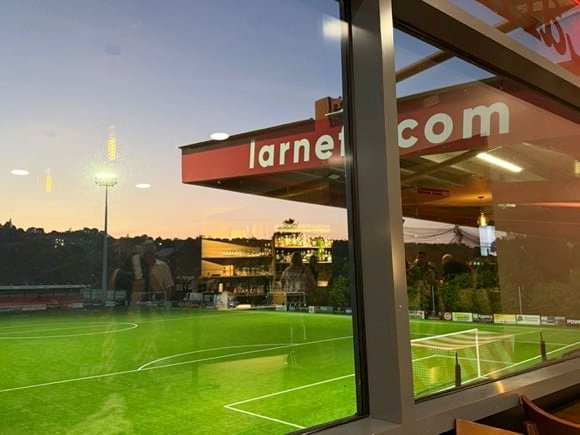
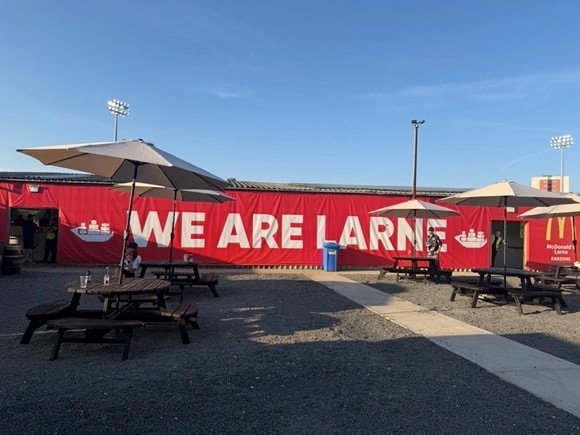
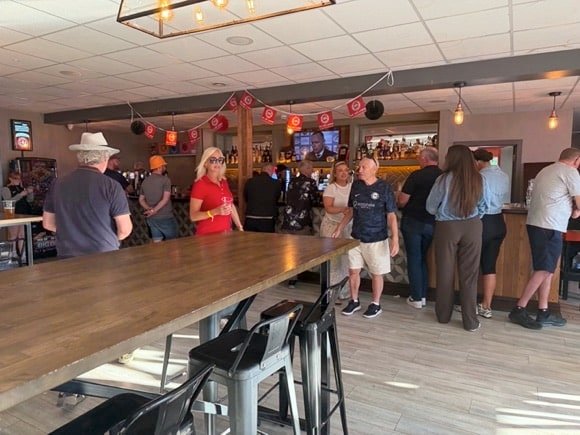
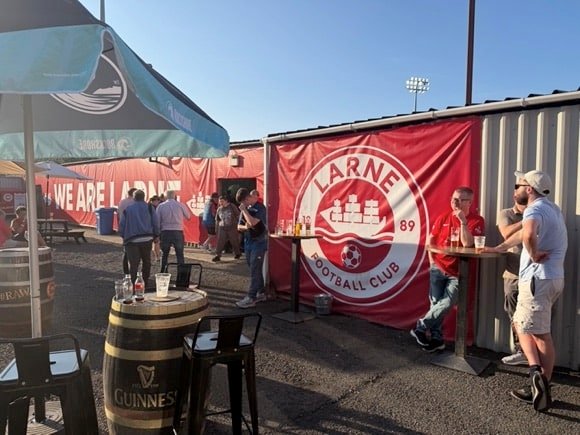
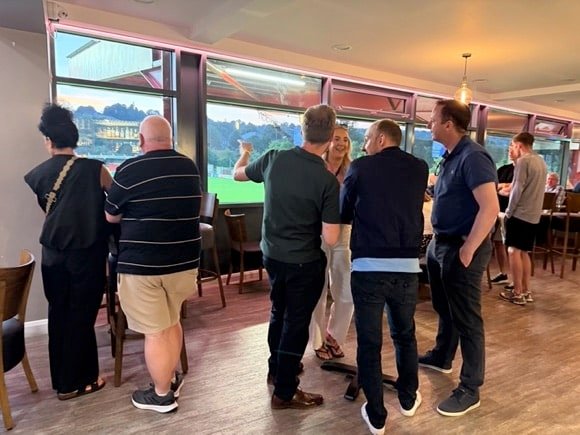
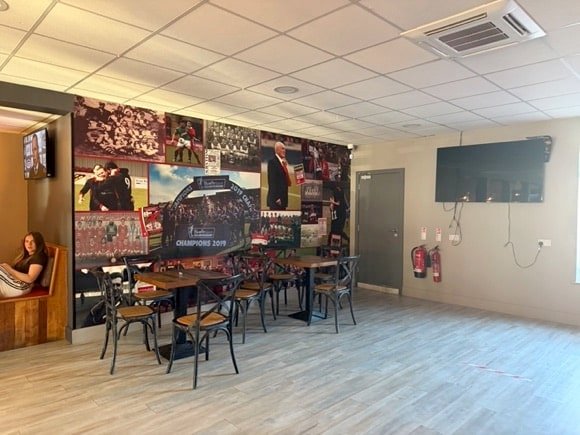
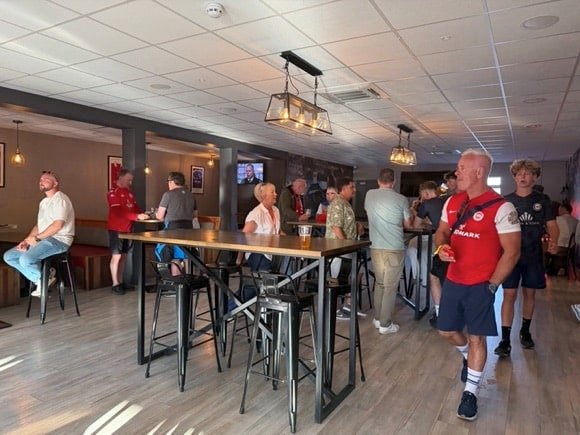
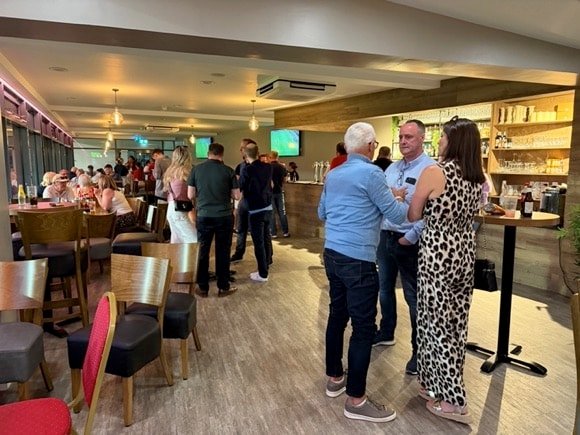
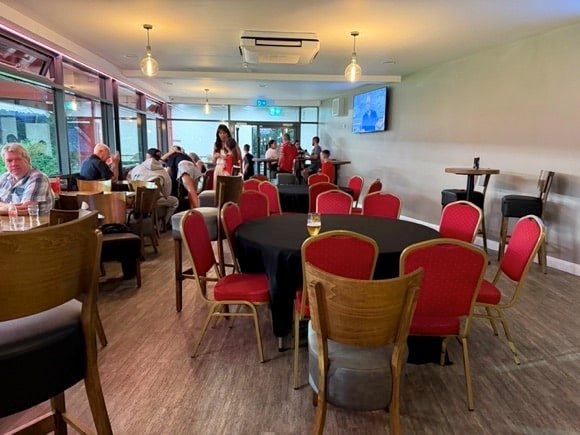
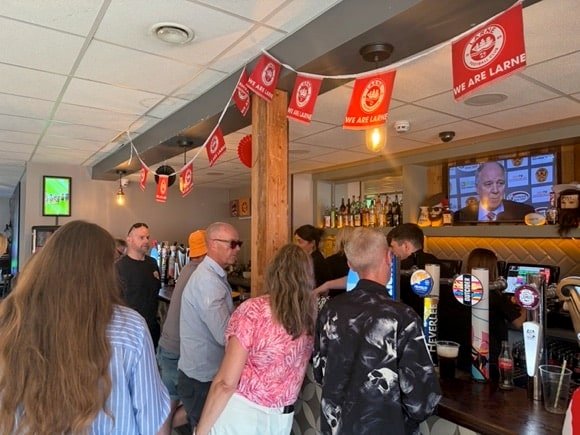
With no pubs or bars in the immediate vicinity of Inver Park, fans gather at the 1889 Sports & Social Club behind the Main Stand and the FanZone alongside. Dotted with TV screens and FC Larne iconography, the clubhouse is equipped with a long bar counter lined with a good dozen beer taps, service reasonably swift despite the constant customer traffic.
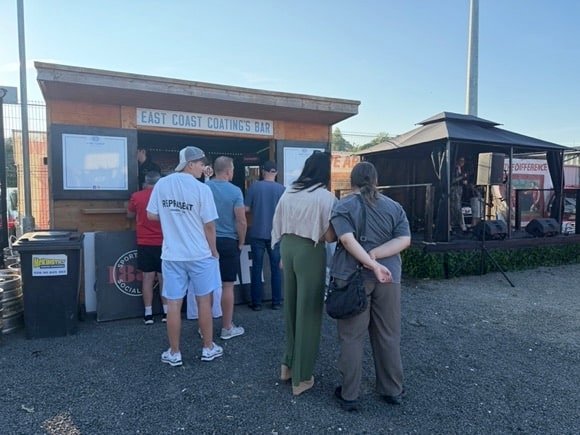
Others prefer the more informal serving huts and stand-up drinking outside in the FanZone. For most domestic fixtures, away fans can also use both venues, plus there’s fast food served on the Church Road end of the McKay Stand, near the corner flag.
When you buy your ticket online, you’ll be offered the chance to buy admission (£10) into the Genovate Lounge beside the Church End home stand. This has a perfect view of the action and a quieter bar.
We use cookies on our website to give you the most relevant experience by remembering your preferences and repeat visits. By clicking “Accept All”, you consent to the use of ALL the cookies. However, you may visit "Cookie Settings" to provide a controlled consent.
This website uses cookies to improve your experience while you navigate through the website. Out of these, the cookies that are categorized as necessary are stored on your browser as they are essential for the working of basic functionalities of the website. We also use third-party cookies that help us analyze and understand how you use this website. These cookies will be stored in your browser only with your consent. You also have the option to opt-out of these cookies. But opting out of some of these cookies may affect your browsing experience.
Necessary cookies are absolutely essential for the website to function properly. These cookies ensure basic functionalities and security features of the website, anonymously.
Cookie
Duration
Description
cookielawinfo-checkbox-analytics
11 months
This cookie is set by GDPR Cookie Consent plugin. The cookie is used to store the user consent for the cookies in the category "Analytics".
cookielawinfo-checkbox-functional
11 months
The cookie is set by GDPR cookie consent to record the user consent for the cookies in the category "Functional".
cookielawinfo-checkbox-necessary
11 months
This cookie is set by GDPR Cookie Consent plugin. The cookies is used to store the user consent for the cookies in the category "Necessary".
cookielawinfo-checkbox-others
11 months
This cookie is set by GDPR Cookie Consent plugin. The cookie is used to store the user consent for the cookies in the category "Other.
cookielawinfo-checkbox-performance
11 months
This cookie is set by GDPR Cookie Consent plugin. The cookie is used to store the user consent for the cookies in the category "Performance".
viewed_cookie_policy
11 months
The cookie is set by the GDPR Cookie Consent plugin and is used to store whether or not user has consented to the use of cookies. It does not store any personal data.
Functional cookies help to perform certain functionalities like sharing the content of the website on social media platforms, collect feedbacks, and other third-party features.
Performance cookies are used to understand and analyze the key performance indexes of the website which helps in delivering a better user experience for the visitors.
Analytical cookies are used to understand how visitors interact with the website. These cookies help provide information on metrics the number of visitors, bounce rate, traffic source, etc.
Advertisement cookies are used to provide visitors with relevant ads and marketing campaigns. These cookies track visitors across websites and collect information to provide customized ads.