AlanEdgar discovers the fan culture of Hibernians of Paola and Valletta FC
Tifos, flares and fireworks do not solely light up Serie A or the Super League in Greece. Ultra culture is alive and well and thriving on tranquil little Malta.
With one notable exception in 1980, the Maltese terraces rarely witnessed the worst excesses of the hooligan era – a visit by Leeds to Gzira the year before even gave rise to friendly choruses of Yellow Submarine in reference to the visitors’ kit.
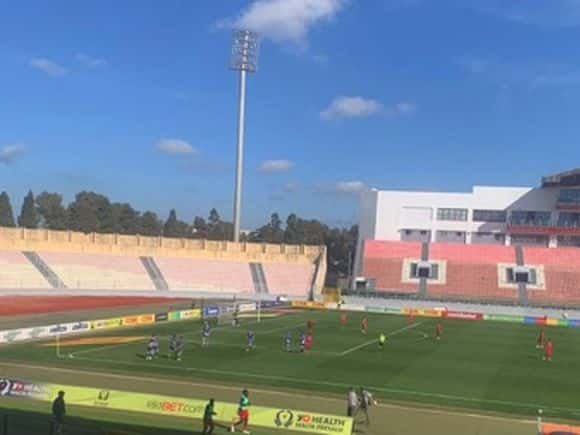
Leaving behind its infamous sandy surface soon afterwards, now long abandoned and the subject of a decades-long ownership dispute between wealthy local dynasties, the Malta FA relocated domestic football to parkland near the medieval fortifications of Mdina. Built around a grass pitch in 1981, the Ta’ Qali National Stadium sits in the heart of Malta, the main island barely nine miles wide.
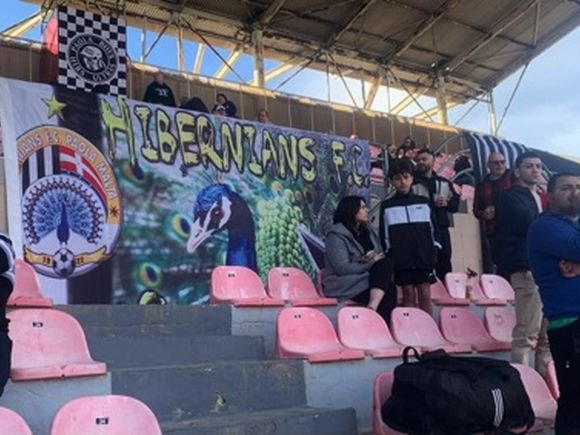
The proud Peacocks of Paola/Alan Edgar
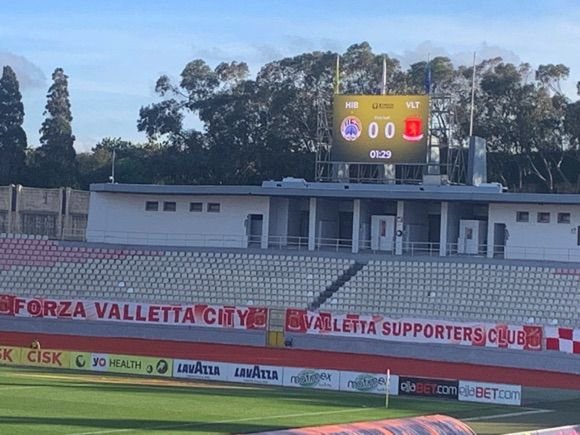
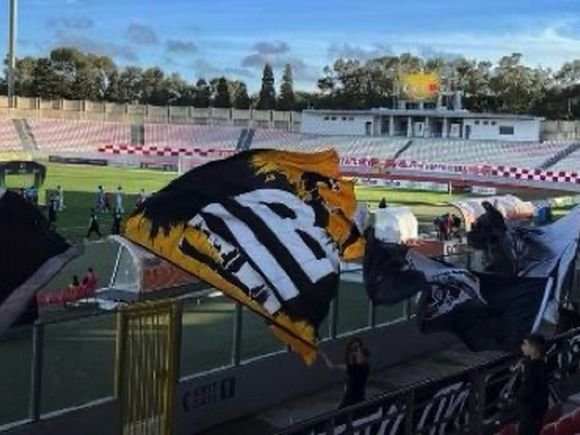
Valletta FC fans set out their stall/Alan Edgar
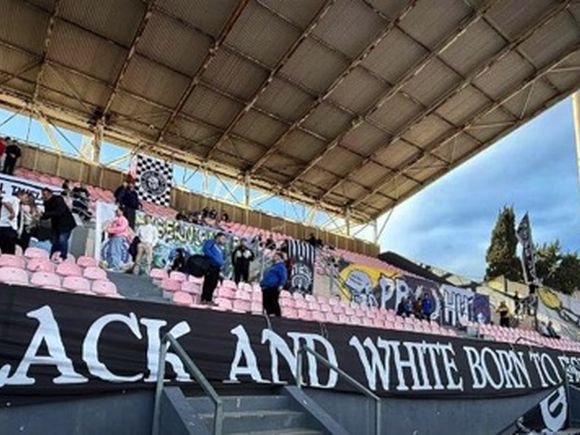
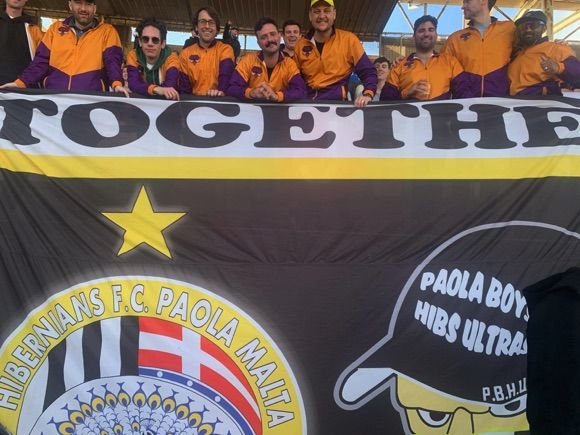
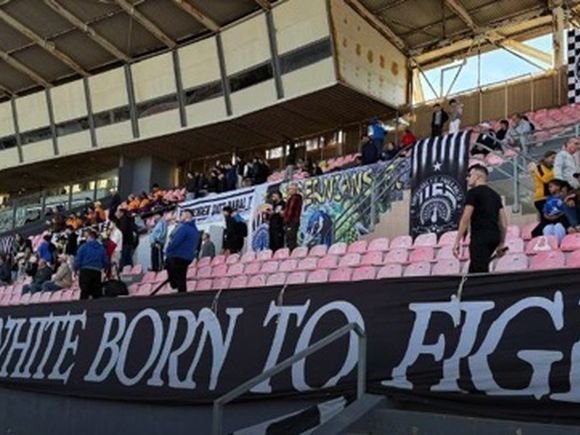
Paola Boys spell it out in black and white/Alan Edgar
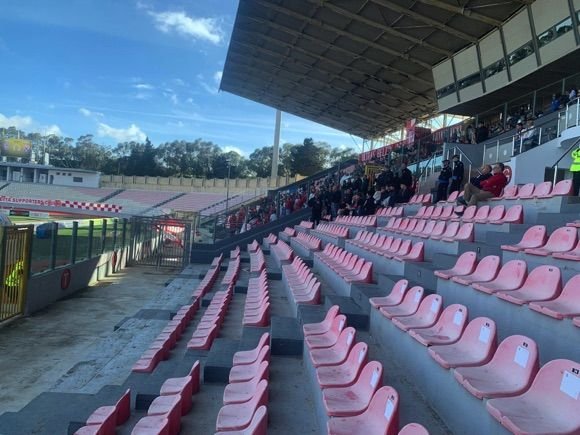
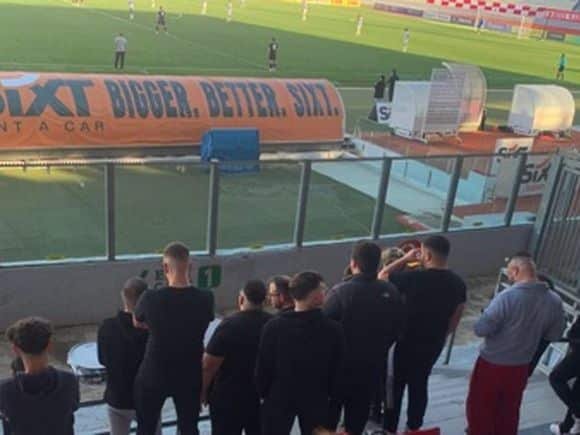
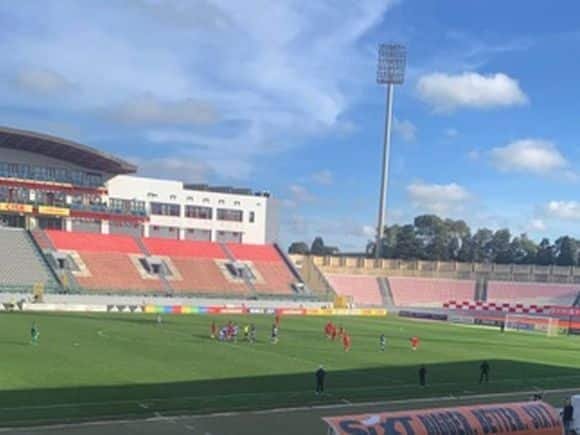
Strict segregation at the Ta'Qali National Stadium/Alan Edgar
This is where most domestic fixtures in the Maltese Premier League take place, an elite division comprising just 12 teams. No wonder then, that the numerous derbies and centrally located groundshare have allowed rivalries to develop rapidly. Saturday afternoon double-headers are a regular occurrence, an example of which occurred on the final day of February, when the 2pm kick-off pitted the nearby town of Mosta against the small south-eastern fishing village of Marsaxlokk.
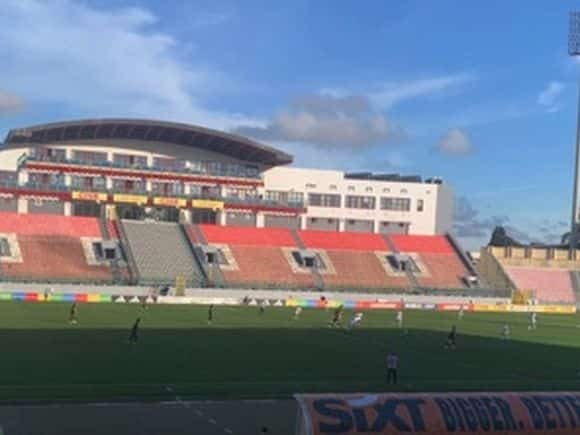
The spectators, who numbered 287 in a ground with a capacity of 17,000, were securely segregated at each end of the one side of the stadium that was open to the public. The match proceeded peacefully with ultra culture not particularly visible or audible – indeed, the most obvious display of community came from our group of 14 spectators from the UK all attired in our cricket-tour jackets.
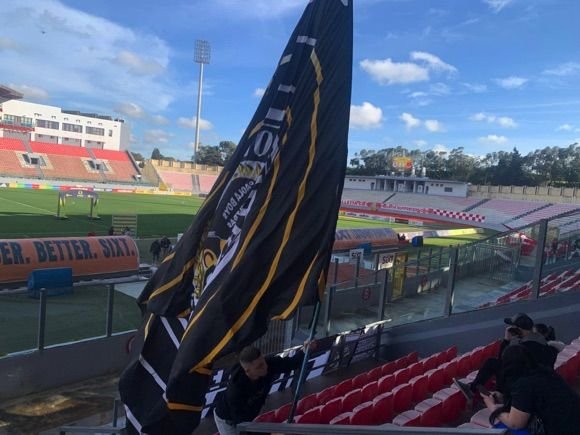
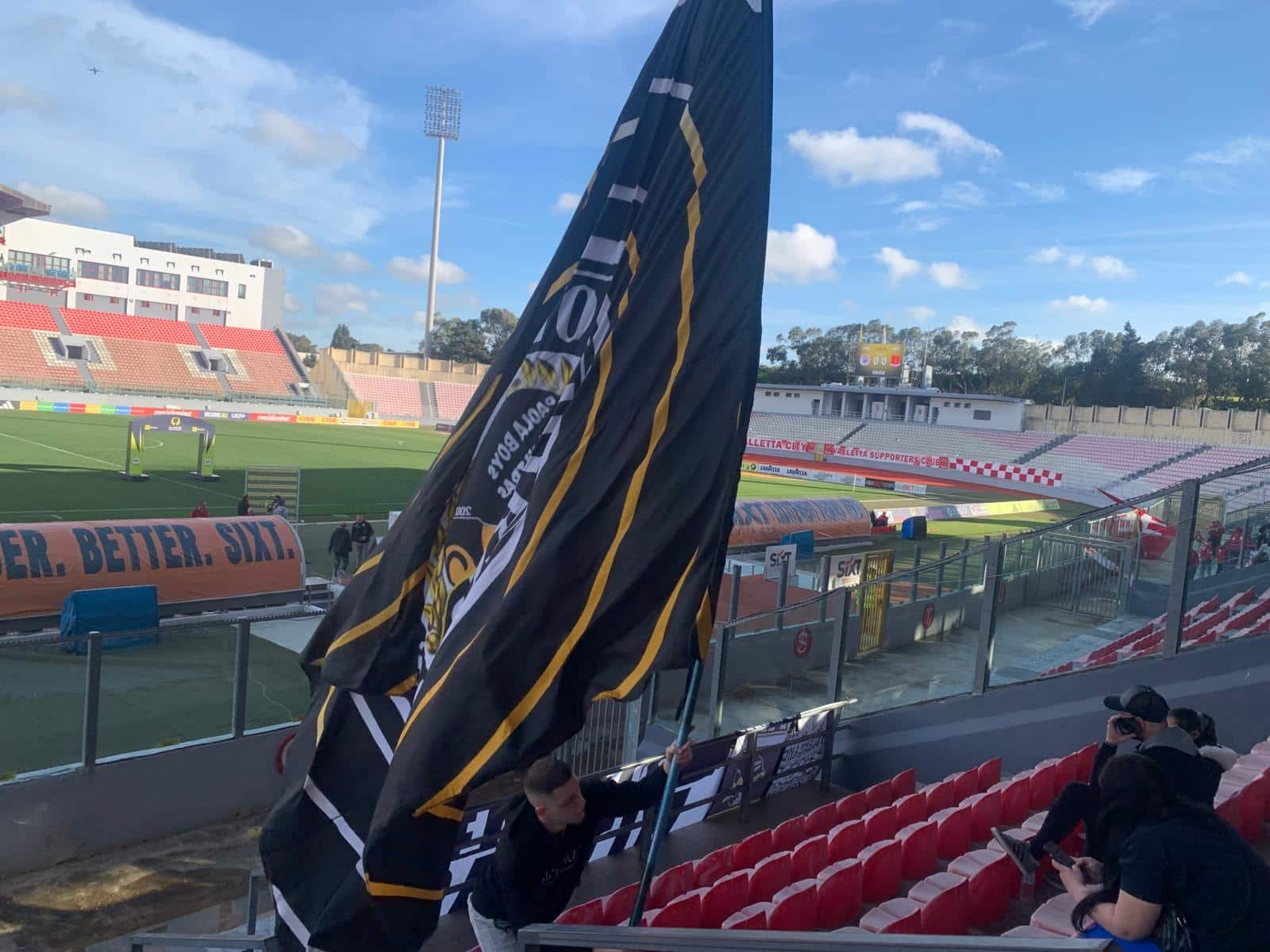
If we were wondering why armed police were deemed necessary both outside and inside the stadium, we would get our answer halfway through the second half. This was when followers of the clubs involved in the later fixture began wandering in to start setting out their emblems of support for Hibernians or Valletta.
Flying the flag for Hibernians FC/Alan Edgar
'...and today's attendance is 287'/Alan Edgar
Ta' Qali National Stadium/Alan Edgar
Paola Boys smile in solidarity/Alan Edgar
With 38 league titles between them, most recently in 2022 and 2019 respectively, these two teams have a broader fan base than most of their rivals. Paola Boys Hibs Ultras (PBHU) were formed around two decades ago, a couple of years after the White Warriors of Valletta.
Ultras are seldom keen on being photographed, but usually happy to talk, and one of the PBHU was keen to highlight the community spirit that their group fosters, starting from the lunchtime match-day meeting at the otherwise innocuous corner snack bar Paramount in the port area of Paola. Then comes the supporters’ bus and the 15-minute drive to the stadium, before the pre-match preparation ritual of brandishing the Hibernians banners in their sector.
While English is the language of most terrace chants, often using tunes familiar to UK spectators, the proximity of Malta to Italy, both geographically and culturally, was emphasised soon after PBHU’s formation. Paola, Malta, became twinned with its namesake on the south-western coast of southern Italy, near Cosenza. Hibernians fans headed across the Med to exchange club motifs with their counterpart organisation, the Boys Paola who follow US Paolana.
They are not averse to adversarial, perhaps antagonistic actions, such as the huge tifo displayed in 2024 celebrating the demise of bitter rivals Valletta, relegated for the first time in the history of the Lilywhites.
Ta' Qali National Stadium/Alan Edgar
Following the Peacocks/Alan Edgar
Ta' Qali National Stadium/Alan Edgar
Pre-match warm-up with the Paola Boys/Alan Edgar
For their part, the main issue currently concerning the White Warriors is one that they believe is hazardous from a health and safety perspective, namely the failure of the MFA to remove the fence spikes designed to prevent spectators entering the playing area after some supporters had been injured.
They are perhaps encouraged by the fact that the MFA has recently formalised their interactions with supporter organisations of the national team, such as Ultras Malta and the South End Core, by signing a Memorandum of Understanding that will prioritise the fan experience for Malta’s home game with Luxembourg in the Nations League play-off on March 26.
Malta’s aim to achieve their first promotion in the tournament, from League D to League C, took a blow with a 2-0 defeat at the Ta’ Qali – but the pre-match discussions were a clear indication of the increasing importance of organised fan groups in the country.
It’s a pleasing counterpoint to the excesses of commercialisation evident in the higher echelons of more prestigious leagues, without demeaning fans’ key role in their local social scene.
We use cookies on our website to give you the most relevant experience by remembering your preferences and repeat visits. By clicking “Accept All”, you consent to the use of ALL the cookies. However, you may visit "Cookie Settings" to provide a controlled consent.
This website uses cookies to improve your experience while you navigate through the website. Out of these, the cookies that are categorized as necessary are stored on your browser as they are essential for the working of basic functionalities of the website. We also use third-party cookies that help us analyze and understand how you use this website. These cookies will be stored in your browser only with your consent. You also have the option to opt-out of these cookies. But opting out of some of these cookies may affect your browsing experience.
Necessary cookies are absolutely essential for the website to function properly. These cookies ensure basic functionalities and security features of the website, anonymously.
Cookie
Duration
Description
cookielawinfo-checkbox-analytics
11 months
This cookie is set by GDPR Cookie Consent plugin. The cookie is used to store the user consent for the cookies in the category "Analytics".
cookielawinfo-checkbox-functional
11 months
The cookie is set by GDPR cookie consent to record the user consent for the cookies in the category "Functional".
cookielawinfo-checkbox-necessary
11 months
This cookie is set by GDPR Cookie Consent plugin. The cookies is used to store the user consent for the cookies in the category "Necessary".
cookielawinfo-checkbox-others
11 months
This cookie is set by GDPR Cookie Consent plugin. The cookie is used to store the user consent for the cookies in the category "Other.
cookielawinfo-checkbox-performance
11 months
This cookie is set by GDPR Cookie Consent plugin. The cookie is used to store the user consent for the cookies in the category "Performance".
viewed_cookie_policy
11 months
The cookie is set by the GDPR Cookie Consent plugin and is used to store whether or not user has consented to the use of cookies. It does not store any personal data.
Functional cookies help to perform certain functionalities like sharing the content of the website on social media platforms, collect feedbacks, and other third-party features.
Performance cookies are used to understand and analyze the key performance indexes of the website which helps in delivering a better user experience for the visitors.
Analytical cookies are used to understand how visitors interact with the website. These cookies help provide information on metrics the number of visitors, bounce rate, traffic source, etc.
Advertisement cookies are used to provide visitors with relevant ads and marketing campaigns. These cookies track visitors across websites and collect information to provide customized ads.