Alan Deamer finds that five into four may work perfectly for future table-toppers
Will 2026 see the long-awaited reform of Germany’s Regionalliga? Following fan pressure and club solidarity, an upcoming meeting of the DFB in January might just put the wheels in motion to streamline the regionalised fourth tier and usher in automatic promotion for all.
For far too long a league of heartbreak and frustration, the Regionalliga comprises five divisions, with just two winners currently guaranteed an automatic berth to the nationwide 3. Liga.
Only those topping the Südwest and West tables go straight up. For the North, North East and Bavaria, the promotion spot rotates, while the other two winners are forced into a lottery-like play-off. The result: you could steamroller your way through the regular campaign, break every record and still walk away empty-handed.
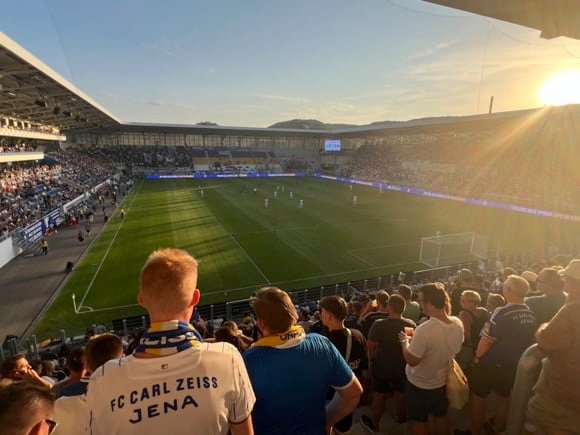
The system is particularly harsh on former giants of the GDR who fill the 18-team Regionalliga Nordost. Take Lokomotive Leipzig. After winning the division in 2020, they drew twice against SC Verl in the play-offs and were denied promotion on away goals.
Fast forward five years, and another strong season ended in heartbreak with an extra-time loss to TSV Havelse. Energie Cottbus felt the sting too, missing out in 2023 after losing their play-off to Unterhaching by the narrowest of margins.
For fans, this is excruciating: a long trek ends with an entire season erased because of a single unlucky draw. If that wasn’t enough, supporters have long resented the presence of reserve teams in the Regionalliga. Hoffenheim II, Bayern II and other U23 sides arrive with no history to defend and no future to fear.
The football may be tidy, but it is development-led, incentive-light and played in front of half-empty stands – a poor substitute for rivalry, consequence and noise. Fans want real rivalry, meaningful matches and passion, not contests shaped by development targets.
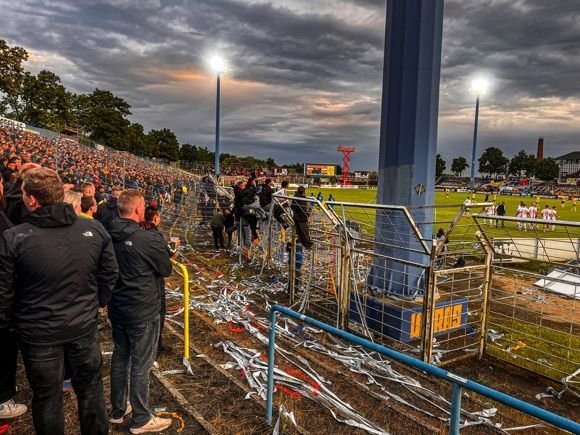
Clubs such as Weiche Flensburg 08, VfB Lübeck and Eintracht Norderstedt have spoken out: champions should be promoted and amateur clubs must be respected in any reform. Flensburg have experienced the pain first-hand, losing in the 2018 play-offs despite topping the table.
Sporting director of VfB Lübeck, Sebastian Harms, summed it up: “Standards help. Creating a fair, stable league structure benefits everyone. But it must also be manageable for Regionalliga clubs”. And Norderstedt’s Frank Spitzer adds a crucial fan perspective: any reform must have broad buy-in, so no side feels railroaded by bigger clubs with deep pockets or professional academies.
In early 2025, 17 of the 18 Regionalliga Nordost clubs formed Aufstiegsreform 2025, a movement demanding a fairer promotion system. Their motto: “Meister müssen aufsteigen!” – Champions Must Be Promoted! Suddenly, what started as a regional complaint became a nationwide push. Clubs from other Regionalligas and even some professional teams from the Bundesliga joined in solidarity.

The DFB responded by forming a 13-member working group to examine reform. Tommy Haeder of Chemnitzer FC emerged as the voice of reform inside the DFB, helping the push for structural changes.
The proposed solution? Reduce Germany’s five regional divisions to four – North, East, South, and West – with 20 teams each, and guaranteed direct promotion for all four champions. No more ludicrous rotational lottery. No more play-offs that can crush a season’s effort. Finally, champions can feel the benefit.
Yes, the league would shrink from 90 teams to 80, and yes, travel logistics might increase slightly. But the upside would be packed stadiums witnessing meaningful matches between true competitors, also engaging TV viewers.

Currently, there are 19 second teams competing in the Regionalliga. Many reform proposals, including that of Holstein Kiel president Steffen Schneekloth, suggest a professionalised fourth tier, and a separate league for U23 teams. Fans would finally get the drama they deserve and today’s amateur clubs would not be pushed aside by professional academies.
Clubs could then plan long-term, attracting sponsors and invest ingin youth development without gambling an entire season on one play-off tie. The aim is to implement this fundamental reform by 2027-28.
For the first time in decades, match days might actually feel like match days again. After far too many cruel twists of fate, a season in the Regionalliga would finally reward perseverance between July and May.