Mark Burgess tells Colin Young the saga of a strange seafaring league
Winning the league has never been easy, whichever the era and wherever the home ground. Especially if the action began during the Great Depression across the bitter, raging North Sea…
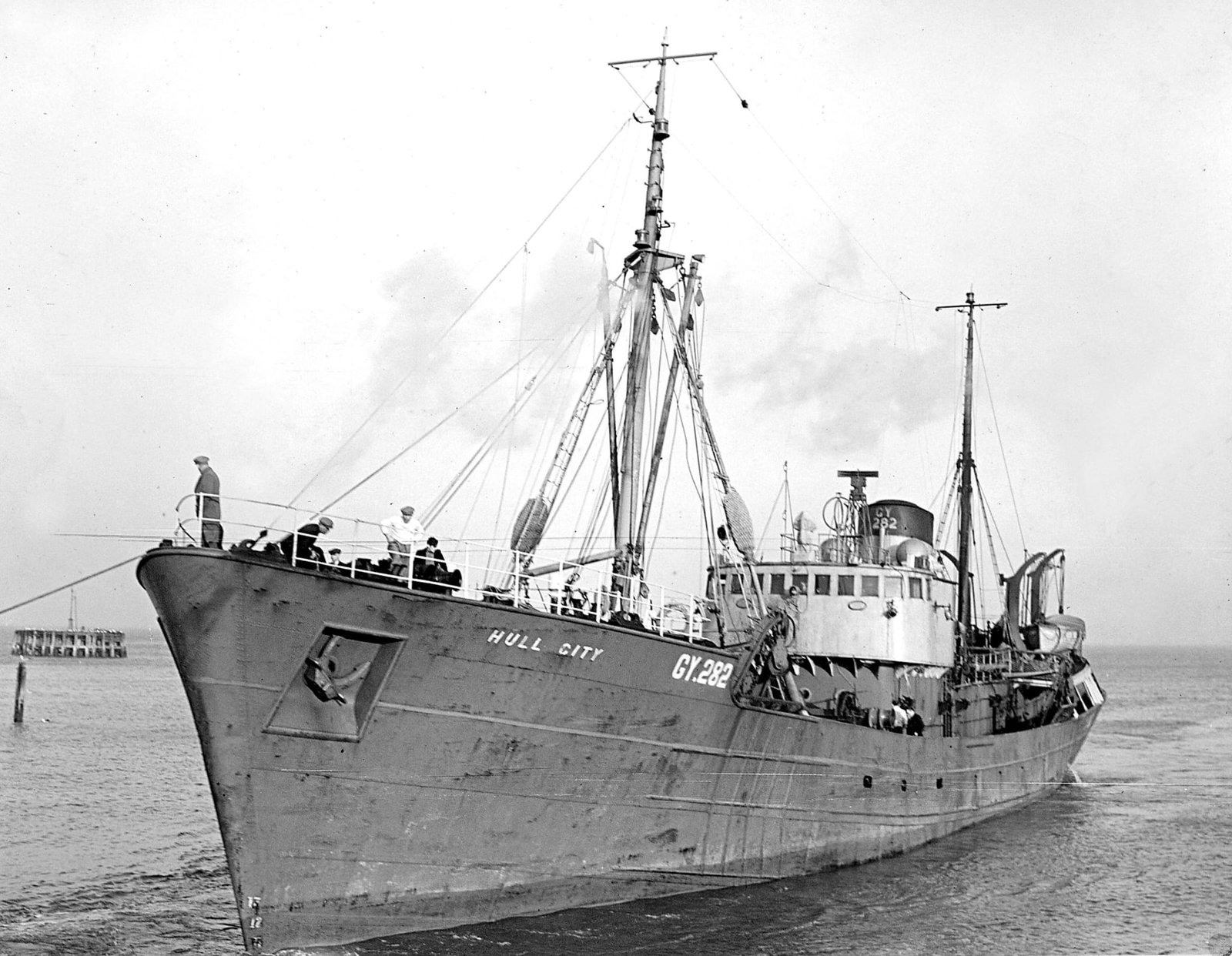
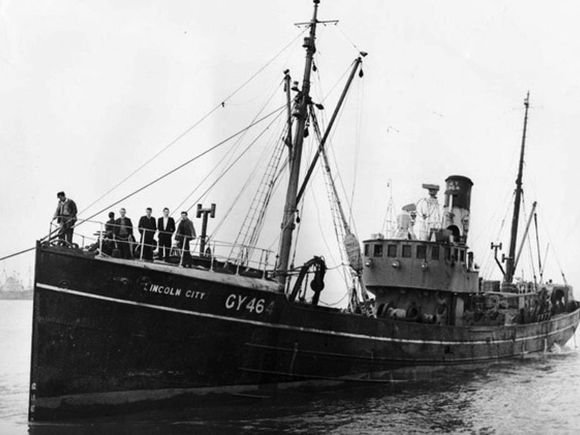
In a bid to increase competition between the fishing trawlers leaving Grimsby’s docks, Consolidated Fisheries created its own league table in the 1930s. Eventually, there would be 30 football trawlers – 29 named after the best teams in England and one from Europe.
The captain and his crew would have no particular affiliation to their ship’s name. They were simply given the moniker and went out to sea. Throughout the fishing season, they’d represent their club. The trawler team that caught the most fish over the course of the campaign won the league.
How do we know all this?
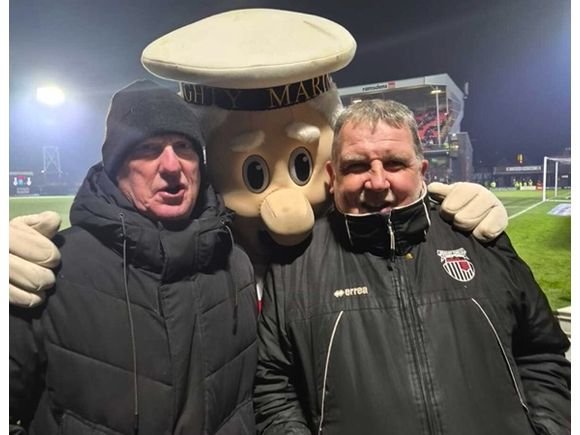
Because Mark Burgess, the friendly welcoming face and volunteer in Grimsby Town’s press room, has researched the Grimsby football trawlers for many years. His ambition is to write a book and tell the tales of the trawlers who ruled the waves and the league tables.
“I’m Grimsby born and bred,” says Mark, whose father Derek served on The Wolverhampton Wanderers and whose grandfather was skipper of the famous Humber dredger, The Cherry Sand. “Fishing has always been big in this town and there are many books about the industry but none about the trawlers named after football teams.”
“So I began to looking into it and there are so many stories… I didn’t realise what road it was going to take me down.”
“When the league first started in the 1930s they commissioned five, at a cost of £100,000, and then over the years, they kept adding to the fleet. The skippers were given random names. And there was no Man United or Liverpool because they weren’t good enough back in the day. It was made up of the top English teams at the time – plus Real Madrid.”
“Their names weren’t necessarily tied to the sea or the city but a lot of the clubs actually adopted some of the trawlers, like The Leicester City. Their fans and players’ wives used to knit clothing for her crew.”
“Some of the trawlers served in World War II. Some were minesweepers and three were at Dunkirk. Seven in all were lost during the conflict.”
“The Arsenal was sunk in the Clyde and The Sheffield Wednesday was mined by a Spanish saboteur frogmen at Gibraltar. I found so many interesting stories – like the skipper of The Stoke City who went down to visit a school in Stoke to hand out swimming badges to the kids.”
“The one thing I haven’t been able to find is the actually league tables. I discovered that The Leicester City won it once but after that I can’t find any leagues just tales of the demise of the trawlers over the years.”
The idea of naming a fleet after successful football teams belonged to John Marsden, later knighted for his services to the shipping industry, who introduced the concept to Consolidated Fisheries in July 1933.
Only the top-flight clubs – those playing in the then First Division – were initially honoured. The Arsenal was the first put into operation a month later, quickly followed by The Aston Villa and then The Derby County which was built in Middlesbrough by Smith’s Dock at a cost of £19,864.
By the time the last vessel, The Blackburn Rovers II, was launched in 1962, there were 29 different English League teams, plus The Real Madrid which was added to the fleet a year earlier.
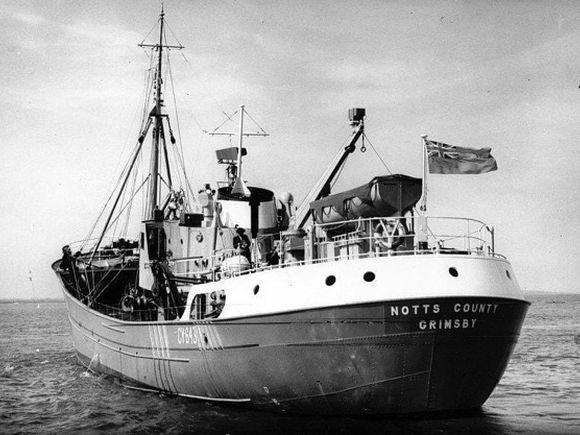
The Notts Forest endured a rather stormy passage after its launch in 1960 when the club’s chairman complained to Consolidated Fisheries that “Our abbreviated title is incorrect… it should be The Nottm Forest.” The protest went unheeded.
No great surprise then that the vessel suffered after making waves and was caught in severe gales, provoked a strike, was banned from Icelandic waters, suffered a mutiny and spent most of its time languishing in dry-dock.
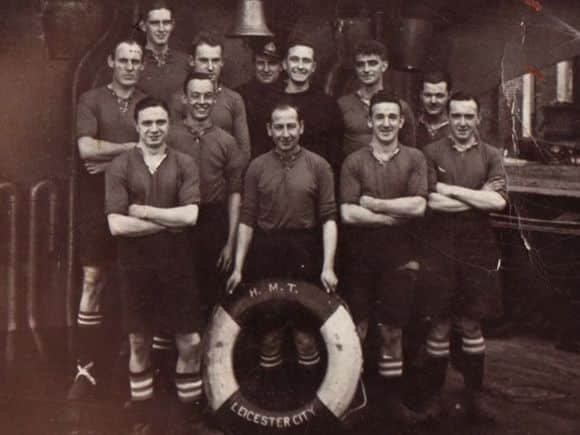
One rich source of detail for Mark’s Trawling Tales was a legend of the town, Jim Hodson, who had served on the seas from a very young age and lived in a nursing home until his death in 2020. Mark was a regular visitor until Covid struck and Jim died at the age of 90.
“He was a character-and-a-half,” says Mark. “He was just like Uncle Albert from Only Fools and Horses. He’d worked all over the world and he had all these amazing stories.”
“Jim told me that he was a spy for the government and they gave him a posh camera to take photographs when he was out at sea and he said that as soon as he got into port, someone would come and collect his films. How true it is, I don’t know, but that’s what he told me and why would he lie?”
“The Hodsons were a famous fishing dynasty in this town and I’d go to his house to talk to him because I looked after him before he went into the home. He was actually born on the same day as me but there was 40 years difference between us.”
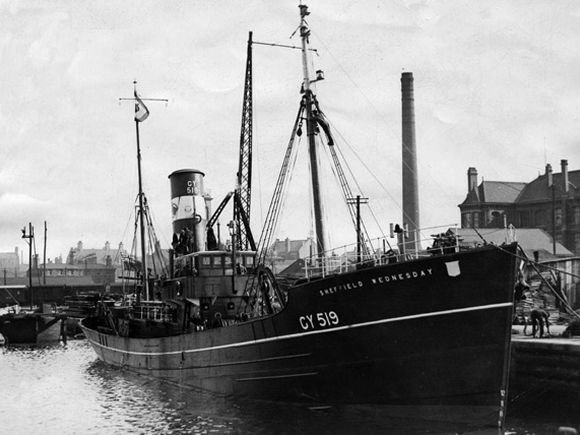
“He talked about the Cod Wars and the real battles they used to have at sea. I’ve had many skippers telling me the Icelandic Navy would regularly shoot at the English ships and trawlers.”
A couple were hits and after the Cod Wars, UK fishing declined, leading to the demise of proud seaside towns like Grimsby and nearby Cleethorpes.
“Some ships became support vessels for the oil rigs down in Lowestoft. Others were decommissioned, scrapped or sold on to the Far East. Parts are spread out across the globe. The bell of The Aston Villa has its own resting place in a park in Stockholm. I don’t think there are many Football League trawlers about now, sadly.”
Lifelong Mariners fans and father of three Mark has been the welcoming face in the Blundell Park press room for the last ten years. And he’s had a busy season. David Artell’s Grimsby Town beat Manchester United in the League Cup in August. They play Wolverhampton Wanderers in the Fourth Round of the FA Cup on February 15.
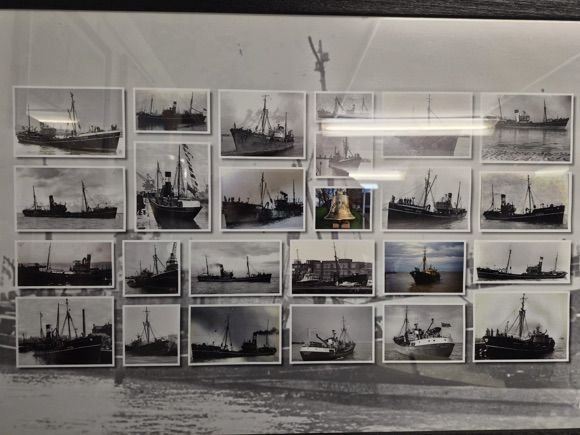
The 10,000-seater Blundell Park will be full, as will the press box and media hut, tucked away in a corner of the ground from the Matt Tees Lounge where Mark will be serving Bovril, quarter-cut sandwiches, shortbread and ginger biscuits.
On the walls, signed photos and programme covers feature ex-players, managers and the odd media pundit. And in one large picture frame is a photo montage of the Football League trawlers – and bell of The Grimsby Town.
As well as seeing his hard work and research going into print eventually, Mark has one personal ambition he’d like to fulfil as a Mariners fan. Somewhere in the bowels of his beloved Blundell Park – the club’s home since 1898 – there is that Grimsby Town trawler bell. And he is determined to find it.
Reveals Mark: “It’s somewhere in storage in the ground and I’d love to put it in the players’ tunnel, so the Grimsby skipper can ring it three times before every home game, in memory of all the mariners who died at sea over the years”.