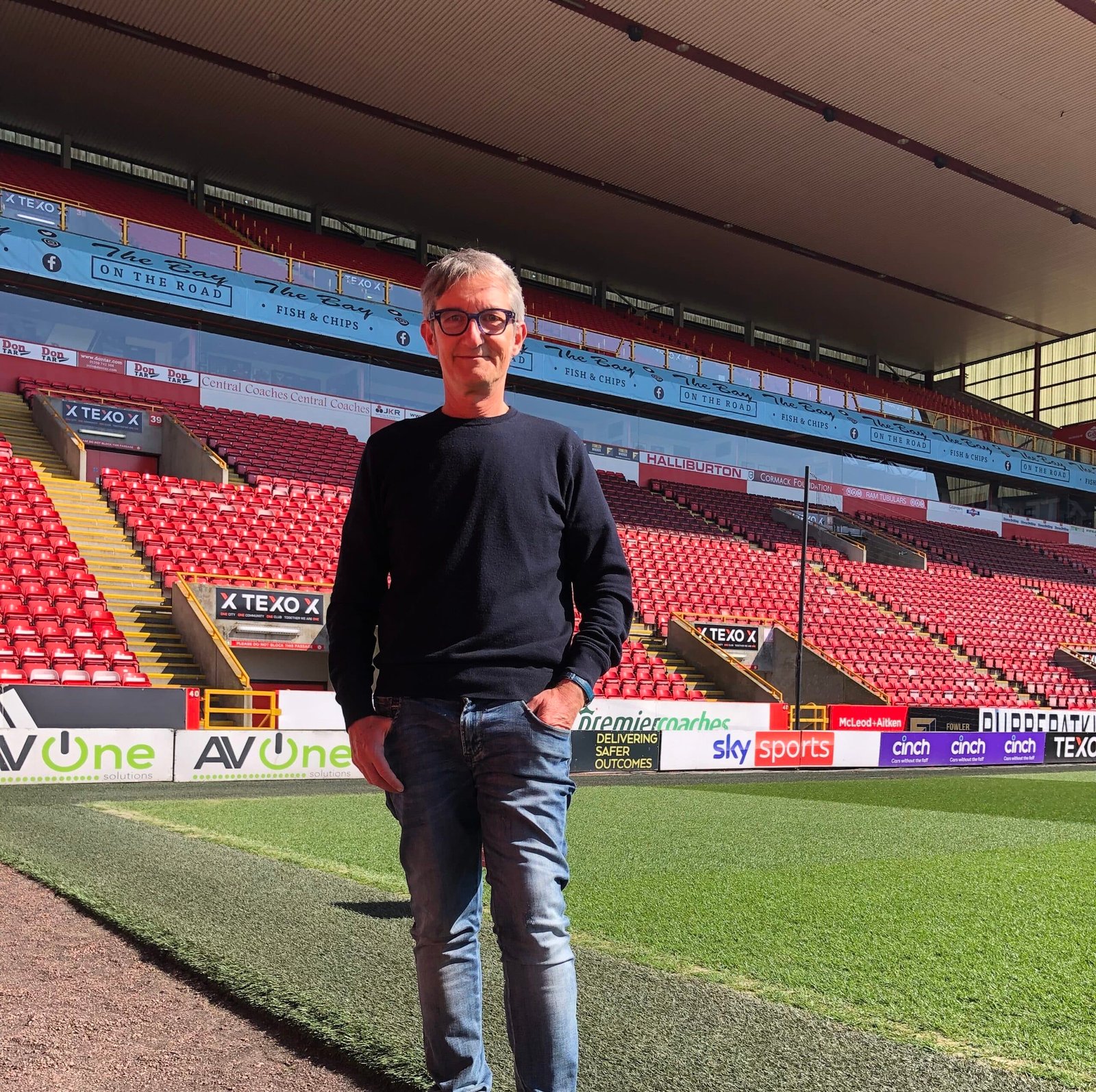
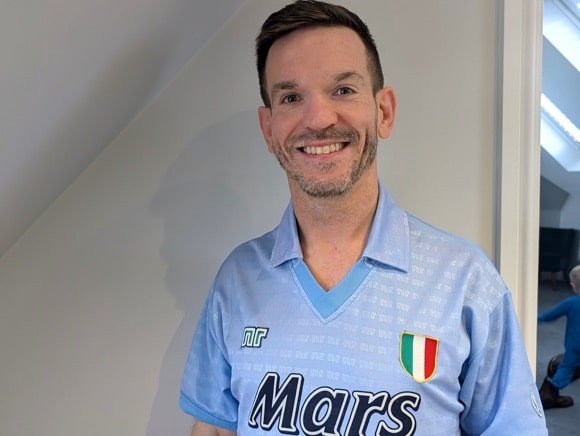
Alan Deamer meets Will Hogg, whose expert textile repairs gave rise to We Fix Kits
Football shirts used to be treated as disposable. Buy the new one, forget the old one. But for collectors, fans and lovers of football culture, shirts are stitched memories of seasons, players, cities and moments. Once they start to fade or tear, something more than fabric is lost.
That’s the space occupied by We Fix Kits – and the reason why the work of Will Hogg has been quietly changing how fans think about their shirts.
Will has restored more than 1,000 kits. While he accepts commissions, his main focus is on educating and sharing his knowledge. He has also released a paid-for digital booklet to help people follow his example.
“Most of what I learned came through mistakes,” Will tells Libero. “Early on I watched a few videos, but the methods were too heavy-handed. I knew there had to be a better way.”
Will grew up near Woolwich in South-East London – close enough to feel the pull of football but in a house where the game barely registered. His parents weren’t interested. Neither was his sister, at least until Gary Lineker appeared on TV and – inconveniently – turned her into a Spurs fan.
Arsenal came by geography rather than inheritance. Woolwich Arsenal station was his route into central London, and the club duly followed. His earliest football memory isn’t a match, but a shirt: a sky-blue England Airtex from Mexico ’86. He returned from holiday to find his bedroom wrapped in World Cup wallpaper. Football had arrived. It wasn’t leaving.
That slow-burn obsession – formed outside of tradition, handed down by no-one – would eventually shape how he sees football shirts today.
It wasn’t a single moment or breakthrough that started his journey, more a growing realisation.
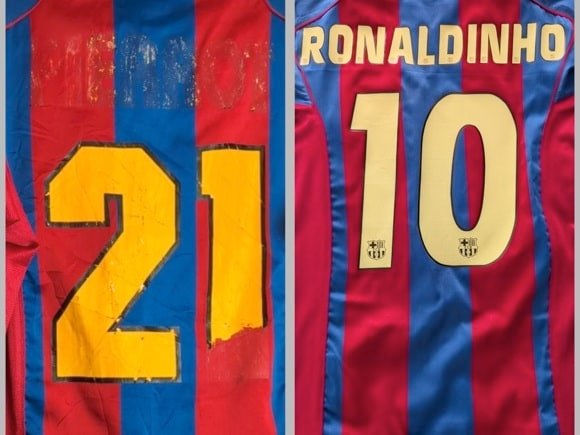
Before We Fix Kits existed, Will was quietly tinkering away at his collection of worn-out football shirts. Trial and error were his guide, experimentation his modus operandi.
“There are countless football shirts in need of restoration,” he explains. “Many people want them fixed or want to learn to restore them themselves, but almost no-one was openly sharing methods. That gap inspired me to make information accessible.”
A few short clips on Twitter quickly drew attention. Fans from all over began asking how he did it. Around the same time, his wife suggested turning the hobby into a family venture. They upgraded their equipment, formalised their operations and We Fix Kits was born.
“From the start, our goal was to educate people about restoring shirts. Some other restorers worried sharing knowledge would hurt their business. In my view, the opposite happened – the demand for restoration far exceeds what the community can provide.”
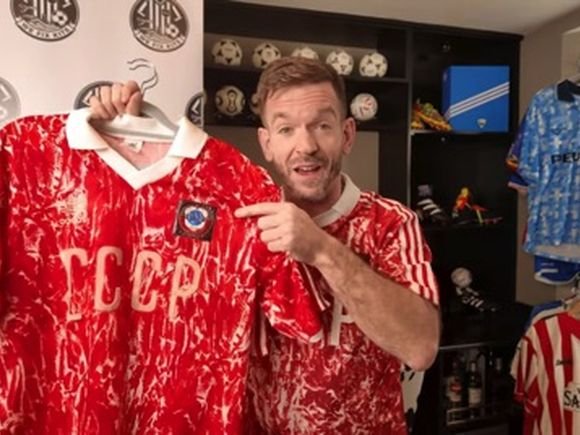
Even now, We Fix Kits isn’t his full-time job. By day, Will works in IT – structured systems, problem-solving, long hours. Restoration has always lived in the margins: evenings, weekends, moments carved out around a professional career.
That balance – precision by day, patience by night – quietly shaped the way he approaches the craft.
Will’s approach is meticulous. “I experiment with different solvents and household products, testing each to see what works. Most attempts fail, but that’s part of the fun. Eventually I discovered VLR for vinyl name-sets and Isopropyl Alcohol for flock. Every obstacle is just another problem to solve.”
Not every shirt survives intact. Will laughs when recalling mistakes. “I’ve damaged many shirts along the way – thankfully never beyond repair. Innovating and exploring new methods are ongoing. That’s what keeps it interesting.”
The craft is not just about removing name-sets. Modern challenges often come from fans attempting DIY restorations. “Most problems come from using the wrong solvent or tackling a particularly stubborn shirt,” he says.
Some jobs stand out. A classic Arsenal redcurrant shirt came to him layered with old name-sets and residue. “After carefully removing everything, the transformation was remarkable – I even made a YouTube video documenting the process!”
Even more delicate was a match-worn Scotland 1982 shirt, framed with superglue and belonging to a collector on Twitter. “Removing that glue without damaging the shirt was intense. Everyone was delighted with the result – it was the sort of restoration that reminds you why you do this.”
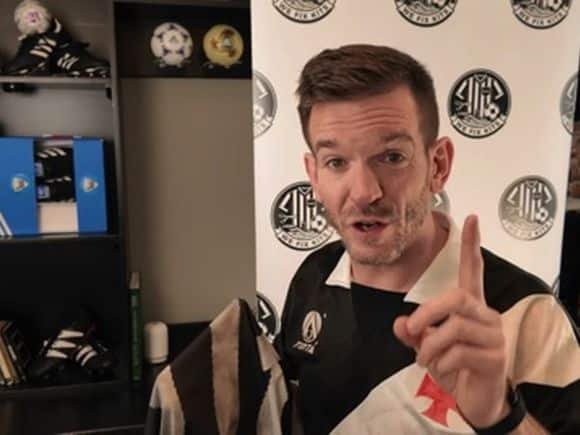
And then there are the nightmare jobs. “Screen-print removals are an absolute nightmare – basically paint. Time-consuming, messy and frustrating. I’ve now shifted my focus to teaching people to work on their own shirts rather than doing every job myself.”
Among shirts in need of TLC, Liverpool’s DTF Carlsberg kits are the most frequent offenders. “The DTF has perished over time and smeared paint across the fabric – it’s a common problem for shirts from that era.”
Perhaps the most remarkable part of We Fix Kits is the community it has built. Will beams when talking about his global impact. “It fills me with joy to see people embracing shirt restoration as a hobby, side-hustle or business. Our goal was always to teach people to do it themselves.”
He has no regrets about sharing his techniques openly. “Knowledge is best when shared. When I started, there were only a few small nudges of assistance – very little guidance. I enjoy helping people and the gratitude we receive shows it’s appreciated.”
Since launching, We Fix Kits has been featured in Forbes, the national press and the BBC. They’ve supported football-related charities and restored shirts for high-profile collectors and soap-opera stars alike.
“None of this was expected when we first started. We were just trying to share a love of shirts and the joy of restoring them.”
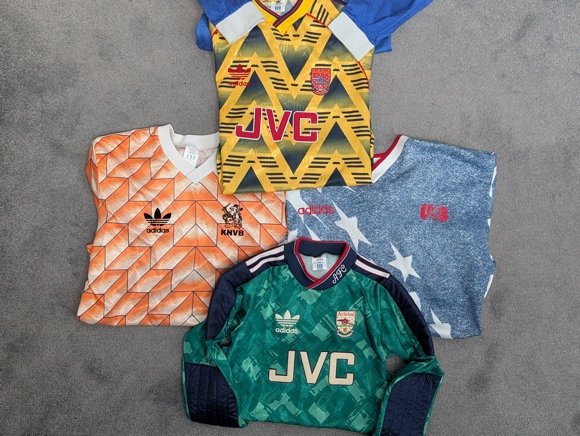
We ask Will to pick a five-a-side of his favourite shirts – a mix of personal nostalgia and football history:
- 1988 Arsenal goalkeeper shirt: Received for his eighth birthday – the first shirt that made him feel like John Lukic.
- 1988 Netherlands home shirt: Watching Gullit, van Basten and Rijkaard made this shirt unforgettable.
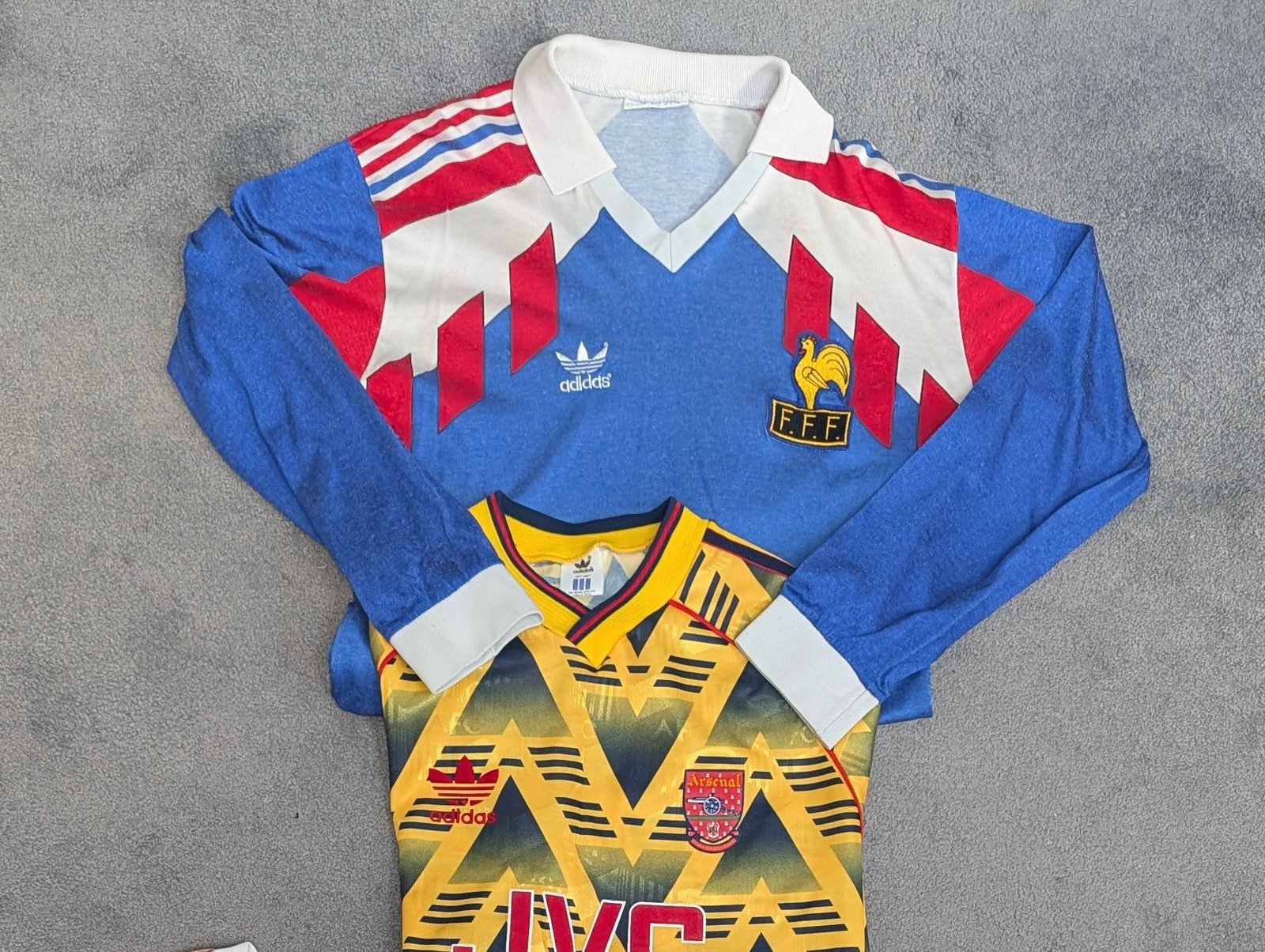
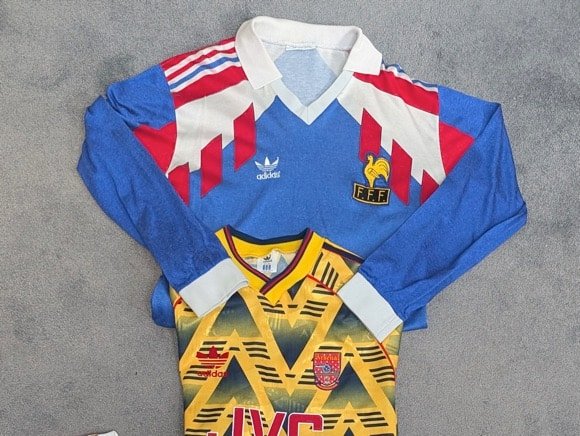
- 1993 Arsenal ‘bruised banana’ shirt: His all-time favourite – a charity-shop bargain and holy grail discovery.
- 1994 USA ‘denim’ away jersey: The shirt and tournament were a spectacle, even without England.
- 1990 France home shirt: A long-sleeved childhood treasure featuring Jean-Pierre Papin, later replaced with an adult version.
“Ask me next week, and I’d probably give you a different lineup!” he laughs.
Fans of shirt restoration, collectors or anyone curious about the craft can follow We Fix Kits on Insta, YouTube, or explore the tools and services Will offers via his website.