Candystripes let good vibrations ring in walled city
Teams, tales and tips – a guide to the local game
Despite almost overwhelming difficulties, football has survived, in fact thrived, in Derry, second city of Northern Ireland. After more than a decade out of the senior game, Derry City have been competing with teams from south of the border in the League of Ireland since 1985.
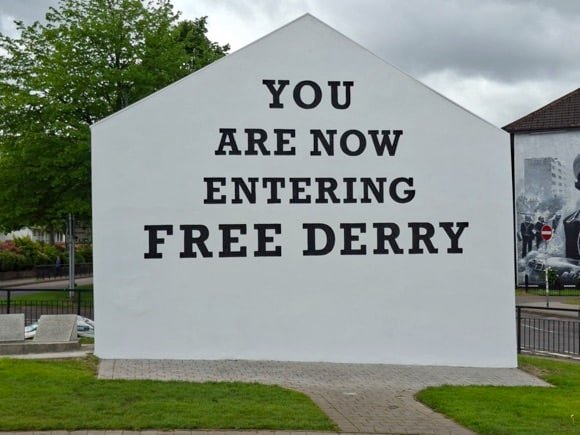
The club’s home, the revamped Brandywell Stadium, stands just past the Free Derry Corner and the Bloody Sunday Monument, major landmarks relating to The Troubles. Civil strife saw Derry City forced to play home games in Coleraine from 1971, before being reduced to Saturday-morning football.
Success post-1985 was swift. With Derry regular qualifiers for Europe since winning a memorable domestic treble in 1989, the Brandywell has hosted the likes of Benfica, Gothenburg and Paris Saint-Germain. A £7 million stadium redevelopment in 2017 reflects the positive effects of an almost unbroken run in the top flight for over 30 years.
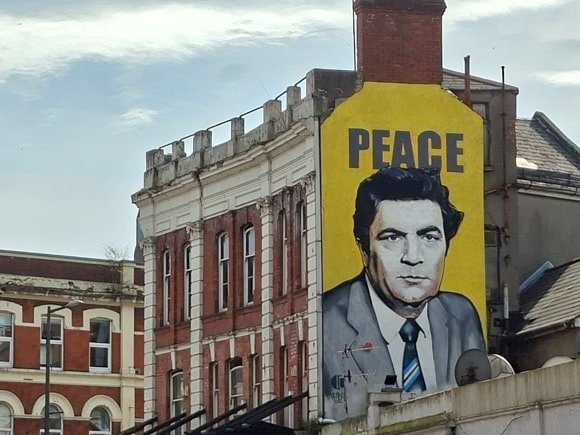
John Hume mural/Peter Hegarty
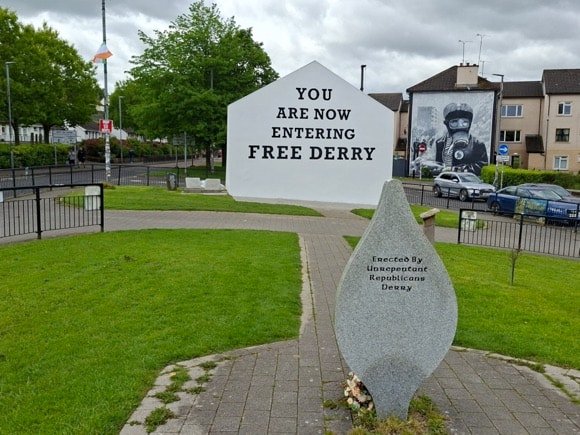
Free Derry mural/Peterjon Hegarty
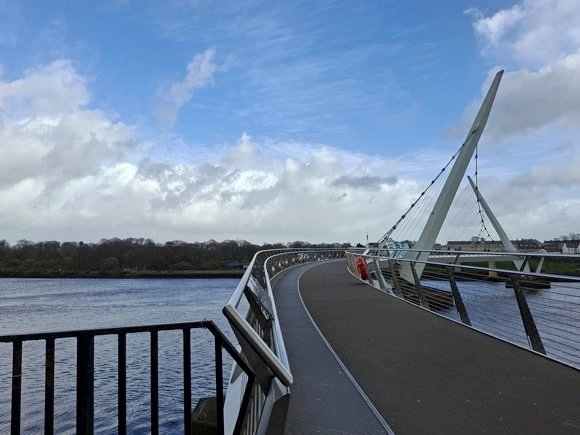
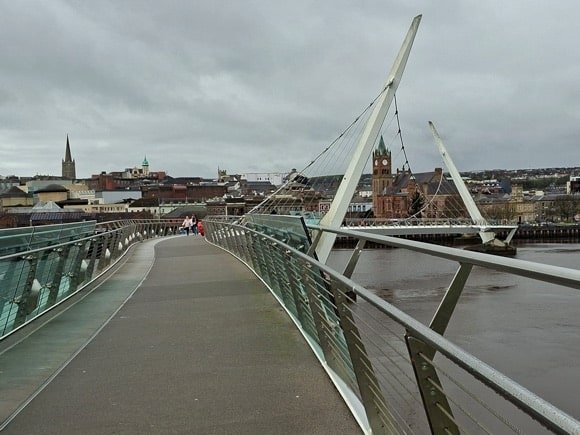
Peace Bridge/Peter Hegarty
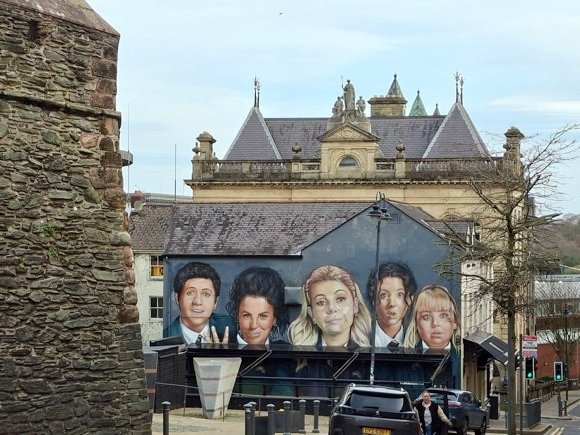
Derry Girls mural/Peter Hegarty
Nearly a decade later, thanks to billionaire philanthropist owner Philip O’Doherty, the plastic pitch was ripped up and replaced by turf of hybrid grass, a £1.4 million investment in the future of a club that had taken all-conquering Shamrock Rovers to the wire in the title race of 2025.
Football has been played at the Brandywell since 1900. Alongside stands Celtic Park, home of Derry’s GAA team, and where soccer team St Colomb’s Court played from 1894. Founded in 1886, St Colomb’s competed in the County Derry Cup, twice winning it in the early 1890s.
From 1894, a St Colomb’s Hall, later known as St Colomb’s Hall Celtic and then Derry Celtic, monopolised the tournament, renamed the North West Cup. These were all the same club, under different guises, although the relationship with St Colomb’s Court isn’t clear. A Derry Hibernians also lifted the regional trophy three times.
The Irish League and Cup were dominated by teams from Belfast, although a Derry Olympic were admitted in 1892 and Derry Celtic in 1900, the same year that they moved into the Brandywell.
For reasons also not entirely clear, Derry Celtic were voted out of the Irish League in 1913 after finishing in the relegation zone.
Derry football mural/Mick O'Hanlon
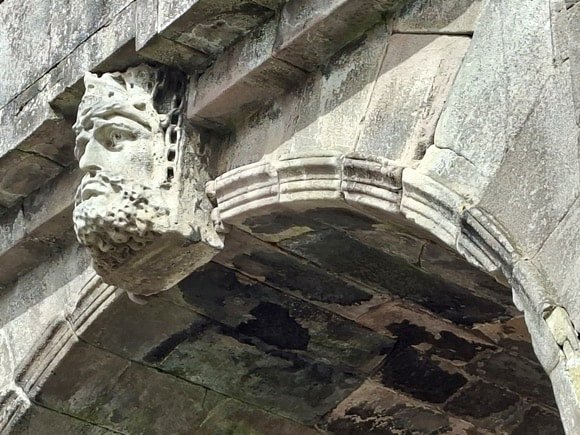
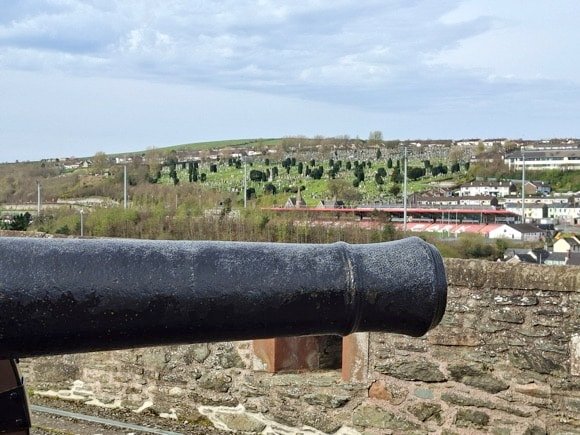
Derry City Walls/Peter Hegarty
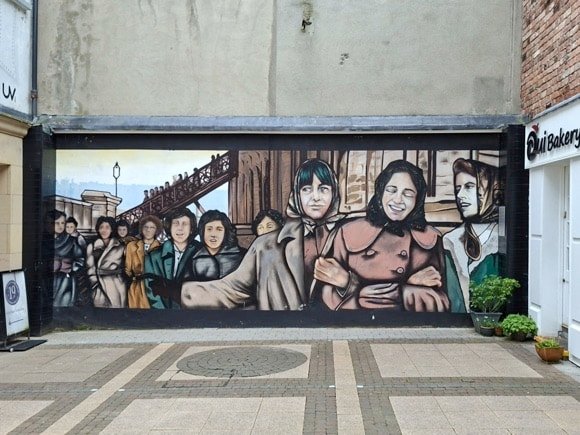
Derry factory girls mural/Peter Hegarty
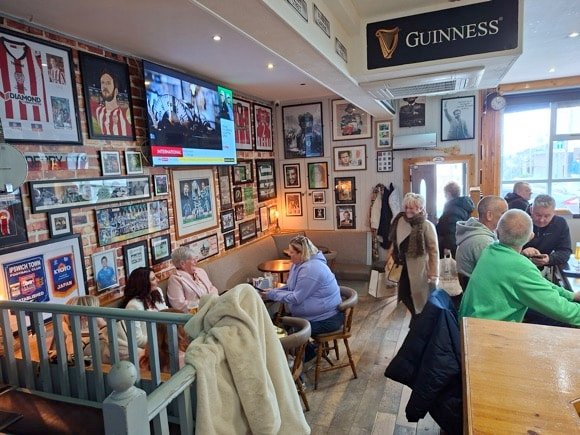
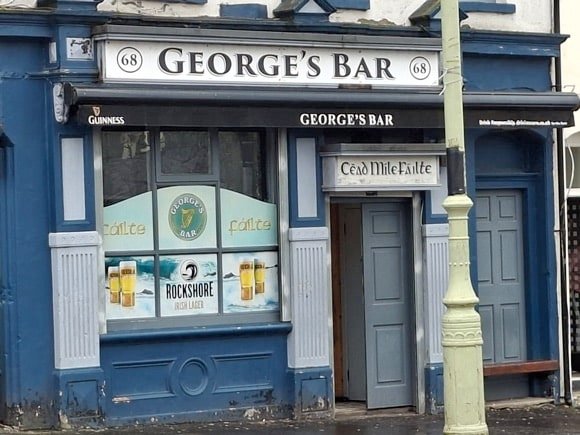
George's Bar/Peter Hegarty
Even Institute FC, formed in 1905 as the Presbyterian Working Men’s Institute, where the later influential Derry City manager Billy Gillespie started out as a teenager, seem to disappear from the record books after 1912.
For 15 years either side of the Partition of Ireland, Derry had no senior soccer team. Formed in 1928, Derry City received senior status a year later, joining the Irish League, which had separated from the south in 1921.
From the start, the club was based at the council-owned Brandywell, later failing to buy Celtic Park, which became the local home of Gaelic football.
Adopting red-and-white stripes in honour of manager Billy Gillespie, who had enjoyed a 20-year career with Sheffield United after leaving Institute, Derry proved themselves cup specialists. A decade later, Derry made their European debut but The Troubles soon put paid to any kind of senior football until 1985.
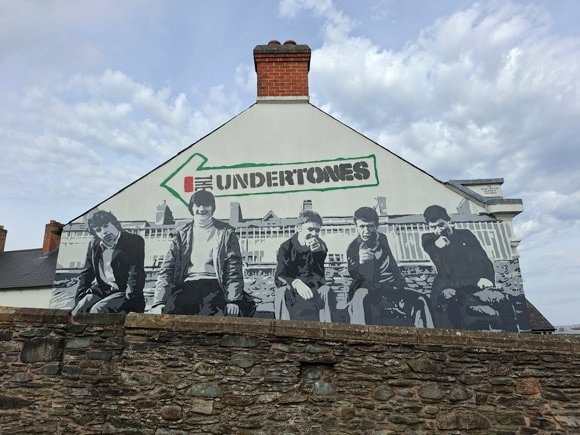
Undertones mural/Peter Hegarty
Derry City Walls/Peter Hegarty
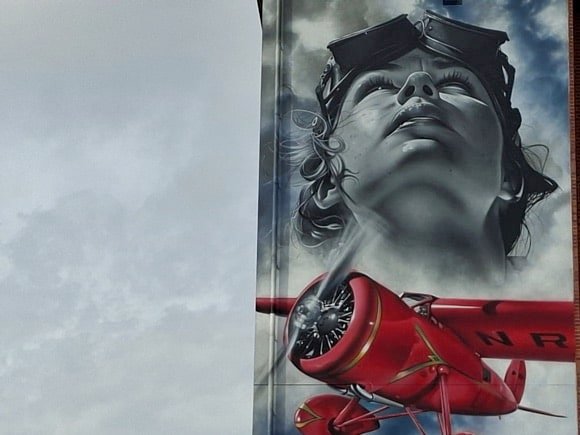
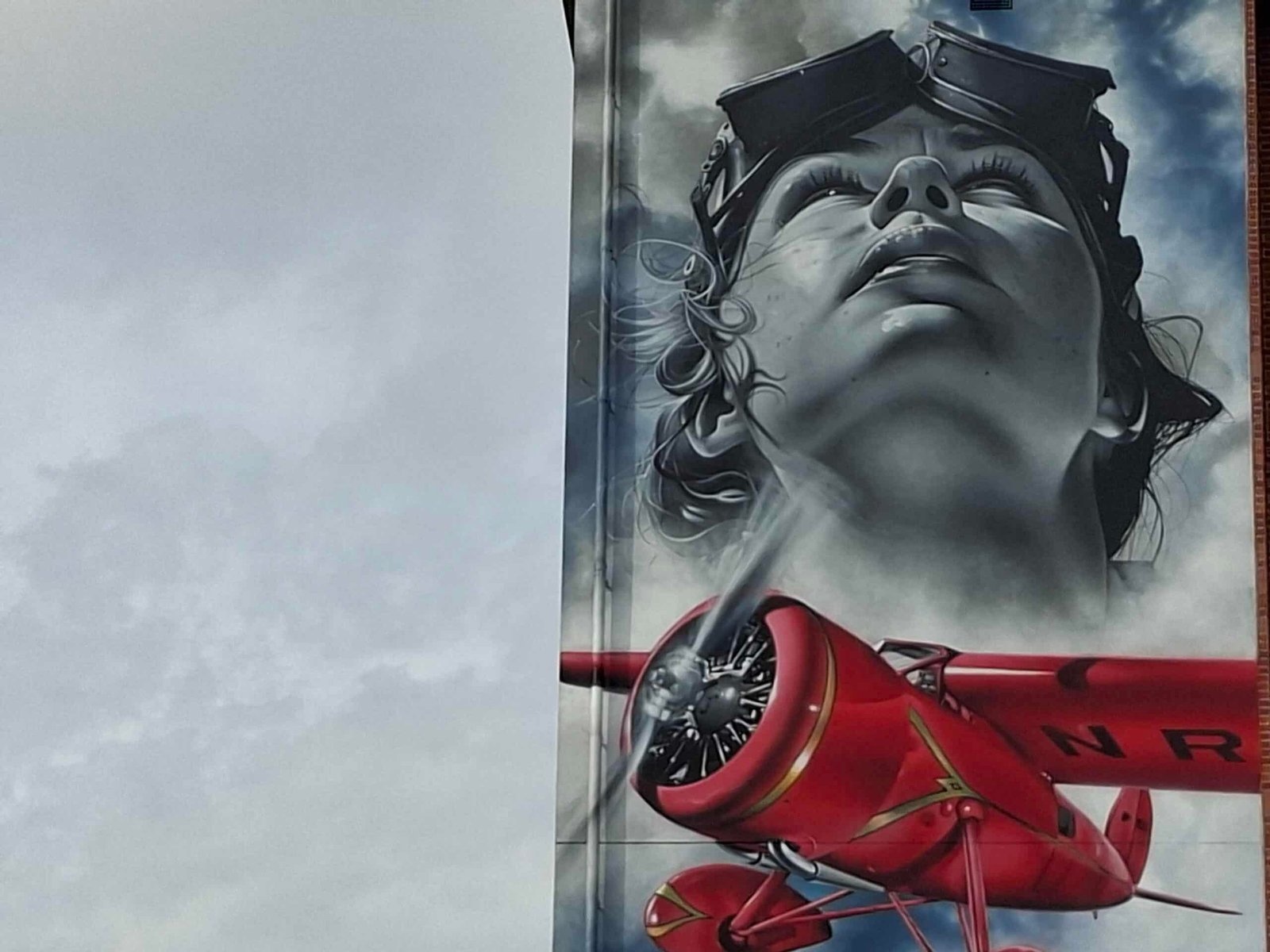
Amelia Earhart mural/Peter Hegarty
Peace Bridge/Peter Hegarty
Free Derry mural/Peterjon Hegarty
After years of delicate negotiation, Derry managed to join the football set-up in the south, crowds flocking to the Brandywell to see the Candystripes take part in the inaugural First Division, City winning the second tier a season later. In scenes that would have hardly seemed possible in the 1970s, Benfica, Gothenburg and Paris Saint-Germain all came to the Brandywell as Derry embarked on more than a dozen European campaigns.
Institute, meanwhile, adopted senior football in 1999 and began to develop their ground at Drumahoe, a village a couple of miles south-east of Derry. With major funding from Sport Northern Ireland, a new main stand was built as ’Stute gained promotion three times to the top flight, to take on the top clubs from Belfast. The North West Senior Cup, the same trophy won by St Columb’s Court a century ago, also found its way to Drumahoe several times.
Unfortunately, the aptly named Riverside Stadium suffered severe flooding in 2017 and the ground remains out of commission to this day. Playing most home games at the Brandywell, ’Stute achieved another promotion to the Irish Premiership that same season and but lost top-flight status in 2020. Any return to the Riverside is now impossible, given the deconstruction order approved in June 2022.
Sharing the Brandywell with Derry City, however, may not be a long-term solution, given club owner Philip O’Doherty’s long-term aim to move the Candystripes from the Brandywell and build a new stadium beyond the narrow streets and tortured history surrounding the ground.
Getting Around
Arriving in town, local transport and timings
Derry City transport/Michael O'Hanlon
Derry is a dual-currency city. Sterling is accepted everywhere, euros in pubs, restaurants, shops and hotels. Change will be given in sterling.
Derry has its own airport 11km (7 miles) north-east of town. Currently easyJet, Loganair and Ryanair provide links with major UK hubs. A City Cabs taxi (+44 28 7126 4466) costs £11 into town.
Translink buses run to Foyle Street bus station (£4) – the 234 every 2hrs takes 30mins, other services in between 50mins. You can buy tickets online or pay the driver (contactless).
The waterfront bus station is in town by the Peace Bridge, the same side of the river as the stadium. Trains from Belfast arrive at beautifully restored Waterside station, now renamed the North West Transport Hub, across the river. The hourly service (£15.50) takes 2hrs 15mins – book tickets to DerryLondonderryonline.
Belfast International Airport is 92km (57 miles) away, Dublin Airport 220km (137 miles). Aircoach runs the 705X bus service every 2hrs from DublinTerminal 1 Zone 2 and Terminal 2Zone 20 (€24, journey time 4hrs-4hrs 15mins) and Coach Park Bay 3 at BelfastInternational (€20, 1hr 30mins) to Foyle Street bus station. Book online or pay contactless on board.
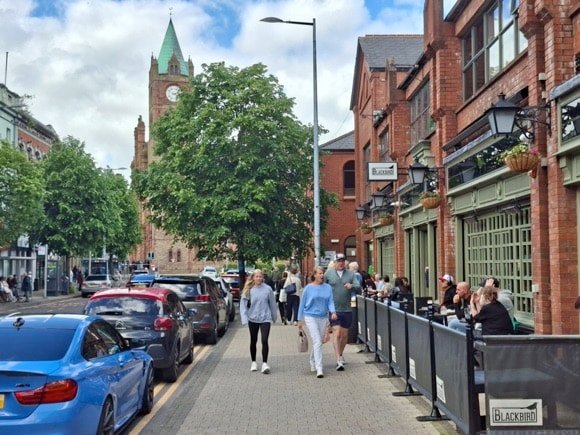
Pubs sit behind and alongside the riverfront Foyle Street bus station, a major point of arrival, starting with trendy gastropub Blackbird. Order the excellent IPA craft brew, Scraggy Bay, from Letterkenny and watch Derry go by from the pavement terrace.
Football is screened in The Snug, one of the three bars that comprise the historic River Inn, dating back to 1684, with food and entertainment laid on in Silver Street, a former adjoining cinema.
Occupying the building embellished with a mural depicting hit TV show Derry Girls, Badgers screens matches and serves decent pub grub amid iconography of Irish sporting heroes. Close by, the Bentley is a six-bar complex, one showing matches, food and drink offers attracting custom from late afternoon Sundays to Thursdays.
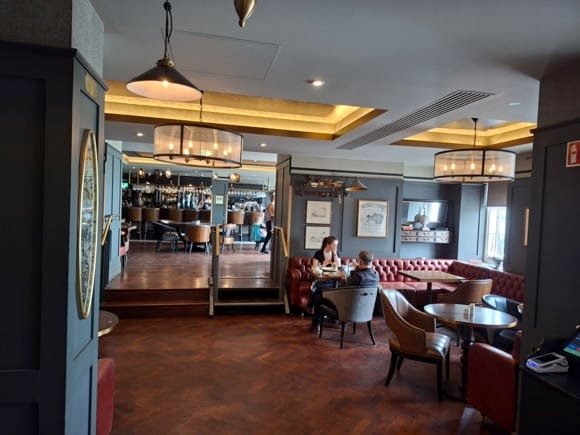
Make time for a sortie into George’s Bar, at the corner of Bishop Street and Upper Bennett Street, an intimate, football-friendly place, one of several you’ll come across on your way to the Brandywell. “I felt like I belonged,” one visitor posted on TripAdvisor.
Oakgrove Bar/Peter Hegarty
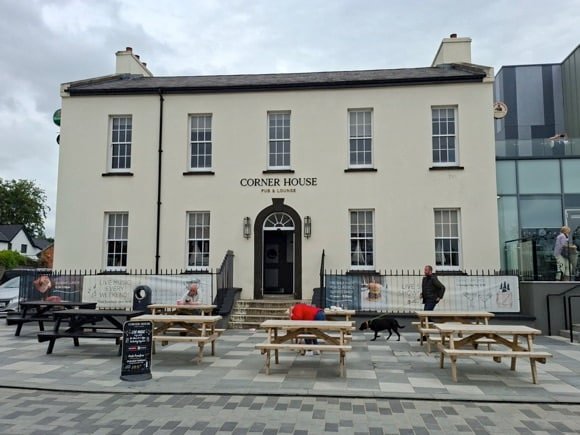
The Corner House/Peter Hegarty
The Corner House/Peter Hegarty
The Derby/Mick O'Hanlon
Stitch & Weave/Peter Hegarty
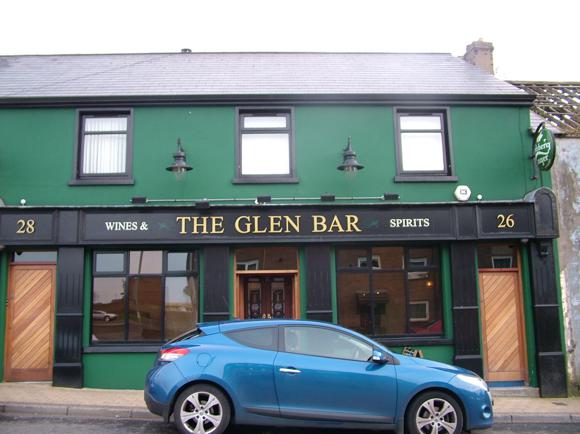
The Glen Bar/Mick O'Hanlon
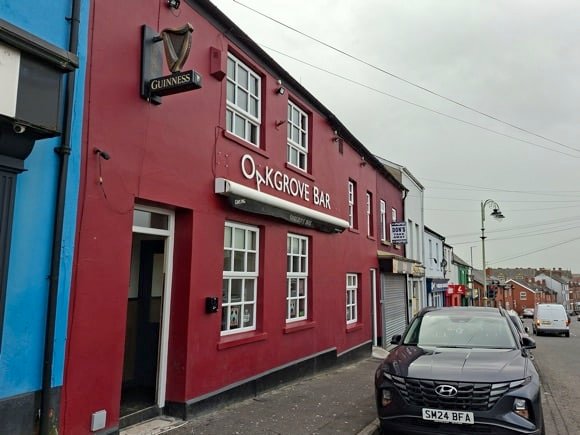
Oakgrove Bar/Peter Hegarty
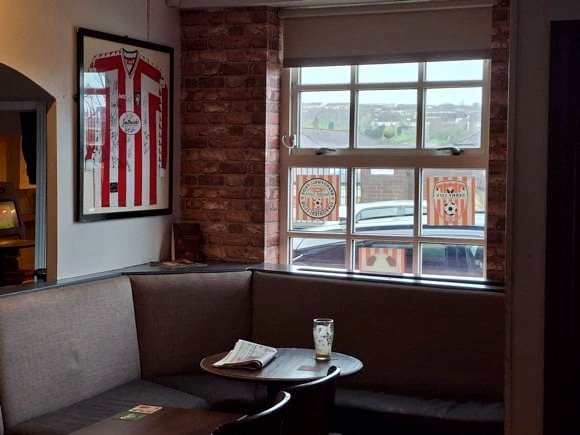
Nearby, on the way to the Brandywell, the congenial Oakgrove Bar displays framed Derry shirts, City stickers and live games. Pool and snooker also feature. Take your time over a pint, and you’ll soon find yourself in conversation.
Across the city centre, old-school community pub, The Derby on Great James Street, is a revered spot with TV football.
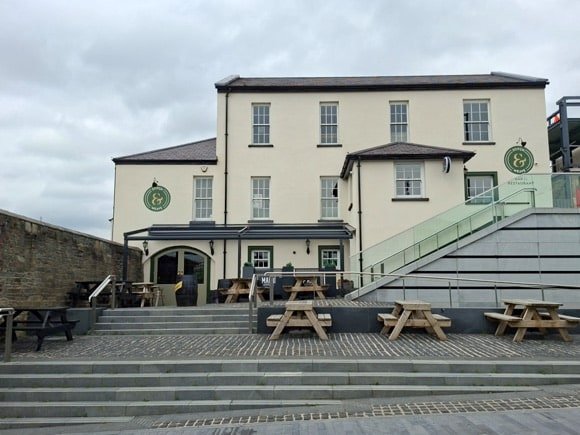
Across the Foyle, by the Peace Bridge, buzzy, late-opening Stitch & Weave feels convivial without being afraid to party – its heated garden is a godsend. Keep going up the gently sloping parade ground to the Corner House, an annexe of the grand Ebrington Hotel. Sit outside and enjoy the view southwards along the Foyle. Both pubs show live soccer and have menus designed for people on the move.
Further up, nearer the train station, the Glen Bar (28 Dungiven Road) has become a real football haunt with two big screens and a full schedule.
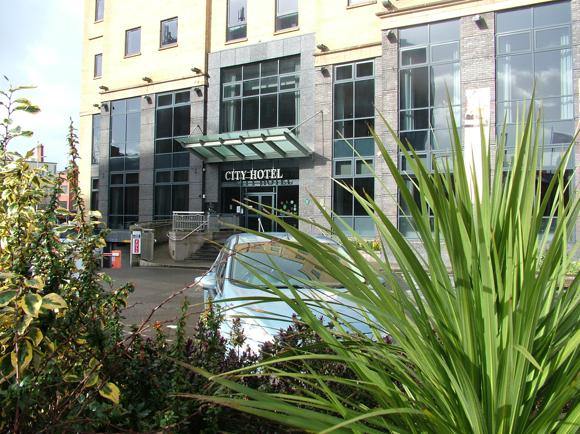
The four-star Maldron is close to the bus station, with 90 rooms, a gym and sauna. Its Lyric bar shows TV football. Also nearby is superior B&B Townhouse No.8. Waterfront four-star City Hotel Derry, with a pool and gym, offers attractive weekend breaks.
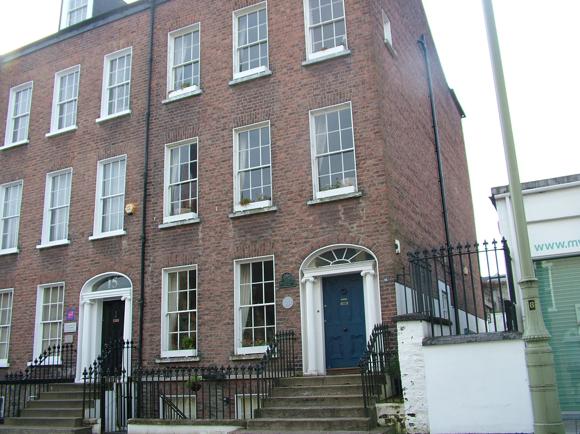
Saddler’s House on Great James Street is convenient, comfortable and affordable. Breakfast is a feast. Its sister operation, Merchant’s House on Queen Street, dates back even earlier.
For something equally historic, the Bishop’s Gate Hotel on Bishop Street is a 31-room five-star with a champagne bar, cocktail bar and ballroom. Originally this was a social club for veterans of the Crimean War.
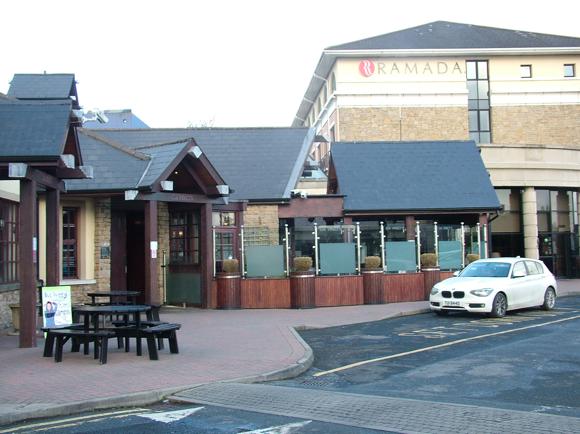
Just outside the centre Da Vinci’s on Culmore Road, the former Ramada, offers the largest bedrooms in town, a top-notch restaurant and live music in the traditional bar.
Even further out, handy if you’re with the car, the local Premier Inn is close to the main roads into town and offers free parking.
We use cookies on our website to give you the most relevant experience by remembering your preferences and repeat visits. By clicking “Accept All”, you consent to the use of ALL the cookies. However, you may visit "Cookie Settings" to provide a controlled consent.
This website uses cookies to improve your experience while you navigate through the website. Out of these, the cookies that are categorized as necessary are stored on your browser as they are essential for the working of basic functionalities of the website. We also use third-party cookies that help us analyze and understand how you use this website. These cookies will be stored in your browser only with your consent. You also have the option to opt-out of these cookies. But opting out of some of these cookies may affect your browsing experience.
Necessary cookies are absolutely essential for the website to function properly. These cookies ensure basic functionalities and security features of the website, anonymously.
Cookie
Duration
Description
cookielawinfo-checkbox-analytics
11 months
This cookie is set by GDPR Cookie Consent plugin. The cookie is used to store the user consent for the cookies in the category "Analytics".
cookielawinfo-checkbox-functional
11 months
The cookie is set by GDPR cookie consent to record the user consent for the cookies in the category "Functional".
cookielawinfo-checkbox-necessary
11 months
This cookie is set by GDPR Cookie Consent plugin. The cookies is used to store the user consent for the cookies in the category "Necessary".
cookielawinfo-checkbox-others
11 months
This cookie is set by GDPR Cookie Consent plugin. The cookie is used to store the user consent for the cookies in the category "Other.
cookielawinfo-checkbox-performance
11 months
This cookie is set by GDPR Cookie Consent plugin. The cookie is used to store the user consent for the cookies in the category "Performance".
viewed_cookie_policy
11 months
The cookie is set by the GDPR Cookie Consent plugin and is used to store whether or not user has consented to the use of cookies. It does not store any personal data.
Functional cookies help to perform certain functionalities like sharing the content of the website on social media platforms, collect feedbacks, and other third-party features.
Performance cookies are used to understand and analyze the key performance indexes of the website which helps in delivering a better user experience for the visitors.
Analytical cookies are used to understand how visitors interact with the website. These cookies help provide information on metrics the number of visitors, bounce rate, traffic source, etc.
Advertisement cookies are used to provide visitors with relevant ads and marketing campaigns. These cookies track visitors across websites and collect information to provide customized ads.