How the Stray Cats of Barga put the Celtic into calcio
KateCarlisle visits Barga, whose local club links with Celtic and the chip shops of Paisley
Celtic may be twinned with many teams but the one representing the Tuscan community of Barga is a wee bit special. Barga is not just a pretty medieval village north of Pisa but ‘the most Scottish town in Italy’, whence many emigrated, some to return generations later.
It’s thought that around half of today’s residents have Scottish relatives. And not just any relatives… The father of pop star Paolo Nutini, Alfredo, of Barga origins, ran a fish ‘n’ chip shop in Paisley.
“Many Scots have come to Barga over the years,” Francesco Talini tells Libero. “The Nutini family is just one of them. As they were linked to Italian families, they were mostly Catholic, so in 99% of cases they were Celtic fans. The Celtic shirt has long been seen around Barga.”
Talini should know. He is president of local club Gatti Randagi, the Stray Cats, who play in green-and-white hoops. “Our team came about because there was a group of lads who wanted to play football in a more casual way than the more serious teams in Barga.”
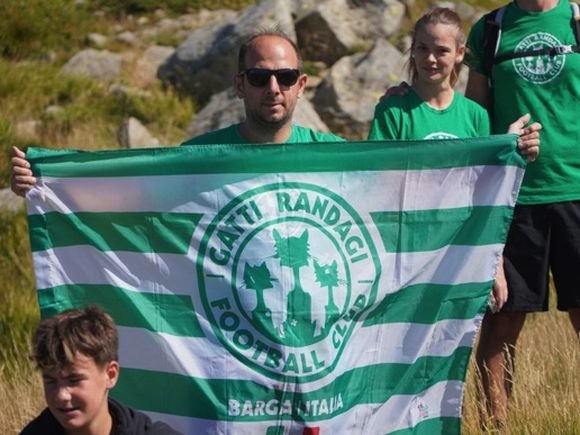
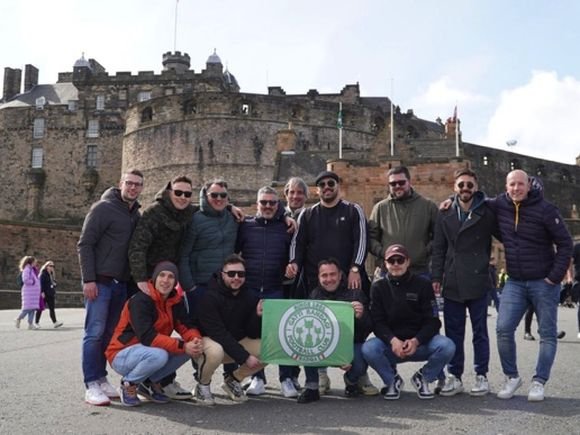
Fly the flag: Gatti on tour
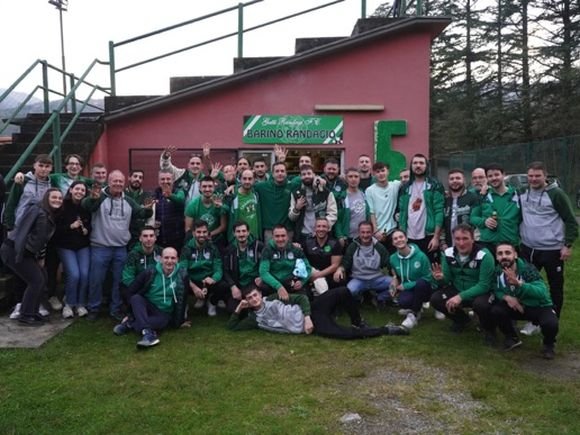
Friends and family: Gatti Randagi bring all ages together
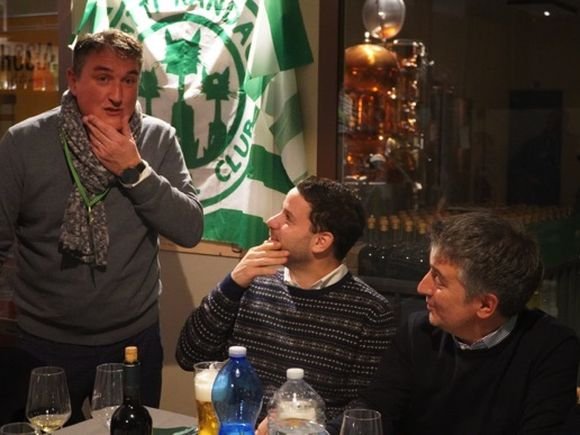
Talking tactics: Planning Gatti's next move
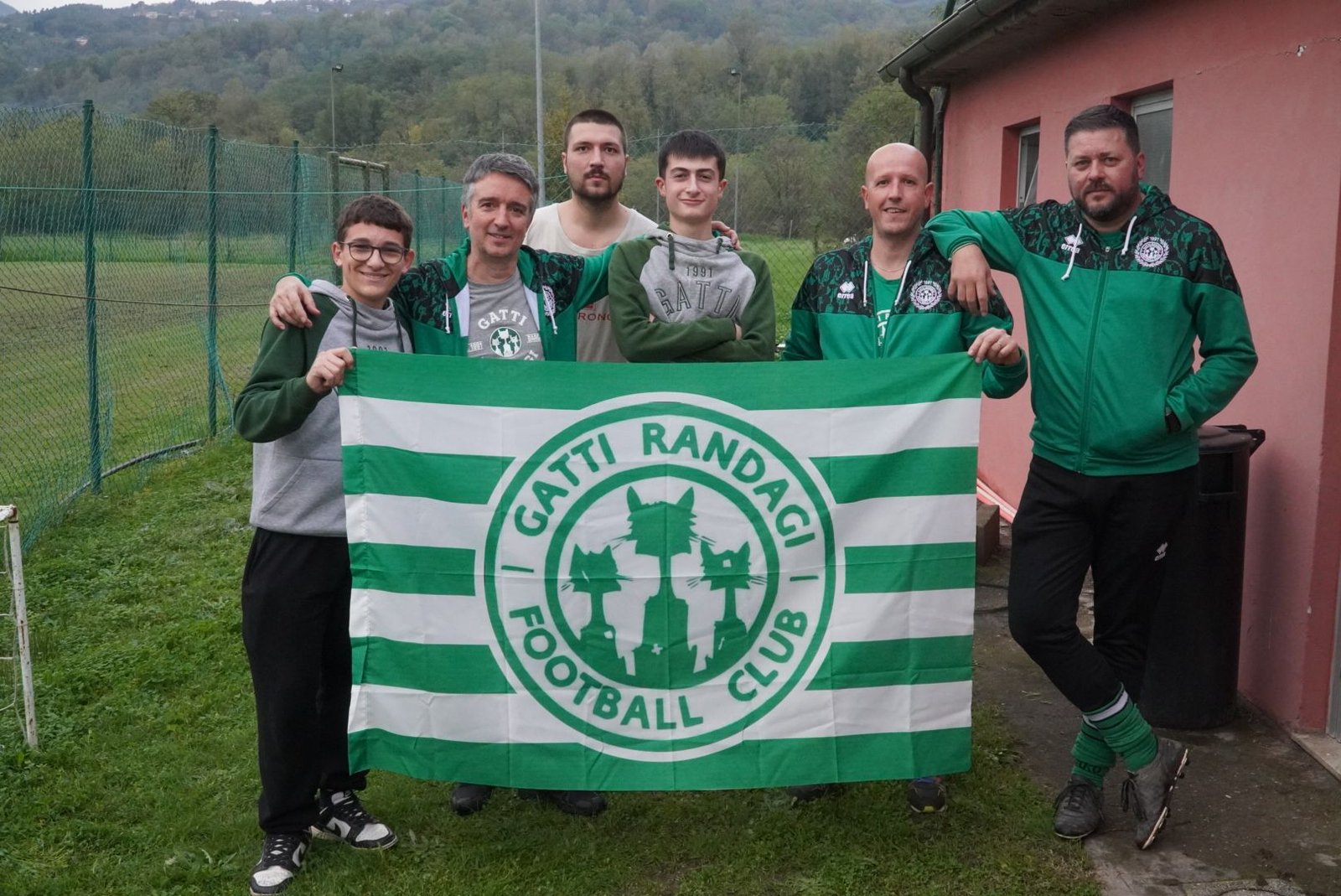
Team Gatti: Stray Cats line up
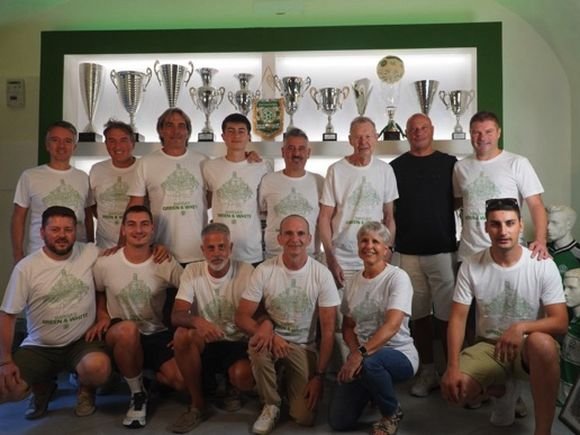
Get your merch: The green and whites of Tuscany
“The funny thing is that when they went to choose the shirt, they didn’t agree on the colours, because some wanted the Italian national one. Then someone suggested using the Celtic hoops, something familiar to Barga. We already had support in Glasgow before Gatti Randagi, but the Celtic connection added another thread.”
The name itself came from a fraternity of local motorcyclists who, in between riding around the hills of Garfagnana, raised the initial funds to form the club. “At the time, we didn’t have any direct links with Celtic. But there’s always been a very strong bond between Barga and Scotland.”
“From what I’ve studied, read and been told, this mainly arose at the end of the 1800s and early 1900s, during a major economic crisis here. The emigration destination was supposed to be the America, but there was some strange mix-up in the process, taking the Italians not to New York but Glasgow. Some thought it was just a stop-off but that was as far as they got. So, a strong community from Barga developed in Glasgow.”
“Many went into hospitality – ice cream, fish ‘n’ chips, Italian restaurants – and made good money. They always maintained their roots with Barga. So, every summer, every holiday, they went back to revisit their Barga families. Some even think that the local Tuscan accent we speak has a Scottish lilt.”
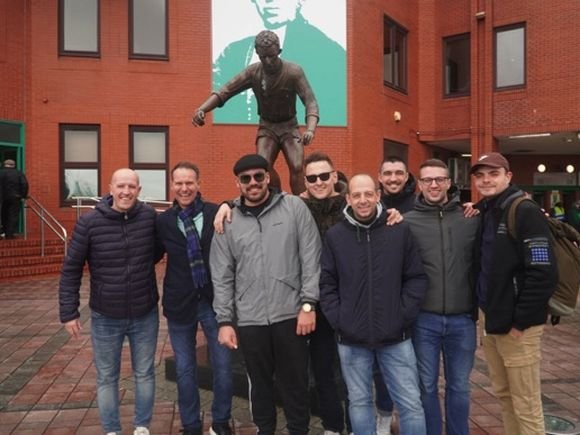
Spirit of 67: Gatti pilgrimage to Celtic Park
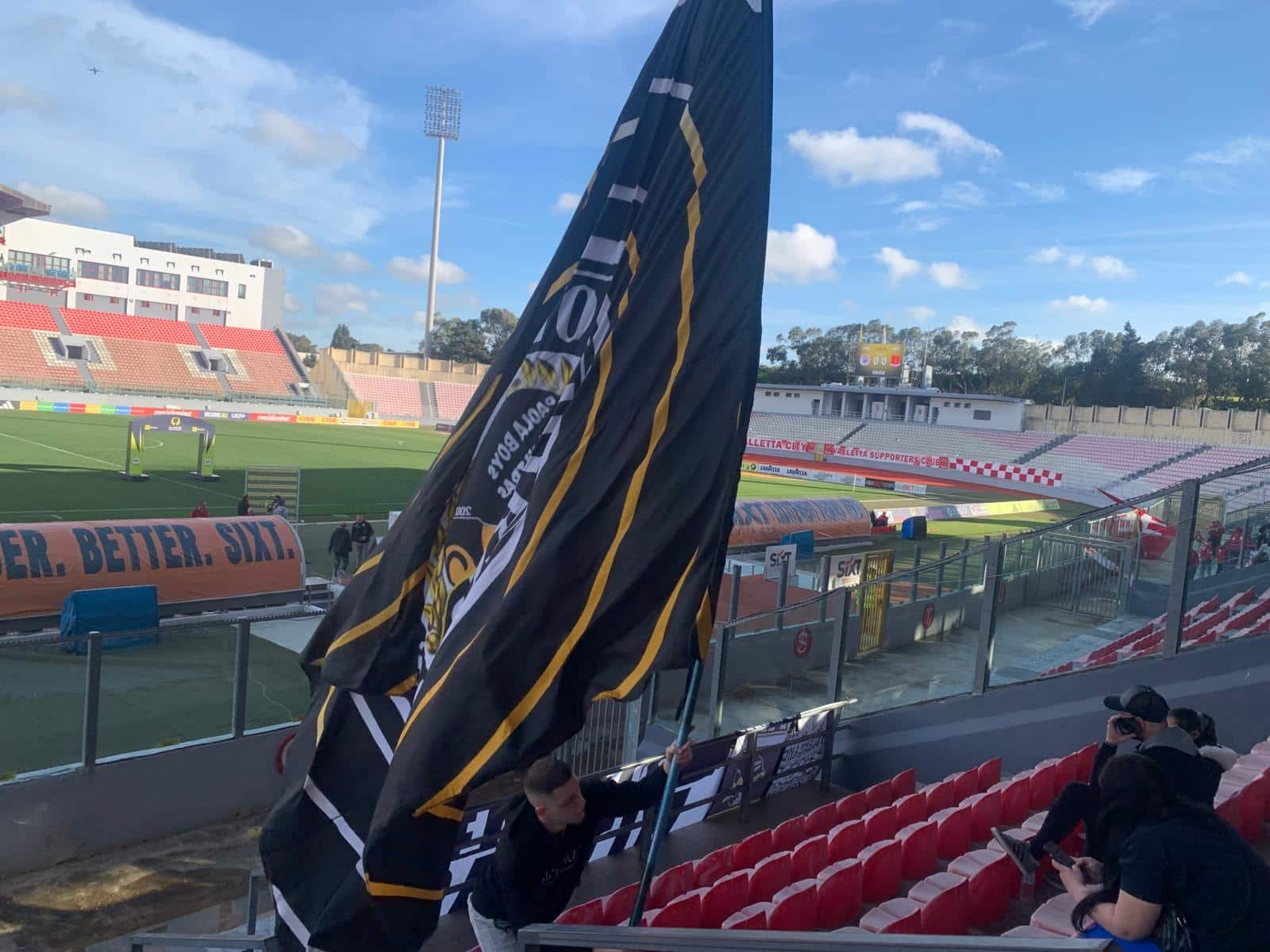
Cats on tour: Have flag, will travel
Too many cooks: Gatti visit family in Paisley
Green day: Gatti group shot
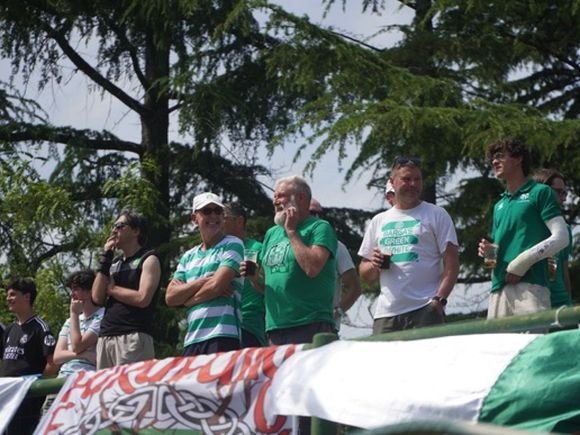
Celts in Barga: Visiting fans watch Stray Cats in action
Some 25 years ago, the Barga bhoys founded a Celtic Club, and watched games together. A wall of signed shirts lines the Barga dressing room and office. “We’re working on trying to bring a Celtic player to Barga, either a current or former one. We’re trying to bring someone here for the Barga Scottish Festival that we’ve been organising for many years. The mayor of Glasgow has even been here. Before our matches, we play Celtic songs, The Fields of Athenry, Willie Maley and You’ll Never Walk Alone.”
The traffic is not only one-way. “We go to Glasgow every year,” says Talini. “It’s where we feel at home. And we can also give a taste of the Scottish experience and atmosphere to locals from Barga aren’t familiar with it yet.”
“In 2017, I had the pleasure of watching a Celtic game from the director’s box, myself and the mayor of Barga, and we were well looked after. We met a lot of old players, Bobby Lennox and Bertie Auld before he passed, and we struck up a good relationship with the former Celtic captain, Tom Boyd.”
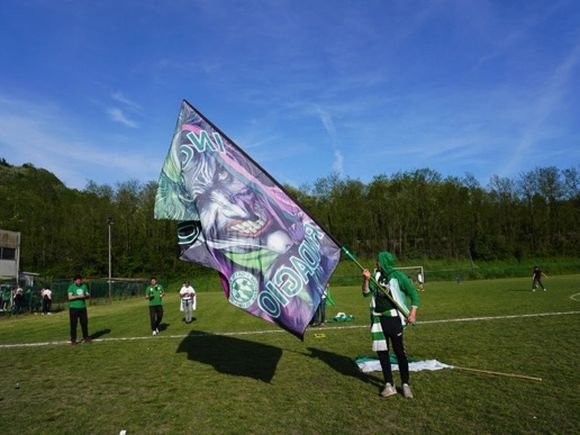
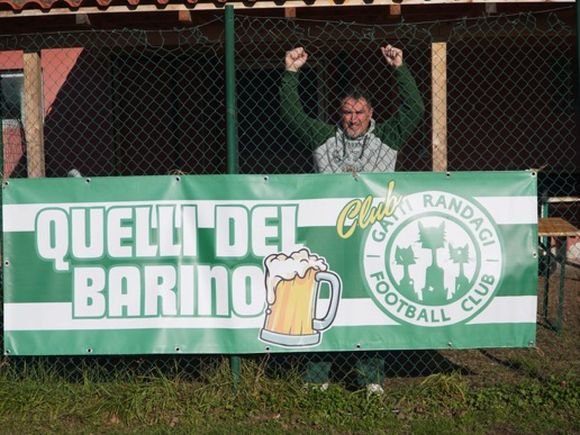
No flag, no calcio: Gatti Randagi fan waves his support
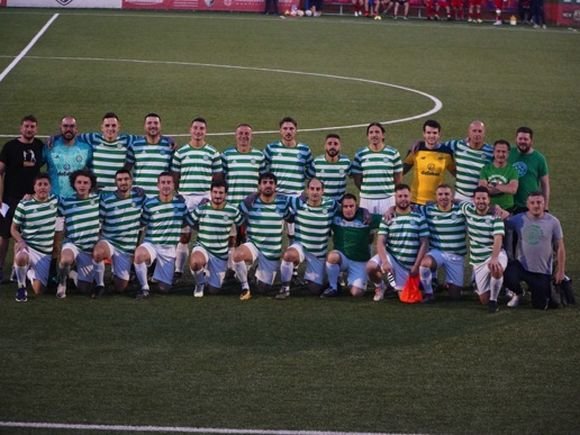
Team game: Gatti Randagi in the storied Hoops
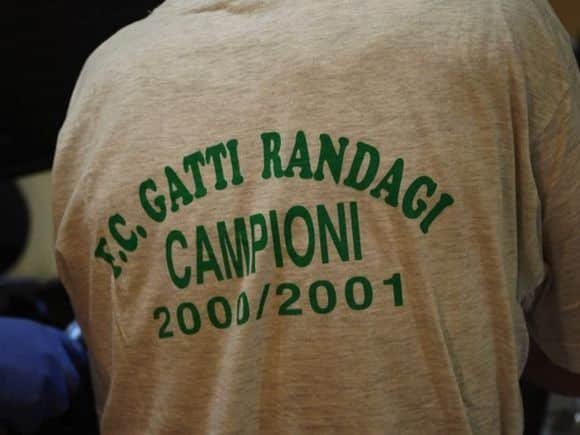
Campioni, Campioni: Celebrating a title win
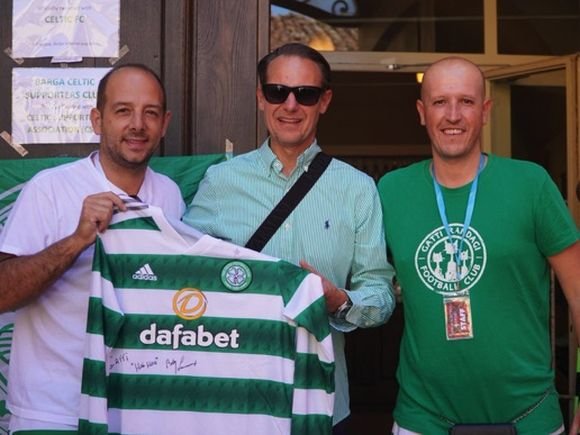
The usual suspects: Proudly displaying the Hoops
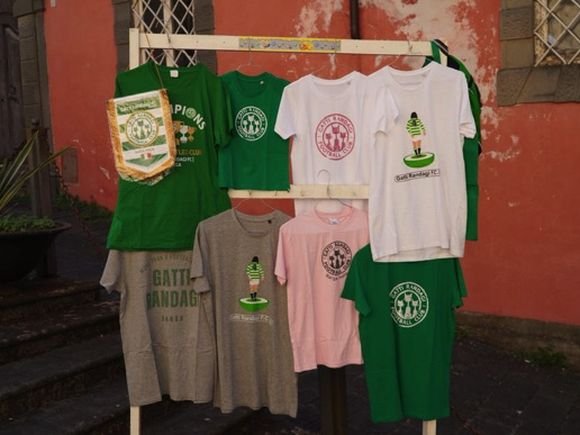
Stray Cats stock: T-shirts for every occasion
The dutiful game: Gatti Randagi run out in search of three points
Back in the lower rungs of Tuscan regional amateur football, Gatti Randagi currently sit in a relegation play-off position – playout to Italians – of their 11-team division. This Saturday, the Stray Cats host Spartak Fiano, who represent a community of 378 citizens of Fiano di Pescaglia north of Lucca. Home turf is just outside Castelvecchio Pascoli, the Campo Sportivo Gatti Randagi, around 3km north-west of Barga itself.
“We’re not part of the Italian Football Federation, but the IGS, which is provincially organised. It’s a good fit. In 2014, we were crowned regional champions of Tuscany, and played in the 2015 national championships. We lost the final, but it meant we were second in all Italy, essentially.”
“Until last year, we played derbies with GS Barga, but they since moved to a different league, so it’s just a team from Pisa, which is a different type of rivalry. Players and fans are quite social, taking part in local festivals. Our roots run deep and are solid. Even during Covid, when we couldn’t go out, we held a fundraiser and set up this little building where we make our own beer. Strangely, Covid actually inspired many things.”
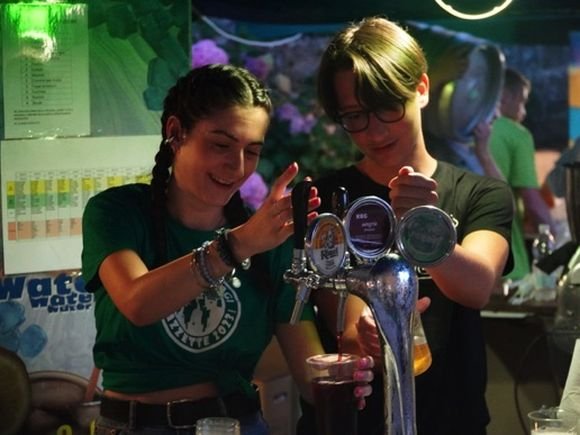
Thirsty work, football: Pouring pints in Barga
Five alive: Barga's loyal regulars
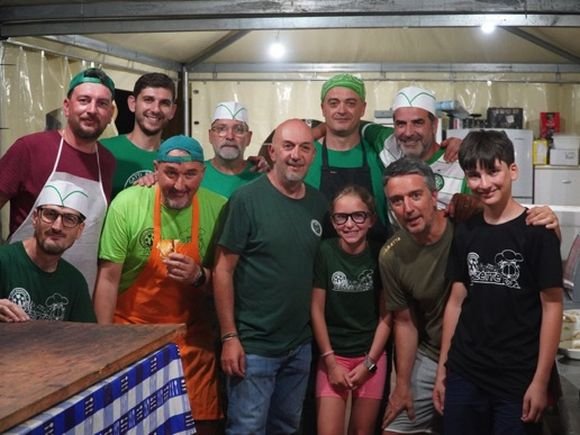
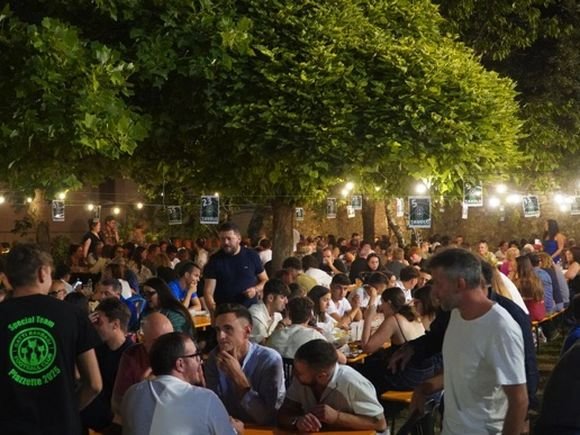
Summer party: Gatti's Barga festival
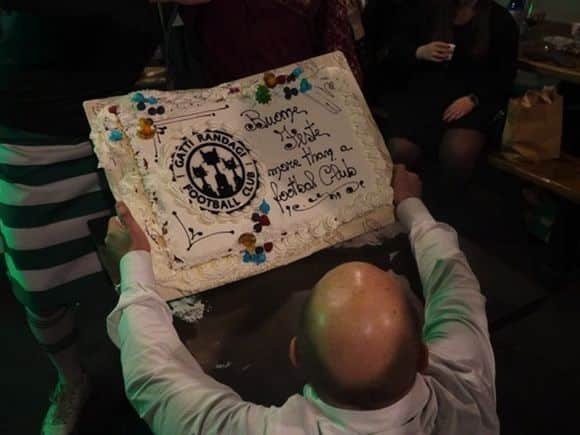
Slices all round: Another Gatti celebration
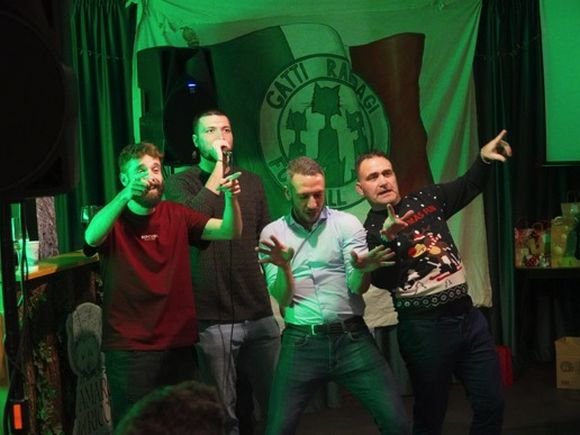
One singer, one song: Gatti fans give it up on stage
Here for the beer: Opening time in Barga
“Friends help to find sponsorship but we raise most of our funds through parties we throw every summer, the Festa delle Piazzette. Every evening, we feed about 300 people for about ten nights. From that, we’ve bought our headquarters, we pay for the pitch, the shirts and cover other expenses. No-one on the team gets paid to play. We all do it free because we have fun.”
“For a small town, it’s very lively. We also have an Irish connection. Someone came here to live for part of the year, fell in love with Barga and wanted to celebrate this relationship by organising a tournament called the Heritage Cup between Gatti Randagi and an Irish team.”
“The most important thing is being together – playing football is just an excuse. It’s something we enjoy, but without having a good time together, it wouldn’t make sense. We’ve also taken over an outdoor space at the Santa Elisabetta concert hall, where we’ve restored a basketball court, a tennis court, a skating rink and other facilities. For the whole community of Barga, for us, the idea of being together, of socialising, underpins everything.”
Gatti Randagi v Spartak Fiano, Campo Sportivo, Castelvecchio Pascoli. Saturday, December 6, 3pm.
We use cookies on our website to give you the most relevant experience by remembering your preferences and repeat visits. By clicking “Accept All”, you consent to the use of ALL the cookies. However, you may visit "Cookie Settings" to provide a controlled consent.
This website uses cookies to improve your experience while you navigate through the website. Out of these, the cookies that are categorized as necessary are stored on your browser as they are essential for the working of basic functionalities of the website. We also use third-party cookies that help us analyze and understand how you use this website. These cookies will be stored in your browser only with your consent. You also have the option to opt-out of these cookies. But opting out of some of these cookies may affect your browsing experience.
Necessary cookies are absolutely essential for the website to function properly. These cookies ensure basic functionalities and security features of the website, anonymously.
Cookie
Duration
Description
cookielawinfo-checkbox-analytics
11 months
This cookie is set by GDPR Cookie Consent plugin. The cookie is used to store the user consent for the cookies in the category "Analytics".
cookielawinfo-checkbox-functional
11 months
The cookie is set by GDPR cookie consent to record the user consent for the cookies in the category "Functional".
cookielawinfo-checkbox-necessary
11 months
This cookie is set by GDPR Cookie Consent plugin. The cookies is used to store the user consent for the cookies in the category "Necessary".
cookielawinfo-checkbox-others
11 months
This cookie is set by GDPR Cookie Consent plugin. The cookie is used to store the user consent for the cookies in the category "Other.
cookielawinfo-checkbox-performance
11 months
This cookie is set by GDPR Cookie Consent plugin. The cookie is used to store the user consent for the cookies in the category "Performance".
viewed_cookie_policy
11 months
The cookie is set by the GDPR Cookie Consent plugin and is used to store whether or not user has consented to the use of cookies. It does not store any personal data.
Functional cookies help to perform certain functionalities like sharing the content of the website on social media platforms, collect feedbacks, and other third-party features.
Performance cookies are used to understand and analyze the key performance indexes of the website which helps in delivering a better user experience for the visitors.
Analytical cookies are used to understand how visitors interact with the website. These cookies help provide information on metrics the number of visitors, bounce rate, traffic source, etc.
Advertisement cookies are used to provide visitors with relevant ads and marketing campaigns. These cookies track visitors across websites and collect information to provide customized ads.