Brian Mulligan follows the progress of London's venerable amateurs and U-21 XIs
On April 28, the 140th final of the London Senior Cup will be played between hosts Dulwich Hamlet and QPR U-21. The competition dates back to the same foundation year, 1882, as the body that created it, the London FA. Unlike its counterpart county associations, the LFA was set up by the national Football Association, and its two pioneering administrators, Charles Alcock and Lord Kinnaird.
After the FA Cup, this is the second-oldest annually contested competition in English football – but the oldest original trophy. Though the FA Cup dates back to 1871, the original 18-inch ‘little tin idol’ was stolen in 1895 and never recovered.
These days, the tournament allows top professional clubs in the capital to give their U-21 and reserve sides competitive experience against top non-league outfits, in front of crowds of paying spectators.
For the lesser lights, the LSC and other county cups remain a huge source of pride – who can forget the Exeter City chants of “Have you ever won the Devon Bowl?” at Old Trafford in 2002? The London Senior Cup also spans several eras in the social history of the capital, as reflected by some of the past winners and the teams competing in this season’s tournament.
Interrupted for four years during World War I, surprisingly staged all through World War II, over nearly 150 years, the London Senior Cup has brushed with Olympian amateurism, the rampant capitalism of the 1980s and the bright, independent era of today.
The inaugural winners were staunchly amateur Upton Park, founded in 1866. Having once demanded an FA Cup defeat by Preston North End be overturned due to the Lancashire side fielding paid players, Upton Park were among the amateur clubs who threatened to boycott the London Senior Cup in 1907 as a reaction to the FA demanding all county associations admit professional clubs.
This split led to the FA banning people and teams associated with the breakaway Amateur Football Alliance, resolved on the eve of World War I.
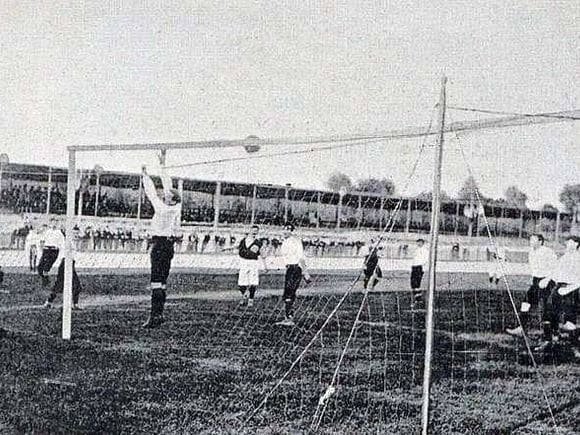
In 1900 Upton Park took part in the Paris Olympics representing Team GB, winning gold with a line-up augmented by Fulham’s Fred Spackman, Crouch End Vampires winger Richard Turner, Chelmsford’s Boer War veteran William Gosling, Ilford’s Alfred Chalk (one of 18 siblings) and Bridport’s Jack Zeally.
These conquerors of Gaul also featured the splendidly named Claude Buckenham (one of only four Olympians/male Test cricketers) and William Quash. The shirts worn by their French USFSA opponents featured a two linked hoop design which would inspire the Olympic symbol. Upton Park folded several times but were refounded in 2016 as an amateur side playing charity games, including matches at West Ham and the Olympic stadium.
Of the teams competing in this season’s edition of the London Senior Cup, newly reborn Stormzy- and Zaha-owned AFC Croydon hosted fallen giants Tooting & Mitcham, formed by the two clubs merging in 1932. A 3-2 win by the visitors echoed their traditional success as eight times winners, their first in 1941-42 and latest as recently as 2020-21. This time round, they would fall to Cheshunt in the last eight.
The roll of honour is topped by Walthamstow Avenue, nine times winners and runners-up on three occasions. Somewhere among the Old Schoolboys and big-name amateurs you’ll find Dulwich Hamlet, Fisher Athletic (with five wins each) and Wingate & Finchley (twice triumphant).
Current holders are Hanwell Town, a club founded in 1920 by Geordies working on the railway who still sport the black and white of the Toon. Potential 2026 winners Dulwich Hamlet, more used to early exits, surprised fans by fielding a first-choice XI to defeat a skilful young Brentford side 1-0 in this season’s Second Round.
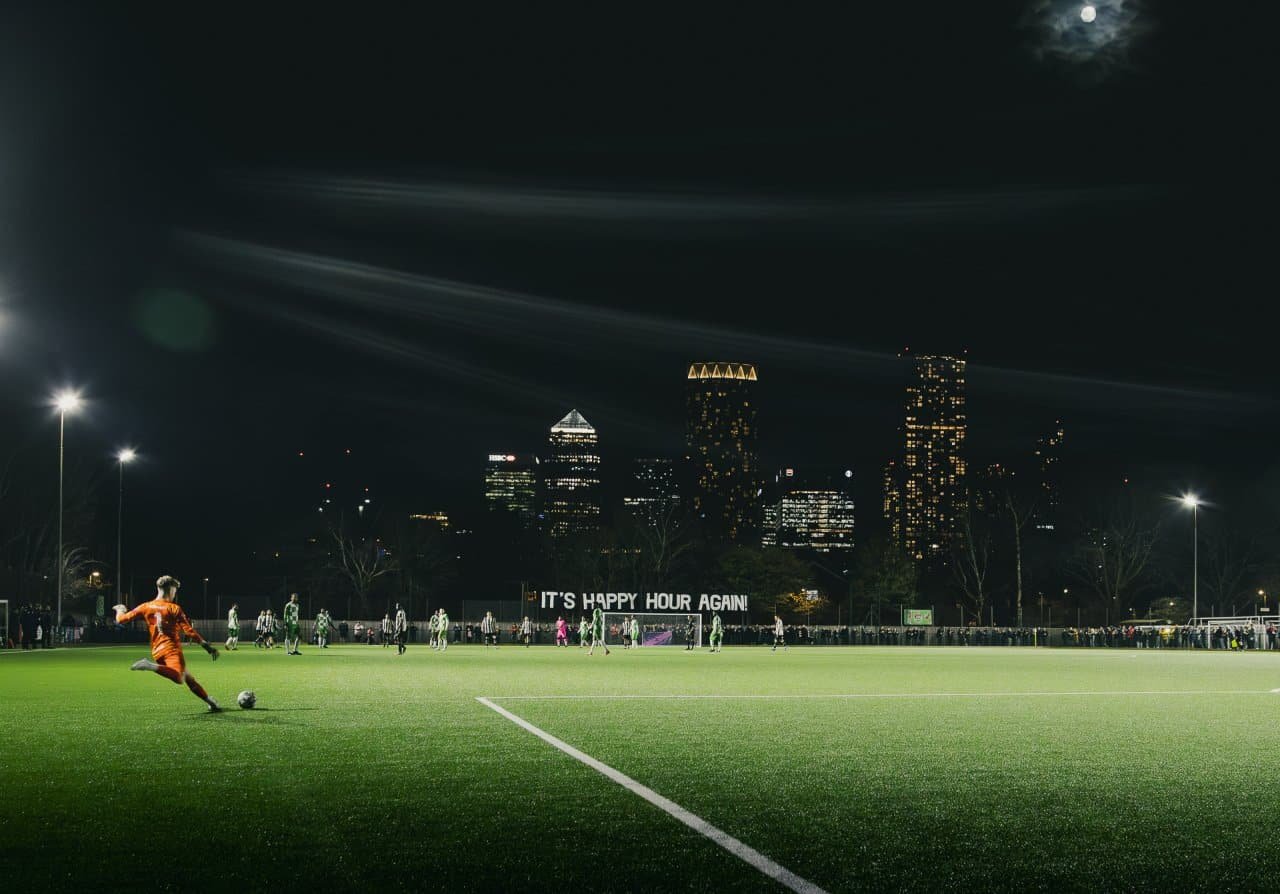
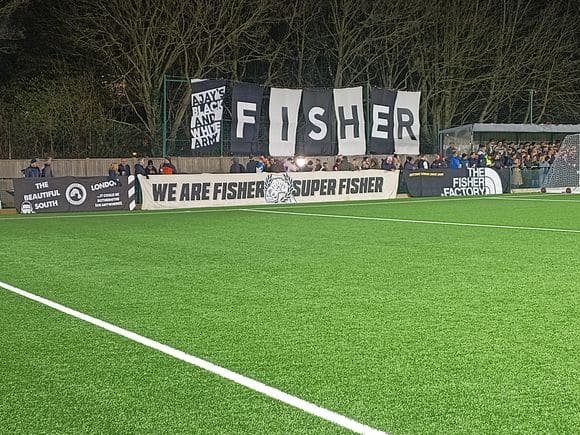
Tie of the Third Round brought together revived Fisher FC and Wingate & Finchley, both with patchwork histories. Fisher play in the shadow of that unholy shrine of 1980s’ capitalism, Canary Wharf, and are currently in the box seat to win promotion to the Isthmian League, where Wingate & Finchley are floating just above the relegation zone.
The Blues were formed by the 1991 merger of two clubs: Finchley FC, founded in 1874 and once cheered on by local rock stars, Ray Davies and Rod Stewart; and Wingate, formed in 1946 to combat anti-Semitism.
In a tragic start to the Blues’ season, young Chichester striker Billy Vigar died following a collision with a concrete wall surrounding the pitch at W&F’s Maurice Rebak Stadium. The devastated squad had to play matches elsewhere while rebuilding work was carried out.
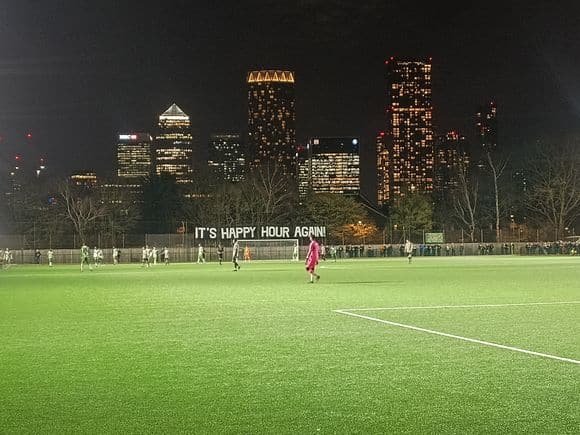
Fisher duly triumphed 3-1. Today’s Fisher FC were created by supporters of Fisher Athletic, one of the few clubs named after a person, the Catholic martyr John Fisher, referencing their Bermondsey migrant Irish roots, in a similar fashion to Glasgow Celtic and Dundee Hibernian (now United), also formed in 1909.
From then until their demise a century later, Fisher reached the fifth tier and the First Round of the FA Cup. Managers included the most successful Wayne Burnett (now in charge of Tottenham U-21s) and Justin Edinburgh, who would later lead Orient’s return to the Football League before his death in 2019 – a stand at Brisbane Road honours his name.
Before folding, Fisher groundshared at rivals Dulwich Hamlet, having vacated their 5,000-capacity Surrey Docks Stadium, now Mayflower Park, a mere 200 metres from Fisher FC’s current St Paul’s Ground.
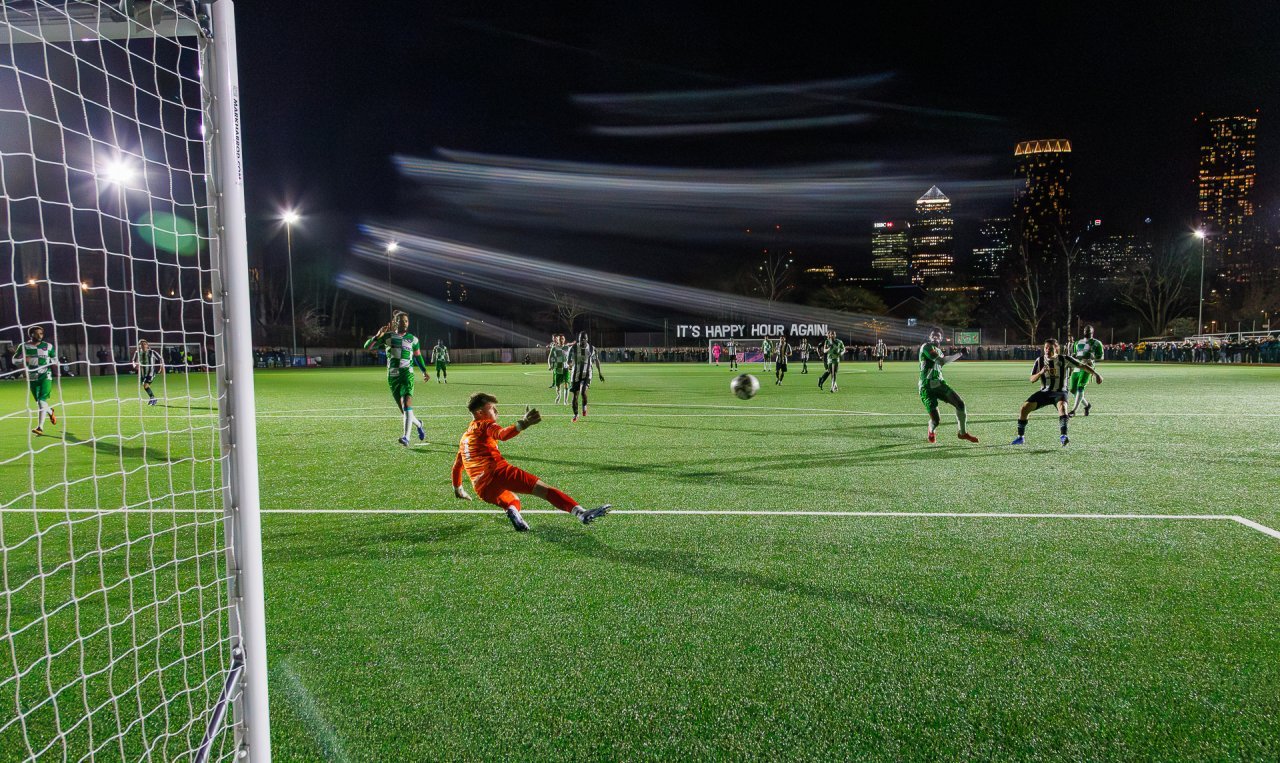
This is where a record crowd of 589 gathered for the all-South London quarter-final with Dulwich Hamlet, who fielded a full-strength side. Despite falling behind, the Fish energised for the second half, equalised, then laid siege to Toby Bull’s goal. In the shoot-out, Bull missed his own penalty but saved the next to win the tie, a transformation from sinner to saint that might have pleased John Fisher himself.
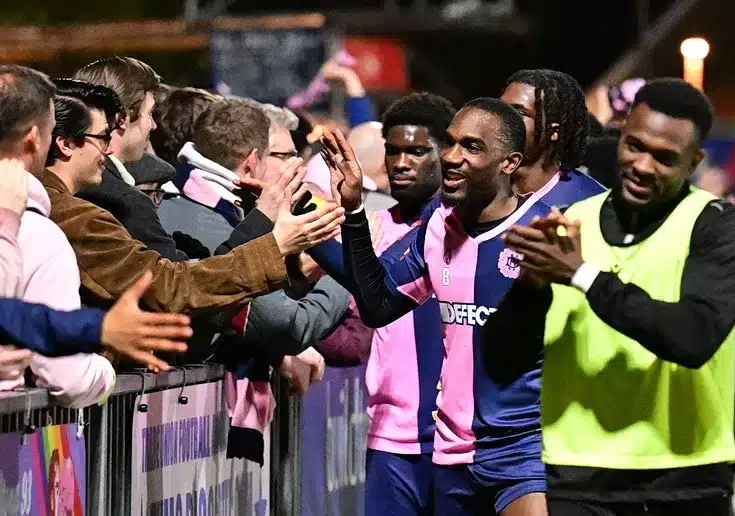
The attendance figures clicked up for the semi-final thanks to a savvy move by hosts Dulwich Hamlet. Opponents Leyton Orient had fielded many first-team squad members for their previous game against Erith – founded in 1881, London’s oldest club in the Football League had never even reached the last four of the London Senior Cup. Dulwich decided to offer free entry to season-ticket holders from both clubs, which resulted in a bumper crowd of 1,300.
But the O’s had bigger fish to fry. The game fell between two crucial matches in the club’s fight to shore up their position in League One, and so a mainly young Orient XI strode out against the experienced fellows of Dulwich Hamlet – and went in 1-0 up at half-time.
Then the axis of Champion Hill shifted and suddenly it was men against boys with the stalwart Danny Mills slipping in to beat a tiring O’s defence. Unaccustomed to playing before a near delirious rabble, Orient began to crack, before ex-Cheshunt midfielder Amadou Kassaraté hit the decider for Dulwich. Bedlam.
Over at Hanwell Town, just north of Ealing, QPR U-21 were tonking Cheshunt and looking forward to a first-ever London Senior Cup trophy since 1882 – the year that the club, and the competition, were founded. Dulwich Hamlet, meanwhile, have been encouraging fans to purchase tickets well in advance for Tuesday’s final at Champion Hill.
Dulwich Hamlet v QPR U-21, London Senior Cup final. Champion Hill Stadium, Edgar Kail Way, East Dulwich, London SE22 8BD. Tuesday, April 28, 7.45pm. Early bird tickets £13/£5.