Spencer Fearn's first visit to Scotland was to rescue a doomed football club
Infamously bottom of the entire Scottish League five seasons running during the early 2000s, in the days before teams dropped down a level, Falkirk side East Stirlingshire were then forced to sell their Firs Park ground in 2008.
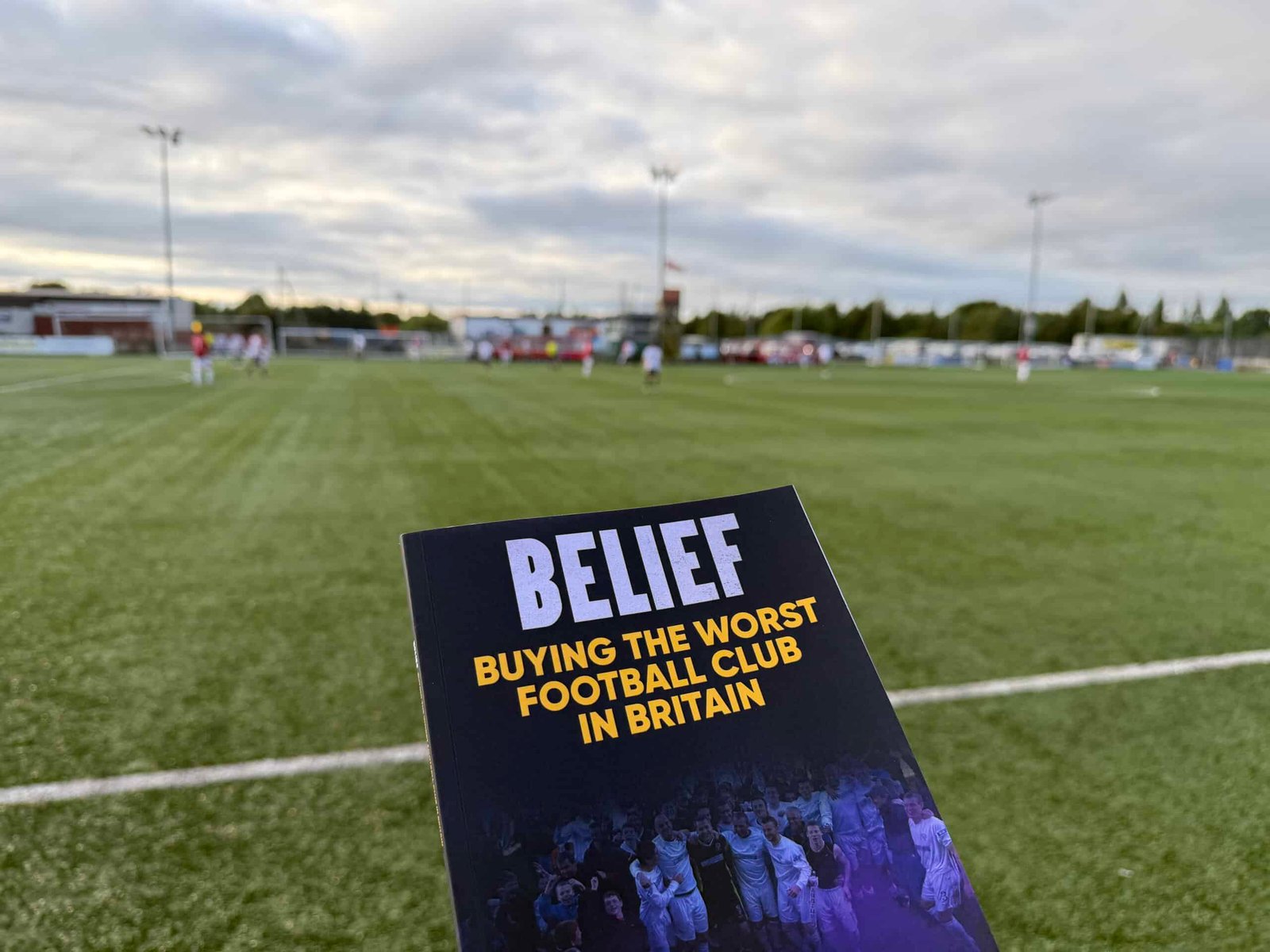
It was around this time that a certain Spencer Fearn stepped in to take over the club, “To give the long-suffering fans belief that together we could achieve something special”, he tells Libero, a mission he outlines in the book he has written about his experience, Belief – Buying the Worst Football Club in Britain.
Now involved in sports management and coaching in northern England, Fearn had colourful four years overseeing a long-standing football institution that once provided Sir Alex Ferguson with his first managerial post back in 1974. He was no sugar daddy investor, seeking to make a fast buck, rather a lover of the game striving to improve it as its most basic level.

“I was a failed footballer, released at 16 by Sheffield United. I came across East Stirlingshire from watching the results come in on Soccer Saturday and seeing them lose heavily week after week. I’d set up some businesses in my twenties, which went well, so I had a little money to invest.”
At the time, East Stirlingshire players had been reduced to accepting wages of £10 a week from a man who had been reckoned on receiving a huge reward for selling Firs Park – and who had lent money to the club upon that expectation. Fearn, then 31, had never been to Scotland.
“Initially they were sceptical, as the club was so bad, the question people asked was ‘Why the hell would you want to invest in this club?’ The process was straightforward enough. I took control of the club registration with the Scottish Football League and the previous owner Alan Mackin, who was asset-stripping and selling the ground he retained ownership of.”

Gates had sunk to under 200 per home game. By chance, fate stepped in to offer Fearn and his blighted newly acquired club a helping hand when East Stirlingshire drew Rangers in the Fourth Round of the Scottish Cup shortly after he arrived. The share of the gate money – 34,000 gathered at Ibrox that winter’s day in January 2008 to watch the Teddy Bears maul The Shire 6-0 – went straight into lifting the club up by its bootstraps.
The following month, East Stirlingshire were able to attract former Scottish international Jim McInally as manager after he had been working miracles at Greenock Morton.
Facing ejection from the Scottish League for a sixth consecutive last-place finish, The Shire duly rallied, beat Montrose 3-1 on the last day of the season, and achieved a total of ten wins and ninth place in a division of ten. Cue celebrations. In their two worst years during their previous dismal run, the Shire had twice managed two wins all season, each time shipping goals to the tune of three figures.

This was progress. In the meantime, the club had acquired a significant Norwegian following, mainly generated by the inspirational signing of a young player nicknamed after a popular cartoon character. The Shire even adopted the Norway shirt for their change strip.
Despite now having to groundshare Ochilview with Stenhousemuir, East Stirlingshire hit untold heights the following season. As Fearn continued to plug gaps and deal with the unforeseen consequences of the as-yet uncompleted sale of Firs Park, striker Andy Rodgers was combining with Brian Graham, on loan from Greenock Morton, to outscore everyone in the division bar champions Dumbarton.
In the divisional play-offs, Rodgers and Graham hit the net home and away but it wasn’t enough to see off a determined Cowdenbeath. It was the same story the following May, an agonising 3-2 aggregate defeat by Forfar featuring a brace from Andy Rodgers but culminating in the Loons gaining promotion.
“Yes, there were highs and lows,” admits Fearn. “The media interest in me owning the club was staggering, as was building a 6,400 strong supporters’ club in Norway. There were also a few scary moments with the Glasgow underworld as well…”

In the end, Mackin never did get his five-figure sum and Spencer Fearn could head south with his head held high. He had missed only one home game in four seasons – ironically a derby win over Stenhousemuir – and made a lot of lifelong friends.
“I had four wonderful years and stepped away in May 2010. My wife Emma and I had our first child arriving and I also had a child from a previous marriage. My children needed their Dad around, not making 700-mile round trips every weekend. I had no regrets. I had a wonderful time.”
Since Fearn left Scotland, the SPFL has been restructured and has long accommodated a promotion and relegation system with the Lowland and Highland Leagues below it: “It has been hugely beneficial to the Scottish game and was long overdue. It has enabled clubs to build and access the league pyramid, and we have seen many success stories”.

East Stirlingshire maintained league status until 2016 but have spent the last decade in the Lowland League. Moving back to Falkirk to groundshare with their city rivals in 2018, the club later returned to Stenhousemuir, where hardy supporters still gather in the low hundreds. Go to a game today and an elderly supporter runs a stall beneath the main stand, souvenirs including artist impressions of the former Firs Park.
“East Stirlingshire have been in existence since 1881 and are an important part of the community,” maintains Fearn. “My relationship with the club is still very strong. We had a reunion last September, where two dozen of us got together after nearly 15 years apart. It was wonderful. All profits from the book go to the club as well. As of today, nearly a thousand have been sold, raising £1,600 for the club so far.”
Today, Spencer Fearn works as a Course Leader for University Academy 92 in Manchester, whose ownership group is the Manchester United Class of 92. His job is to educate students on the Business of Football and Sports Business Management degrees. He also works for the English FA as a coach developer on the UEFA B and UEFA C licences, and coaches League One Doncaster Rovers’ U-16 team. As he puts it, “I am a lucky man – football every day!”