A fan’s guide – the club from formation to today
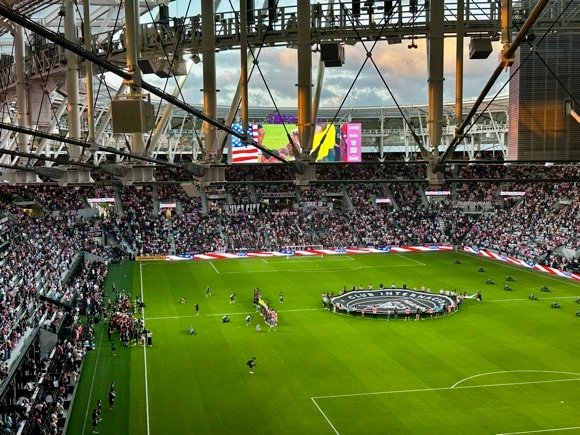
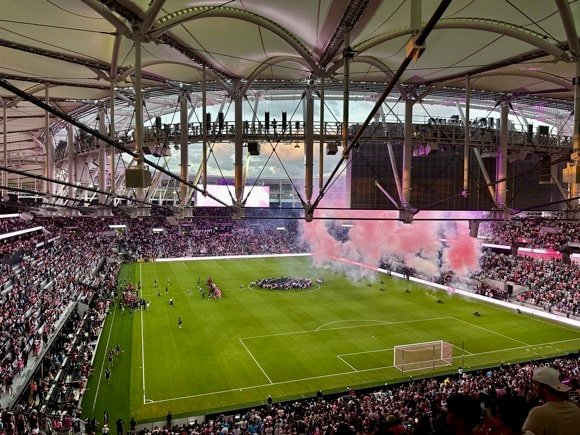
It may have required the two most successful players of the modern era, at least five locations, and a decade of bureaucracy and diplomacy, but Inter Miami now has its own soccer-specific stadium within the city – and as MLS Cup champion, no less. The initiative that began with a clause in the deal that brought David Beckham to LA Galaxy in 2007, followed by a long, long search for a site for his MLS franchise, culminated in the grand opening of Nu Stadium on April 4, 2026 – and a tenth-minute goal from No.10, the superstar who transformed Inter Miami from overhyped flops to box-office gold, Lionel Messi.
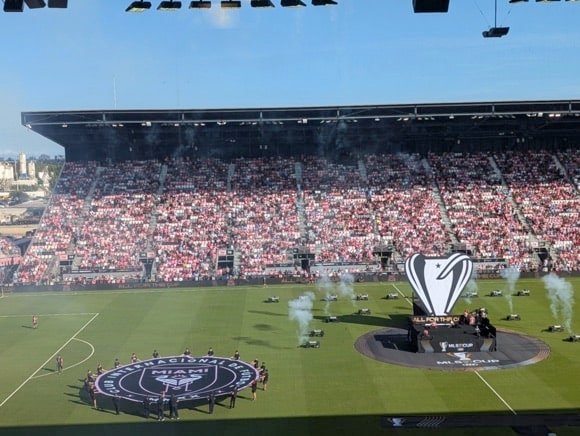
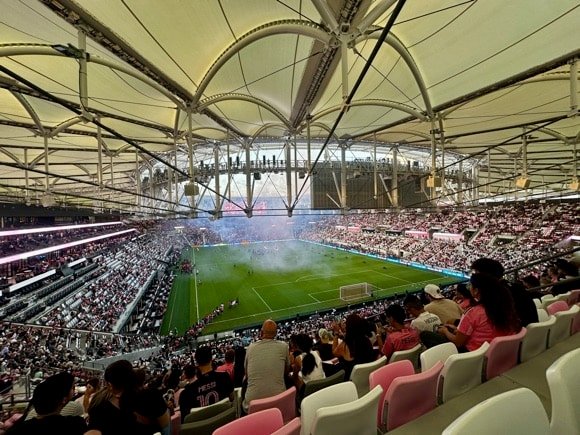
Four months before, Messi’s gorgeously weighted pass into the path of his compatriot, Tadeo Allende, had sealed a memorable MLS Cup win for Inter Miami and set Fort Lauderdale alight. As the clouds of pink dry ice cleared, Messi and Beckham shared a knowing hug. This was also farewell to Fort Lauderdale, where the Inter project had been parked from its underwhelming kickoff during the pandemic summer of 2020.
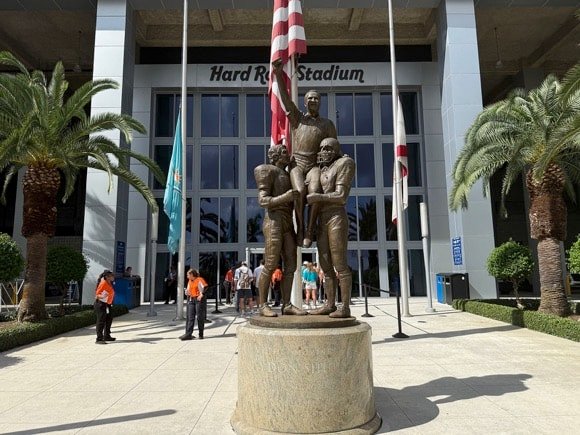
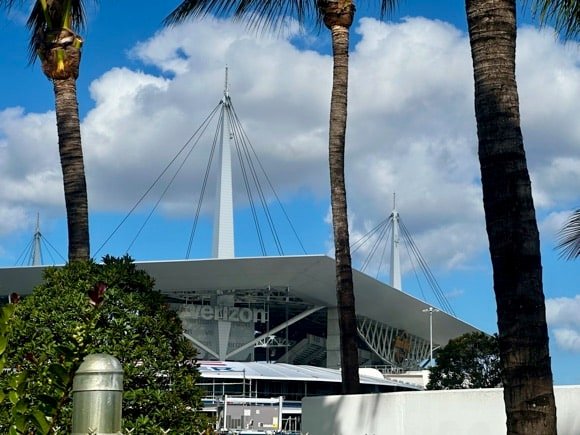
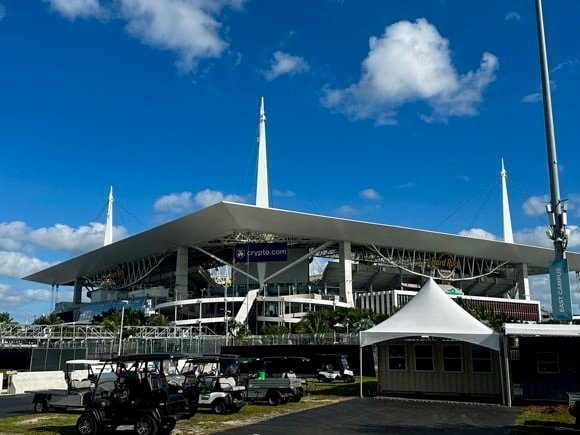
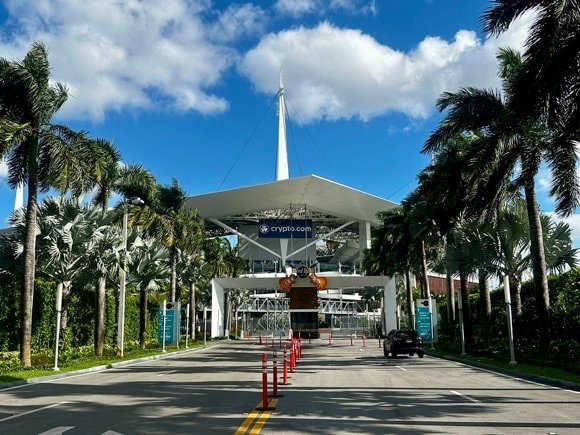
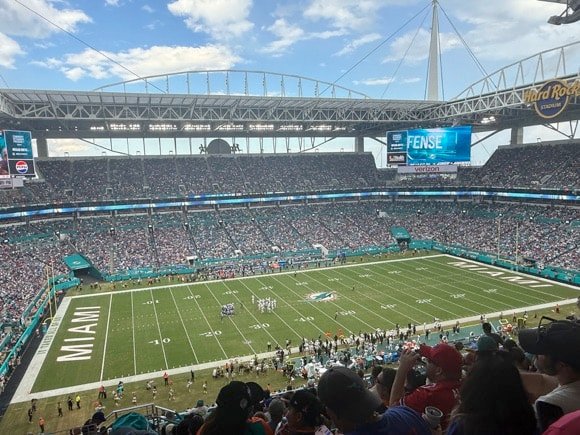
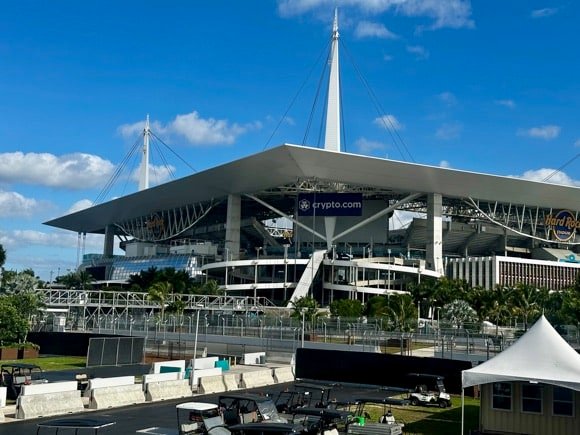
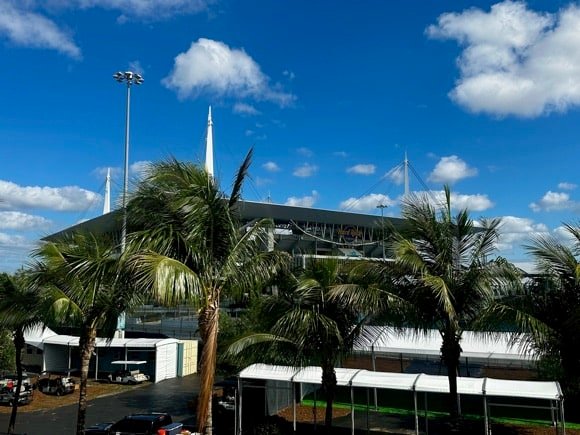
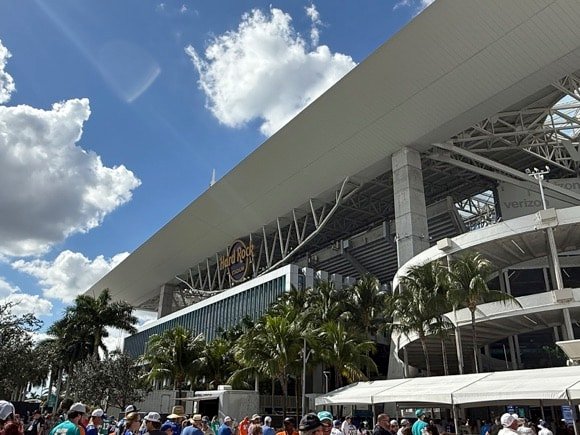
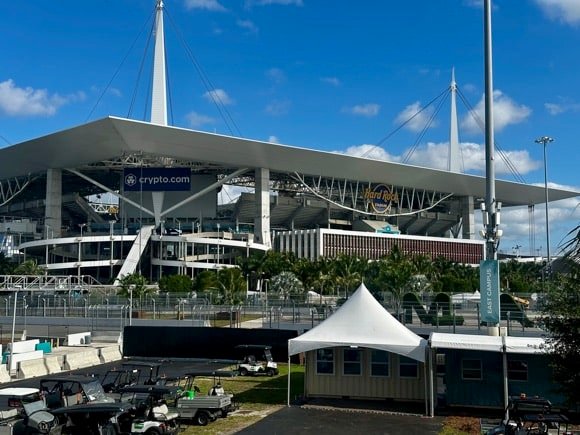
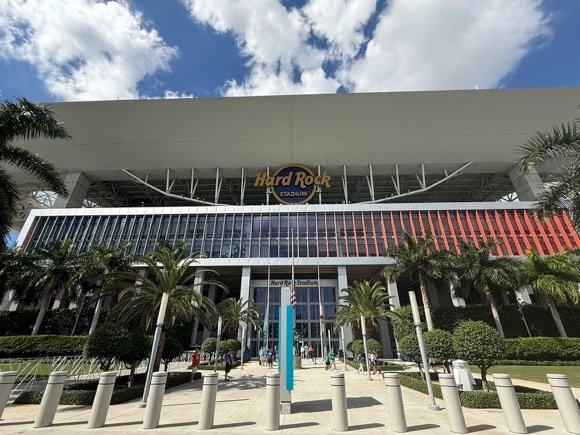
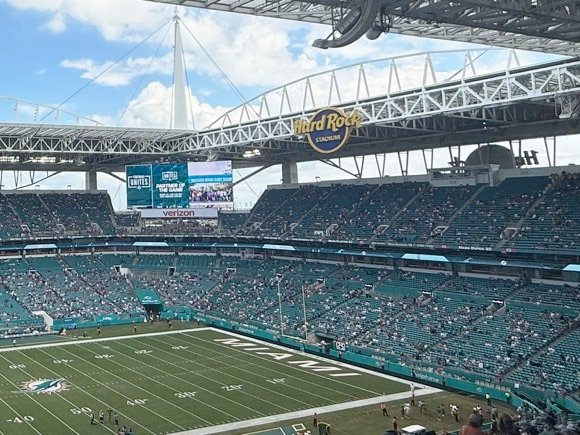
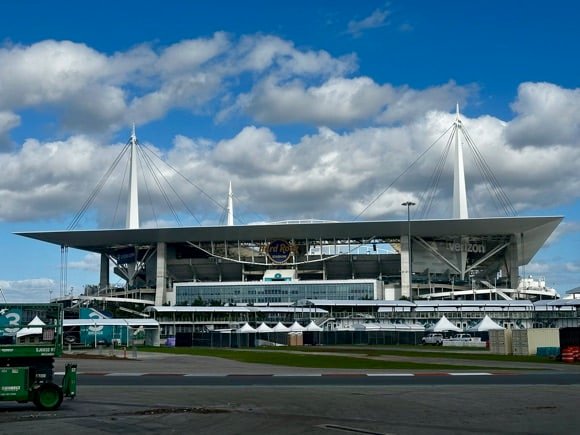
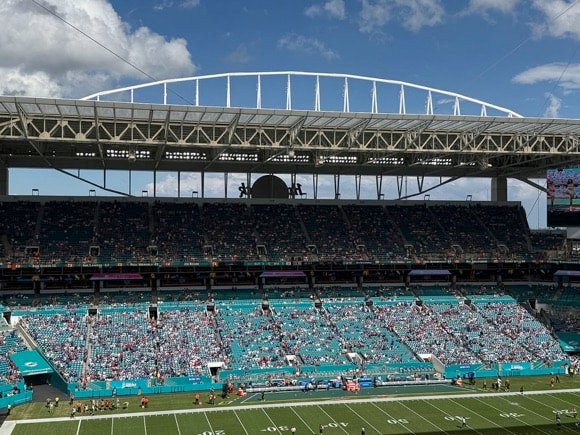
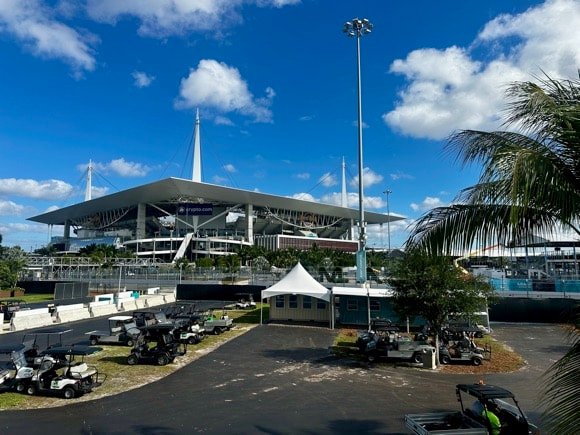
On the plus side, Miami still had its hat in the ring of two-dozen potential venue cities to host the 2026 World Cup, eventually confirmed in 2022. Home of NFL’s Miami Dolphins, the Hard Rock Stadium in Miami Gardens has been adapted to stage six games in the summer of 2026, involving Scotland, Brazil, Uruguay, Portugal and probably Argentina, not to mention the match for bronze between the last two of the final four.
Security should be supertight, considering the thousands of fans who successfully broke through the gates, even the ventilation system, to pack the stadium for the Copa América Final in 2024, Messi’s Argentina beating Colombia 1-0. Capacity for the World Cup is set at 65,000 – Miami was always going to be oversubscribed once Messimania erupted here in 2023.


Beckham’s own city of choice had long been decided. The $25 million option he had been offered to pick up a franchise back in 2007 – the going rate back when MLS was seriously wobbling, not even a tenth of what anyone would pay now – had two main caveats. One was Anywhere But New York. Despite the short-lived example provided by Miami Fusion in MLS a decade before, Beckham had long set his steely focus on South Florida.
A sport-obsessed metropolis with a 70% Hispanic/Latino population, Miami has hosted an equal record number of Superbowls, celebrated three NBA Championship wins and regularly staged showcase soccer fixtures attracting crowds of 50,000-plus. What it lacked was a soccer team that locals could identify with and follow. And for that, it needed a stadium – the second caveat to Beckham’s ambitious project and the stumbling block for the Miami Fusion franchise that almost caught fire back in 2001.
Before Messi, soccer in South Florida had a patchy history. In 1972, NASL came to Miami when Washington Darts moved south to become Miami Gatos. Cats for one season, Bulls the next, Miami Toros made the NASL Final in 1974, losing on penalties to LA Aztecs before 15,000 at the Orange Bowl after a 3-3 draw. Built in the 1930s in the Little Havana neighborhood of Downtown Miami, the Orange Bowl was a classic, old-school arena where the annual college football bowl game of the same name took place, as well as sundry soccer fixtures.
Playing NASL soccer until 1979, Miami Toros used two home grounds: Tamiami Park by Florida International University and the Orange Bowl. The main venue for international soccer fixtures in Miami until the Hard Rock Stadium assumed the role from around 2011, the Orange Bowl was used for many USMNT games, the short-lived American Soccer League side Miami Sharks, and showcase friendlies involving Manchester United, Glasgow Rangers, Real Madrid, and AC Milan.


Most notably, it co-hosted the Olympic soccer tournaments in 1996 – China’s women’s team and USWNT played before 55,000 here, while for the men, goalscorers in Miami included Brazil’s Ronaldo, Juninho and Bebeto.
Managed by 1970 World-Cup winning captain Carlos Alberto and 60-time Dutch international Wim Suurbier, Miami Sharks featured the likes of all-time Peruvian hero Teófilo Cubillas, multi-capped USMNT midfielder Tab Ramos, and Brazilian international Dirceu. Renamed Miami Freedom when the American Soccer League became the American Professional Soccer League in 1990, the team failed to shine despite its substantial financial backing.ed vulputate mi sit amet mauris commodo quis imperdiet. Ullamcorper a lacus vestibulum sed arcu non odio euismod. Sit amet venenatis urna cursus eget nunc scelerisque viverra. Massa tincidunt nunc pulvinar sapien.
For the 1994 World Cup, the Orange Bowl was considered but not adaptable for FIFA regulations, so Miami was overlooked for Orlando, and the Citrus Bowl, where Jack Charlton’s Ireland side sizzled in the Florida sun. An obligation of the U.S. hosting the tournament, MLS was set up two years later – of the ten teams, Tampa alone represented Florida.
It was soccer-loving cellular telecommunications entrepreneur Ken Horowitz who brought MLS to Miami as the league’s first expansion franchise in 1998. Paying around the same amount as Beckham would a decade later, and looking at the same promising optics – Hispanic-majority, sport-loving metropolis – Horowitz poured his own funds into Miami Fusion, convincing other investors and inaugural MLS commissioner Doug Logan of its viability.


But neither Miami, nor the Orange Bowl, the team’s proposed home, were convinced. With the city offering no help and the stadium management insisting on keeping the proceeds from food, beverage and parking, Horowitz was forced to look to Fort Lauderdale to host his franchise.
Used mainly for high-school football, Lockhart Stadium had hosted USMNT’s qualifying games for the 1982 World Cup – a rare 2-1 win over Mexico was witnessed by barely 2,000 spectators – and NASL side Fort Lauderdale Strikers. With George Best and Gerd Müller in the team, post-match libations may have been substantial, but the team made the NASL Final in 1980. Captain that day, a 3-0 defeat to Cosmos, was former Newcastle midfielder, Ray Hudson.
Horowitz not only expanded Lockhart Stadium to 20,000 capacity, he converted it to soccer, the first such stadium in MLS, even before Lamar Hunt’s Columbus Crew Stadium in 1999. Built in next to no time, the stadium was full for the opener of the 1998 season, the live TV game with D.C. United. But even with aging maverick Colombian Carlos Valderrama, a team set up by former Boca Juniors full-back Carlos Córdoba as coach was always going to be defensive, and crowds duly dwindled due to the poor football on offer.
Unforeseen elements also came into play. Unlike today, with far fewer teams involved in 1998, the regular MLS season was over by the end of September – and soccer in South Florida in the height of summer not only meant severe heat but thunderstorms, even hurricanes. For insurance reasons, the stadium had to be disassembled at any hint of extreme weather. People became reluctant to risk driving up from Miami around hurricane season and, in any case, many preferred to stay at home and watch their own Latin-American clubs on cable TV. That is if they were soccer fans – much of the potential local Hispanic supporter base was Cuban, and followed baseball.


The crunch came in 2001. With MLS losing $250 million in five years under Doug Logan, the league was minded to clear out any dead wood before the make-or-break 2002 campaign. Effervescent Geordie Ray Hudson, until then Fusion’s community outreach director, was brought in as coach and put together an attacking side of flair and verve. Signing mercurial Serb-American Preki from Kansas City Wizards, prolific Honduran Alex Pineda Chacón and getting the best out of Colombian striker Diego Serna, Hudson oversaw one of the most magical teams in MLS history, one that won the Supporters’ Shield and scored goals for fun.
Still nobody came. While official attendances crept over the 10,000 mark, the number of spectators actually paying at the gate barely reached 8,000.
There was more at stake in the 2001 Playoff Semifinal with Landon Donovan’s San Jose Earthquakes than a showdown for the MLS Cup with LA Galaxy – defeat would almost certainly mean the club folding, Ken Horowitz and his investors having stumped up more than $50 million and being reluctant to lose more. A scrappy golden goal by workaday Quakes centerback Troy Dayak was the final nail on the coffin. Fusion, and fellow Floridians Tampa Bay Mutiny, dropped out of MLS.
Years later, the Miami Fusion side of 2001 inspires many an interview and podcast, Ray Hudson still choking up about the once-in-a-decade team he had created and what might have been. For later USMNT players, young men given their chance by Hudson, goalkeeper Nick Rimando and defender Kyle Beckerman, Miami Fusion was an education like no other. Horowitz would describe the experience as “exhilarating and painful”. Fusion also laid the foundations for the eventual success of soccer in Miami.


For MLS, too, it was a watershed, the arrival of Don Garber as commissioner ushering in the age of Soccer United Marketing, and smaller, soccer-specific stadiums – as opposed to the empty large arenas and unrealized profits on concessions that typified the Logan era. When David Beckham arrived in 2007, MLS had already seen a mild bounce from USMNT’s positive performance at the 2002 World Cup.
By the time he retired in 2013, MLS was enjoying the benefits of the Beckham effect, doubling in size and attracting better attendances across the league. Towards the end of his time at LA Galaxy, a showcase fixture between Barcelona and Mexican giants Guadalajara had brought a crowd of 70,000-plus to the Hard Rock Stadium in Miami Gardens, the first of a string of summer friendlies played in a near packed arena.
In 2014, Beckham announced his intention to set up an MLS expansion team in Miami, eyeing a site in PortMiami, alongside the home of popular NBA side Miami Heat. Meanwhile, another sports entrepreneur was setting up another soccer development, also with star names involved. Milanese media rights mogul Riccardo Silva, with fashion and art interests in South Florida, set up Miami FC with Italian legend Paolo Maldini in 2015. Bringing in another Azzurri star, Alessandro Nesta, as coach, and Bologna-based sportswear giant Macron as kit suppliers, Silva first based his operation at the campus of Florida International University (FIU).
Appearing in the modern-day but even shorter-lived version of NASL, which featured classic names from the 1970s such as New York Cosmos, Fort Lauderdale Strikers and Tampa Bay Rowdies, Miami FC won the 2017 Spring and Fall Championships. The collapse of NASL and departure of Nesta put the club in limbo, between venues and leagues, though Silva managed to persuade Paul Dalglish, son of Kenny, to come in as coach.


More pertinently, Silva promoted the cause of promotion and relegation to and from MLS, while the club negotiated the unfamiliar waters of the Sunshine Conference of the National Premier Soccer League (NPSL) as Miami FC 2. At one point, reverting back to Miami FC, Silva’s minions even played community-focused team Miami United. Based at Ted Hendricks Stadium in Hialeah, just north of Miami International Airport, ‘Miami’s oldest club’ founded in 2012, sporting a badge showing Miami cityscape and palm trees, Miami United was the brainchild of Italian entrepreneur Roberto Sacca.
Playing in the fourth tier, either the NPSL or United Premier Soccer League (UPSL), United has battled its way through the U.S. Open Cup on several occasions, even playing MLS side Orlando City in 2018. Miami FC, meanwhile, joined the de facto Second Division USL in 2020 and hired Anthony Pulis, son of ex-Stoke manager Tony, as coach.
In 2022, Silva became part of the ownership structure of AC Milan, demanding more of his attention across the Atlantic. Though crowds at what is now the Pitbull (formerly Riccardo Silva) Stadium at FIU barely click into four figures, the club announced a move to a new stadium in Homestead, by the Everglades Alligator Farm.
Pre-Pitbull, FIU Stadium had been one of several options in the conversation after Miami-Dade County rejected David Beckham’s bid to place his new stadium at PortMiami. As three more locations were being stymied, local engineering and construction billionaires the Mas brothers, Jorge and Jose, joined the Beckham operation. The plot they found was on the grounds of the city-owned Melreese Country Club beside Miami International Airport.
After tortuous negotiations over the golf course and the promise to fund public parks for the next 30 years, the Mas brothers and Beckham had their site, known as Freedom Park. In January 2018, MLS announced its 25th franchise, due to launch in 2020: Inter Miami.
Home in the meantime would be the former Lockhart Stadium in Fort Lauderdale, rebuilt and rebranded as the Inter Miami Stadium, of 21,500 capacity. The architect would be the same one behind Miami Fusion’s quickly rebuilt Lockhart Stadium back in the late 1990s.
In a further connection with Miami’s last MLS franchise, former Fusion player Chris Henderson was named Inter’s Sporting Director and, fittingly, having become the voice of soccer for many Americans, ex-Fusion manager Ray Hudson as color commentator. Having fetched up in Fort Lauderdale from his native Newcastle in 1977, the exuberant Geordie had come full circle 40 years on.
The branding team came up with a badge that nods towards Miami’s Art Deco heritage, herons also providing a nickname. Between the birds, seven sun rays align with the shirt number most associated with Beckham, although what his former boss, Sir Alex Ferguson, would make of pink as the club’s signature color has not been investigated.
After a debut goal from Designated Player, Mexican international Rodolfo Pizarro, in preseason, in March 2020 Inter Miami was ready to roll. Two losses on the road later, and the whole shebang came to a grinding halt with the pandemic. After three tentative games in isolation at the ESPN complex in Bay Lake, all defeats, Inter Miami at last recorded a win, in its first game at Fort Lauderdale, over local rivals Orlando. There would only be a few more.


Despite the arrival of elite Argentine striker Gonzalo Higuaín, things barely improved in 2021 – a 5-1 home defeat by Nashville stands out. Reaching the playoffs in 2022 must count as the high point of coach Phil Neville’s 30-month stay at Inter Miami – by the time Beckham was forced to sack his old mate in June 2023, the team was bottom of the Eastern Conference and crowds had dipped to 15,000.
Plus, there were interesting developments from Europe. Ironically, had Beckham been able to follow up on his initial proposal in 2014 to build a stadium at PortMiami, the timing wouldn’t have allowed for the arrival of the most vital element in the whole Inter equation: Lionel Messi. After his tearful farewell from Barcelona in 2021 and a somewhat unsatisfying two-year sojourn in Paris, the world’s greatest player had just turned 36 and was keen on securing a new future for his family.
Beckham’s 2007 signing having ripped up the rulebook on players’ salary caps in MLS, Messi would be paid the kind of astronomical sums he could probably only earn in Saudi Arabia, not a preferred destination for the recently crowned World Cup winner. It wasn’t a moment too soon. Inter Miami had been laboring its way through three-and-a-half lackluster MLS campaigns. With Messi came his old Barça chums, Jordi Alba and Sergio Busquets, with Luis Suárez soon to follow. Former Barcelona coach Gerardo Martino took up the coaching spot.
Messimania began with the Leagues Cup for each member of MLS and Mexico’s Liga MX. Rested until the hour mark, Messi came on to hit a wonder free-kick in the 94th minute to decide the opening game with Cruz Azul, a full house in Fort Lauderdale exploding into life. Scoring in each round, often twice, the No.10 then struck a superb shot in the final in Nashville, eventually settled by an elongated penalty shootout. Miami goalkeeper Drake Callender then outdid Messi by burying his own spotkick and saving a poor one by his Nashville counterpart, earning the visitors their first trophy.


Back in MLS, on the road, Messi drew crowds of 71,635 in Atlanta and 62,124 in Chicago. Injuries and loans to Milan had limited Beckham’s career at LA Galaxy to fewer than 100 MLS games in six years – Messi, who had briefly crossed paths with Beckham in Spanish Clásicos around 2005, had quickly eclipsed his boss’s impact on Major League Soccer. This was approaching the acclaim granted to Pelé nearly half a century earlier.
Joined by his old strike partner Suárez, Messi hit his stride in 2024 despite Miami’s globetrotting preseason. Achieving a record number of points, Martino’s side claimed the Supporters’ Shield, the former Barça duo hitting 20 league goals each. While modest Fort Lauderdale, now called Chase Stadium, had its attendances limited to just over 21,000, Kansas City could switch the Messi show to NFL’s Arrowhead Stadium and attract 72,610 spectators.
Miami twice drew gates of nearly 70,000 in Atlanta, the second match a dramatic playoff in which Messi’s men were through to the Conference Semifinal until a stoppage-time rocket from substitute Xande Silva forced a third game in Fort Lauderdale. There, a shock 3-2 win by the visitors put paid to Miami hopes of a first MLS Cup.
Under his long-term Barça and Argentina teammate Javier Mascherano as incoming coach, Messi hit the ground running in 2025. Bagging 43 goals in all competitions, 29 in MLS to claim the Golden Boot, the team captain did not take his foot off the gas despite his 38 years. Slightly older, Suárez hit 17 across the board, though also gave rise to ugly scenes in a Leagues Cup game in Seattle.


Despite disappointing performances in the Club World Cup in June, two games played at a packed Hard Rock Stadium in Miami Gardens, Mascherano’s men came good in the MLS playoffs, tonking Nashville, Cincinnati and New York City. The Final was set for Fort Lauderdale. the last time that the 21,550-capacity ground would host the senior side in competitive action. Miami faced surprise package for the 2025 season, Vancouver Whitecaps, featuring former Bayern star Thomas Müller. While a few fans made the 3,400-mile trek from the Pacific to Florida, back in Vancouver, 20,500 gathered for a watch party, an MLS record.
With the game tied at 1-1, Messi provided two sumptuous assists for his compatriots, World Cup winner Rodrigo De Paul and Tadeo Allende, whose prolific postseason form had pushed Miami to the Final. His goal on 96 minutes gave rise to wild celebrations, Beckham hugging Messi nearly 20 years after he signed that fateful contract for LA Galaxy.
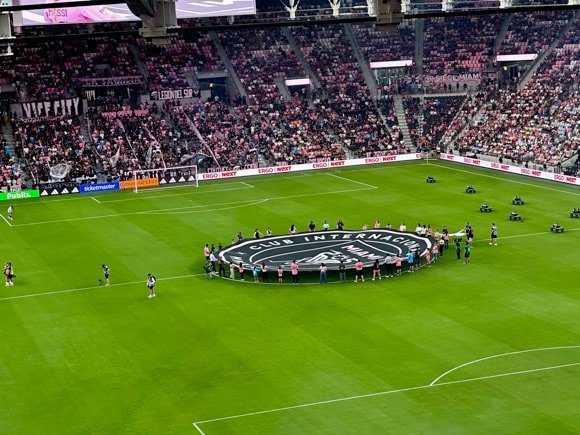
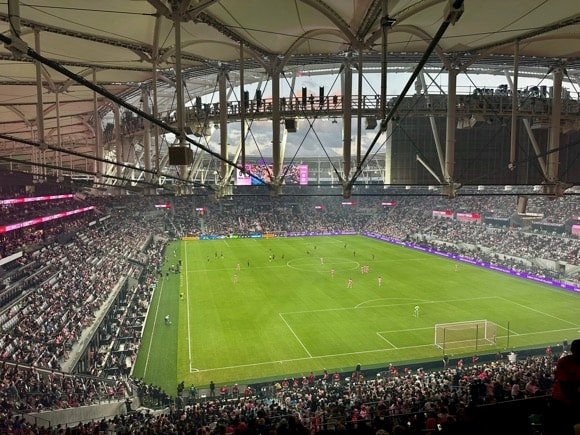
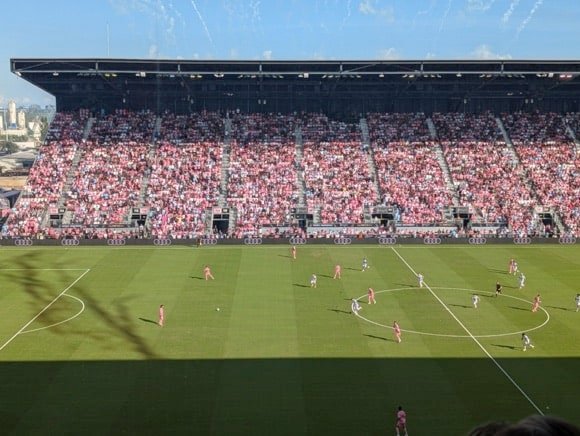
Soon brought back down to Earth with a 3-0 defeat to Beckham’s former team in front of 75,673 at the L.A Coliseum to start the 2026 season, Miami attracted similar crowds in Denver and Baltimore, matches shifted to major arenas to accommodate Messimania. On April 4, Nu Stadium was unveiled before a full house of 26,700.
The curtain-raising game with Austin, however, ended in a 2-2 draw, Miami seeming to lack the balance they had with the now retired Busquets and Alba on board. Further questions were raised when Mascherano left his coaching post citing personal reasons, replaced by former Boca Juniors midfielder Guillermo Hoyos. Messi, meanwhile, may have had one eye on Argentina defending its World Cup in June, his last in a stellar career.
STADIUM GUIDE
The field of dreams – and the story behind it


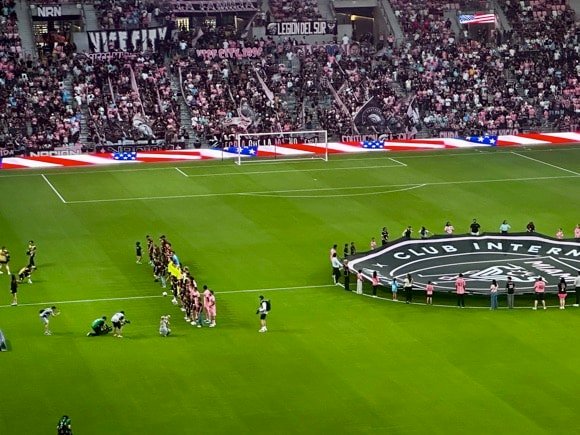
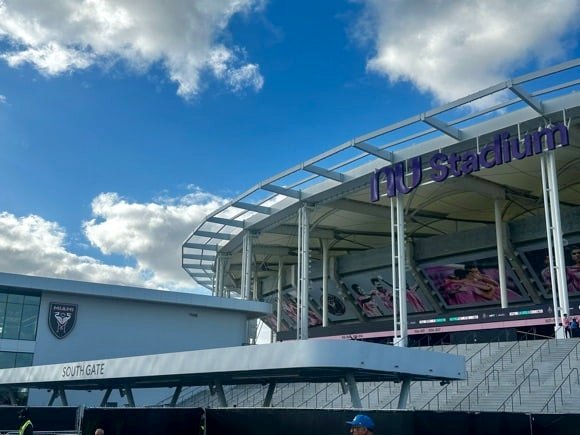
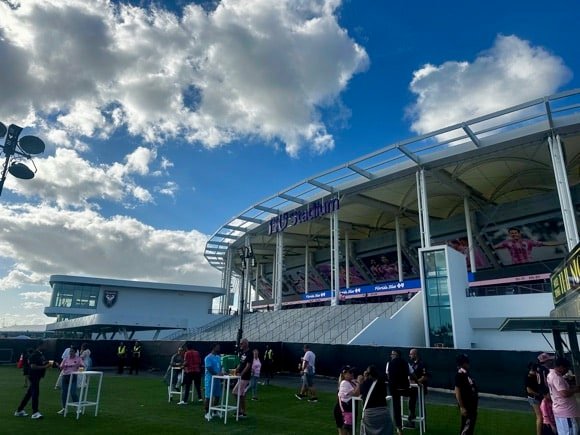
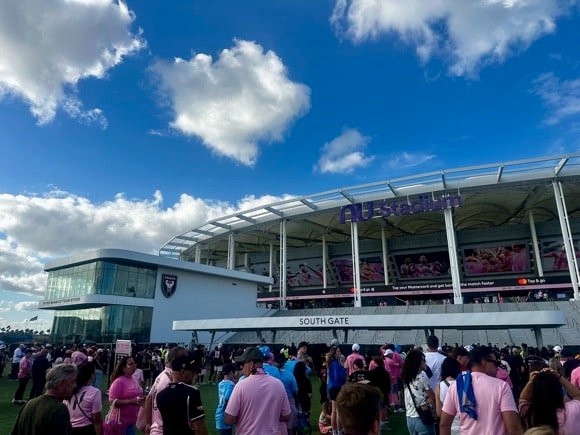
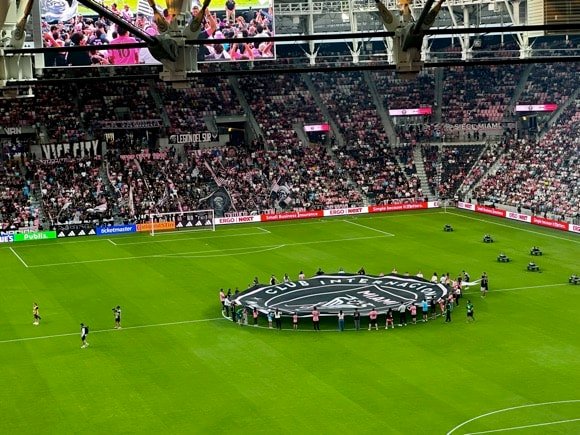
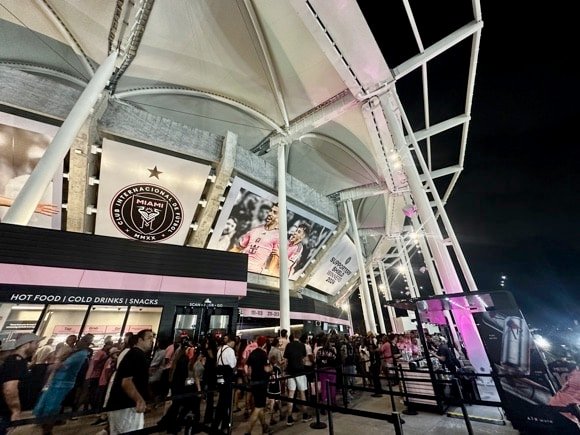
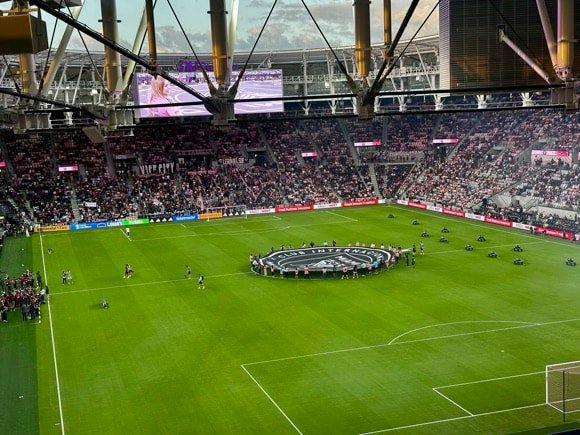
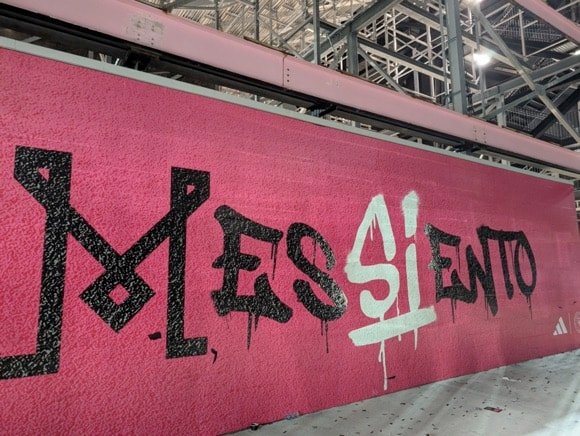
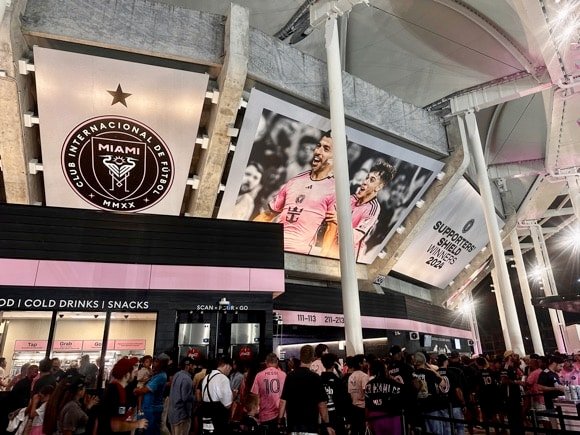
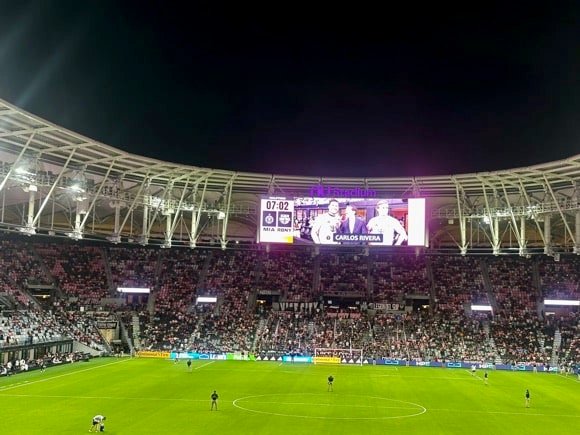
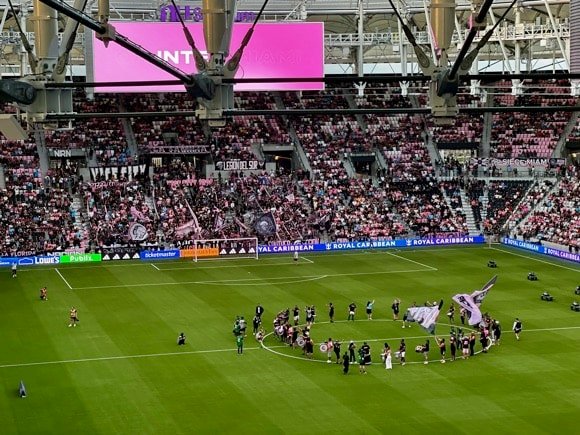
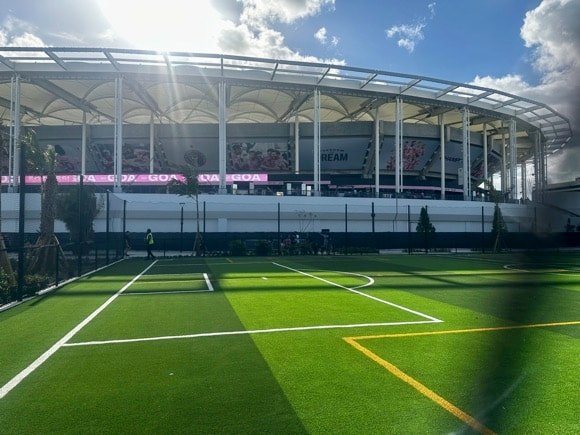
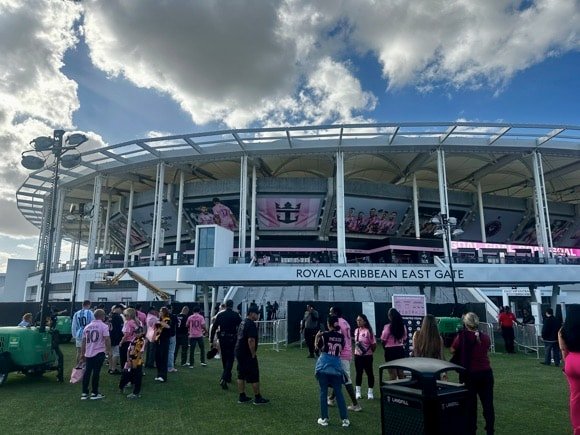
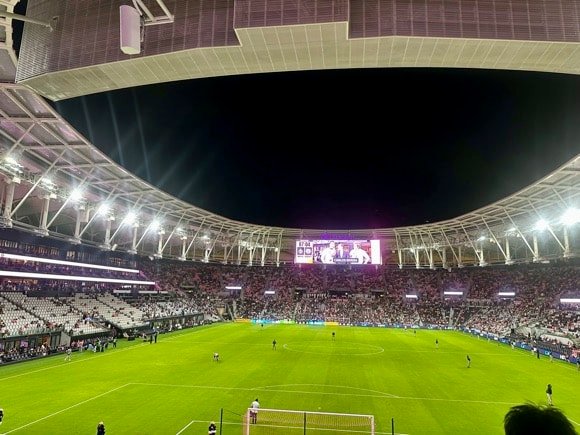
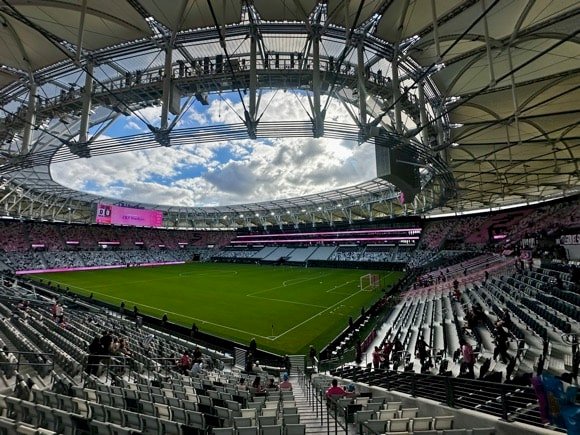
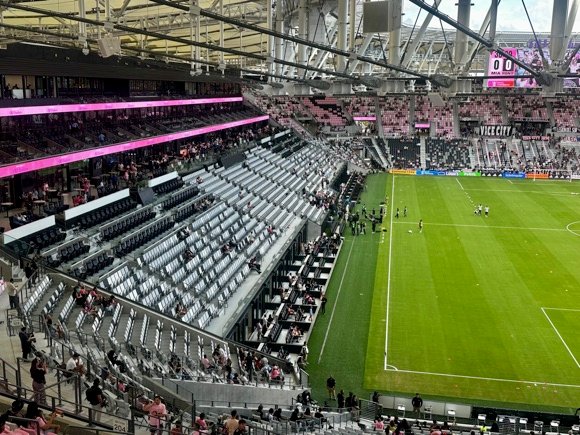
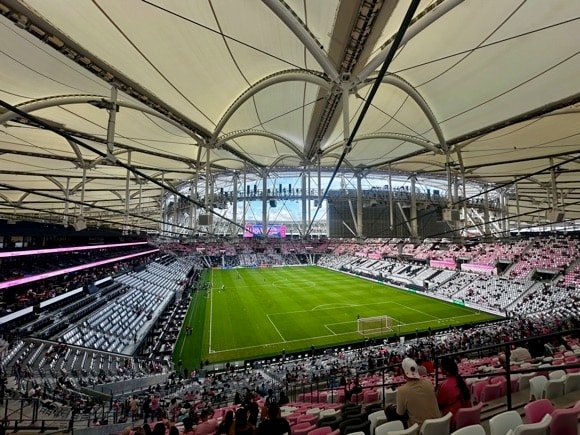
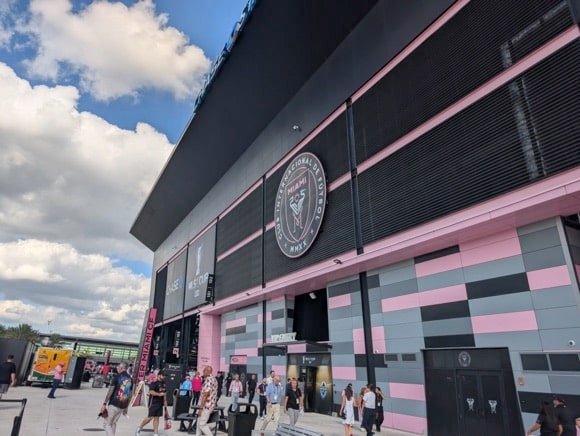
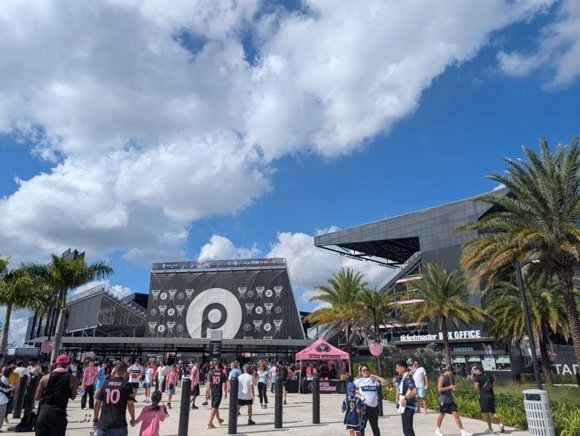
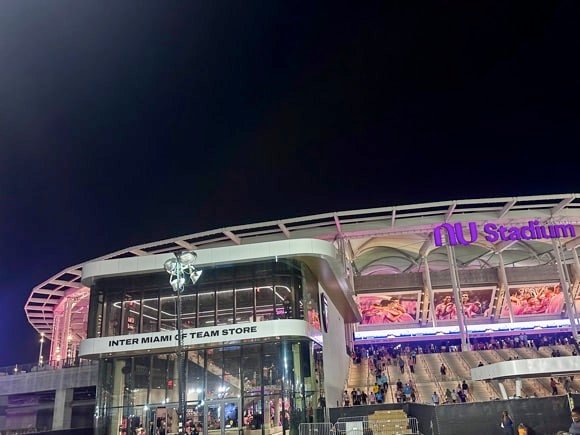
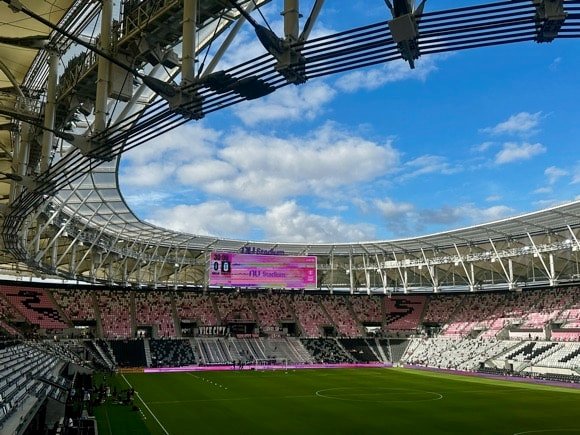
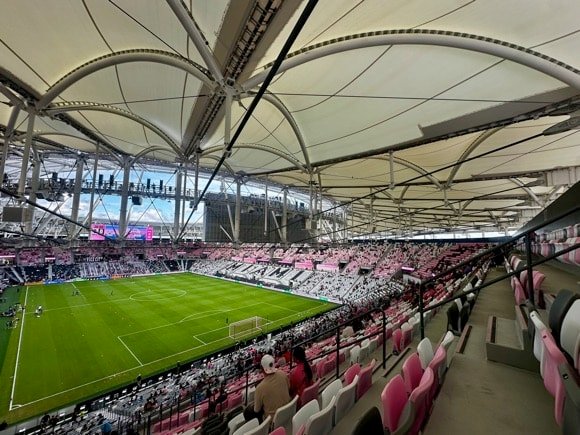
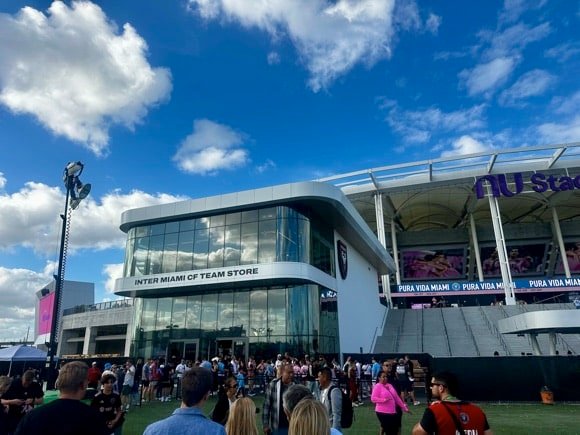
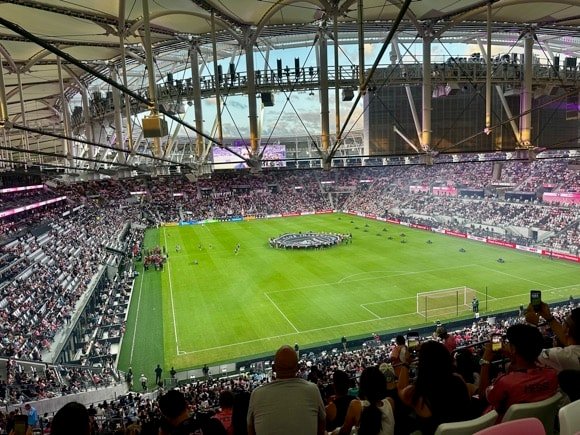
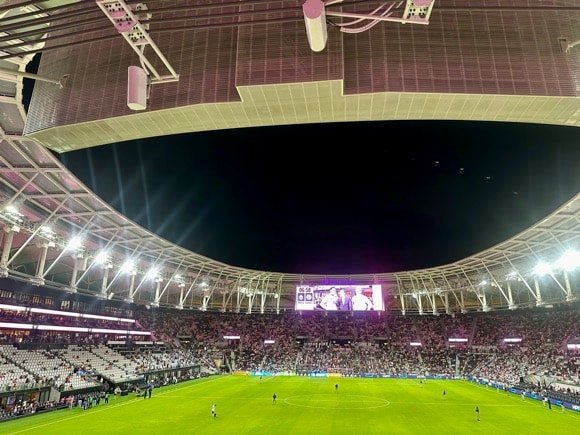
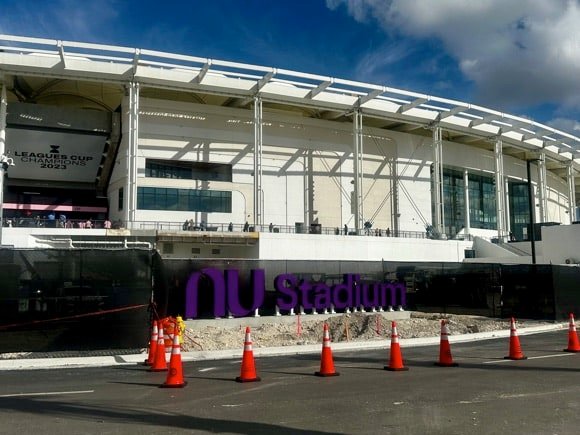
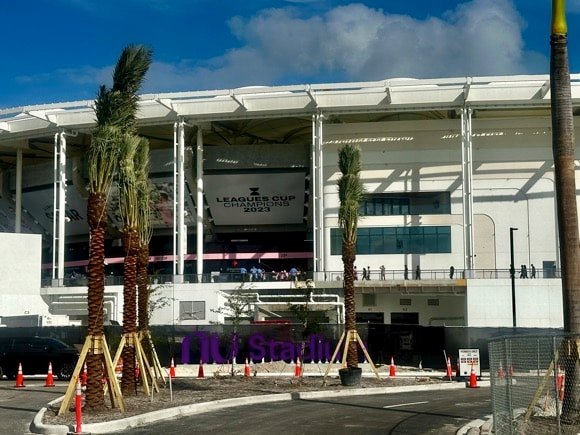
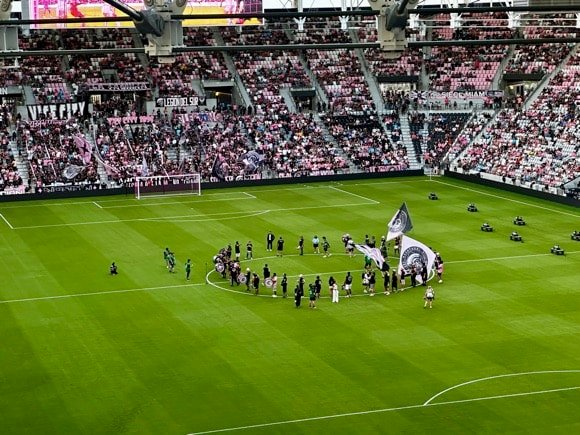
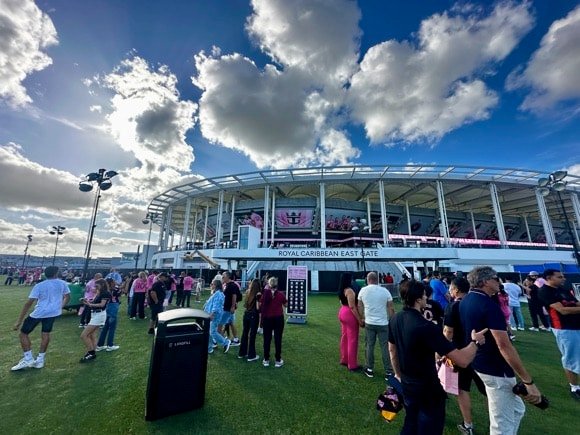
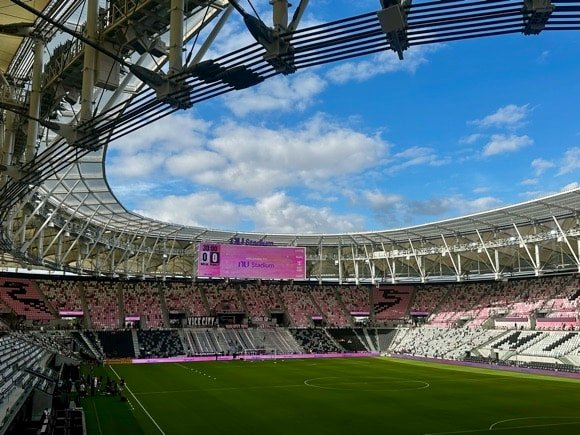
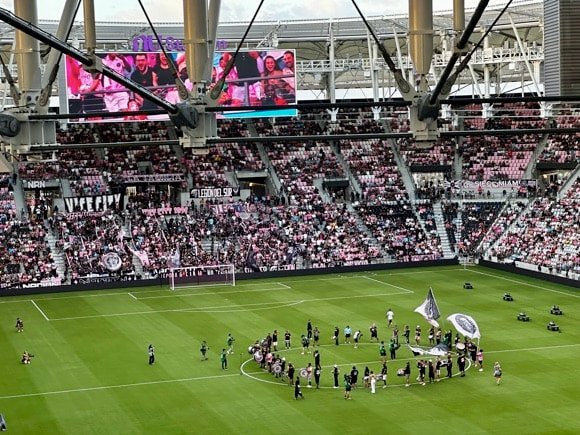
Twelve years in the planning and construction, Nu Stadium, opened on April 4, 2026, pretty in pink and with a Messi Stand to boot. “Dreams really come true,” announced David Beckham, before almost diving into a crowd wielding glo sticks as he saluted La Familia, Inter Miami’s collective supporters’ groups in the North Stand.
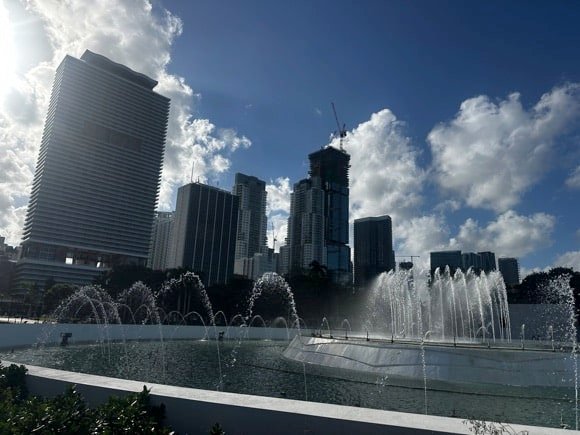
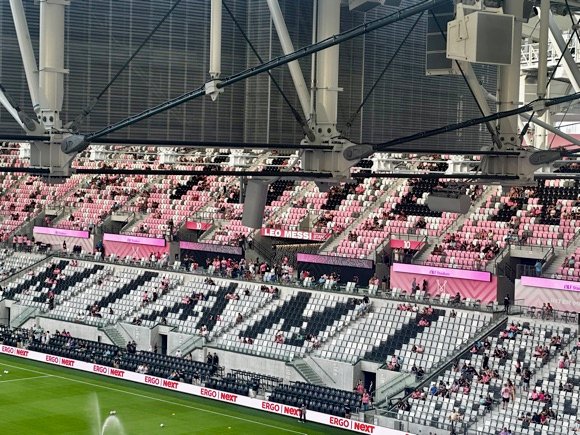
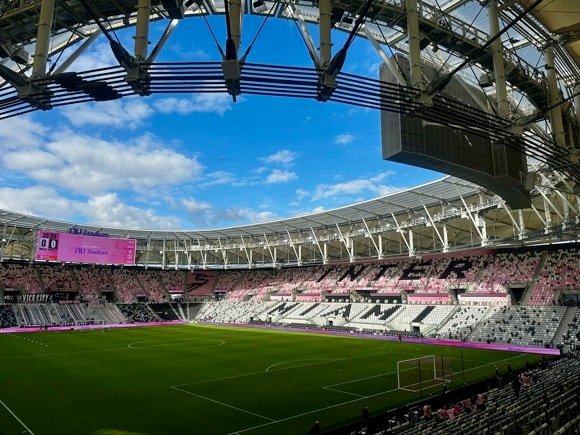
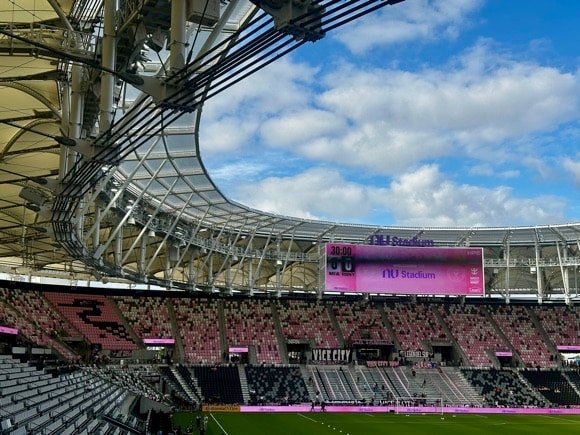
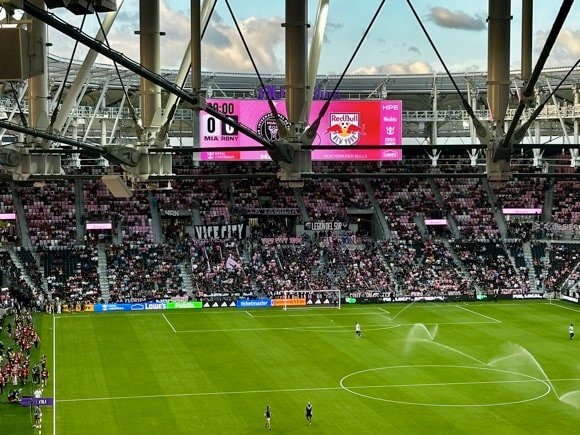
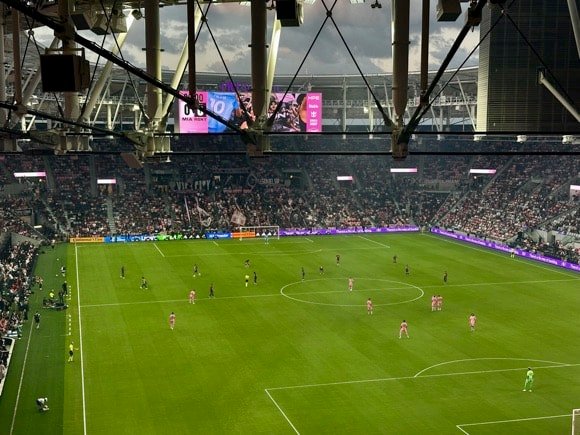
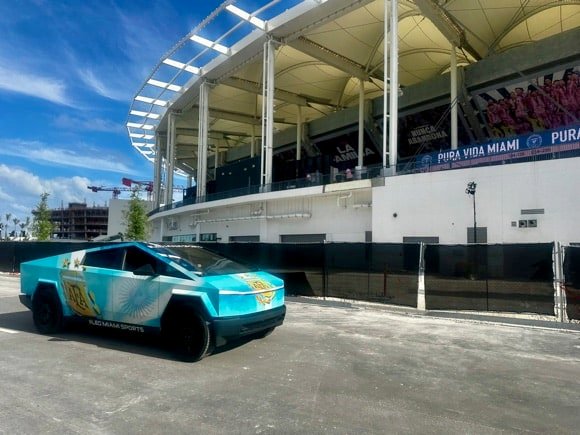
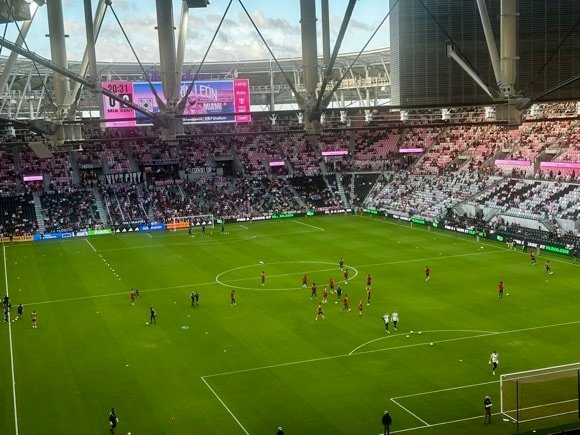
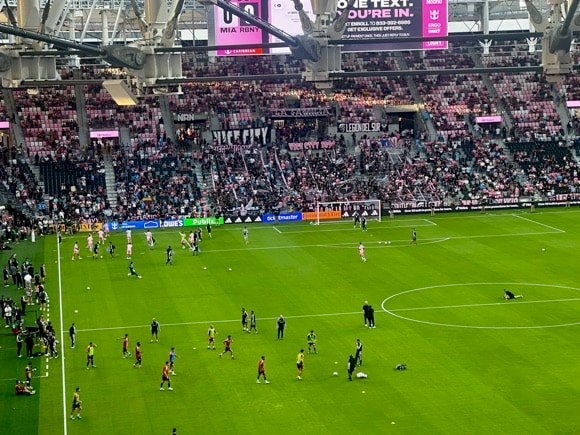
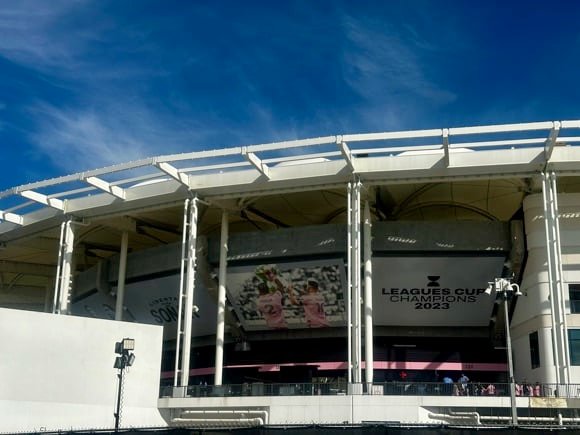
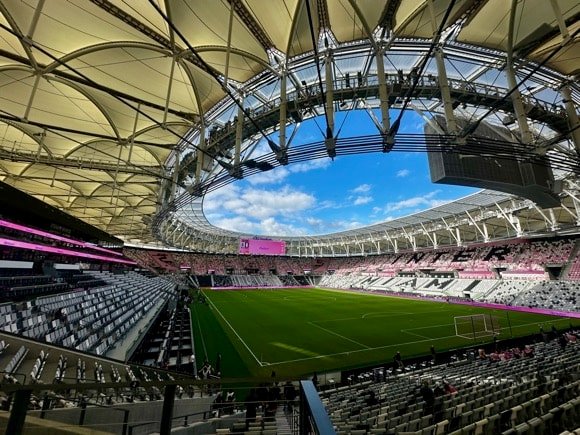
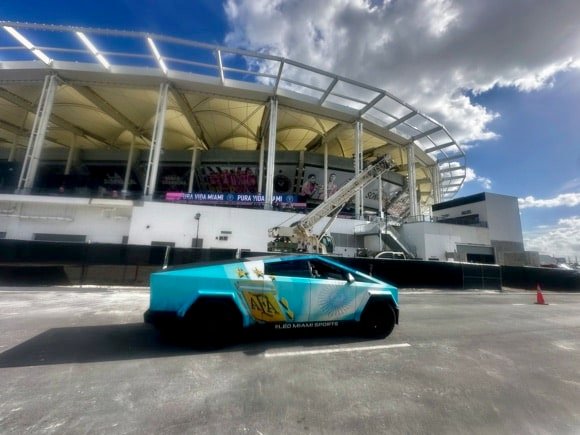
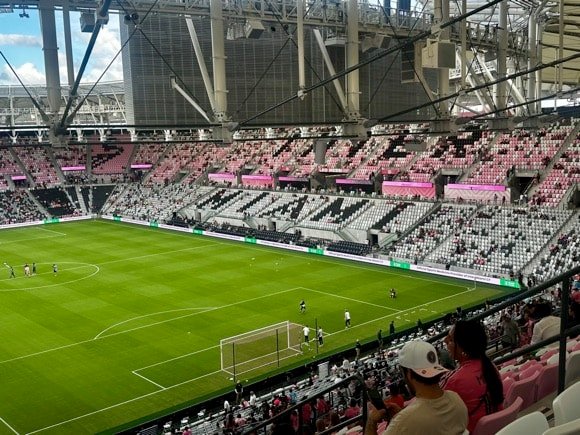
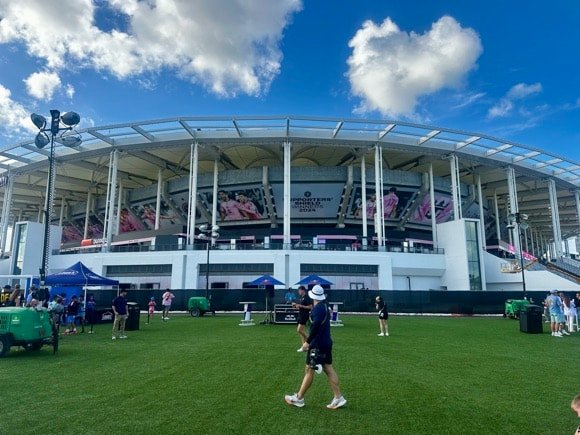
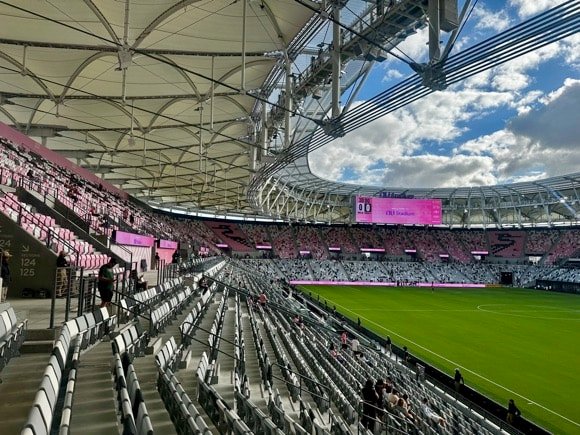
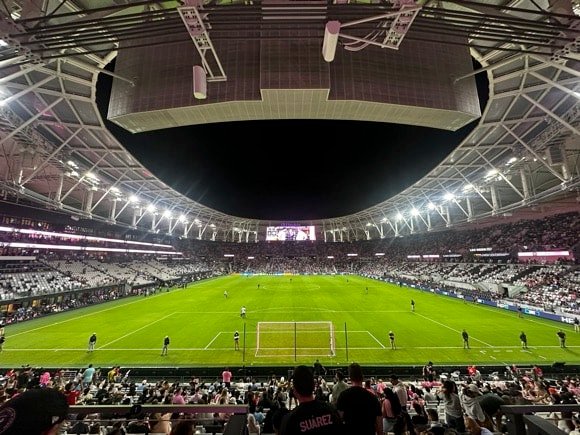
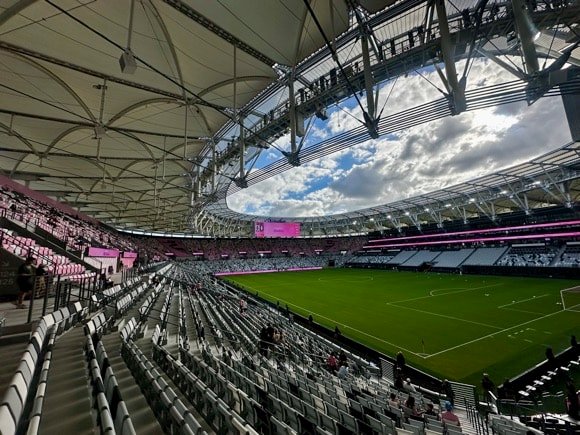
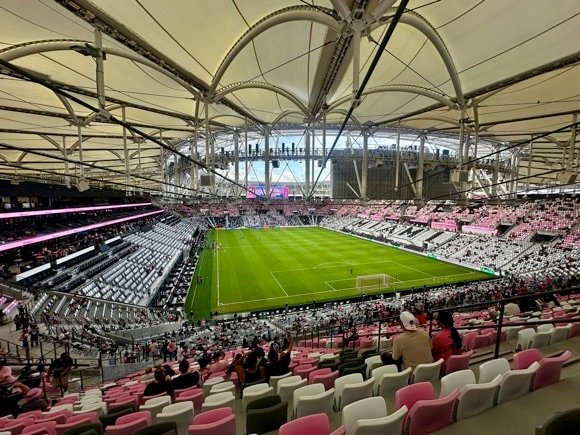
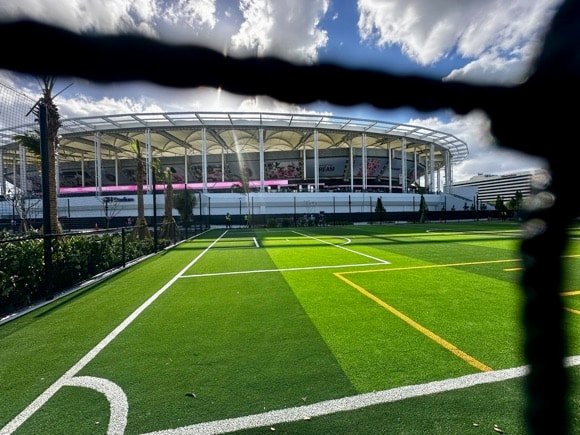
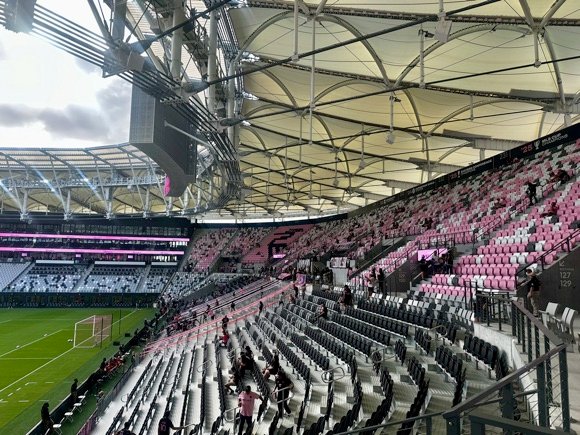
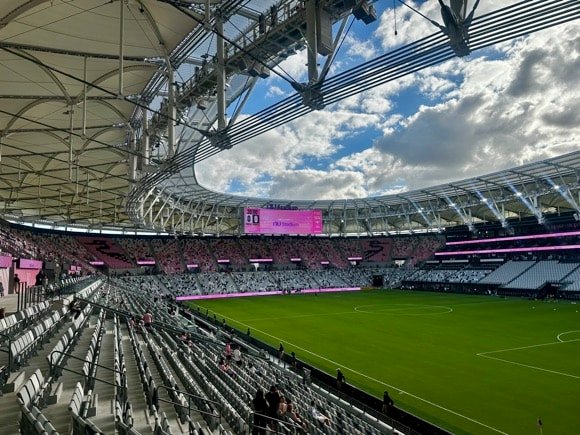
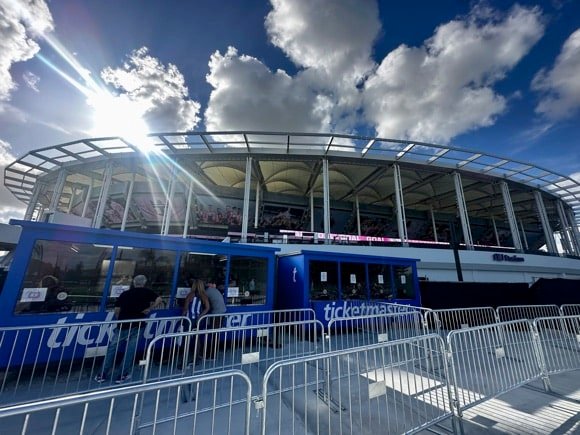
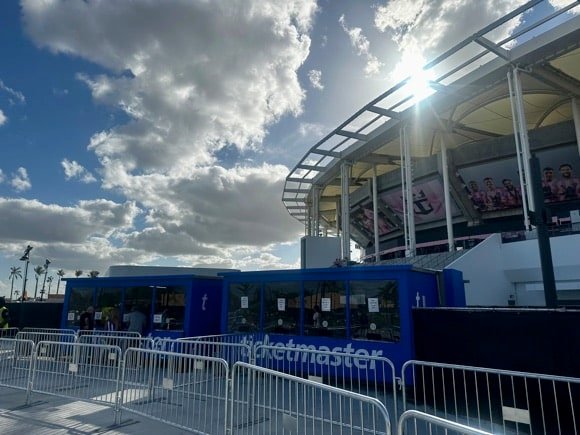
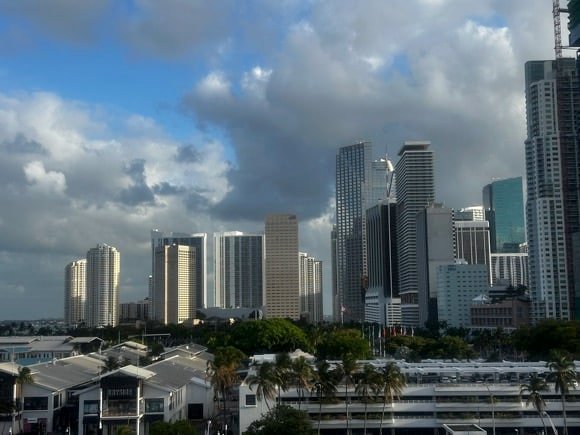
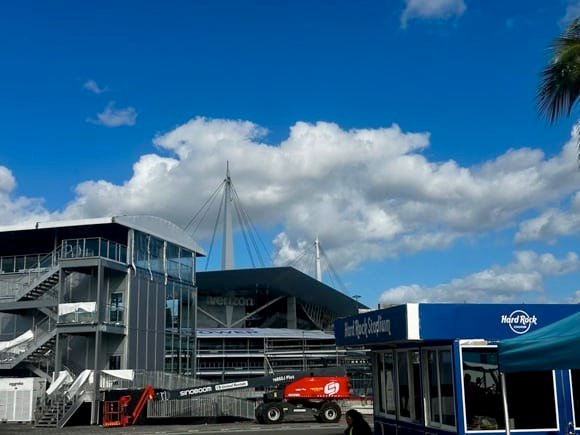
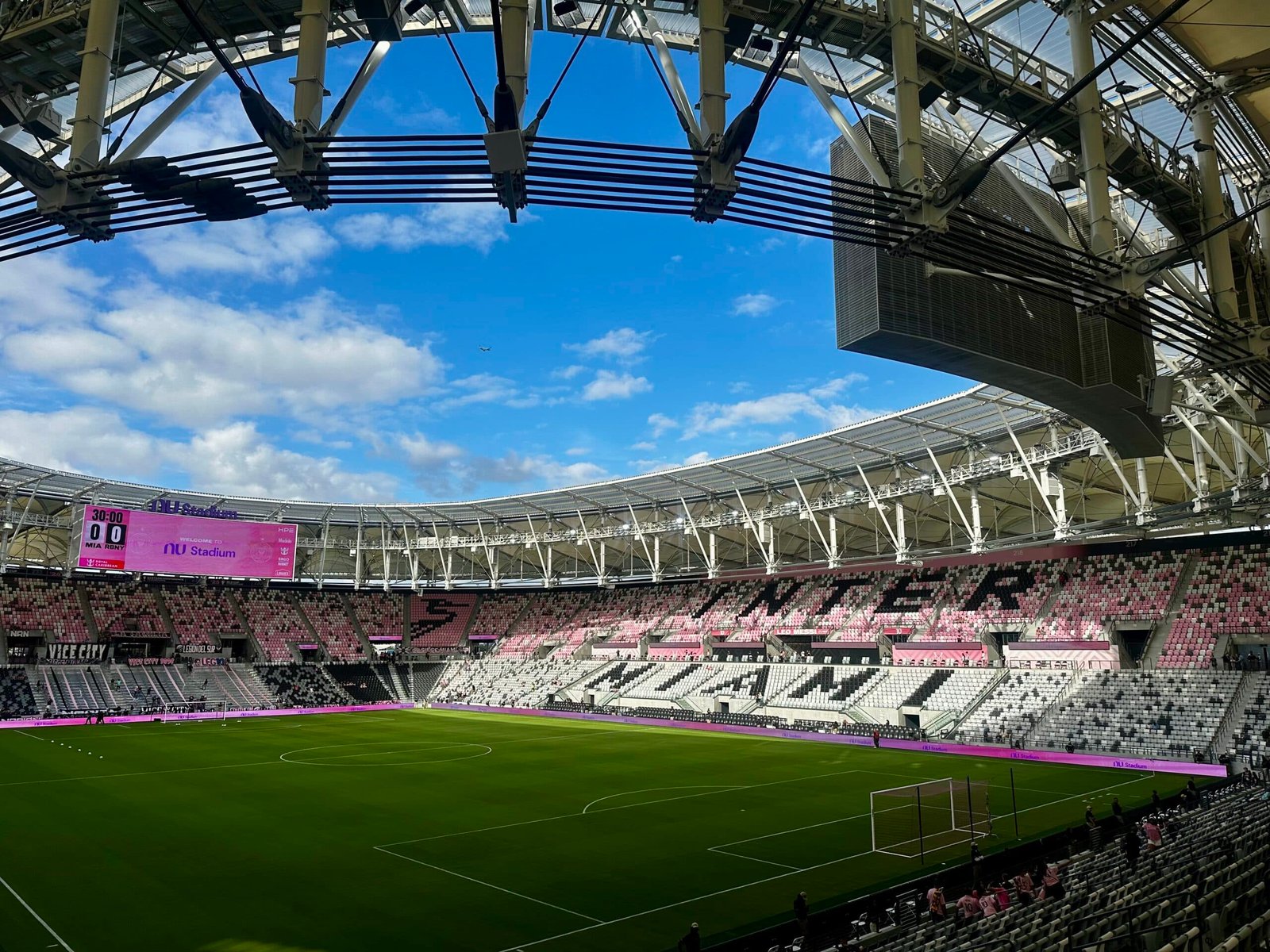
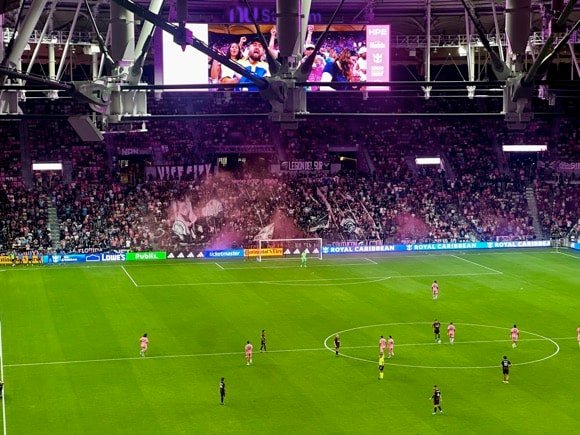
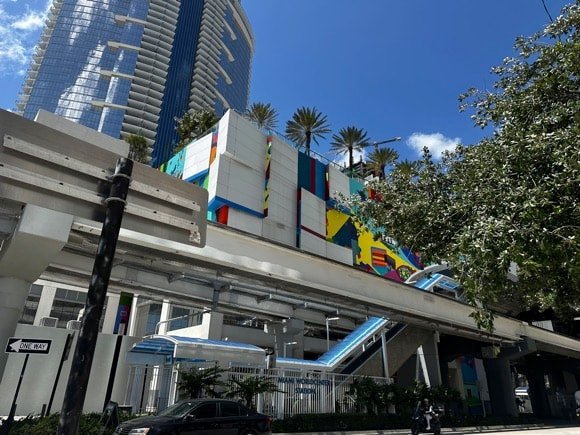
Backdropped by palm trees and Miami cityscape, even if surrounded by construction clutter for the first weeks after its opening, Nu Stadium provides a proper fútbol experience, intimate, passionate and covered from the elements. Two tiers of seating slope close to a grass pitch, the kind of stage Beckham would have appreciated in his younger days in England.
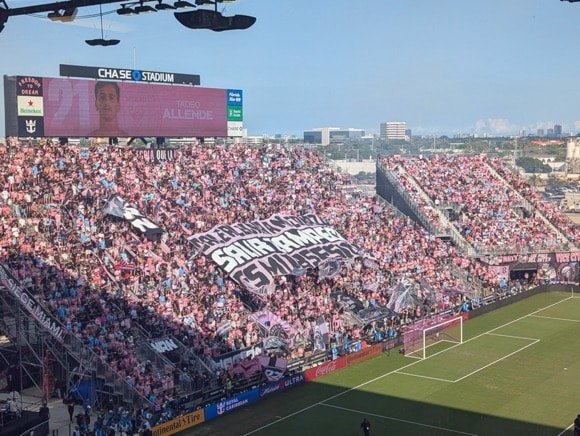
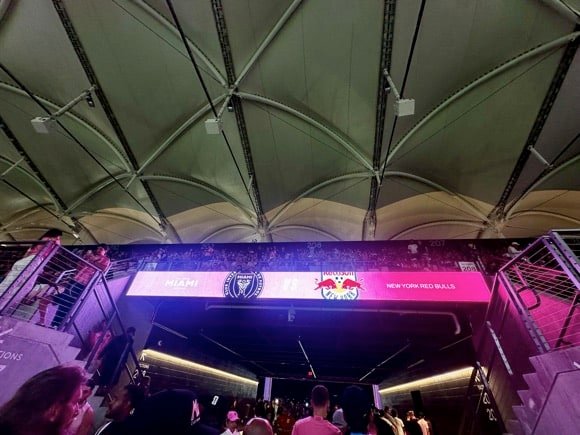
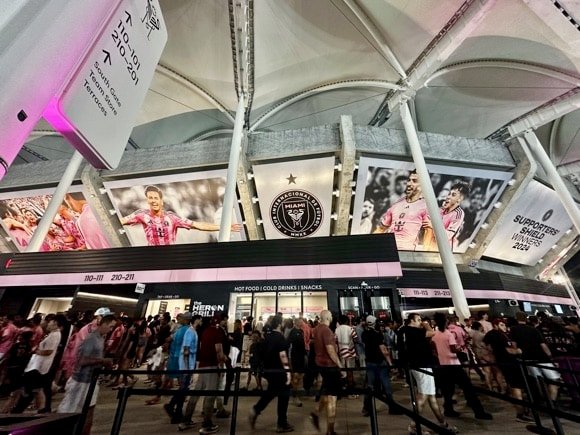
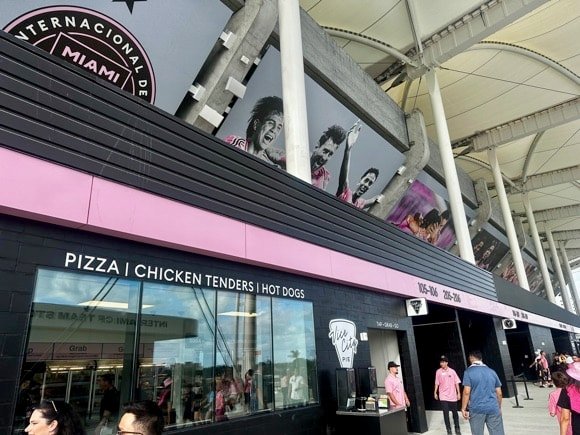
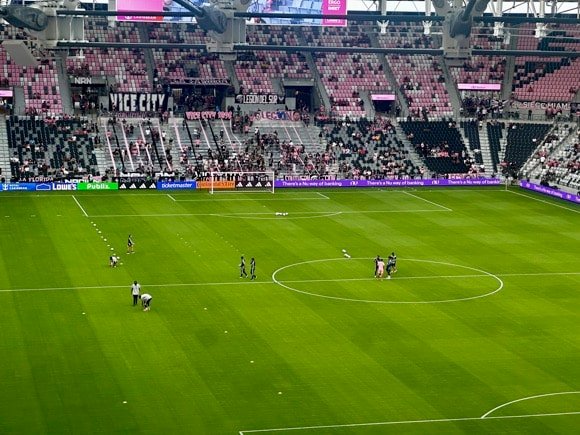
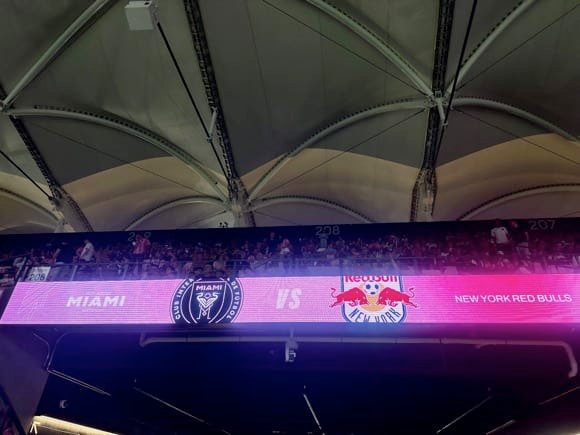
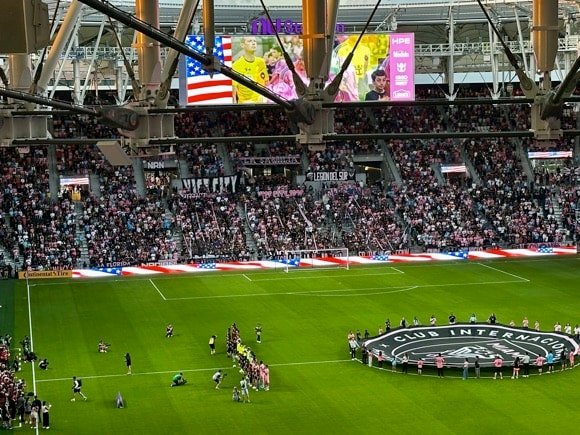
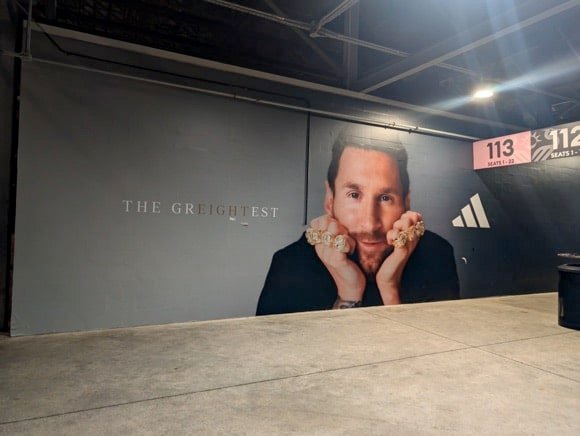
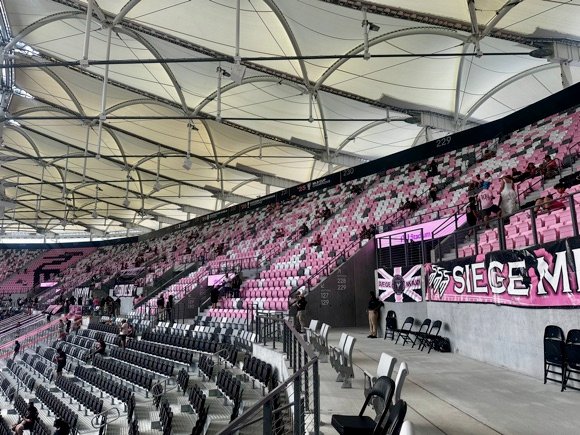
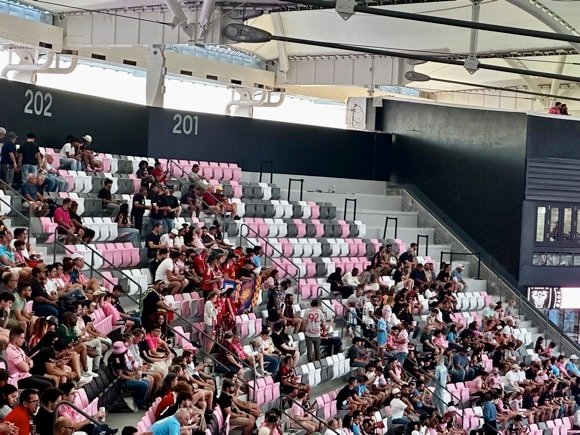
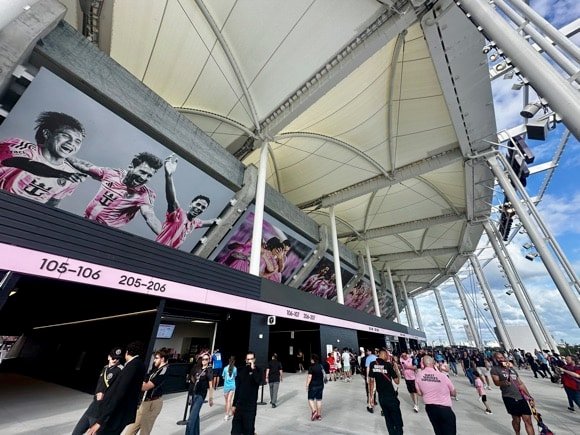
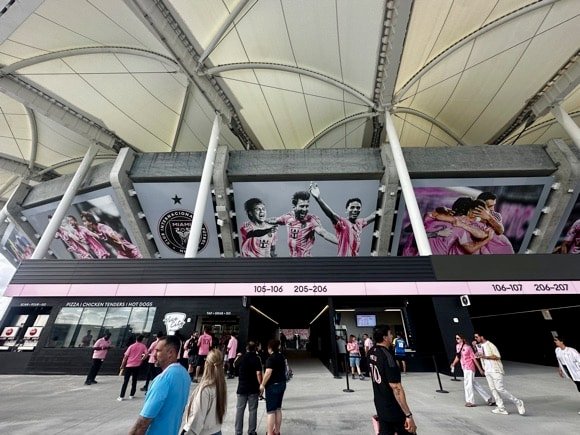
As well as the banners for the main fan groups – The Siege, Vice City 1896, Southern Legion, and la Nacion Rosa Y Negra, boards proclaim the four trophies won by Inter Miami – all since Messi’s arrival in July 2023 – and heron motifs painted across the pink seating display signature branding, accentuated by a club crest on each seat. The Messi Stand sits halfway along the East Side, sectors 117-121 and 217-223 of the lower and upper tiers, while away fans are allocated sector 202.


It’s a far cry, and 30 miles, from the ground in Fort Lauderdale that the club converted and rebranded for its use between joining MLS and stepping into the new arena in the hallowed 305 area code. The domain of high school football until Ken Horowitz and his Miami Fusion showed up in 2008 – and even thereafter, as Fusion had to work around the college schedule, removing the painted lines for gridiron before each soccer game – Lockhart Stadium underwent several changes before Beckham and his team hit the buffers in trying to site a new stadium in downtown Miami.
Now the center of a 34-acre training complex, with seven pitches for Inter Miami’s various academy teams, the former Chase Stadium will forever hold a special place in the club’s heritage, as this is where Mascherano’s men overcame Vancouver Whitecaps to lift their first MLS Cup in December 2025. By then, capacity had crept up to 21,550, 3,000 seats added immediately after Messi’s arrival. This is where MLS Next Pro side, Inter Miami II, now plays, one of the largest in the 30-strong, mainly reserve-team division.
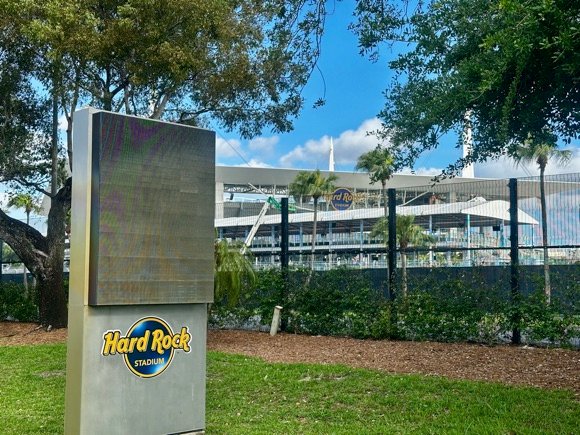
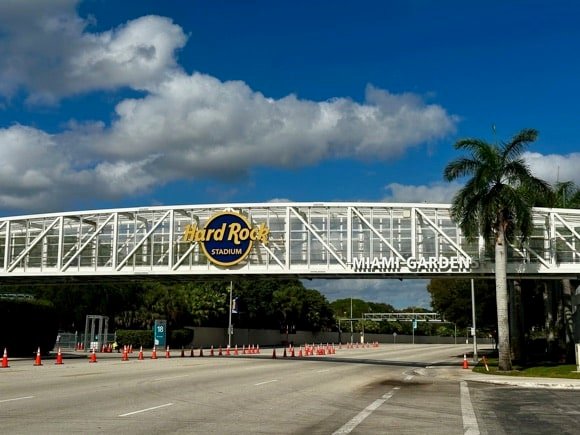
With many thanks to Edward de la Fuente for extra images of Hard Rock Stadium. Edward’s site Itinerant Fan (itnerantfan.com) covers all major American sports in full, with comprehensive stadium and city guides, and ticket information.
TRANSPORTATION
Going to the stadium – tips and timings


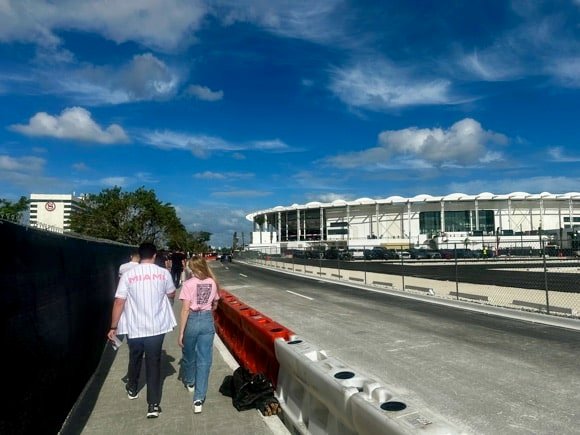
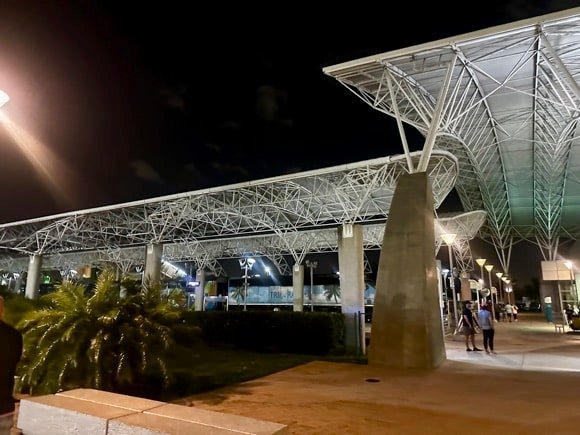
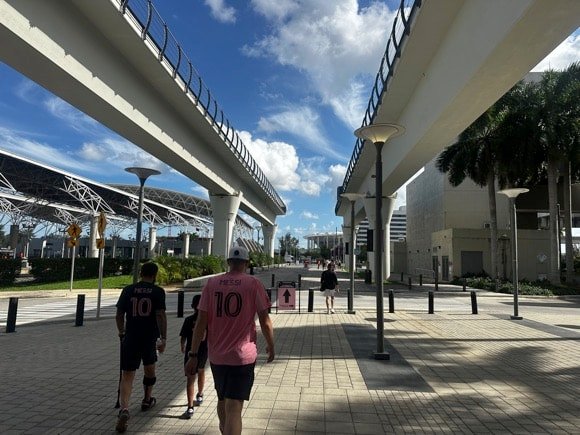
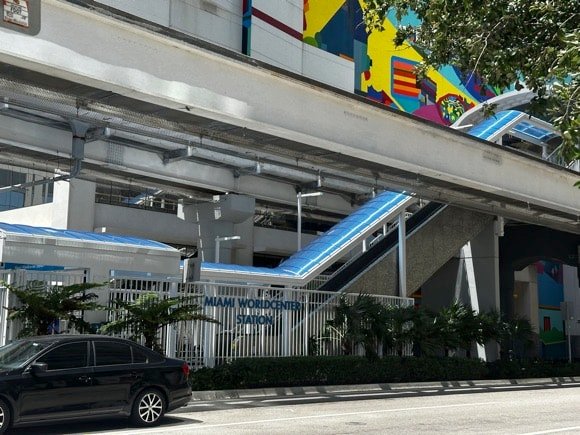
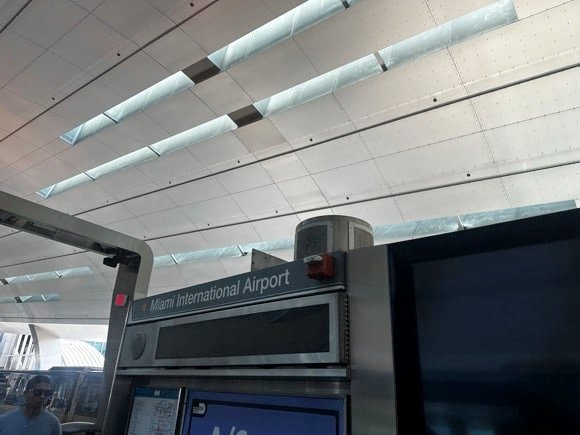
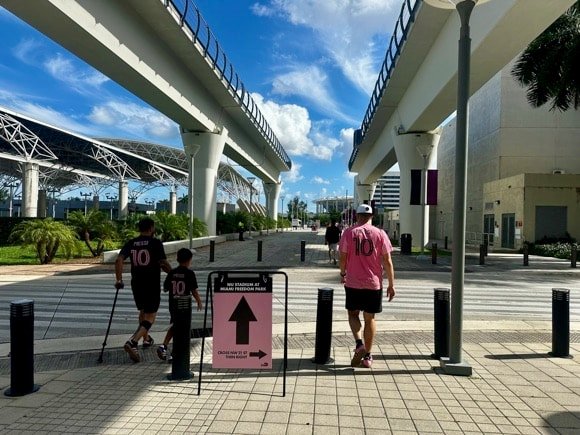
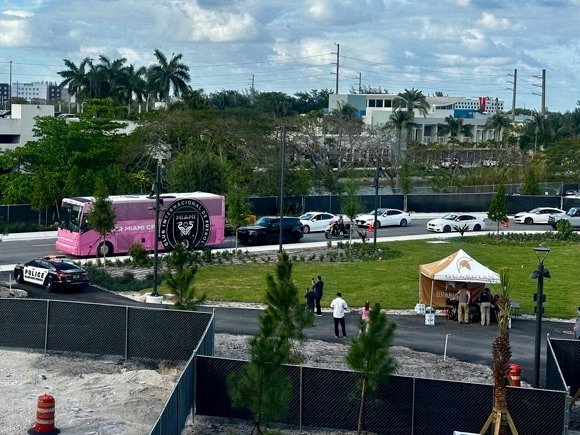
Miami International Airport is eight miles (13km) north-west of Downtown Miami. On Level 3, the free MIA Mover runs every 5-15mins to Miami Intermodal Center 3-4mins away, with Nu Stadium alongside, separated from the airport by State Road (LeJeune) 953. A designated walking route from Miami Intermodal Center takes 10-12mins to Freedom Park and Nu Stadium.
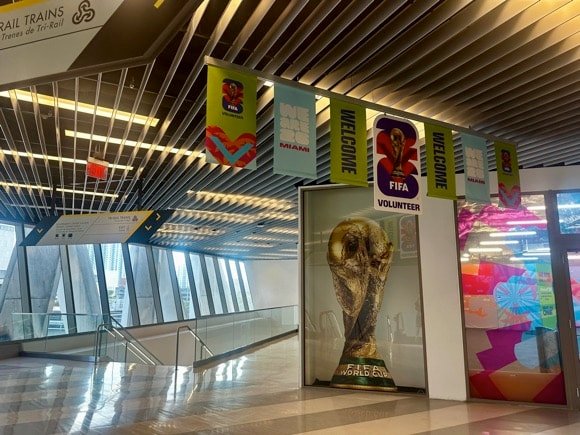
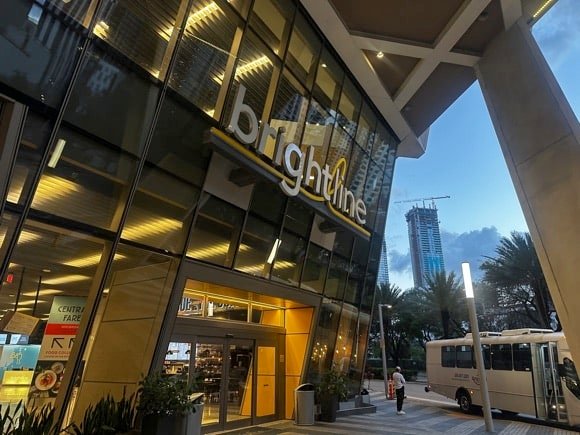
Miami Intermodal Center is where the Orange Line of Miami’s Metrorail (every 15-30mins, 5am-midnight) sets off for Government Center in Downtown Miami. where MiamiCentral serves Brightline trains within Florida (including Fort Lauderdale and Orlando) and Tri-Rail commuter rail, which also links direct to the airport.
EASY Cards ($2) for Metrorail, Tri-Rail and the Metrobus network are available from kiosks and vending machines at the airport, stops and stations (tap in and tap off if transferring to/from Tri-Rail). You can also download the GO Miami-Dade Transit App or SoFloGo App for Apple and Android.


A one-way journey on Metrorail & Metrobus is $2.25, Tri-Rail $2.50 (Sat-Sun & hol $5, weekend day pass $5). To encourage fans to use public transportation, Inter Miami is currently offering $10 credit for food and drink – go to the Guest Services Booth at Section 101 with proof of your journey and match ticket. Tri-Rail lays on extra services on match days. Note that Metrorail and Tri-Rail schedules refer to Miami Intermodal Center as ‘Miami (International) Airport’.
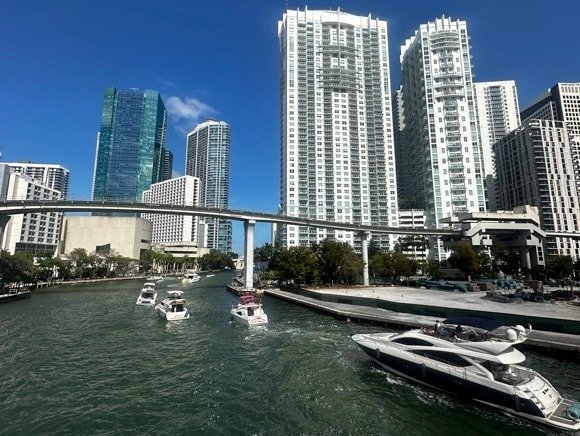
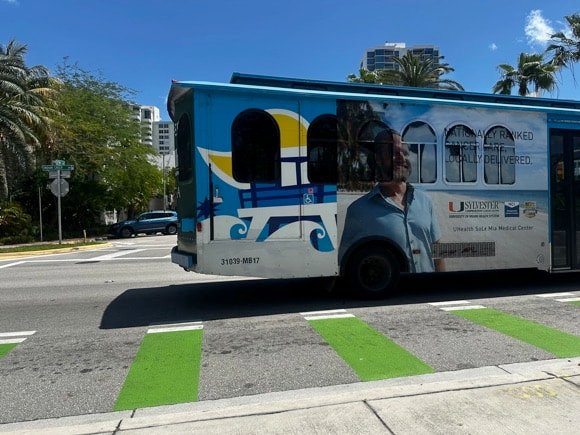
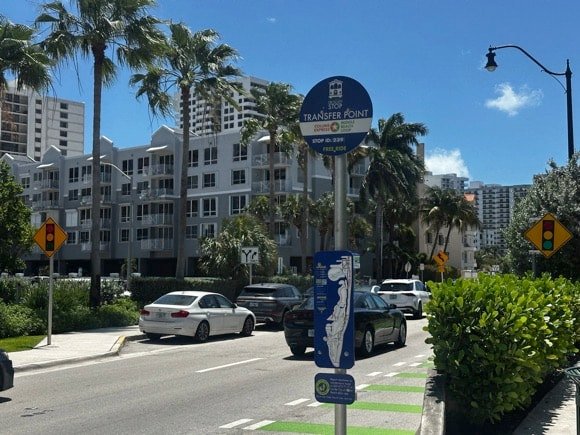
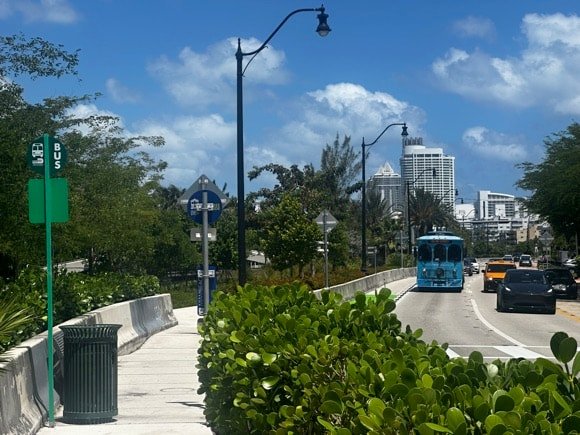
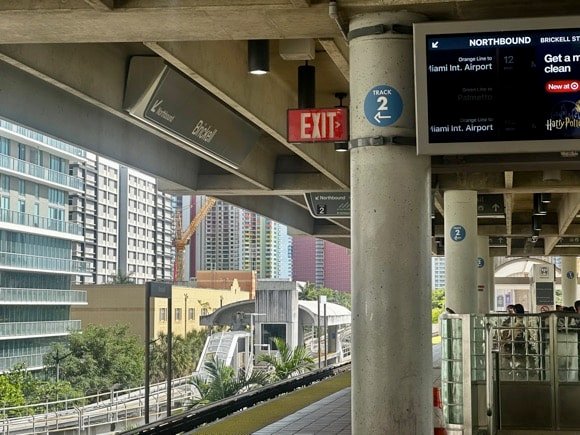
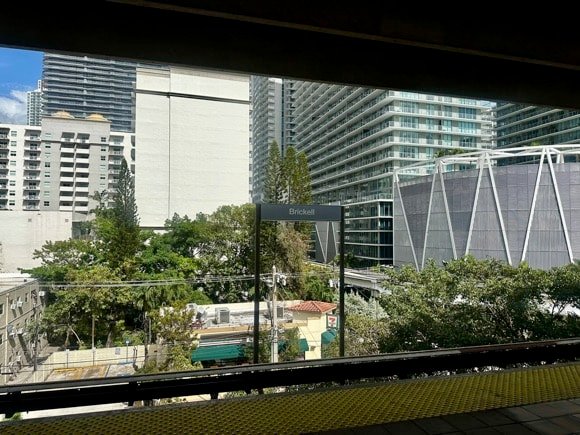
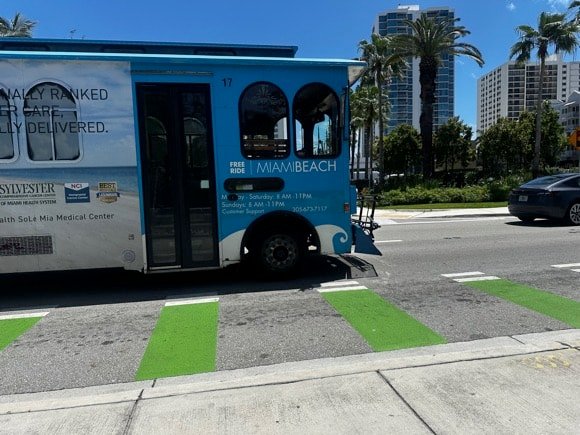
Also from Government Center, a free Metromover service connects to stops around the city center every 3-5mins, including Brickell, while the city’s trolley network is also free, including the four routes (8am-11pm) serving Miami Beach.
A taxi from Miami International Airport carries a minimum fare of $15. Black Cab Miami (+1 786-299-8416) usually provides a reliable service. If you’re driving to Nu Stadium, there is no on-site purchases for parking on match days, and most spots in the Yellow Lot (accessed from the North via Cypress Creek Blvd and NW 10th Terrace) sell out fast. Book a slot ($47) at the junction of NW 13th St and NW 38th Ave (4105 Miami Freedom Park Way, Miami, FL 33125) through parking.com. 1350 NW 55th St, Fort Lauderdale, FL 33309


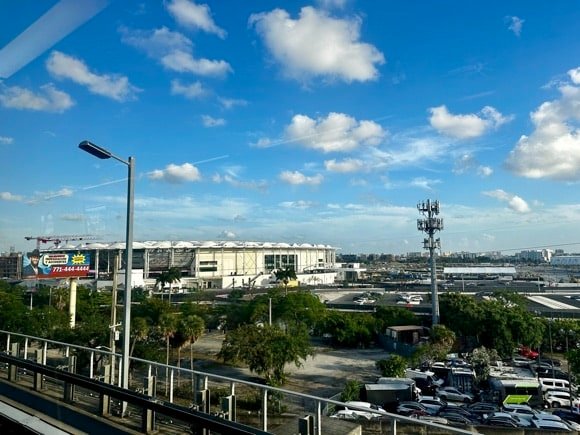
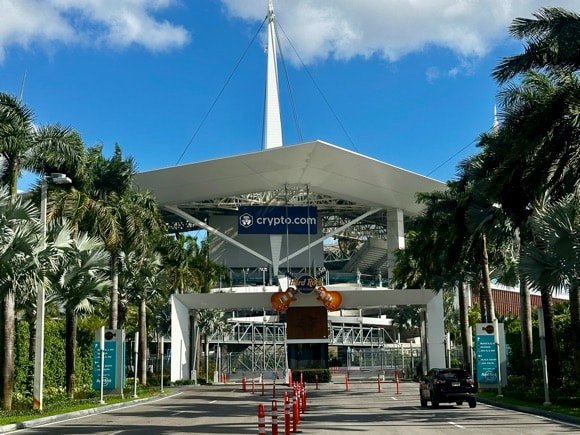
The Hard Rock Stadium is in Miami Gardens, 12.5 miles (20km) north of Miami International Airport. The nearest public transportation is Tri-Rail to Golden Glades 25mins away – a 10min taxi hop to the stadium.
If you’re coming from Downtown Miami, the stadium recommends booking an Uber Shuttle from specific pick-up points in Miami Beach and Brickell, with fixed fares. Taxis will drop off on 199th Street, where they await passengers after the game. Note that Rideshare services are subject to surge pricing, and drop-offs are in Lot 44 Betty T. Ferguson Recreational Complex, a 30min walk to the stadium.
Parking spots for the World Cup and other major fixtures can be found here.
TICKETING
When, where, how, and how much


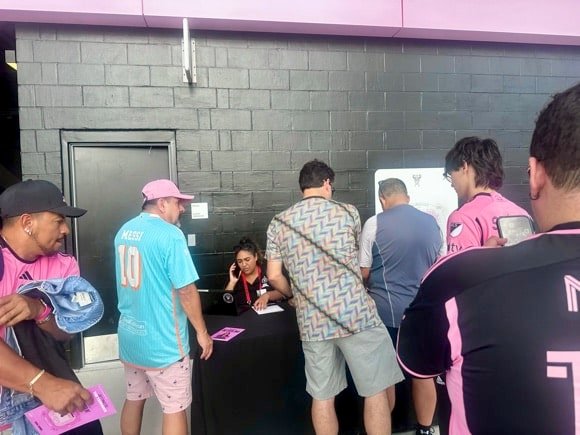
Single match tickets are sold online, starting at around $85 in Sectors 205-209 in the upper tier behind the South Goal. Sectors 131-133 behind the North Goal are reserved for La Familia. You’ll pay around $170-$200 for a seat in the Messi (East) Stand, with a good view of the action over the halfway line.
Though games have so far played close to full capacity at 26,700, you should still be able to find tickets a couple of days before the match, though very little at under $150. For all enquiries, call +1 305-428-0611 or email tickets@intermiamicf.com.
MERCHANDISE
Jerseys, souvenirs, and all kinds of gear


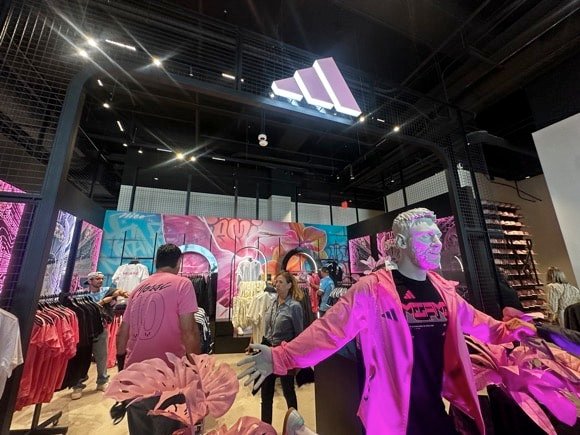
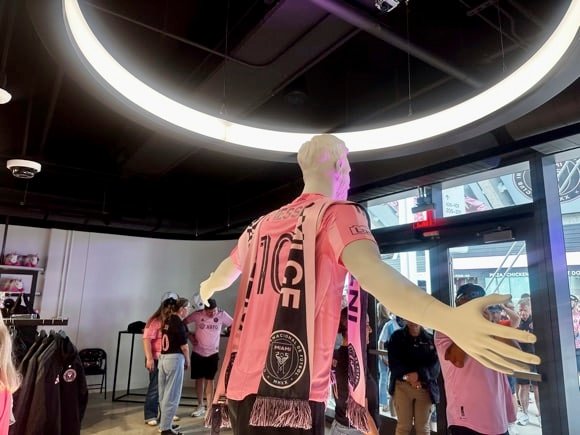
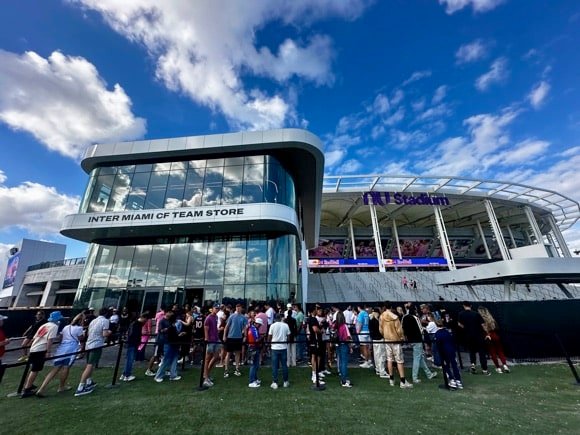
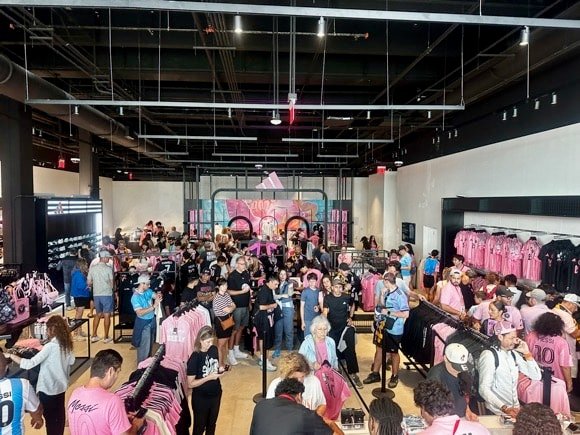
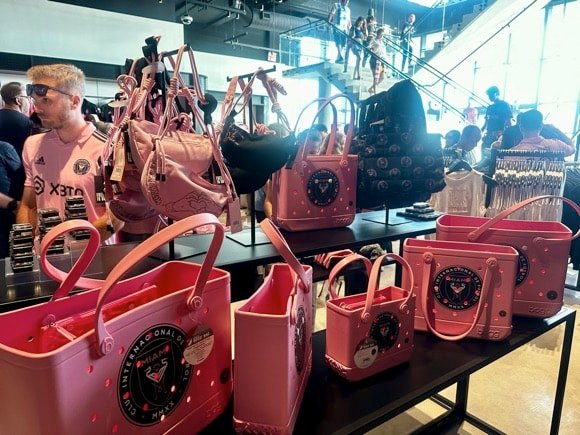
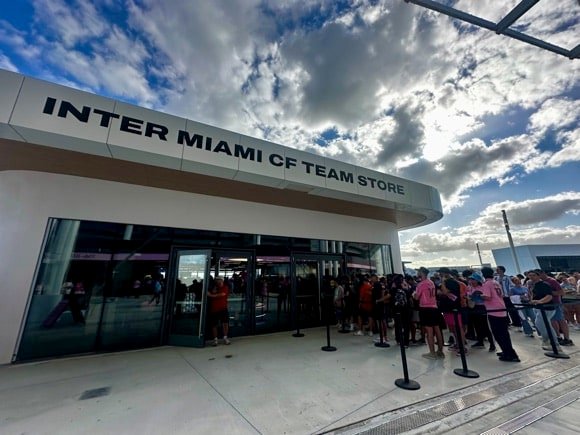
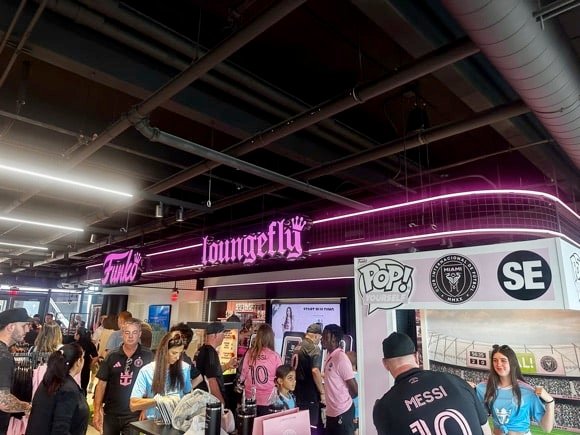
Inter Miami’s huge two-floor Team Store at the stadium only opens to ticket-holders on match days. The space is divided up into adidas World, the Funko Experience for customized collectibles and a New Era wall for hats. To shop for merch during the week, there’s another Team Store at Inter Miami Stadium (1350 NW 55th St, Fort Lauderdale, FL 33309; Mon-Fri 10am-5pm), park at the Blue Lot by Gate 3.
Pink jerseys come with adidas shoulder stripes in black, and alternating lighter/darker stripes, away black with fold-down collars, with ‘Freedom To Dream’ woven into them. Third-choice depicts ‘Miami’s vibrant blue waters’, pink piping around the collars and cuffs. Pink, black and Miami cityscape feature among the T-shirts, while clear tote bags might be handy for stadium entry, given the restrictions on what you can bring in. Topps cards autographed by Messi are the most expensive items among the collectibles.
Where to Drink
Matchday beers at the stadium and downtown


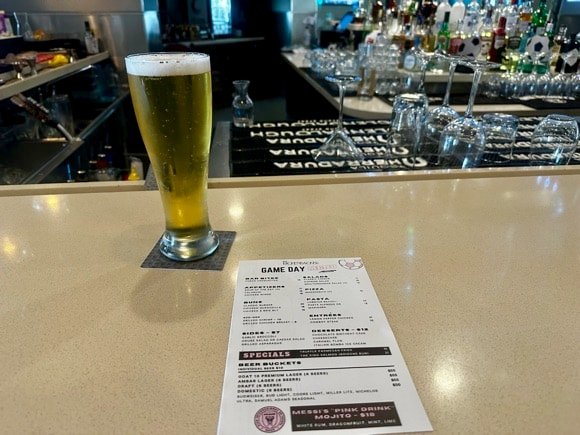
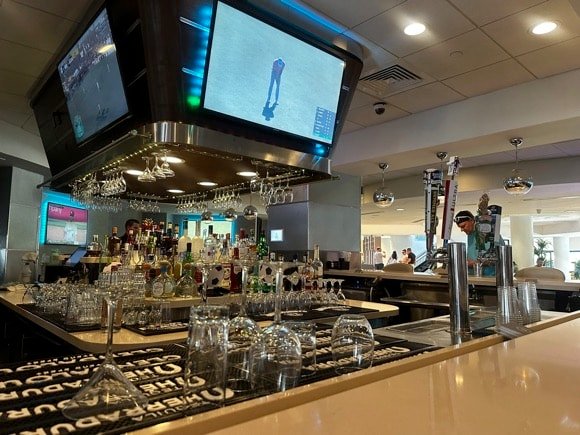
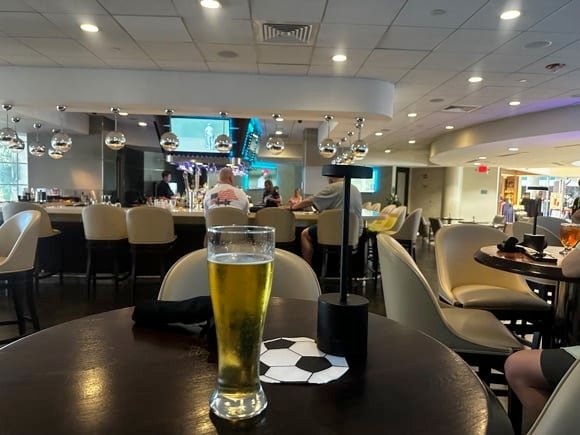
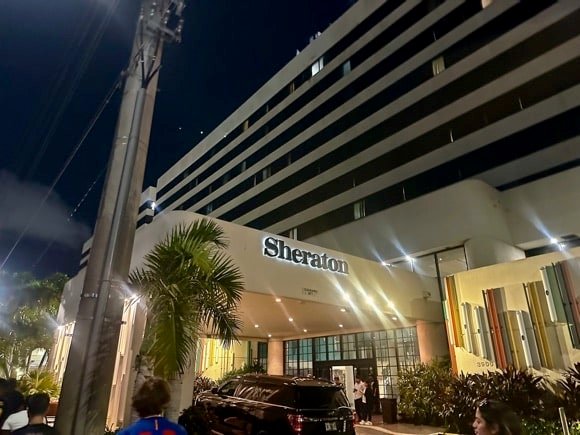
For a relaxed drink before the game, head to the Rickenbacker in the Sheraton Miami Airport Hotel alongside the stadium, where a game day menu includes bar bites and burgers, and beer buckets can be filled with Goat 10 lager or standard domestic brews. An individual beer is $10.
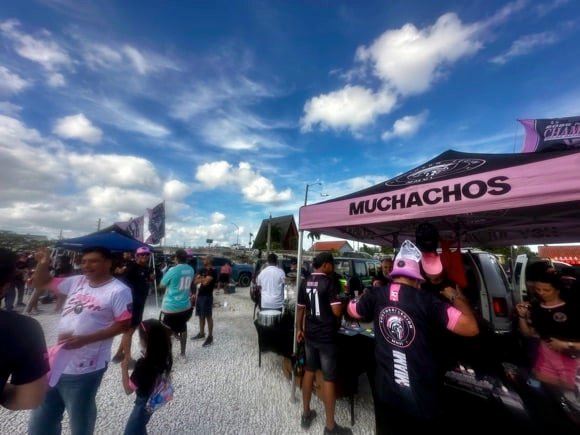
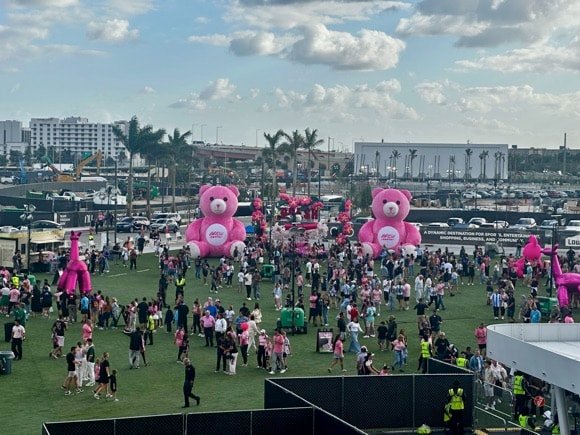
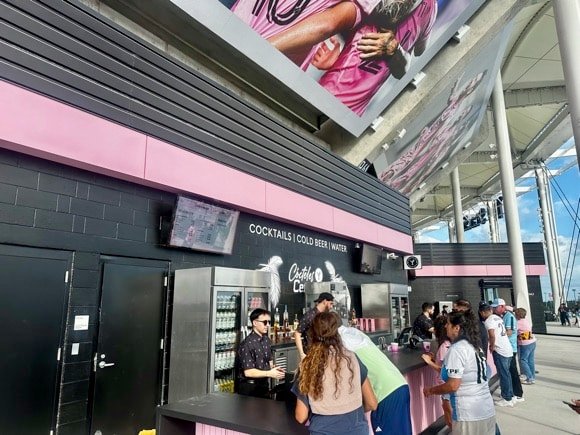
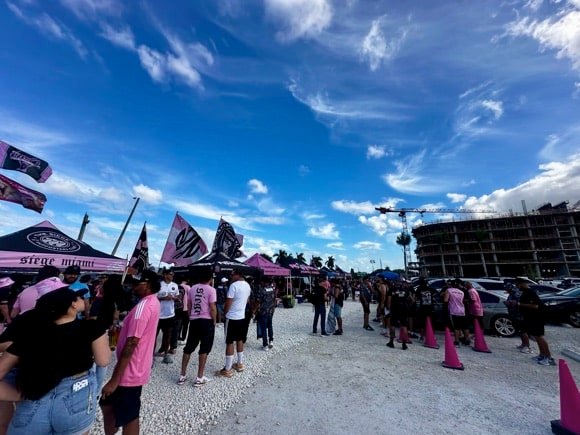
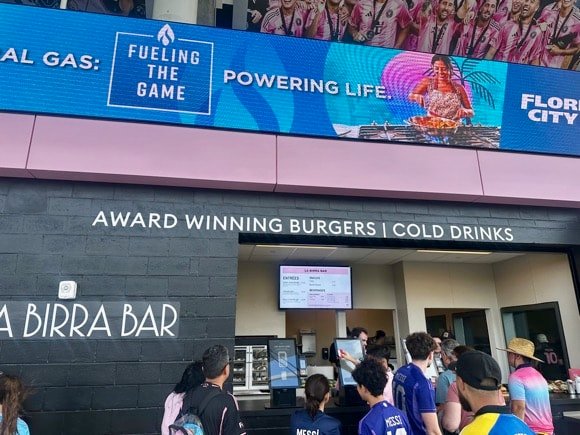
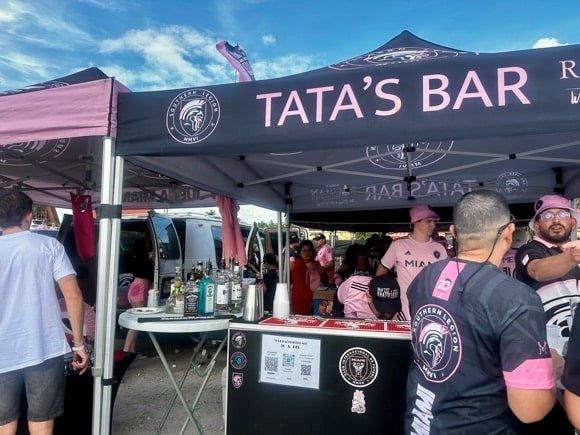
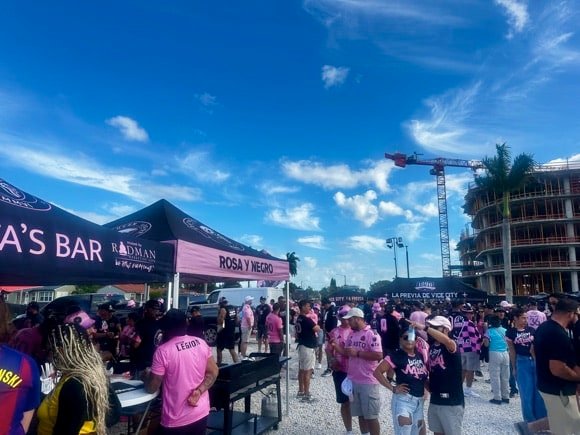
Around the stadium, there’s no tailgating as such but the main fan groups in La Familia set up their own stalls by the Fan Zone and booze flows freely. Canned beer is sold inside the ground, along with ready-mixed cocktails.
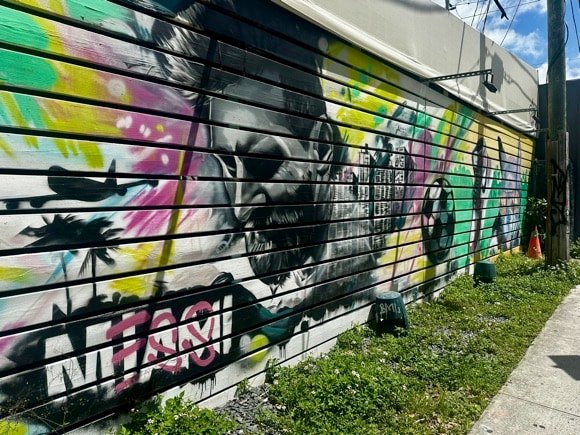
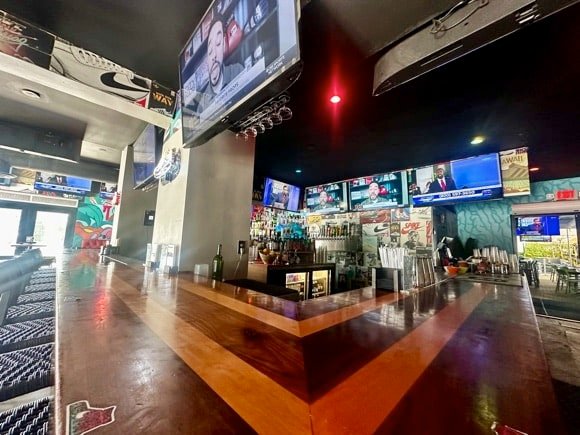
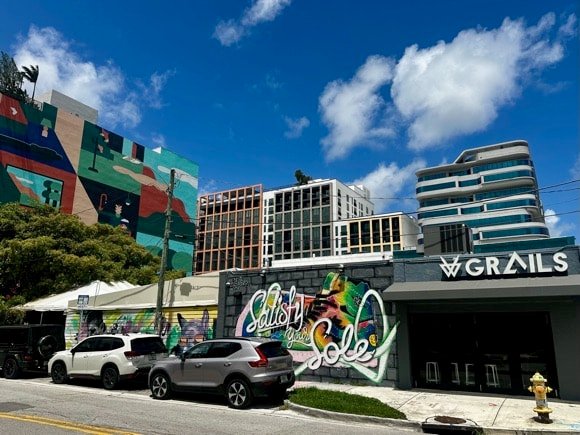
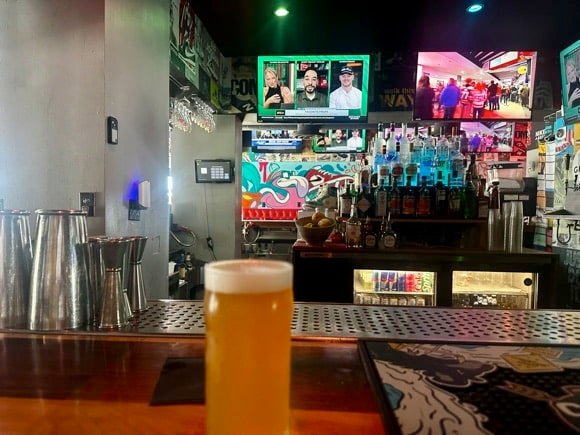
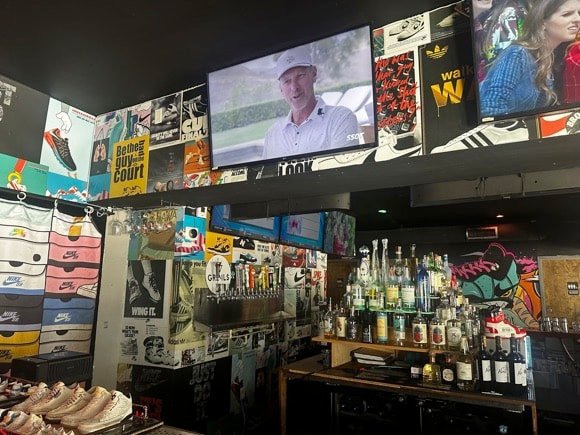
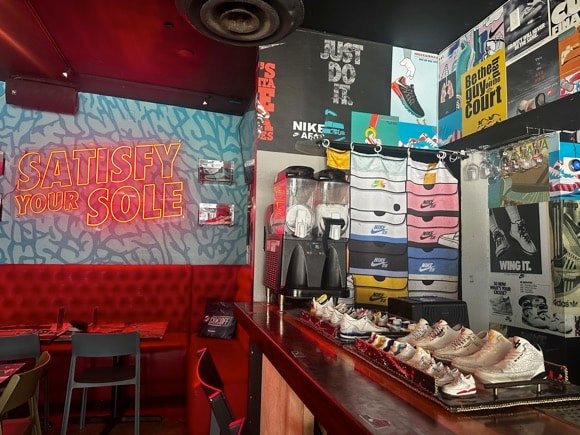
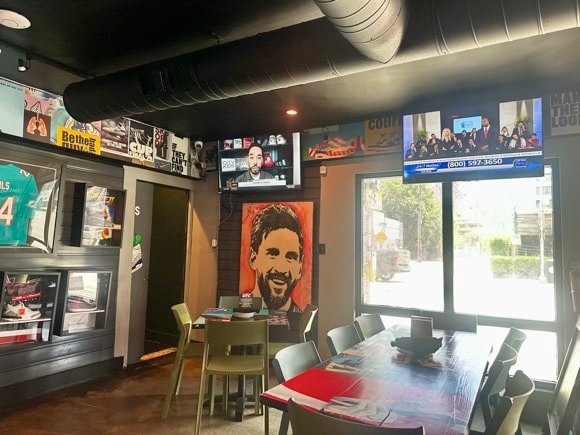
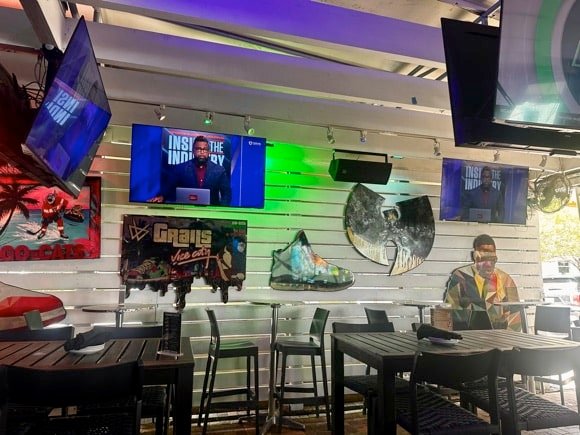
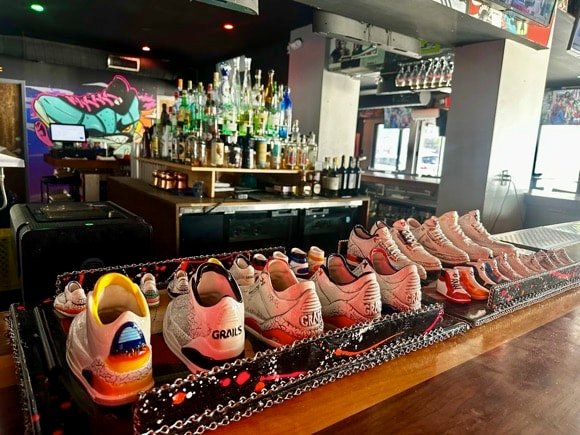
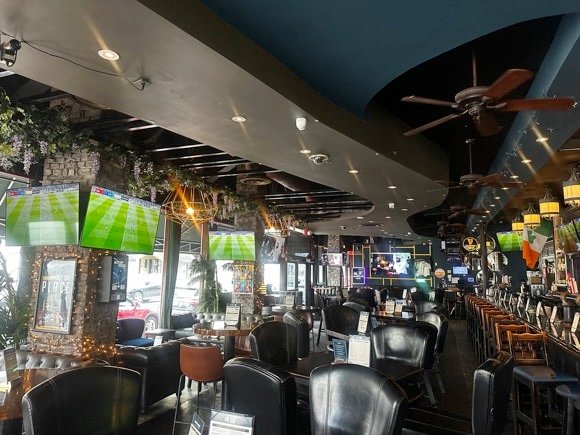
Prime spot for soccer watching in Miami is Grails in the arty entertainment neighborhood of Wynwood, imaginatively theming its own décor around one-of-a-kind sneakers and various artistic creations. TVs abound of course, not least on the large patio named, because somebody had to, Miami Vice. To go the whole nine yards, order your cocktail in a take-home sneaker or, if there’s a group of you, go for a shareable in the Holy Grail range.


On a match day – it’s 11am opening on weekends – you might get the ball rolling with a Messi Mule concocted upon Hendrick’s gin and Campari. La Rubia and Modelo Especial stand out among the draft beer options, slow-braised pork-belly tacos and slow-cooked ribs the best of the superior bar food.
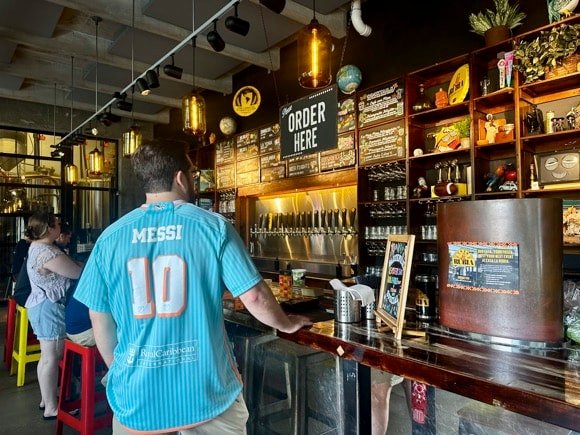
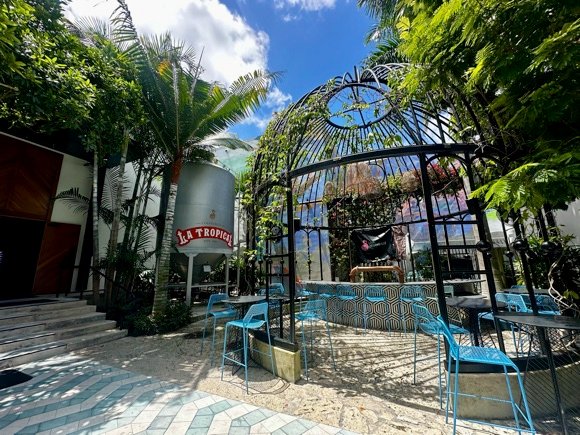
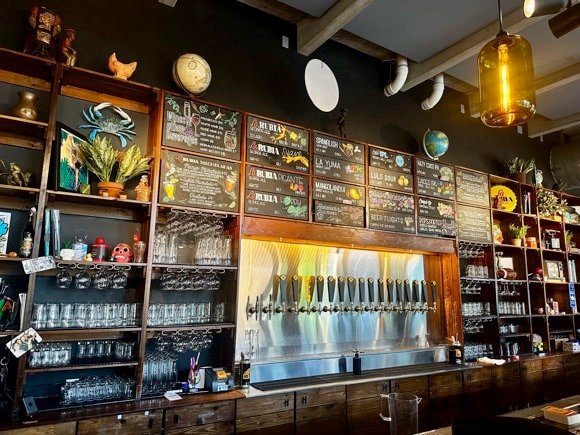
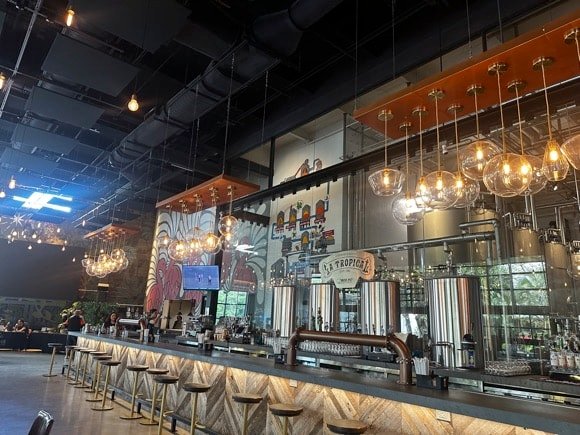
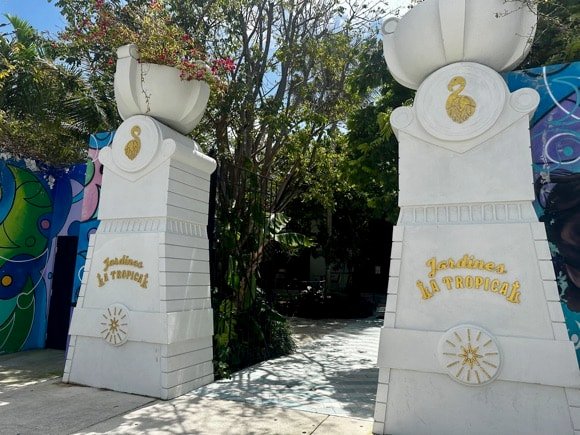
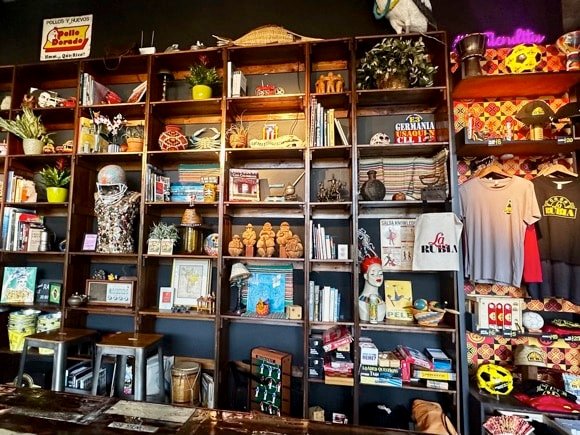
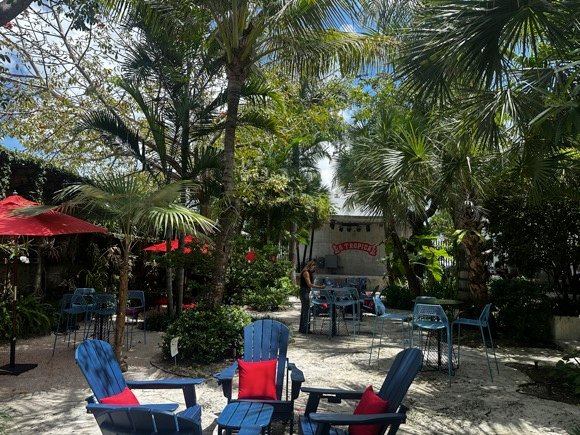
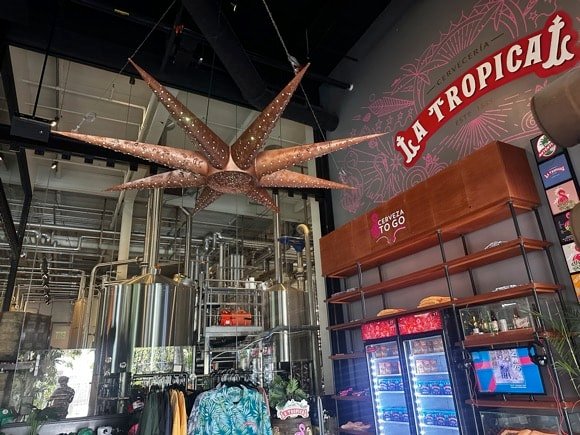
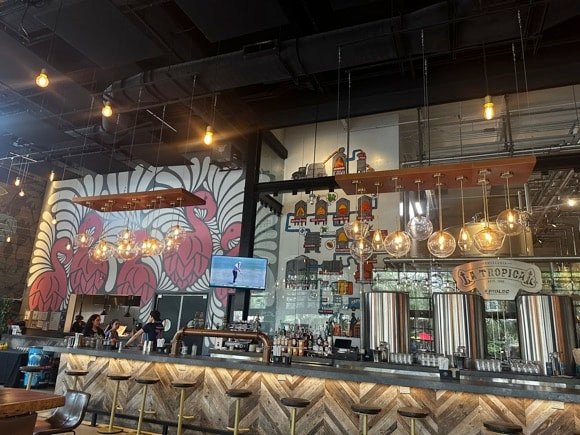
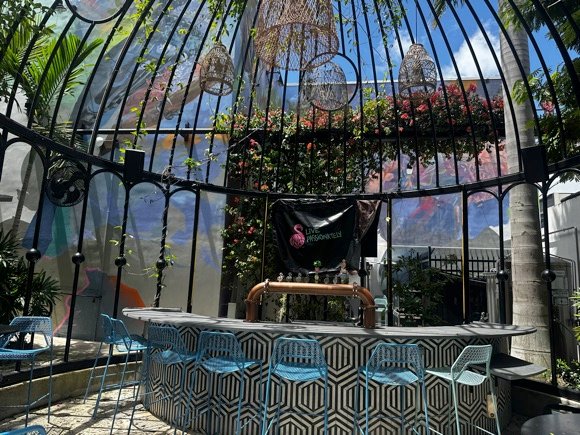
Nearby, La Cervecería Tropical celebrated its fifth anniversary in April 2026 but dates way back to 1888, when the Blanco-Herrera family set up Cuba’s first brewery. Also distributing around Florida, it was shut down twice, once by Castro and then, through strong competition, by U.S. brewing giant Anheuser Busch. Descendants of those who initiated La Tropical on Cuba then revived the beer and the brand in Miami, building this colorful tap room and bar, with a tropical garden alongside. Beers include the celebratory Inter Miami 2024-25, food chicharrón pork belly, empanadas of ropa vieja stewed beef, and frita cubana burgers. Closed Mondays.
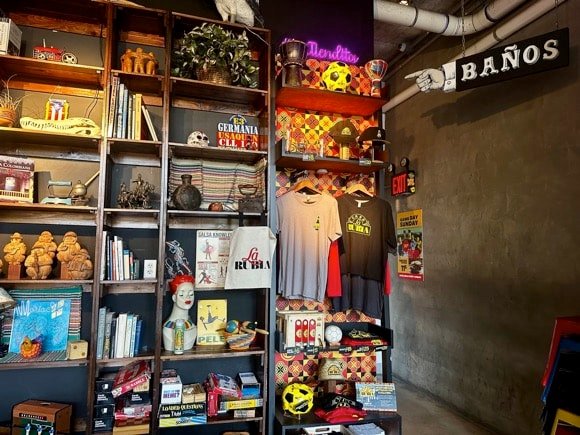
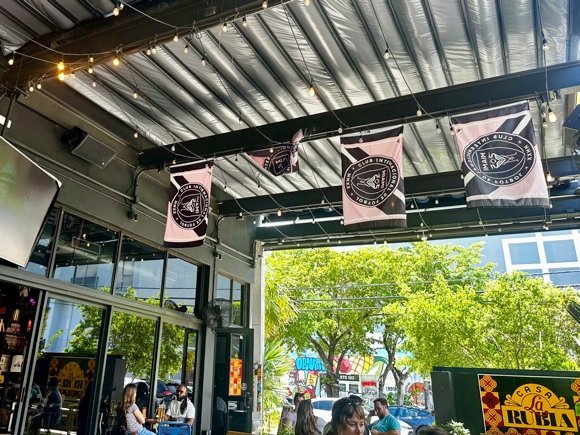
More boutique in style, brewpub Casa La Rubia serves its signature blonde ale, sold across Miami, right from the source. Salsa nights and fútbol watch parties characterize the Latin-inspired former home of Veza Sur.


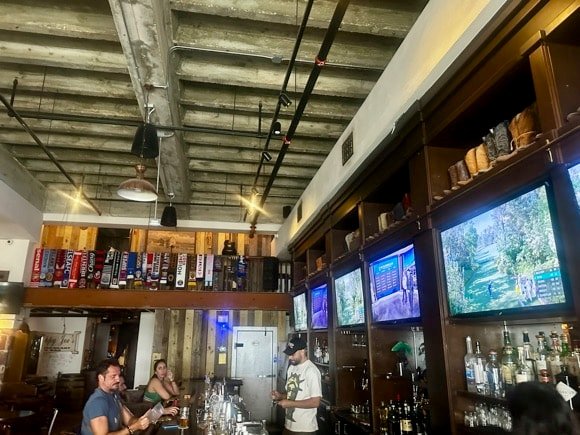
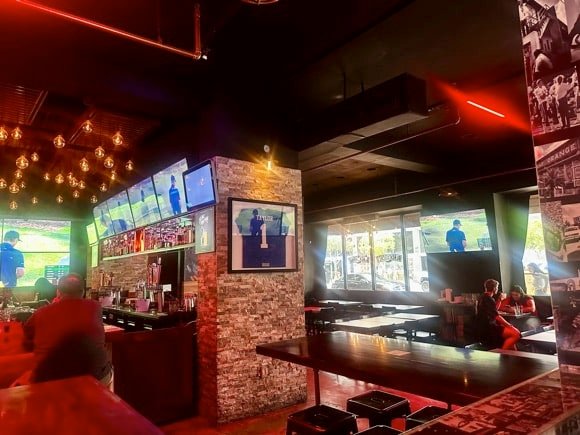
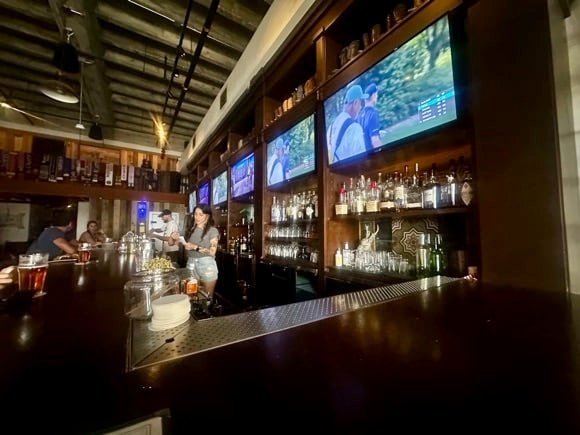
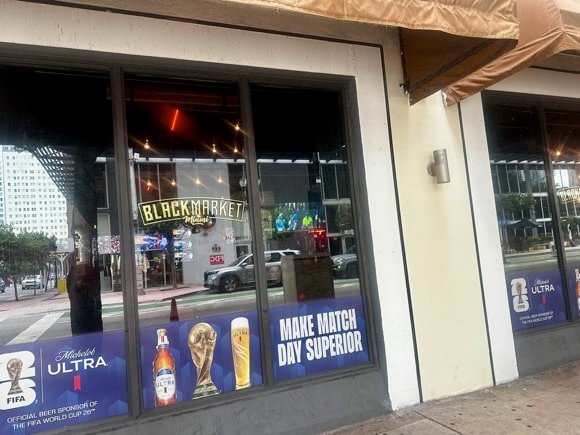
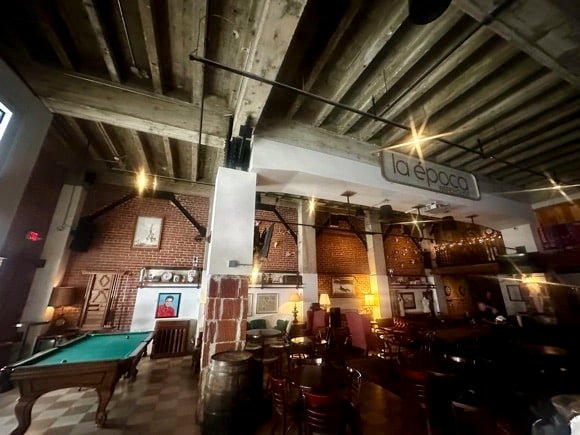
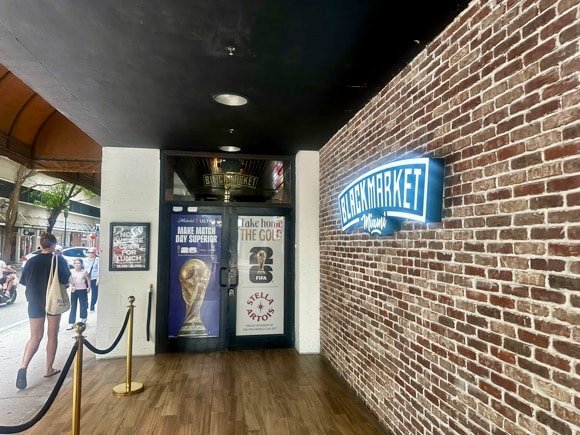
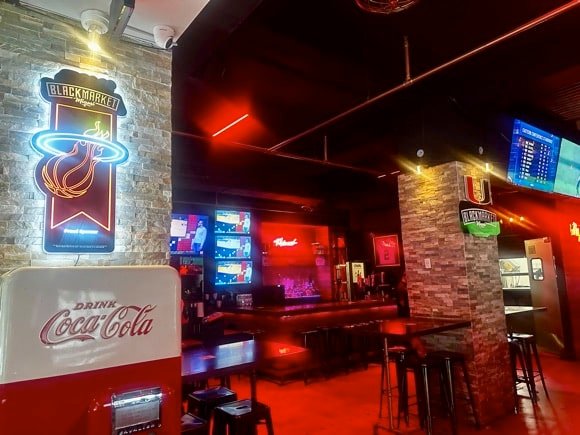
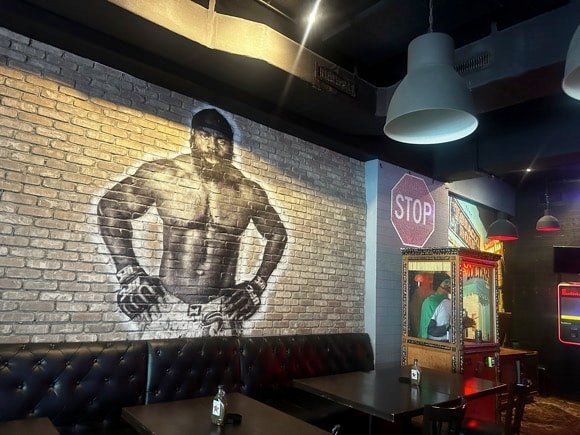
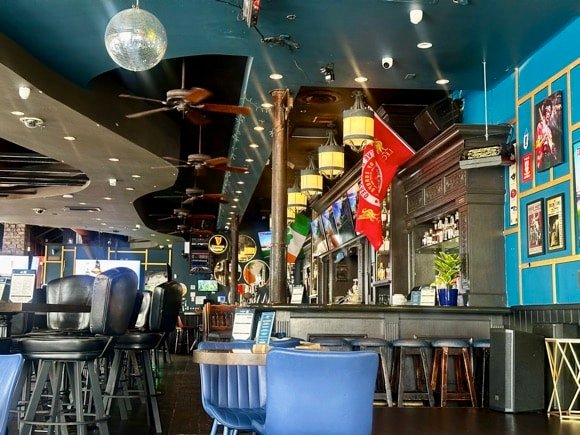
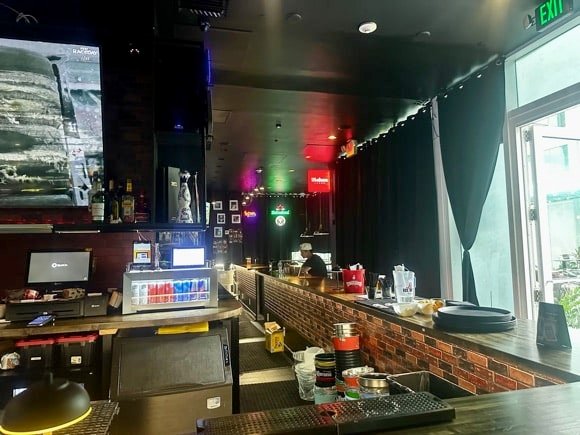
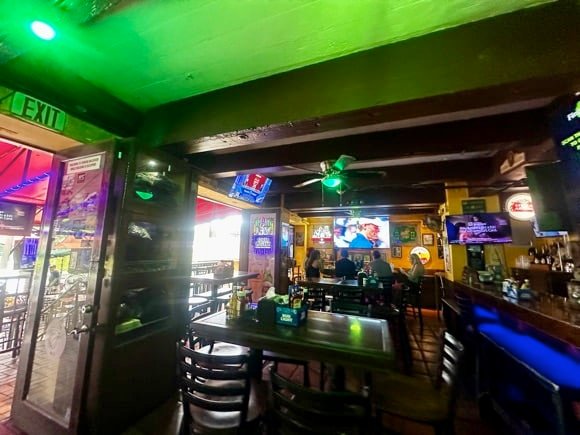
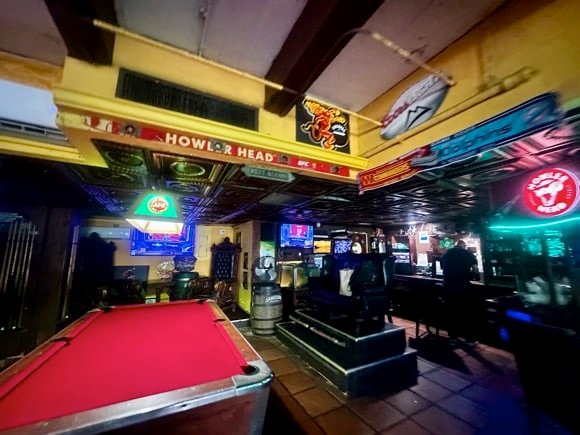
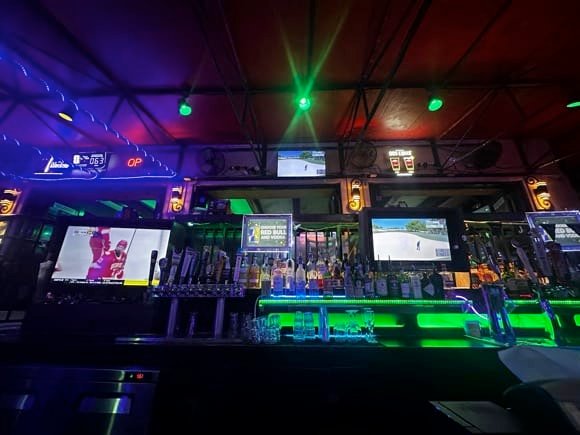
Downtown, Black Market Miami embraces 1980s’ Miami in upscale sports-bar form, 30 or so 4K TVs screening the action amid the bare brick and archive photos. Look out for game day specials and happy hour weekdays, including Fridays, 4pm-7pm. Close by, Lost Boy Dry Goods feels more old-school, half-priced beer and cocktails (same happy hour) tempting customers away from the surrounding competition. Pool tables, dartboards and a row of TV screens over the bar keep customers entertained.
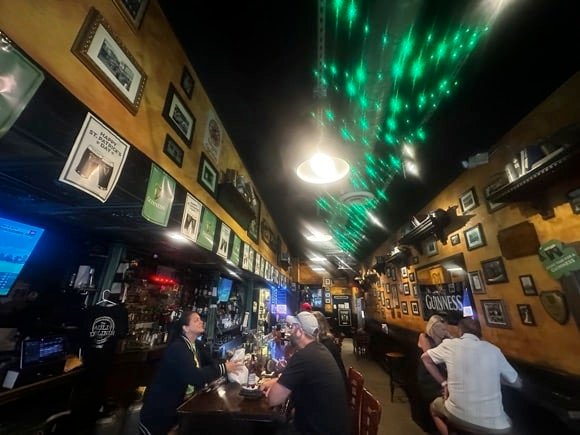
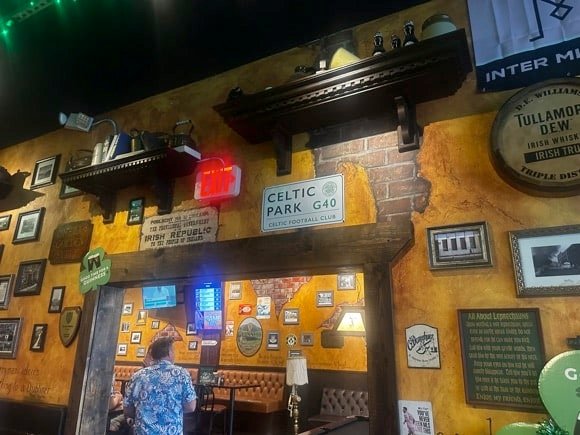
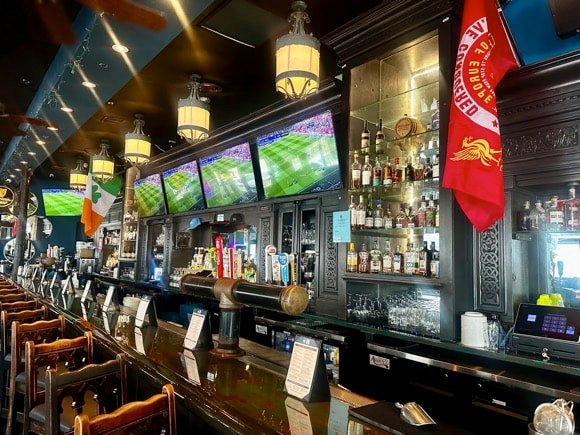
Handily located beside Government Center Station, Auld Dubliner gets pretty lively post-work and for big games – it opens early on weekends for that very reason. There’s pool, too, and pub classics on the menu, shepherd’s pie, and bangers and mash.
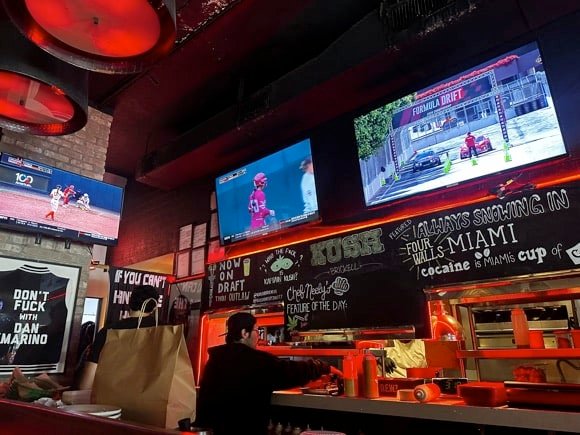
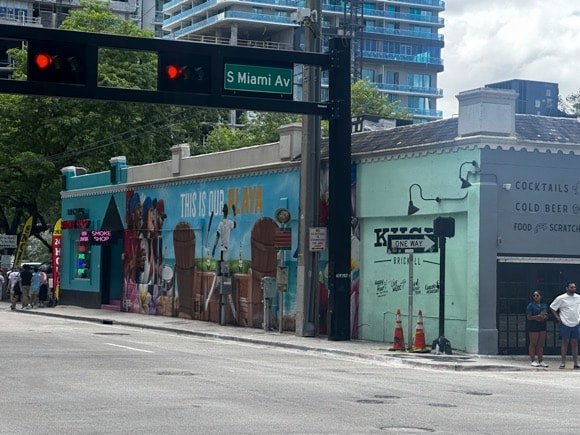
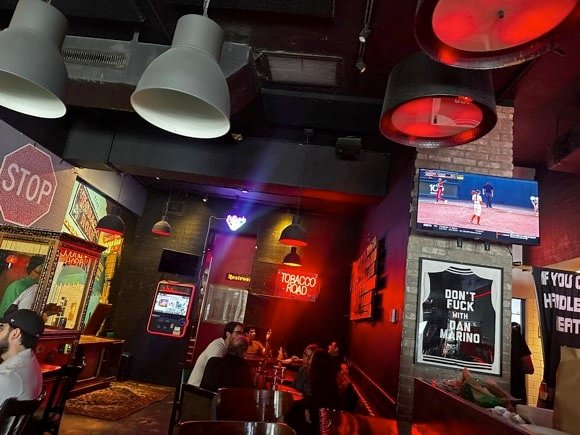
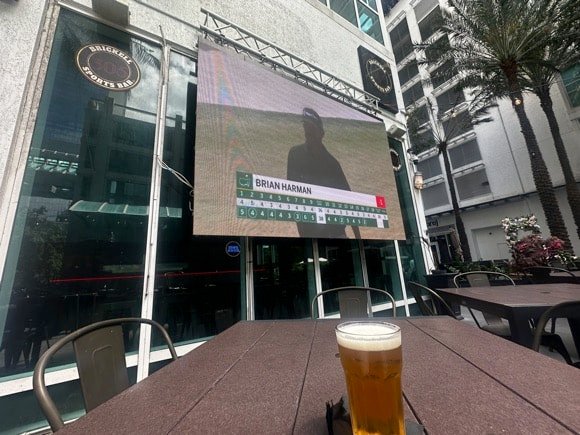
Just south of Downtown, you’ll find plenty of sports-friendly bars in the financial district of Brickell. Matt Kuscher’s Kush, the Brickell branch of this Wynwood favorite, divides its draft options between local (Kaptain Kush, Dr. Dank), craft (La Playita, La Rubia) and ‘sh*tty’ (all the rest), while mixing specialty drinks such as a Dan F*cking Marino of cantaloupe-infused Vida Puebla mezcal, Campari and Aperol. TV sports, industrial lighting and plentiful neon do the rest.


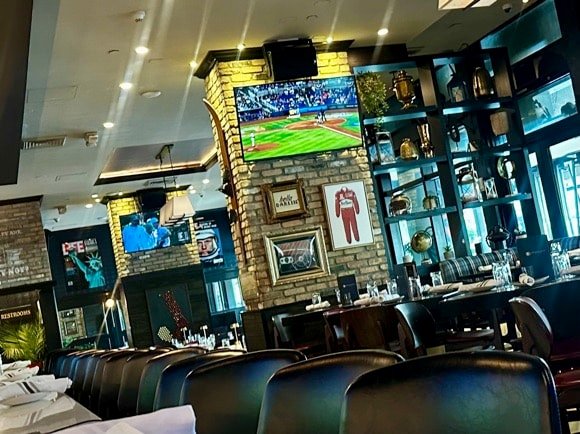
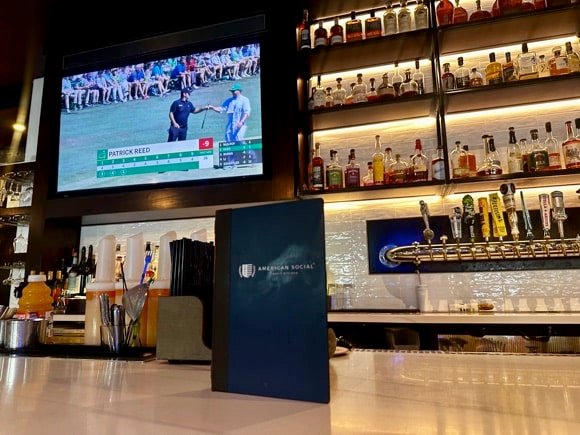
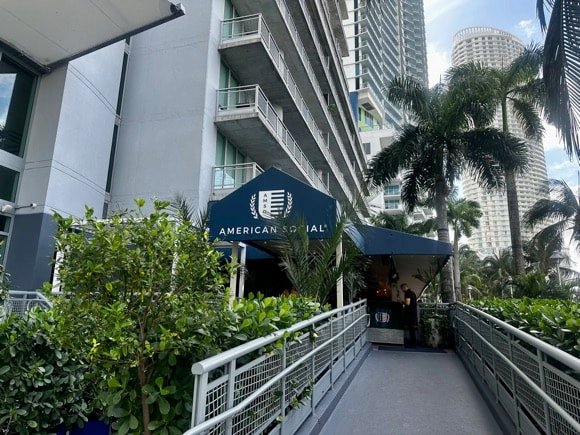
Opening mid-morning with an all-day menu (don’t miss the Coronita fish & chips), American Social offers waterfront views to accompany its extensive offering of cocktails and draft beers, Samuel Adams producing the house lager. When two old friends conceived of this top-quality concept, sports was essential to the equation – and buckets of beer to go with it. All in all, a classier experience.
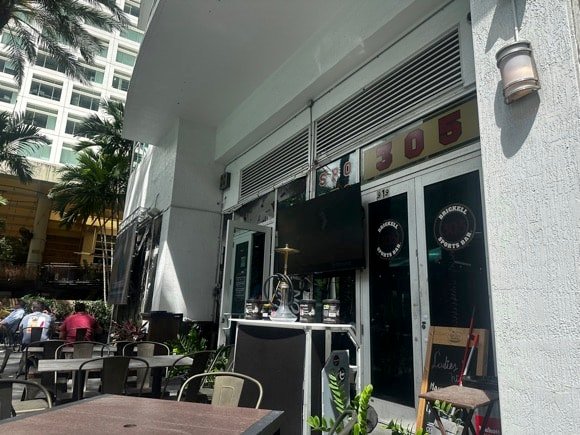
305 Sports Bar plays up its Miami credentials in its area-code name, offering U.S., Mexican and European beers in equal measure. You’ll find Mahou, Modelo, La Rubia and La Tropical on draft, with happy-hour deals Mon-Fri 4pm-9pm and buckets served for watching the match. Valet parking ($10) and terrace drinking complete the picture.
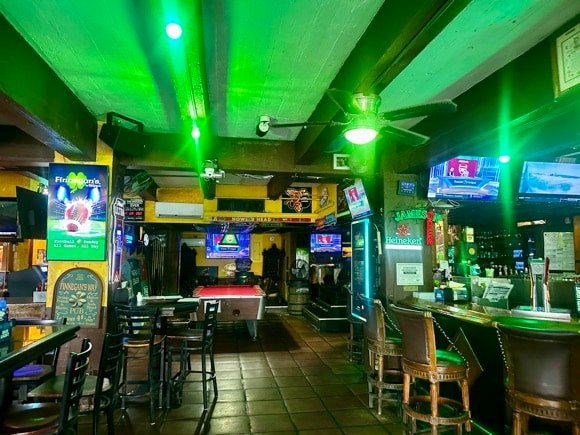
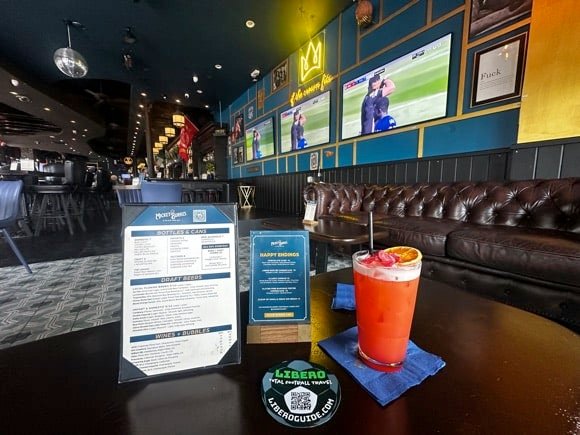
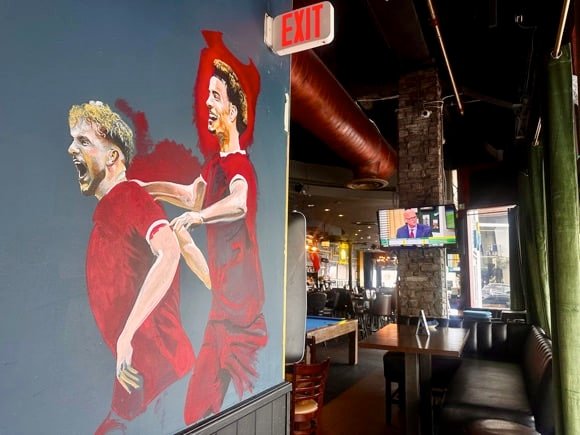
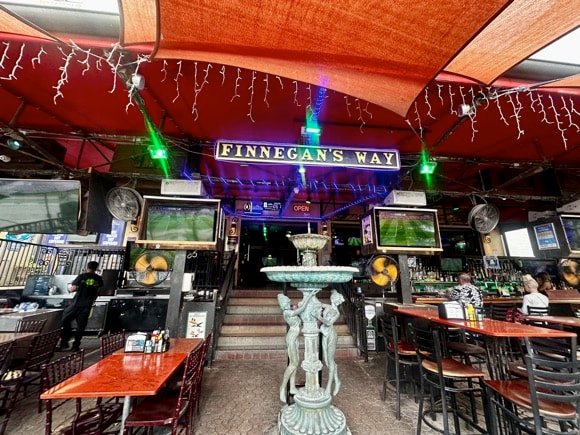
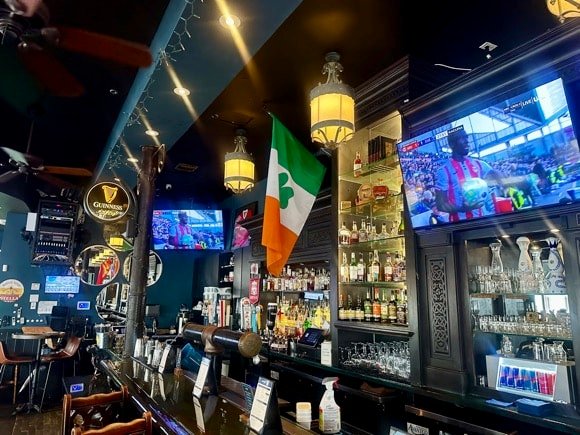
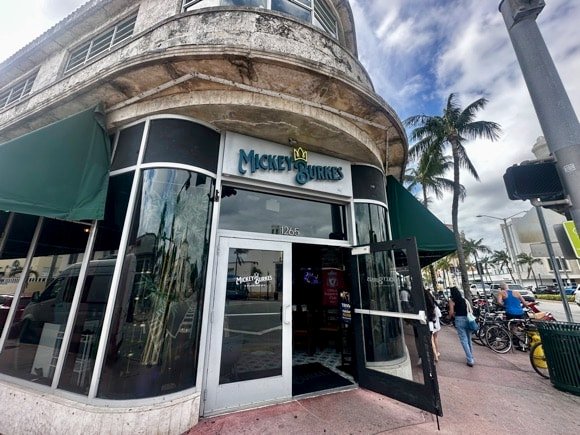
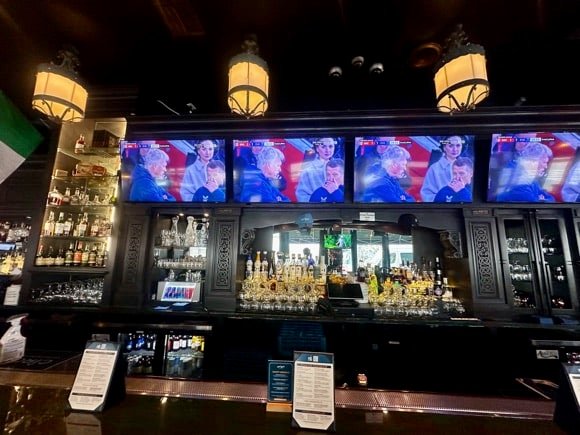
Over on South Beach, Finnegan’s Way opens up fairly early each day to screen sports and serve breakfasts (until 1pm – full Irish under $15 until noon) on Ocean Drive. Drinks half-price during happy hour, Mon-Fri 4pm-7pm. Just behind, Liverpool hangout Mickey Burkes on Washington Avenue is similar in character, opening at 9am on weekends, TVs galore over a big old bar counter just begging to be propped up.
timeline
Following the local soccer scene


1972 Washington Darts moves to South Florida become Miami Gatos.
1974 Rebranded as Miami Toros, the team makes the NASL Final, losing to LA Aztecs at Miami’s Orange Bowl.
1988 Miami Sharks joins American Soccer League (ASL).
1990 Renamed Miami Freedom, team joins American Professional Soccer League (APSL).
1994 Miami loses out to Orlando to co-host World Cup due to issues with the Orange Bowl.
1998 MLS expansion team Miami Fusion sets up at a soccer-converted stadium in Fort Lauderdale. After initial enthusiasm, crowd numbers slide.
2001 Ray Hudson takes over as coach, Fusion wins MLS Supporters’ Shield playing swashbuckling soccer but attendances fail to improve. Club folds.
2007 David Beckham signs for LA Galaxy – a clause in his contract offers him an MLS expansion franchise for $25 million.
2011 Hard Rock Stadium in Miami Gardens stages a series of showcase fixtures in front of huge crowds – 70,000 for Barcelona v. Guadalajara.
2013-14 Beckham retires and announces his intention to set up an MLS expansion franchise in Miami.


2015-16 Milanese media rights mogul Riccardo Silva launches Miami FC, joining the NASL.
2018 NASL collapses. Miami FC drifts into lower leagues, even crossing paths with community-based club Miami United, before joining the second-tier USL in 2020.
2018 MLS’ 25th franchise announced: Inter Miami. Site found for the initially named Freedom Park, beside Miami International Airport.
2020 Inter Miami joins MLS, plays in Fort Lauderdale at a rebuilt Lockhart Stadium, former home of Miami Fusion. Season shuts down almost immediately due to the pandemic. Inter Miami then makes disappointing debut and poor form continues.
2022 Miami confirmed as a World Cup 2026 host – games to take place at the Hard Rock Stadium in Miami Gardens.
2023 Lionel Messi joins Inter Miami with other ex-Barcelona stars, as well as former Barça manager Gerardo Martino. Messi has an immediate effect, striking a stoppage-time free-kick to settle a Leagues Cup game with Cruz Azul. Inter Miami wins trophy after a dramatic penalty shootout. Messi’s former strike partner at Barcelona, Luis Suárez, joins Miami.
2024 Inter Miami wins Supporters’ Shield and attracts huge gates on the road – but loses out to Atlanta in the playoffs.
2025 Inter Miami wins through to the MLS Cup Final, staged in Fort Lauderdale, beating surprise package Vancouver to lift the trophy. Emotional scenes as Messi, Beckham and Suárez celebrate, while fans bid farewell to Fort Lauderdale after six years.
2026 Nu Stadium unveiled. The Hard Rock Stadium prepares for World Cup games involving Brazil, Scotland, Uruguay, Portugal, and probably Argentina.