Braunschweig Police team on the trail of hidden stadiums
AlanDeamer spotlights a unique project to resurrect sports grounds across Europe
“Sadly in Britain, when football grounds disappear they go in their entirety and there is no real acknowledgement of the long history that has disappeared with them.” For Feargal McEvoy, founder of German football fanzine HalbVier, this is exactly what makes PSV Braunschweig’s Lost Ground project so compelling.
The German amateur side have developed a cult following by staging matches in abandoned stadiums, disused sporting arenas and forgotten football spaces across Europe – briefly reopening places long detached from the rhythms of the game.
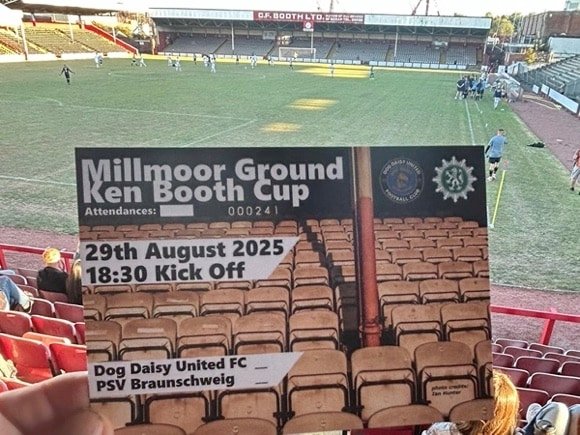
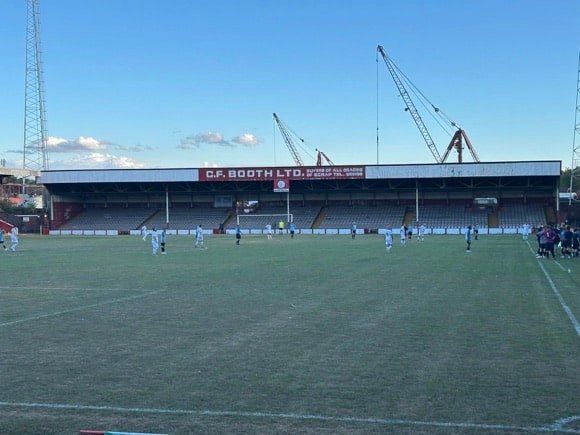
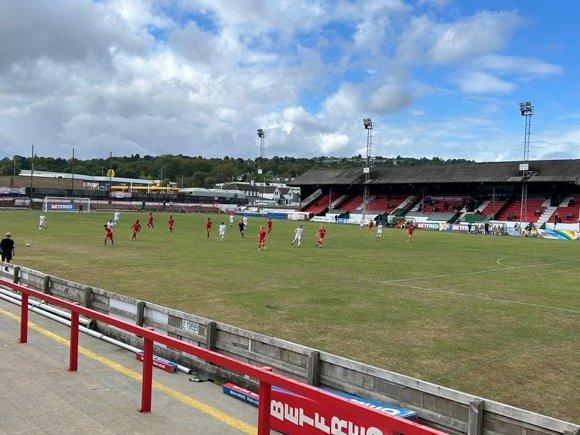
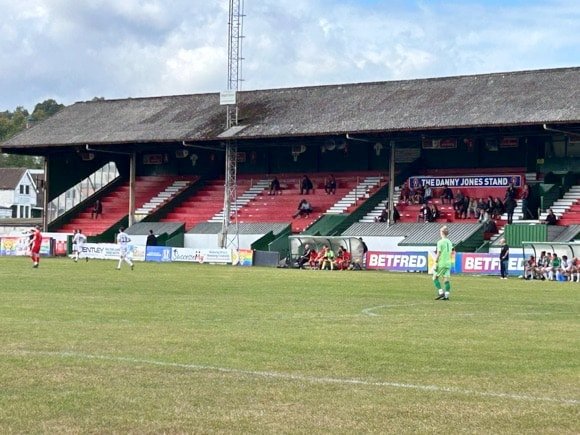
When McEvoy travelled to England to watch PSV play at the disused Millmoor stadium in Rotherham, it felt less like a curiosity and more like a form of preservation. “Wherever else you go these days looks like one of those new Aldi stores,” he says. “Millmoor oozed charm by comparison.”
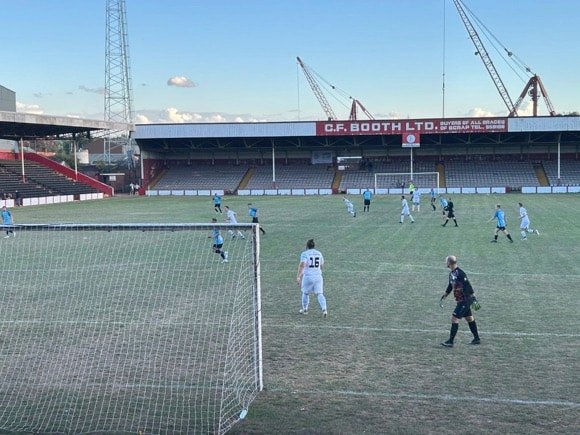
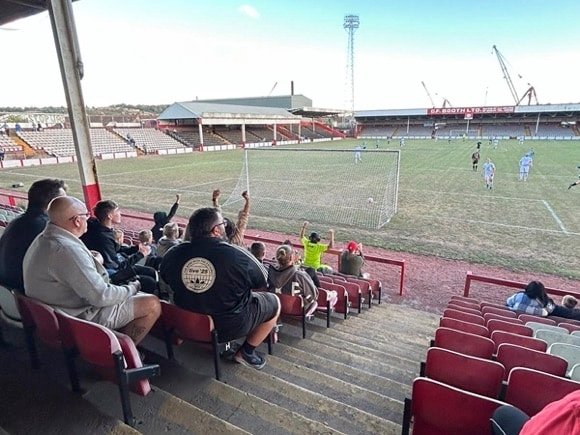
Match day, PSV Braunschweig/Feargal McEvoy
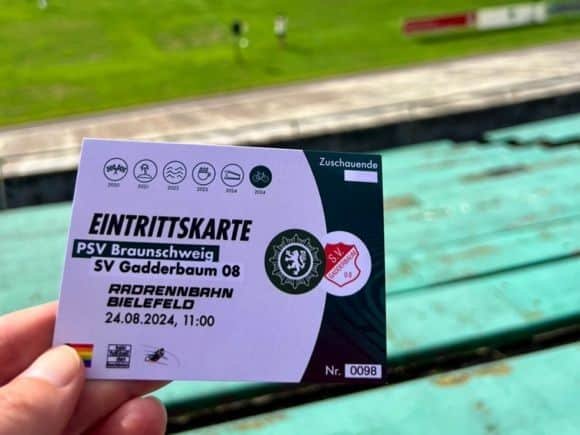
PSV Braunschweig match ticket/Alan Deamer
Millmoor/Feargal McEvoy
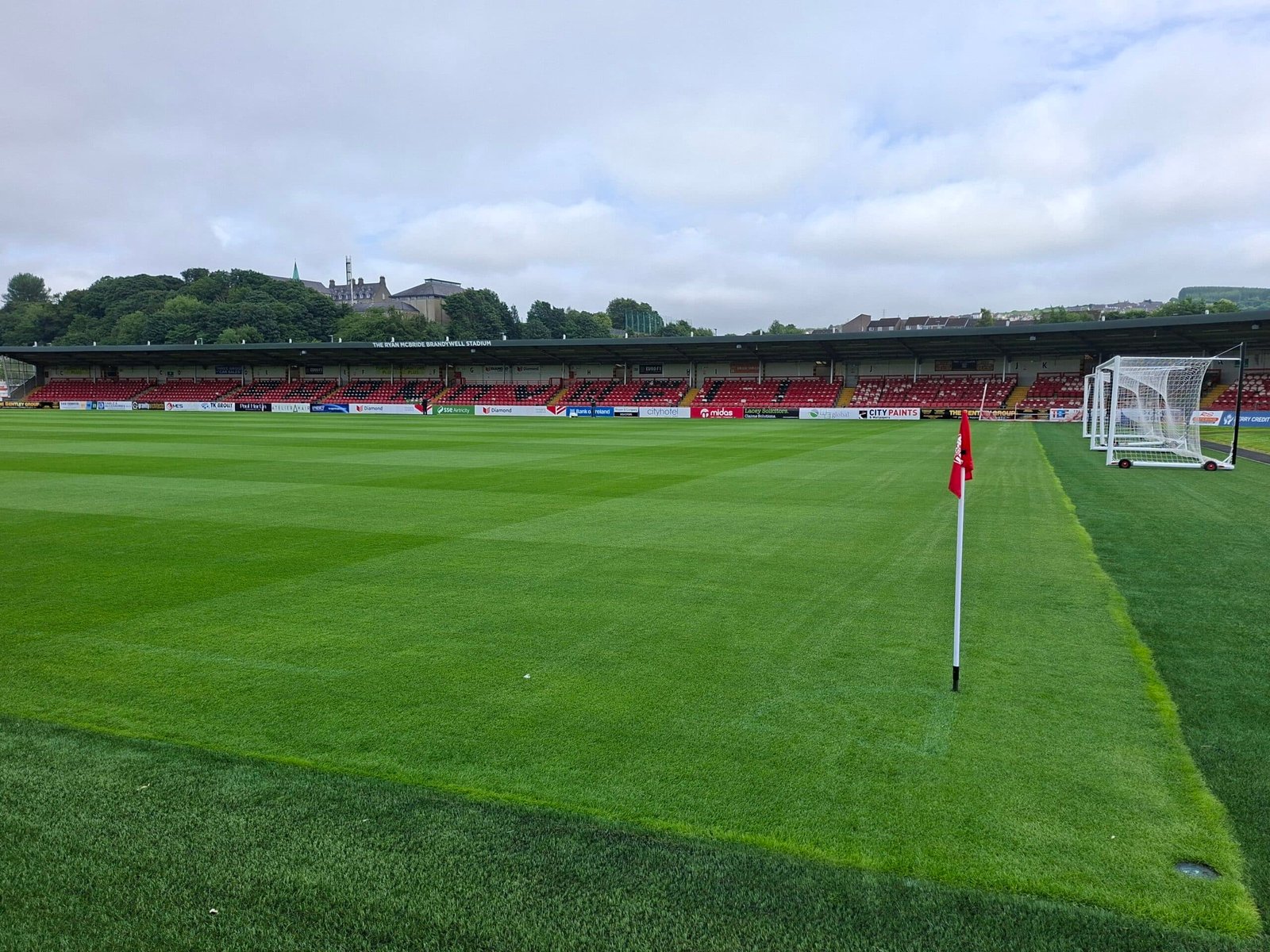
McEvoy is speaking from inside Millmoor as PSV Braunschweig prepare for another of their Lost Ground fixtures. Beyond the rusting stands and faded concrete, Rotherham United’s modern home sits in the distance – functional, uniform and, to him, strangely anonymous despite it being named New York.
That contrast sits at the heart of PSV Braunschweig’s appeal.
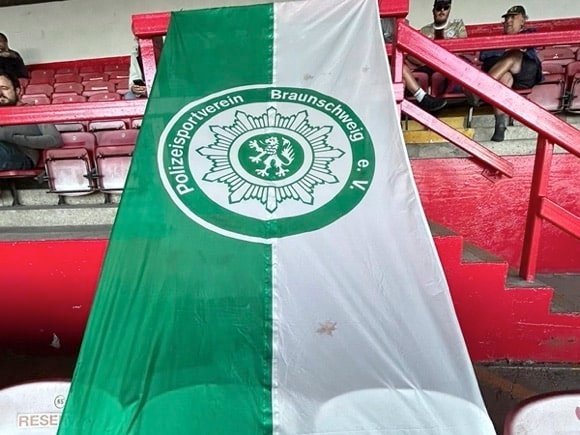
Part amateur football club, part travelling preservation project, PSV Braunschweig are a side from Lower Saxony operating within the Polizeisportverein Braunschweig – a police sports club and multi-sports association historically linked to the city’s police community. Their football section was revived in 2019 by a group of enthusiasts led by social worker Helge Keller, and alongside regular amateur competition, they are best known for staging one-off matches in so-called lost grounds: stadiums and sporting sites no longer in regular use.
For a few hours, these dormant places are brought back to life.
Millmoor/Feargal McEvoy
PSV Braunschweig match ticket/Feargal McEvoy
Millmoor/Feargal McEvoy
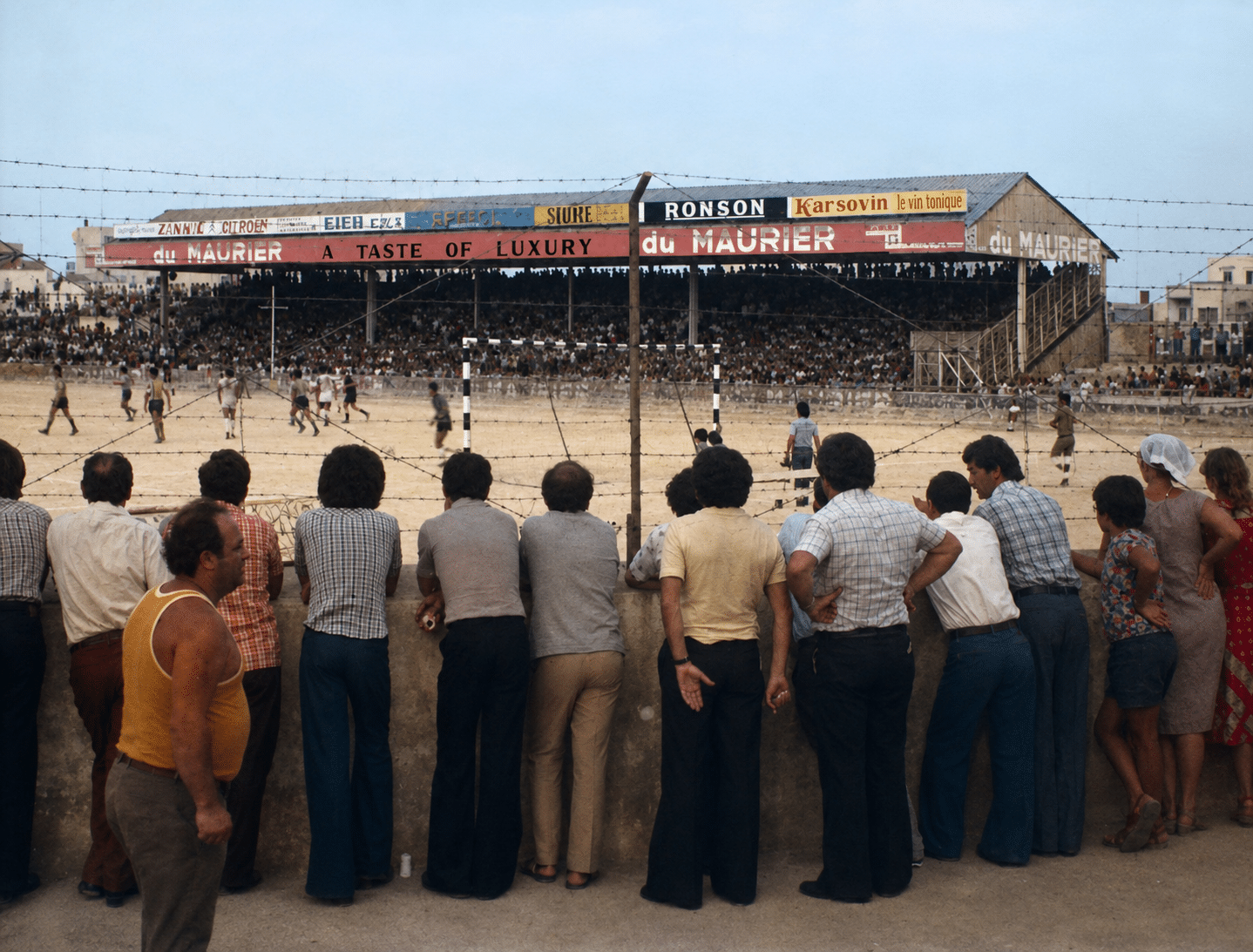
The idea began on a groundhopping trip to Cyprus in 2019. Sitting inside the fading bowl of the Makareio Stadium in Nicosia, Keller and friends began talking about the number of football grounds across Europe that still physically existed but no longer hosted matches. Not demolished, not redeveloped – simply silent.
Within months, PSV Braunschweig had revived their own dormant football section and begun organising matches in these forgotten spaces, drawing travelling supporters, curious locals and dedicated groundhoppers from across Germany and beyond.
Since then, the project has taken them to former East German stadiums, disused sporting arenas and even the remarkable pitch on Helgoland, framed by the red cliffs of the North Sea.
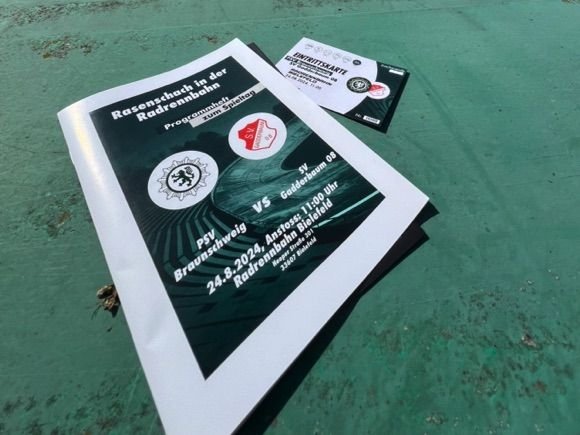
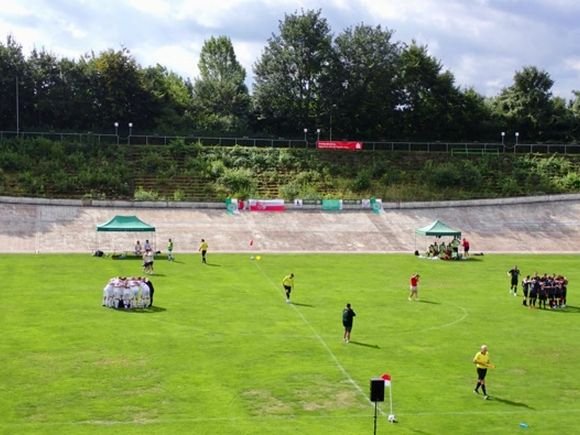
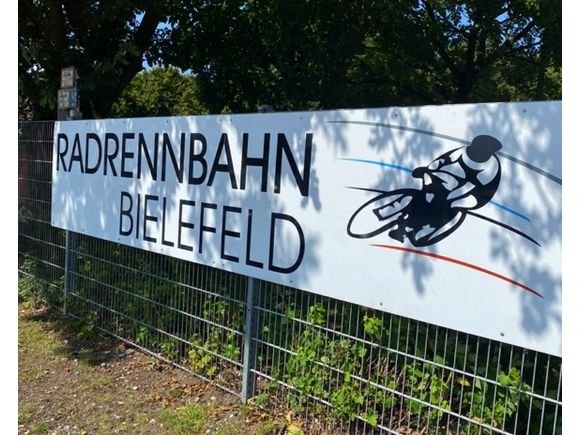
In 2024, they arrived at the Radrennbahn in Bielefeld.
Cougar Park/Feargal McEvoy
PSV Braunschweig match ticket/Feargal McEvoy
Cougar Park/Feargal McEvoy
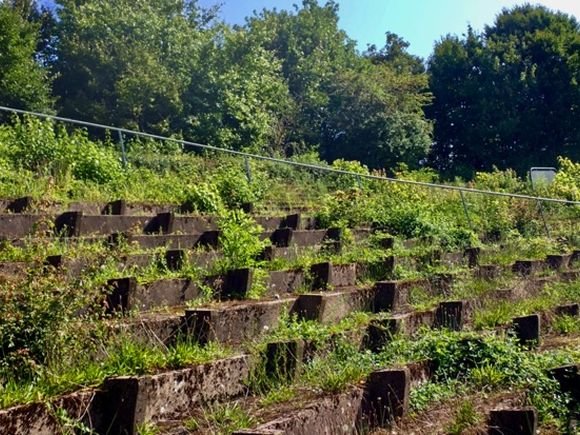
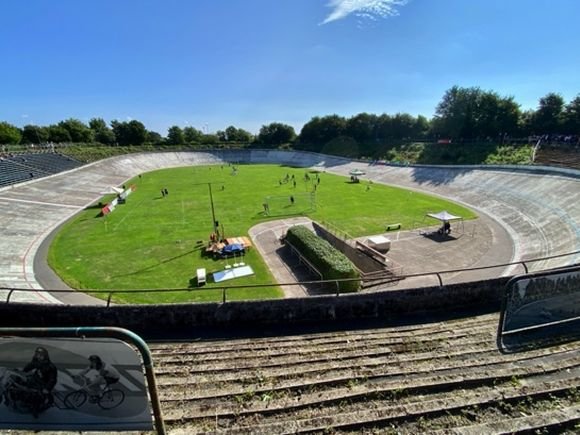
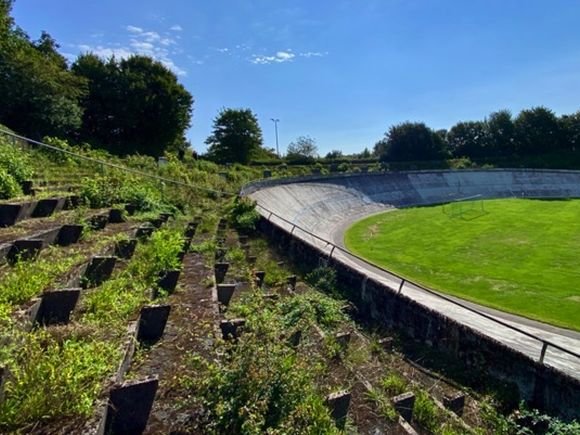
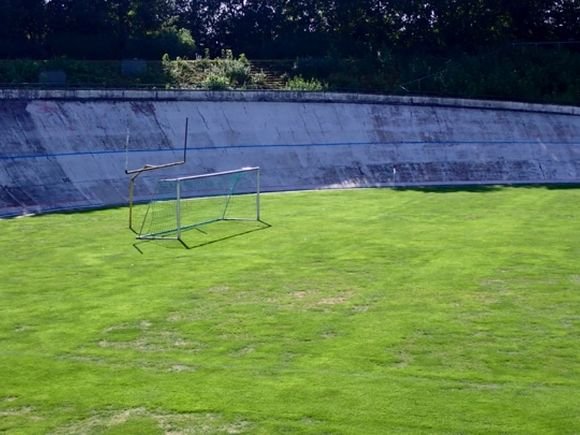
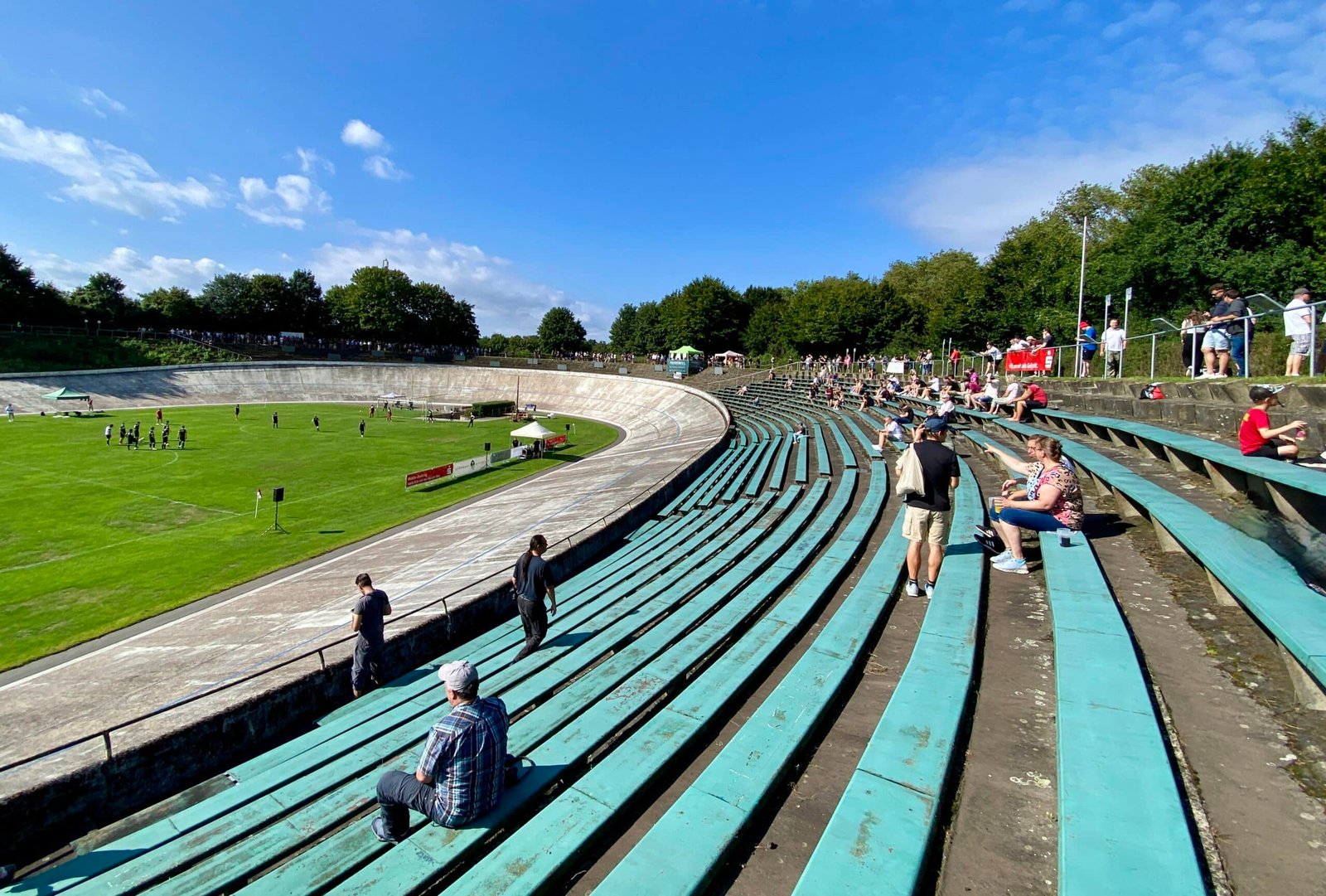
Even without football, the Radrennbahn is imposing. Built in the early 1950s as the city recovered after the war, the vast concrete cycling oval rises steeply from the infield, designed for speed rather than spectators. It remains one of Europe’s most distinctive velodromes.
Yet nearly 900 people turned up to watch PSV transform the centre of the track into a football pitch. For an afternoon, the purpose of the venue shifted entirely. The result mattered less than the act itself: reopening a sporting space that had drifted into partial memory.
For McEvoy, a lifelong Everton supporter and dedicated groundhopper, that temporary transformation is exactly the point.
“I liked the concept,” he says. “An amateur club playing football in grounds that are not normally being utilised and breathing new life into them.”
It also offers something increasingly rare in modern football culture: access.
Cougar Park/Feargal McEvoy
Match day, PSV Braunschweig/Alan Deamer
Millmoor/Feargal McEvoy
“It was a chance for a groundhopper like myself to tick off another visit on the rare occasion that these grounds are used for football.”
The English leg of PSV’s project had a different kind of dynamic. At Millmoor, football’s past felt physically present. The stands sit tight to the pitch, compact and imperfect in ways modern stadiums rarely replicate.
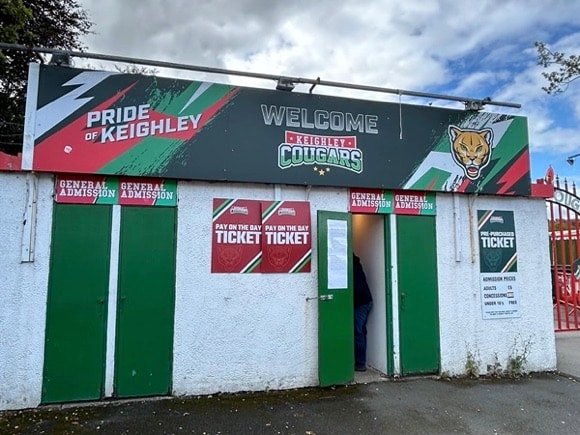
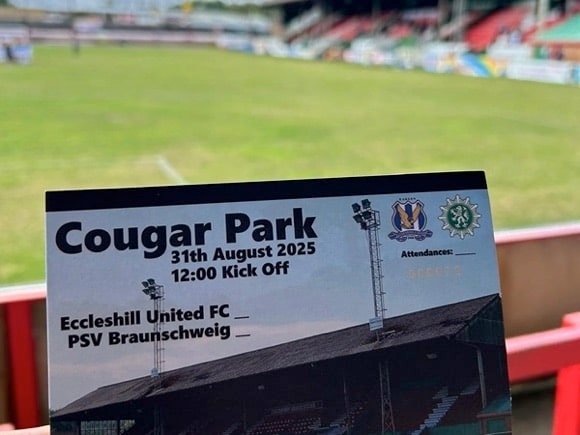
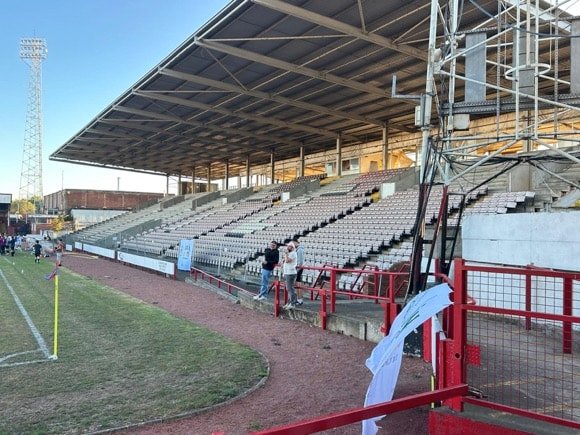
Some 45 miles north in Keighley, Cougar Park, by contrast, told a slightly different story. Originally a rugby-league ground, it reflects another strand of disappearing British sporting architecture.
“It was a classic like Millmoor,” McEvoy says, “one of those lower-league grounds that seems to have been lost from the British landscape post-Hillsborough and the Taylor Report”.
That sense of disappearance – not only of grounds but of identity – runs quietly through the project. There are exceptions, of course, such as Highbury. But mostly football moves on quickly. Old grounds are replaced, redeveloped or erased entirely.
Radrennbahn/Alan Deamer
Radrennbahn/Alan Deamer
Radrennbahn/Alan Deamer
PSV Braunschweig briefly interrupt that process.
Their next major staging point is already confirmed. On 27 June, PSV are due to play at the Olympia-Skistadion in Garmisch-Partenkirchen, a vast winter sports arena best known for ski jumping and its association with the 1936 Winter Olympics. The idea of football taking place beneath an Alpine infrastructure fits neatly with PSV’s broader concept: the temporary occupation of spaces designed for entirely different sporting lives.
There is, inevitably, a romanticism to all of this. Rusted floodlights, faded paint and overgrown terraces have become part of football’s visual language. But PSV’s project works because it goes beyond aesthetics. These are not simply abandoned sites to be photographed and remembered. They are used again, however briefly. A pitch is marked out. Goals are erected. Crowds gather. Noise returns. Then, just as quickly, it disappears.
Radrennbahn/Alan Deamer
Radrennbahn/Alan Deamer
Radrennbahn/Alan Deamer
Perhaps that is why the project resonates so strongly. These are not restorations or recreations. They are moments of reconnection between football and the places it once inhabited.
For McEvoy, the dream lost ground remains Glenmalure Park, former home of Shamrock Rovers before redevelopment in the late 1980s.
“I was lucky to get to about ten games there before the gates closed,” he says. “If we could turn back time, that’s the lost ground I would most like to visit again.”
That sense of longing – not simply for football, but for football places – is what PSV Braunschweig seem to understand better than most.
In a sport driven by expansion, redevelopment and reinvention, their project asks a quieter question: What happens to the places left behind?
We use cookies on our website to give you the most relevant experience by remembering your preferences and repeat visits. By clicking “Accept All”, you consent to the use of ALL the cookies. However, you may visit "Cookie Settings" to provide a controlled consent.
This website uses cookies to improve your experience while you navigate through the website. Out of these, the cookies that are categorized as necessary are stored on your browser as they are essential for the working of basic functionalities of the website. We also use third-party cookies that help us analyze and understand how you use this website. These cookies will be stored in your browser only with your consent. You also have the option to opt-out of these cookies. But opting out of some of these cookies may affect your browsing experience.
Necessary cookies are absolutely essential for the website to function properly. These cookies ensure basic functionalities and security features of the website, anonymously.
Cookie
Duration
Description
cookielawinfo-checkbox-analytics
11 months
This cookie is set by GDPR Cookie Consent plugin. The cookie is used to store the user consent for the cookies in the category "Analytics".
cookielawinfo-checkbox-functional
11 months
The cookie is set by GDPR cookie consent to record the user consent for the cookies in the category "Functional".
cookielawinfo-checkbox-necessary
11 months
This cookie is set by GDPR Cookie Consent plugin. The cookies is used to store the user consent for the cookies in the category "Necessary".
cookielawinfo-checkbox-others
11 months
This cookie is set by GDPR Cookie Consent plugin. The cookie is used to store the user consent for the cookies in the category "Other.
cookielawinfo-checkbox-performance
11 months
This cookie is set by GDPR Cookie Consent plugin. The cookie is used to store the user consent for the cookies in the category "Performance".
viewed_cookie_policy
11 months
The cookie is set by the GDPR Cookie Consent plugin and is used to store whether or not user has consented to the use of cookies. It does not store any personal data.
Functional cookies help to perform certain functionalities like sharing the content of the website on social media platforms, collect feedbacks, and other third-party features.
Performance cookies are used to understand and analyze the key performance indexes of the website which helps in delivering a better user experience for the visitors.
Analytical cookies are used to understand how visitors interact with the website. These cookies help provide information on metrics the number of visitors, bounce rate, traffic source, etc.
Advertisement cookies are used to provide visitors with relevant ads and marketing campaigns. These cookies track visitors across websites and collect information to provide customized ads.