A fan’s guide – the club from early doors to today
Record Dutch champions Ajax are a football superpower and four-time winners of Europe’s premier trophy. Every generation brings another thrilling young Ajax side, the latest coming painfully close to a Champions League final in 2019. A stoppage-time goal from Tottenham put paid to an epic run, Ajax seeing off 2017 finalists Real Madrid and Juventus, and re-establishing belief in the tournament as a whole.
Europa Cup finalists in 2017 with the youngest team to star at such a showcase, Ajax have always placed belief in nurturing their own talent, the classic example being all-time icon Johan Cruyff. The modern-day stadium that has been the club’s home since 1996 took Cruyff’s name in 2018.
Formed in the Café Oost Indië, Kalverstraat, by local businessmen on March 18, 1900, Ajax notched up pre-war titles under English coach Jack Reynolds. A modest stadium, the De Meer, was built, but the club only took off in the 1960s.
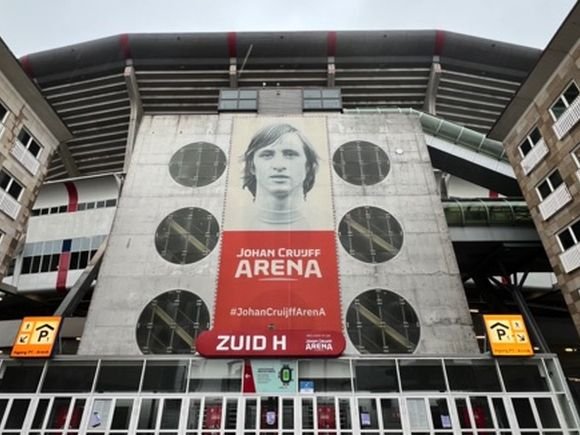
Johan Cruijff ArenA/Peterjon Cresswell
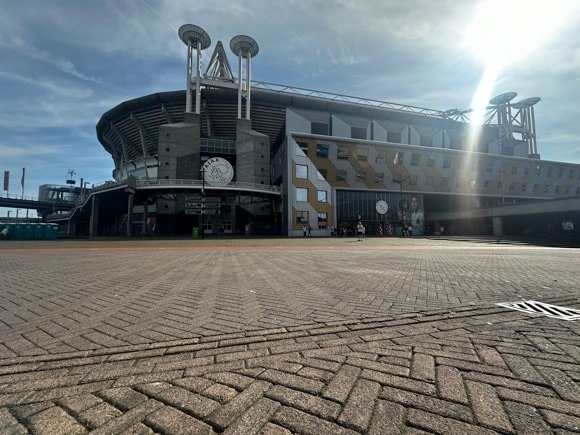
Johan Cruyff ArenA/Alan Deamer
Ajax tour/Joe Stubley
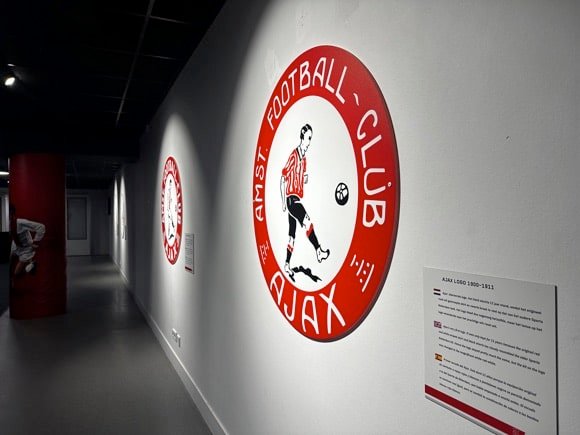
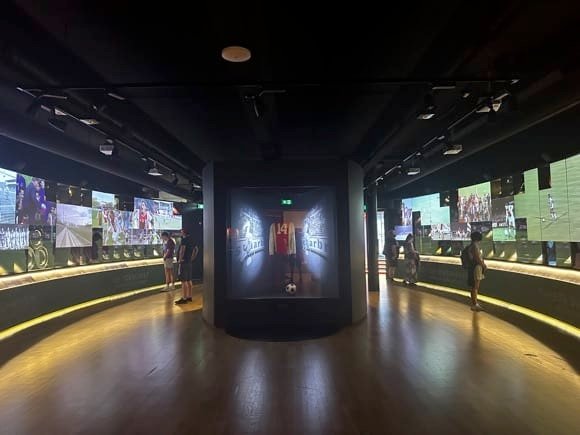
Ajax Museum/Seán Kearney
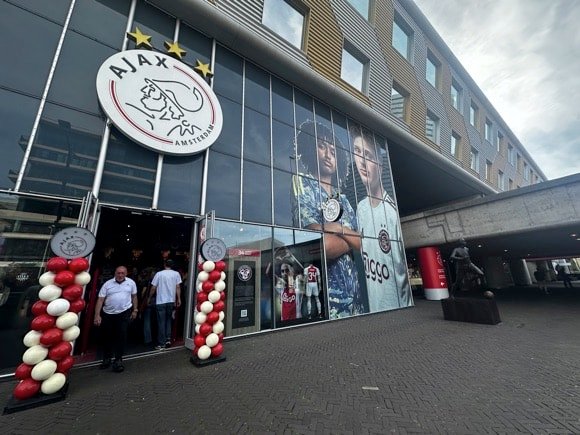
Ajax shop/Peterjon Cresswell
Coached by former Ajax forward Rinus Michels, an adventurous team was based around teenage prodigy Cruyff and swift winger Piet Keizer. Along with three consecutive Dutch titles, Ajax thumped Liverpool 5-1 on a foggy night in 1966.
A European Cup final defeat to AC Milan in 1969 was avenged at Wembley two years later with a 2-0 win over Panathinaikos.
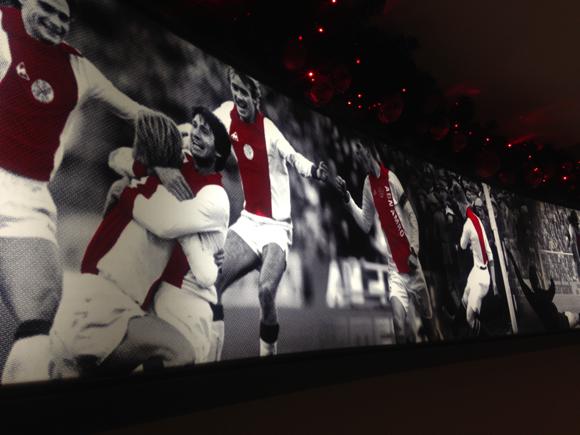
With Romanian coach Ștefan Kovács taking over, and aided by Johan Neeskens, Horst Blankenburg and Ruud Krol, Cruyff shone. Ajax adopted Total Football, a fluid system of interchanging positions, team-mates anticipating runs from deep. The conductor was Cruyff. Ajax dominated the European Cup twice more, before Cruyff and Neeskens headed for Spain.
Ajax stadium tour/Joe Stubley
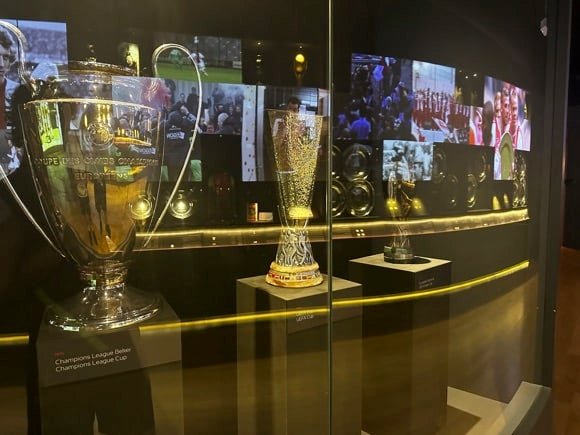
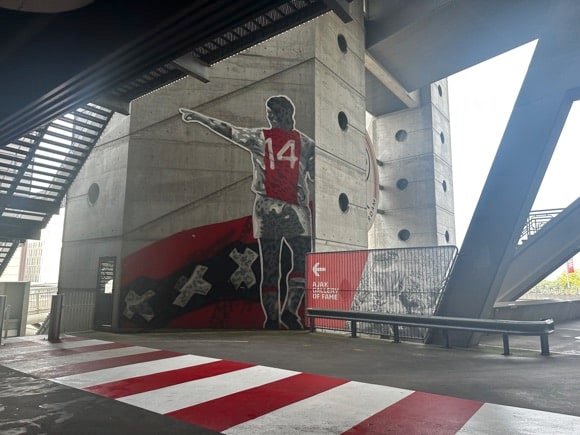
Ajax Gallery of Fame/Joe Stubley
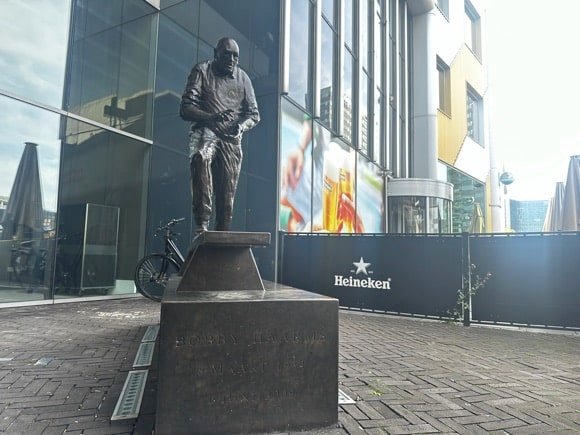
Bobby Haarms statue/Joe Stubley
Ajax Gallery of Fame/Joe Stubley
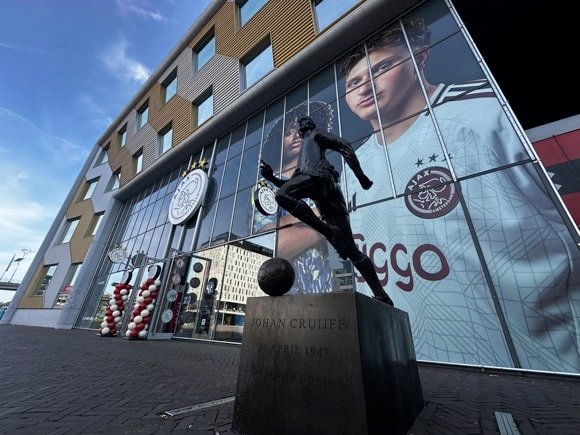
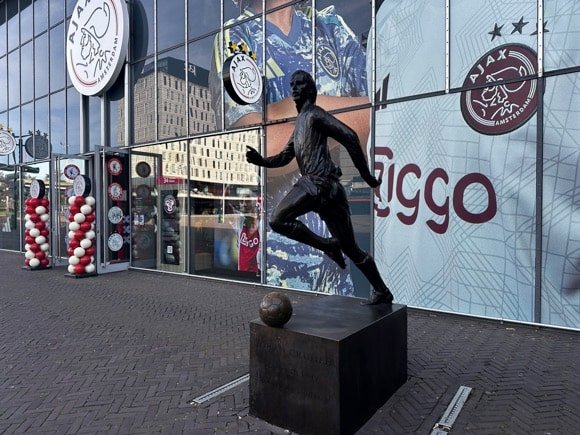
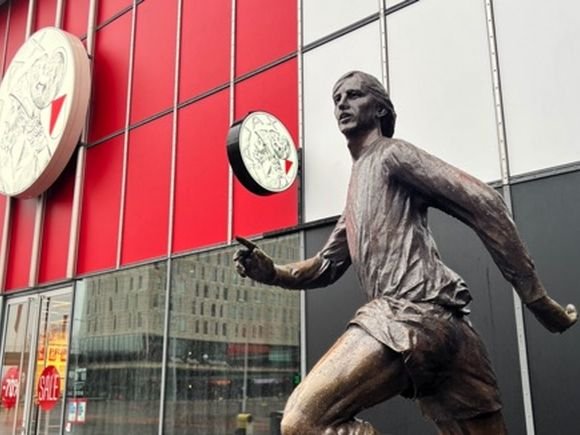
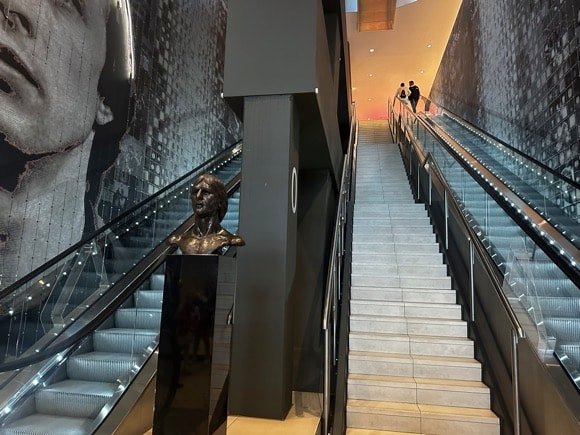
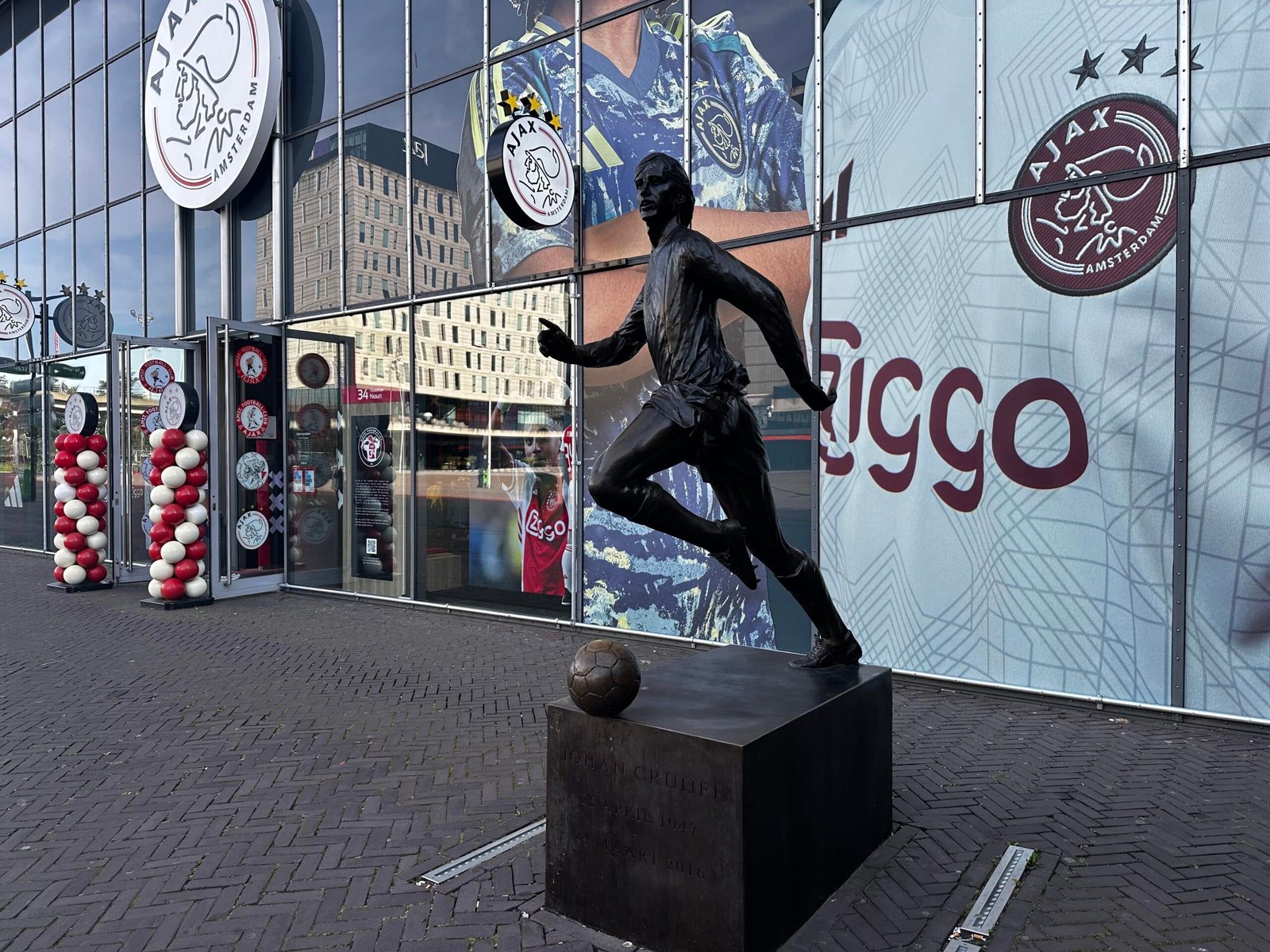
Johan Cruyff statue/Joe Stubley
Ajax’s form dipped until 17-year-old striker Marco van Basten made a dream debut in 1982-83, substituting a veteran Cruyff to notch his first goal. Cruyff then coached van Basten’s Ajax to the European Cup Winners’ Cup in 1987.
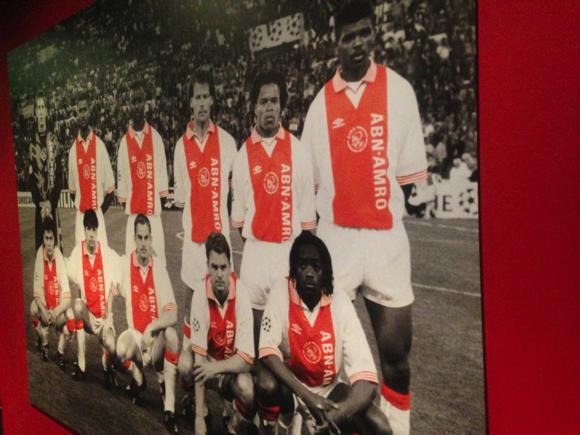
Under Total Football follower Louis van Gaal, a buccaneering Ajax took the UEFA Cup in 1992, star striker Dennis Bergkamp later replaced by Finn Jari Litmanen. A new young side nurtured at the Ajax Academy came to the fore. With the return of ’87 veteran Frank Rijkaard, van Gaal’s youngsters swept to Champions League glory in 1995, a 1-0 win over AC Milan courtesy of 19-year-old Patrick Kluivert.
The team soon broke up, Clarence Seedorf and Edgar Davids leaving a year later, when Ajax lost the final to Juventus on penalties. Marc Overmars, the de Boer brothers and goalkeeper Edwin van der Sar also departed.
Under Ronald Koeman, Ajax won the double in 2002, with help from feuding team-mates Rafael van der Vaart and Zlatan Ibrahimović. The further sales of Wesley Sneijder, Ryan Babel and, later, forward Klaas-Jan Huntelaar, attracted criticism, assuaged by the arrival of prolific Uruguayan Luis Suárez.
Johan Cruyff ArenA/Joe Stubley
Ajax VIP area/Kate Carlisle
Johan Cruyff ArenA/Joe Stubley
Ajax shop/Peterjon Cresswell
Ajax VIP area/Kate Carlisle
Coach Martin Jol made goal-a-game Suárez captain, his goals helping the club to a first title in seven years before he, too, left.
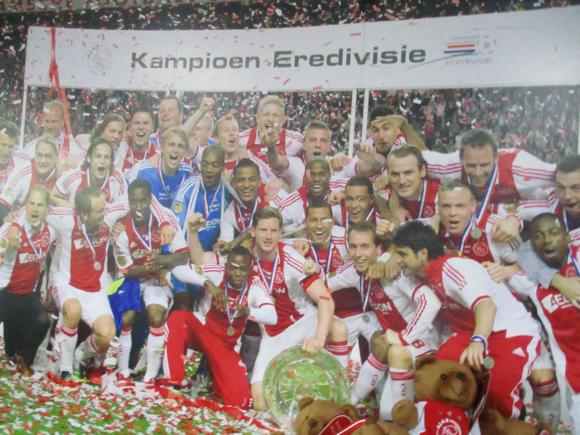
With old boy Frank de Boer at the helm, Ajax claimed a record four straight titles from 2011 to 2014, the last without wonder boy Christian Eriksen. Without Danny Blind, they failed to make it make it five in 2014-15.
Ajax went into the final games of the campaigns in 2015-16 and 2016-17 with the title in the balance, but it wasn’t to be. Reaching their first European final in two decades, a young Ajax side froze on the night against Manchester United, who had too much savvy and lifted the 2017 Europa League.
Coach Peter Bosz having left for Dortmund, Ajax struggled at home and abroad, the bright spark being the breakthrough of Justin Kluivert, son of Ajax legend Patrick. Manager Erik ten Hag then stepped in, stellar midfielders Dušan Tadić and Donny van de Beek, one ex-Southampton, the other a classic Ajax graduate, helping the Amsterdam side reach the knock-out stage of the Champions League.
Johan Cruyff ArenA/Alan Deamer
Johan Cruyff ArenA/Joe Stubley
Johan Cruijff ArenA/Jannes Hartkamp
Johan Cruyff ArenA/Joe Stubley
Trailing Real Madrid 2-1 after the home leg, and with Tadić simply imperial, Ajax shocked the Bernabéu with an electric display, coming away with a 4-1 whitewash of the record European champions.
There was more of the same in the quarter-final, Matthijs de Ligt and Frenkie de Jong bursting onto the world stage to help to a devastating 2-1 defeat of Juventus in Turin. De Ligt and de Jong were quickly snapped up by Juventus and Barcelona respectively, lending a poignant touch to the semi-final clash with Tottenham. Winning 1-0 in London and going into half-time in Amsterdam 2-0, Ajax were stunned by a Lucas Moura hat-trick, the killer deciding away goal coming in the 96th minute.
The team signed off with a 34th domestic title for Ajax. Veteran Klaas-Jan Huntelaar kept scoring as Ajax maintained domestic superiority in 2019-20, with Tadić notching vital goals to steer the club to another Champions League group stage.
Having sold Hakim Ziyech, van de Beek and Sergiño Dest for a combined €100 million, Ajax splashed out on prolific striker Sébastien Haller halfway through the double-winning season of 2020-21. The Franco-Ivorian came into his own the following campaign, hitting a phenomenal 34 goals in all competitions, 11 in the Champions League alone.
Johan Cruyff ArenA/Alan Deamer
Johan Cruyff ArenA/Joe Stubley
Johan Cruyff ArenA/Alan Deamer
Johan Cruyff ArenA/Joe Stubley
Johan Cruyff statue/Joe Stubley
What should have been a high-scoring run to the later stages of the competition ended in frustration in the first knock-out round when Benfica kept Ajax at bay for 77 minutes before scoring with their only chance of the game, a poorly defended free-kick. Haller duly left for Dortmund, ten Haag, Old Trafford.
Flush from a successful half-year at Bruges, Alfred Schreuder used revenue from the sales of Haller and Argentine centre-back Lisandro Martínez, who followed ten Haag to Manchester, to invest in former PSV star Steven Bergwijn. The young striker soon justified his Dutch record fee with a goal in a 4-0 drubbing of Rangers in the Champions League.
A run of six draws either side of Christmas scuppered any chance of a title defence but behind the scenes, the club was in trouble. Star of the van Gaal era, director of football at Ajax since 2012, Marc Overmars had overseen a savvy transfer policy, keeping the club in contention at home and abroad. Inappropriate behaviour with female staff led to his departure in early 2022, leaving the club rudderless.
Failing to qualify for the Champions League and losing the cup final on penalties to PSV pale in comparison to the sheer disaster of the subsequent 2023-24 campaign, underscored by a scandalous 4-0 defeat at home to Feyenoord.
Johan Cruyff statue/Joe Stubley
Johan Cruyff ArenA/Joe Stubley
Ajax shop/Joe Stubley
Johan Cruyff ArenA/Joe Stubley
Bobby Haarms statue/Joe Stubley
Johan Cruyff ArenA/Alan Deamer
Abandoned after constant crowd trouble, the match preceded a further three straight league defeats as Ajax prepared for the unprecedented prospect of a relegation battle.
Changing CEOs as often as coaches, Ajax rallied to go on a ten-game unbeaten run thanks to goals from Brian Brobbey, a graduate of Jong Ajax returning from RB Leipzig. Galvanising the midfield with Liverpool legend Jordan Henderson, Ajax managed to claim an unexpected European place by May 2024.
Little-known young Italian coach Francesco Farioli imposed a solid defensive strategy in 2024-25 to keep the goals-against tally down, while vital strikes from burly World Cup warhorse Wout Weghorst sparked a string of wins that put Ajax in a title-winning position. A couple of strange defeats – 4-0 at Utrecht, 3-0 home to NEC Nijmegen – then saw the momentum swing to PSV.
Missing out on the Dutch crown by one point, after a decisive 99th-minute goal in a chaotic finish at Groningen downgraded an away win to a frustrating draw, Ajax bade farewell to Porto-bound Farioli only to return to instability in 2025-26. With coaches coming and going, the blossoming of Jong Ajax winger Mika Godts lit up the Johan Cruyff ArenA and pushed the young Belgian towards boarding the plane for the World Cup 2026.
Stadium Guide
The field of dreams – and the story behind it
Johan Cruyff ArenA/Joe Stubley
Johan Cruyff ArenA/Alan Deamer
Johan Cruijff ArenA/Peterjon Cresswell
Johan Cruyff ArenA/Joe Stubley
Johan Cruijff ArenA/Peterjon Cresswell
Johan Cruijff ArenA/Jannes Hartkamp
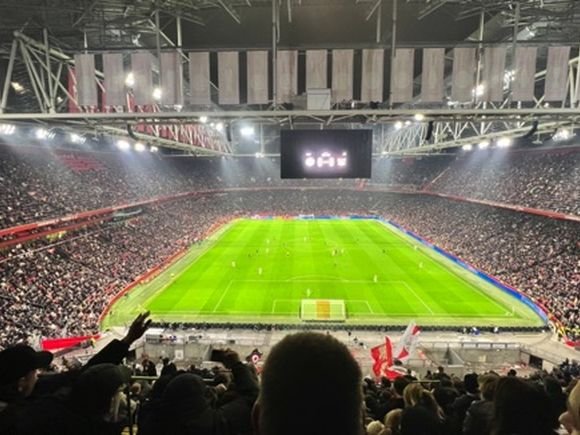
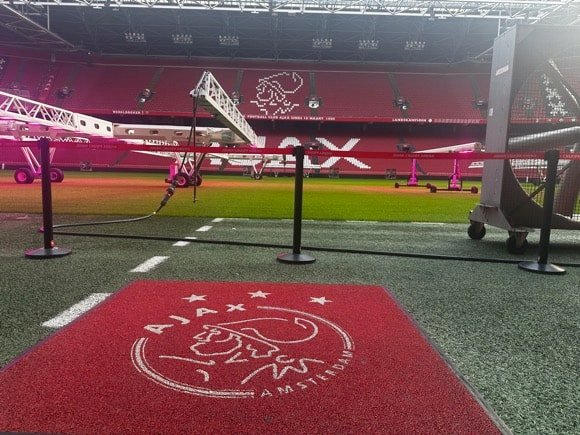
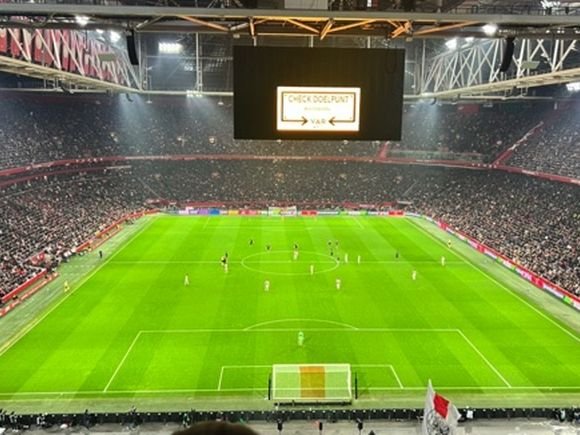
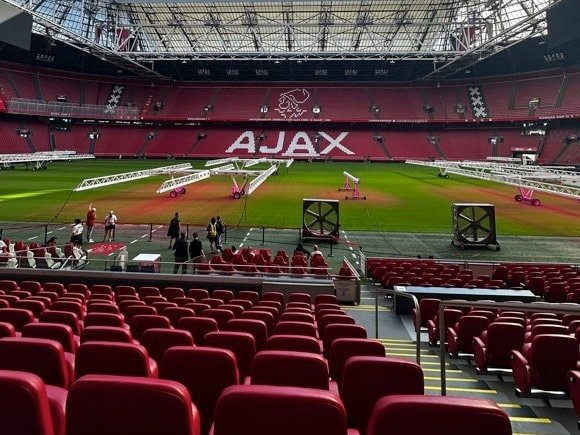
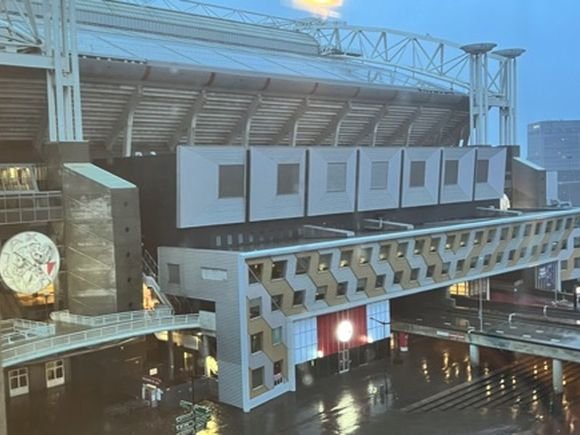
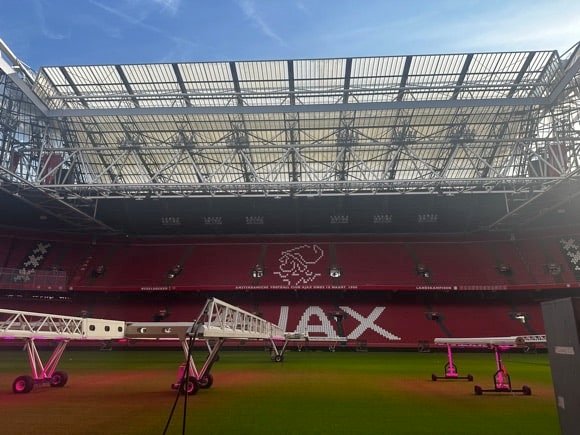
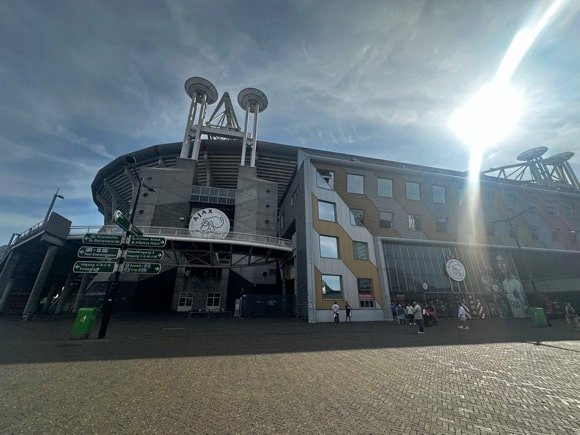
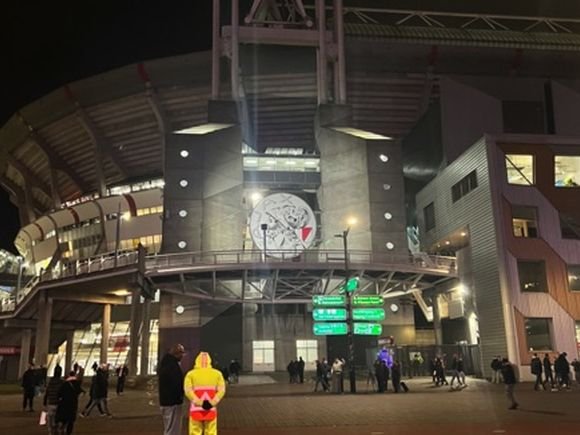
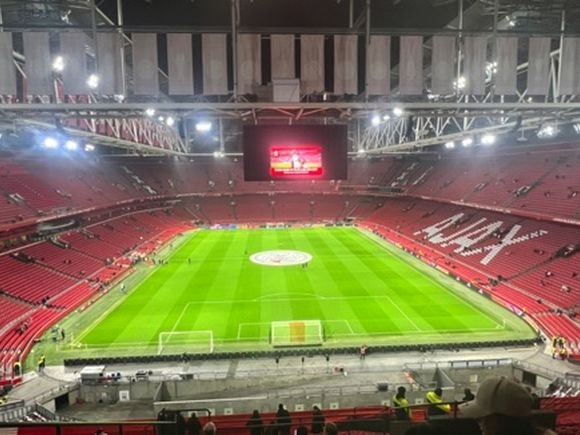
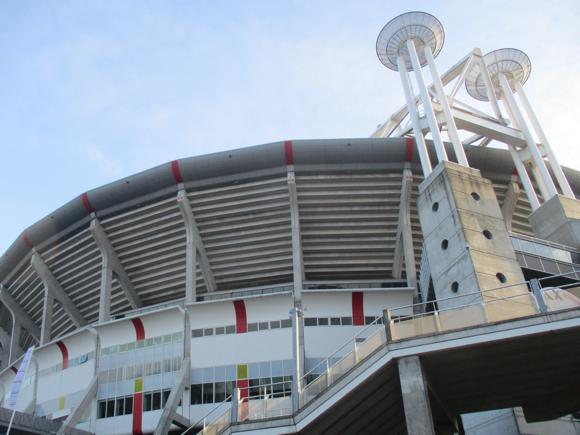
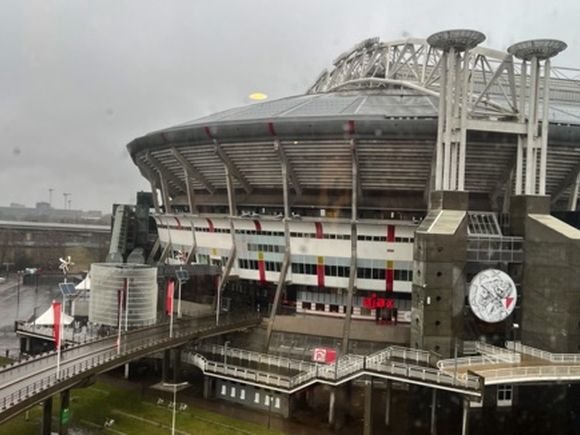
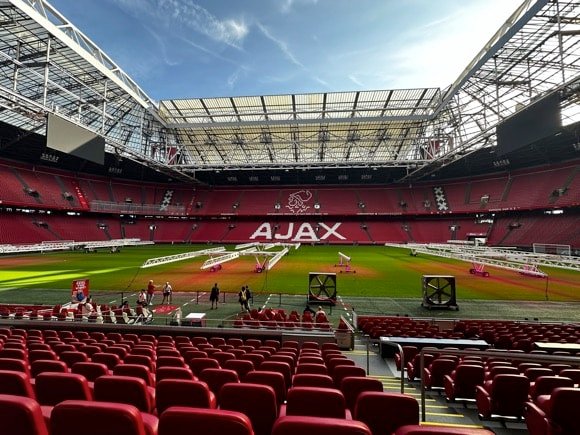
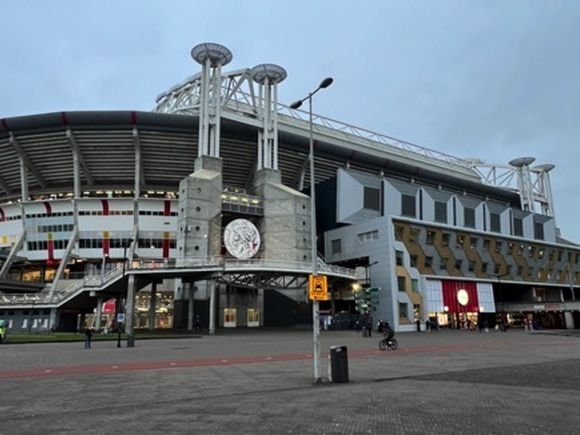
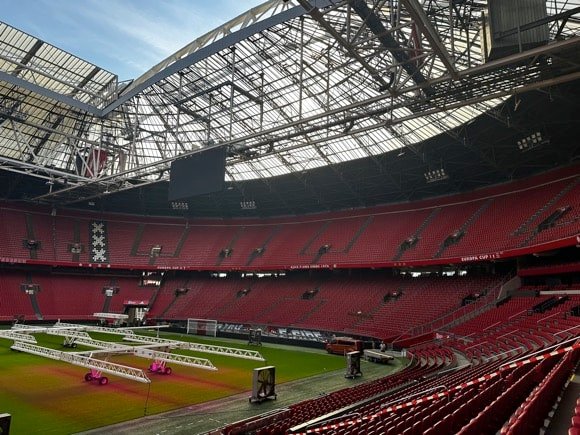
Built at a cost of €140 million and opened in 1996, the 56,000-capacity Johan Cruijff ArenA hosted the Europa League Final between Chelsea and Benfica in 2013. A venue for Euros 2000 and 2020, it stands surrounded by a multiplex cinema, two music venues, hotels and several stores in the once neglected district of Bijlmer south-east of the city.
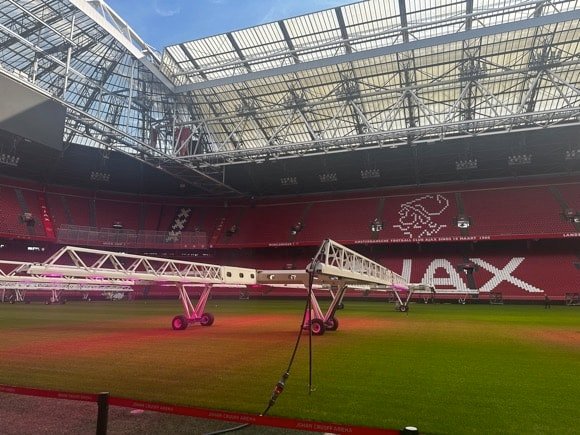
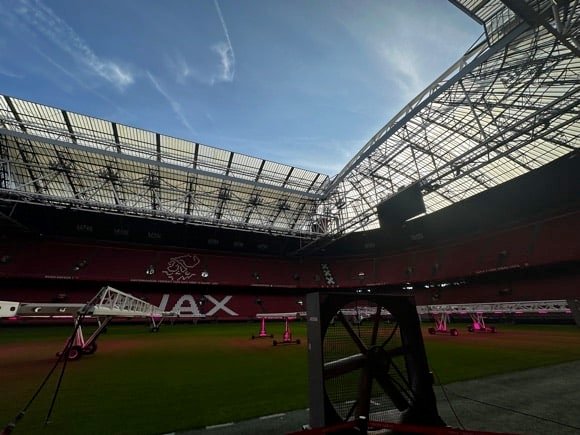
Although criticised for the state of its turf – a sliding roof is a curse and a blessing – the ArenA does show just how far this once neighbourhood club have come in a relatively short time.
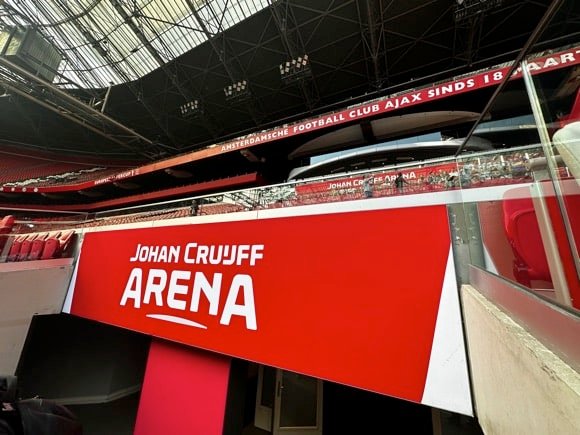
In 2018, the stadium officially switched from its original name of the Amsterdam ArenA to honour all-time club hero Johan Cruyff, who carried in the first torch for the opening ceremony in August 1996.
Johan Cruijff ArenA/Jannes Hartkamp
Johan Cruyff ArenA/Joe Stubley
Johan Cruyff ArenA/Alan Deamer
Johan Cruyff ArenA/Joe Stubley
Johan Cruyff ArenA/Alan Deamer
Johan Cruyff ArenA/Joe Stubley
Originally holding just over 50,000, the stadium has seen its capacity click up with gradual minor replacements and expansions linked to the hosting of Euro 2020, the rights awarded in 2014. As it turned out, Covid restrictions kept attendances to 15,000 and the tournament was played a year later.
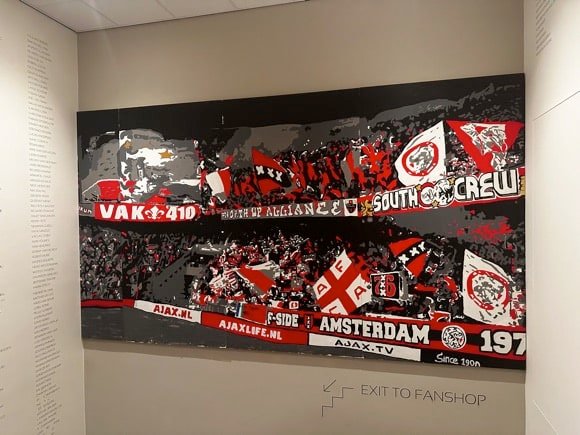
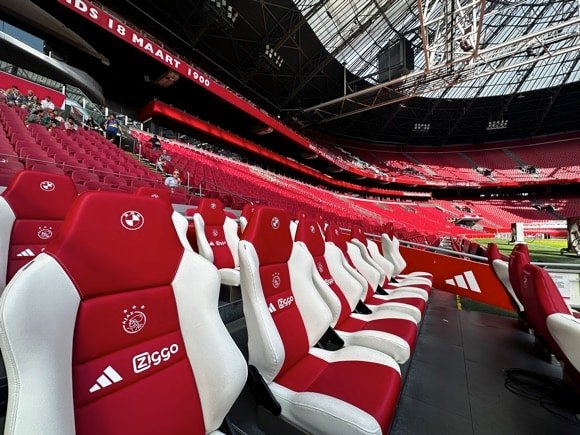
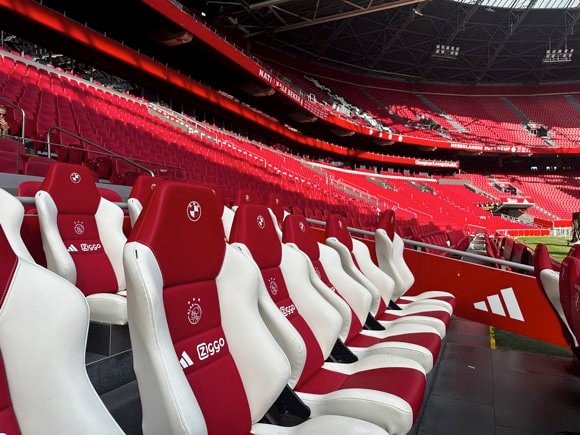
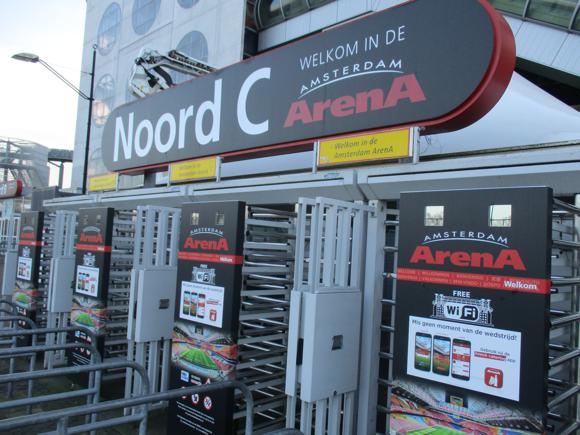
Three tiers of bright red seats are accessed by 11 gates, the upper tier containing sectors 401-430, the lower tier 101-129. The home Zuid end (gates G-J) houses the notorious F-Side hard-core following of yesteryear.
At the opposing Noord end (A-C, K), away fans are allocated sectors 416 and 417 through gate K in the north-west corner. Stadium tours and the Ajax shop are found at the main entrance, Hoofdingang (gate E).
getting here
Going to the stadium – tips and timings
Ajax Amsterdam transport/Jannes Hartkamp
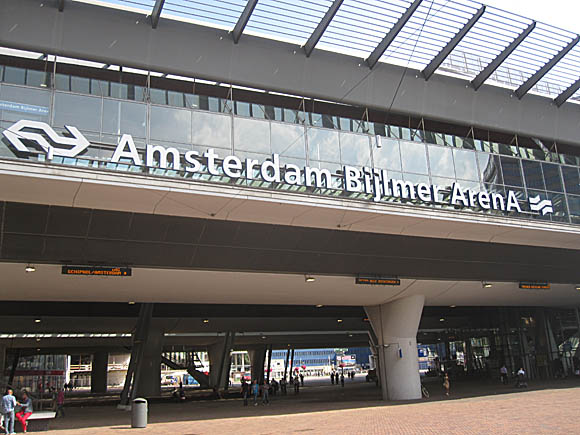
Metro line 54 runs to Station Biljmer ArenA from Centraal, direction Gein. Allow 15 mins. The previous stop of Strandvliet is also reasonably close and more convenient for the Noord end.
The station is on a direct train line from Schiphol Airport, journey time less than 15 mins, as well as major Dutch cities such as the railway hub of Utrecht. From Bijlmer, the ArenA is ahead as you turn left down the stairs from the platform.
getting in
Buying tickets – when, where, how and how much
Johan Cruijff ArenA/Peterjon Cresswell
Tickets are sold via the Ajax website. Purchases are limited those holding a Club Card (€5/season), and usually only less-attractive fixtures have any kind of availability.
Alternatively, you can sign up to the Ajax Supporters’ Association (€14/season) via Dutch-only Ajax Life, even if you live abroad.
Match packages are sold inclusive of a one-night stay at the Jaz in the City hotel next door including breakfast, plus a match-day stadium tour, for €665-695/€1,330-1,390 for two.
For visits of lesser clubs, you pay €26 for a seat behind the goals, €31-€36 (€22 for over-65s) around the corner flags, and €52 for a place over the halfway line. Note that online sales are Dutch-only but relatively easy to negotiate.
For all queries, you can try tweeting Ajax Fancare.
what to buy
Shirts, kits, merchandise and gifts
Ajax shop/Joe Stubley
Ajax shop/Peterjon Cresswell
Ajax shop/Joe Stubley
Ajax shop/Joe Stubley
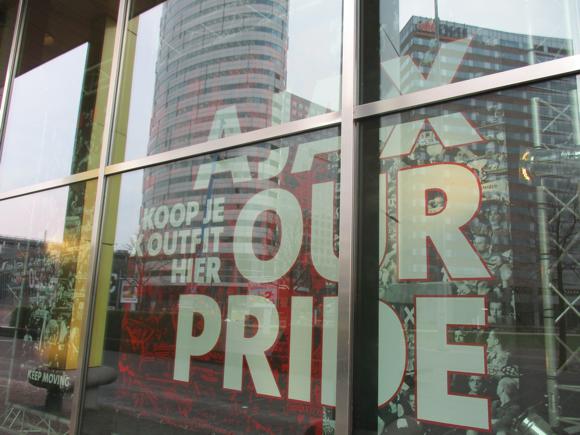
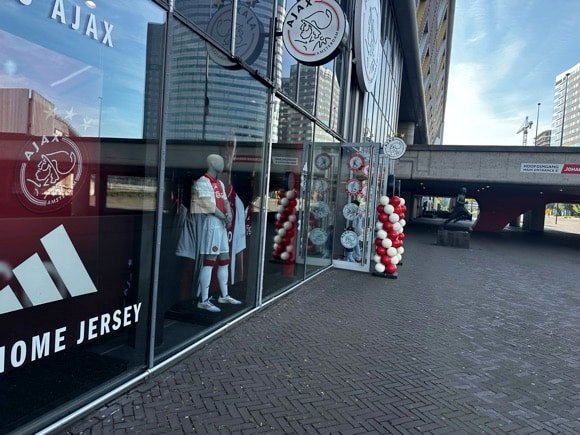
The club oversees three stores, two in Amsterdam, one by the main entrance of the ArenA (Mon & Sun 11am-5pm, Tue-Sat 9.30am-5pm, match nights) and another in town at Kalverstraat 124 (Mon & Sun 11am-7pm, Tue-Sat 10am-7pm).
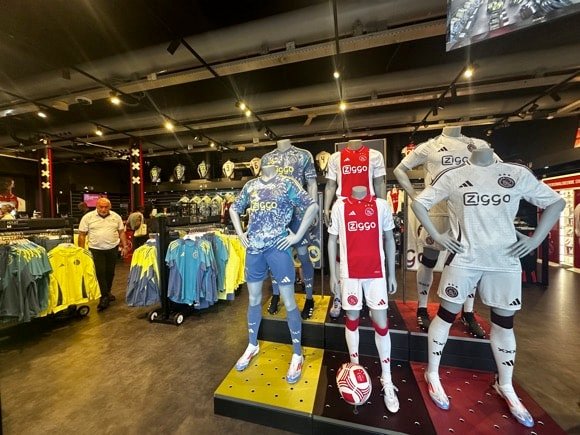
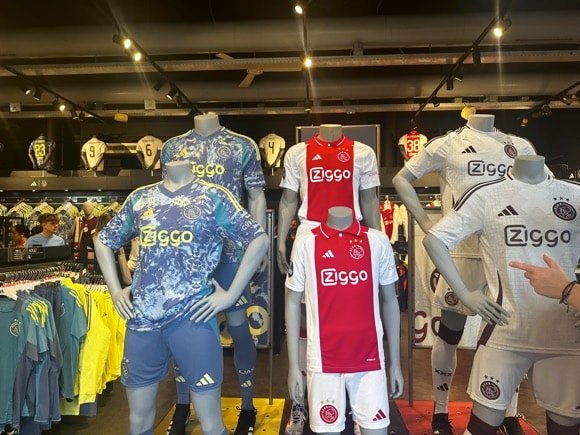
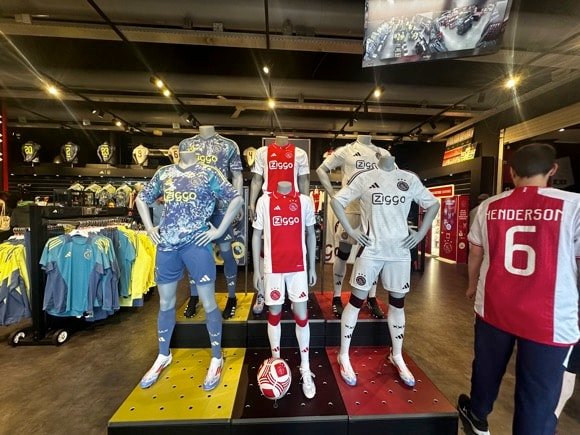
The classic red vertical band is currently displayed nice and thick on the home shirt, with a banner on the back of the neck to celebrate 750 years of the city of Amsterdam. Change strip is black with strange patterns in lime green meant to represent water, which is turn is meant to represent the fact that bringing through young talent is in the water at Ajax.
Third kit is far simpler, white with sleeve and collar tips in a lighter blue, and red adidas shoulder stripes. Sponsors are Dutch telecommunications giant Ziggo.
Other Ajax merch includes playing cards, pillows and pyjamas, with a build-your-own Ajax dressing room an unusual gift for kids.
Stadium tours
Explore the ground inside and out
Ajax stadium tour/Joe Stubley
Ajax tours/Peterjon Cresswell
Ajax Gallery of Fame/Joe Stubley
Ajax Gallery of Fame/Joe Stubley
Ajax stadium tour/Joe Stubley
Ajax Gallery of Fame/Joe Stubley
Ajax stadium tour/Joe Stubley
Ajax Gallery of Fame/Joe Stubley
Ajax stadium tour/Joe Stubley
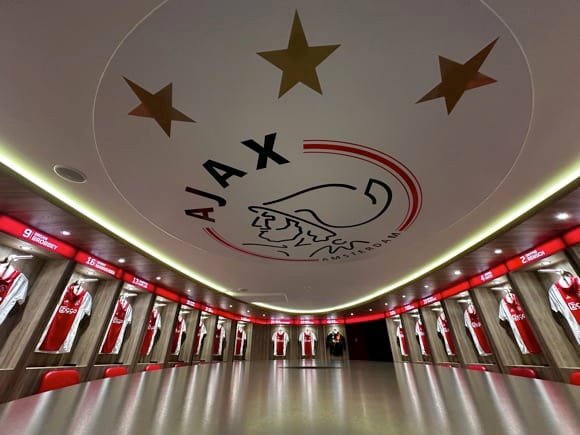
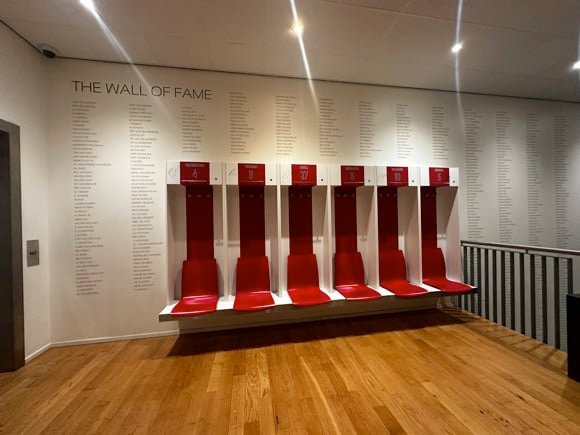
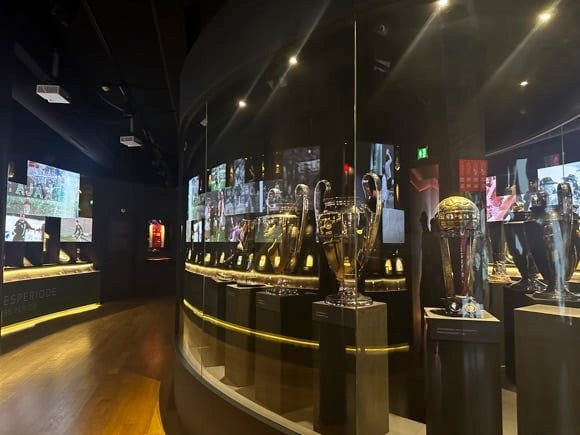
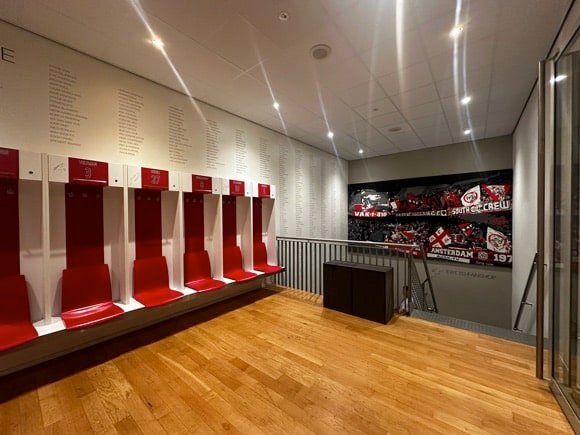
At-your-own-pace, unguided stadium tours (€27.50, 5-12s €19.25, under-4s free) run every half-hour most days (not match days), departing from the main entrance and lasting 1hr. Pitch, dug-outs, dressing rooms, the players’ tunnel and a Gallery of Fame with trophies on display are all taken in.
Guided tours (€38/€22) also include the press room and run for 75mins, while VIP tours (€62/€27.50) involve visits to the skyboxes and boardroom, running for 2hrs.
Where to Drink
Pre-match beers for fans and casual visitors
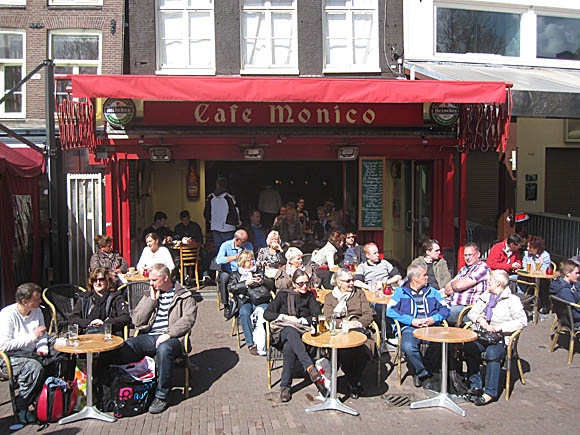
Café Monico/Jannes Hartkamp
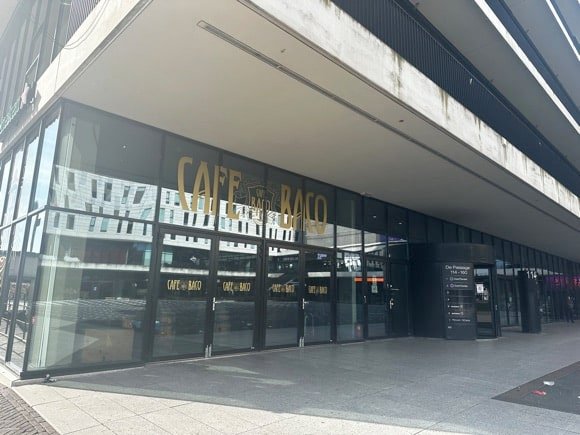
Café Baco/Joe Stubley
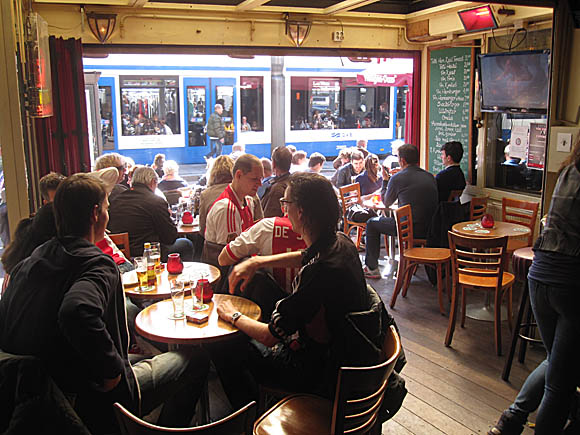
Café Monico/Jannes Hartkamp
Grand Café 3 & 20/Peterjon Cresswell
Hesp/Jannes Hartkamp
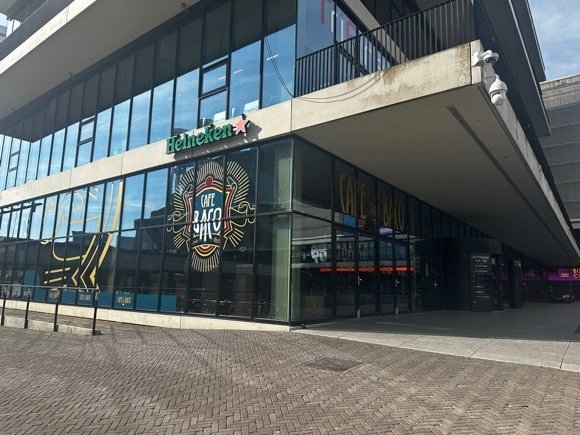
Café Baco/Joe Stubley
Rhythms Bar & Kitchen/Alan Deamer
Many Ajax fans gather in town at the Café Monico on Rembrandtplein and/or Café Hesp near Amstel station on Weesperzijde before heading to the ArenA.
On match days, the concourse between Bijlmer ArenA station and the stadium turns into an alfresco party zone, with techno blasting out amid food and drink outlets.
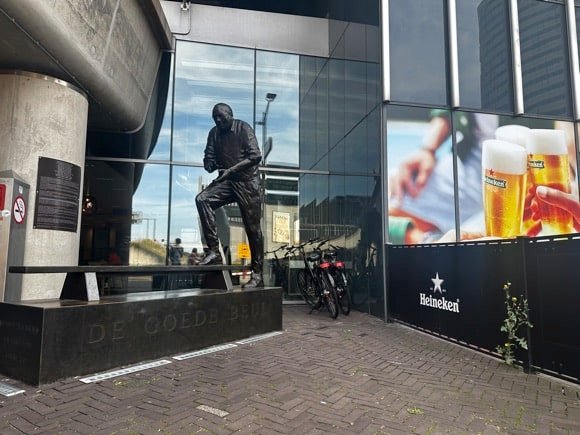
Crowds also fill the spacious Café Baco, sinking lagoons of Heineken and tucking into classic Dutch snacks and bar food. Overlooking this scene, Rhythms Bar & Grill in the Jaz in the City Amsterdam hotel serves a higher class of grilled food plus craft beer – no reservations on match days, so it’s first come, first served to find a seat.
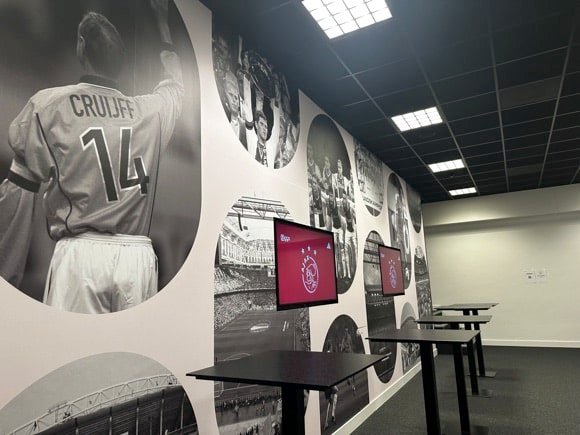
For just chips and mayonnaise, you’ll find it at popular fast-food chain FEBO. and for Grolsch beer, Boulevard Fourteen, 14 being the number on the back of Cruyff’s shirt. His portraits decorate the walls of this mainstream venue near Bijlmer ArenA station.
Grolsch is also the attraction at the classier, restaurant-like Grand Café 3 & 20on De Passage.
We use cookies on our website to give you the most relevant experience by remembering your preferences and repeat visits. By clicking “Accept All”, you consent to the use of ALL the cookies. However, you may visit "Cookie Settings" to provide a controlled consent.
This website uses cookies to improve your experience while you navigate through the website. Out of these, the cookies that are categorized as necessary are stored on your browser as they are essential for the working of basic functionalities of the website. We also use third-party cookies that help us analyze and understand how you use this website. These cookies will be stored in your browser only with your consent. You also have the option to opt-out of these cookies. But opting out of some of these cookies may affect your browsing experience.
Necessary cookies are absolutely essential for the website to function properly. These cookies ensure basic functionalities and security features of the website, anonymously.
Cookie
Duration
Description
cookielawinfo-checkbox-analytics
11 months
This cookie is set by GDPR Cookie Consent plugin. The cookie is used to store the user consent for the cookies in the category "Analytics".
cookielawinfo-checkbox-functional
11 months
The cookie is set by GDPR cookie consent to record the user consent for the cookies in the category "Functional".
cookielawinfo-checkbox-necessary
11 months
This cookie is set by GDPR Cookie Consent plugin. The cookies is used to store the user consent for the cookies in the category "Necessary".
cookielawinfo-checkbox-others
11 months
This cookie is set by GDPR Cookie Consent plugin. The cookie is used to store the user consent for the cookies in the category "Other.
cookielawinfo-checkbox-performance
11 months
This cookie is set by GDPR Cookie Consent plugin. The cookie is used to store the user consent for the cookies in the category "Performance".
viewed_cookie_policy
11 months
The cookie is set by the GDPR Cookie Consent plugin and is used to store whether or not user has consented to the use of cookies. It does not store any personal data.
Functional cookies help to perform certain functionalities like sharing the content of the website on social media platforms, collect feedbacks, and other third-party features.
Performance cookies are used to understand and analyze the key performance indexes of the website which helps in delivering a better user experience for the visitors.
Analytical cookies are used to understand how visitors interact with the website. These cookies help provide information on metrics the number of visitors, bounce rate, traffic source, etc.
Advertisement cookies are used to provide visitors with relevant ads and marketing campaigns. These cookies track visitors across websites and collect information to provide customized ads.