A fan’s guide – the club from early doors to today
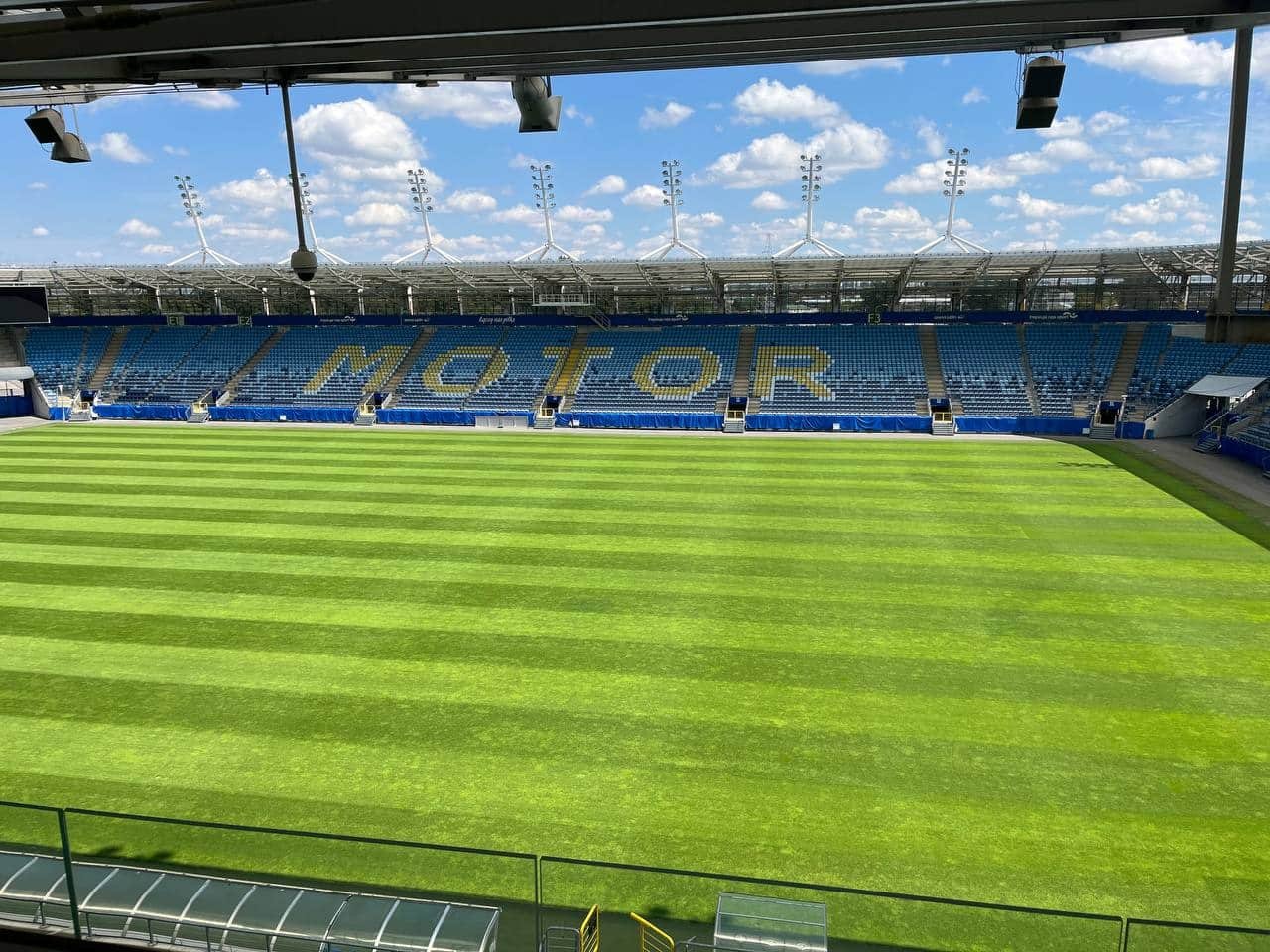
Ekstraklasa champions for the first time in 2024, Jagiellonia Białystok are a new force in the Polish game, six top-three finishes since 2015 pushing ‘Jaga’ in the same bracket as Lech Poznań and Wisła Kraków. Yet before this recent decade or so, Jagiellonia had no taste of the big time, only climbing to challenge Poland’s biggest clubs once the City of Białystok, an industrious hub in the far north-east, had taken over the former Hetman Stadion to create the contemporary, 22,000-capacity Stadion Miejski.
The Municipal Stadium, set by woodland in the far south of town, is only part of the story, as Wschodzący (‘Rising’) Białystok, a marketing campaign to promote the city, became the club’s co-sponsors in 2011, when the new arena was halfway through its lengthy rebuild. Białystok has no airport, few tourist attractions and little visual identity. Jagiellonia, European competitors to be feared in recent times, have taken the Białystok brand to destinations as diverse as Ghent, Greece and Kazakhstan.
The striking colours of yellow and red, taken from the city crest and also used for the stadium, were not the ones selected by the soldiers who formed the club in the fiery days of Polish independence in 1920. This team in black and white only knew regional football for long decades of obscurity but now Białystok is on the map, within the borders of Poland and not Tsarist Russia, Stalin’s Soviet Union or Nazi Germany, the novelty certainly hasn’t worn off.
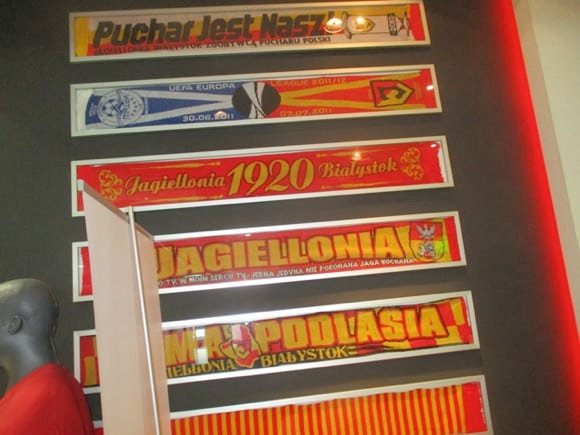
Once WKS 42 Pułk Piechoty Białystok – the 42nd Białystok Infantry Division – established a football team following the bitter Battle of Białystok between Polish and Soviet forces in 1920, nearly two full years after the end of World War I, the regiment moved into the barracks and used the football pitch on Traugutta left behind by the occupying forces.
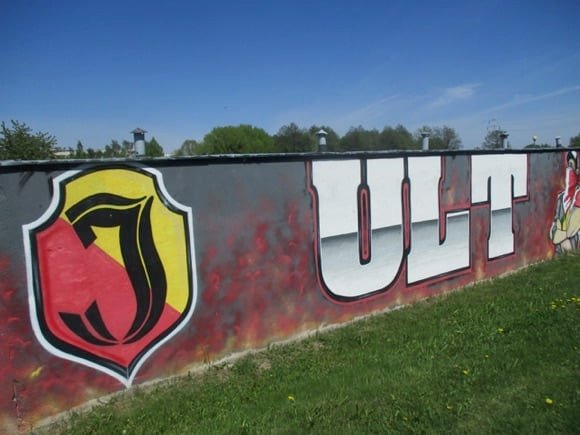
It was another hero of World War I, Marian Zyndram-Kościałkowski, who was responsible for the change of colours to cherry red and yellow, and signature crest centrepieced by the letter J in a historic font. As a reward for his heroics, Zyndram-Kościałkowski had been named governor of the Białystok region in 1930, four years after a multi-sports stadium had opened at south of town by the Zwierzyniecki Forest. As well as rebranding the club in 1932, the governor renamed it Jagiellonia after the powerful medieval dynasty, and had the Zwierzyniecki Stadium renovated. It’s still in use today, as one of the best athletics arenas in Poland.
All did not end well for the governor, however – fleeing the country after the Soviet invasion of this region in 1939, he ended up in an internment camp on the Isle of Bute and died in Brookwood, Surrey, immediately after the war. His grave is still there today.
Buchcik is honoured with a statue outside the Stadion Miejski, Jagiellonia’s home in signature red and yellow. It’s taken a long time to get there. Regaining their original name in 1957 after several short-lived iterations, Jagiellonia moved into a new stadium on Jurowiecka in 1963 but then spent a decade at district level. Promotion to the second tier came in 1975, then a first-ever jump to the elite in 1987. It wasn’t until 2007, however, that Jaga joined the Ekstraklasa and stayed there.
The year before, the City had taken over what was the Stadion Hetmana, begun to renovate it and called it Miejski (‘Municipal’). Jagiellonia could not have risen from the fourth flight at a better time.
In the spring of 2010, helped by goals from locally born striker Tomasz Frankowksi, who had started his career at Jagiellonia, made his name at Wisła Kraków and come back to Białystok, Jaga won tight two-legged fixtures against Korona Kielce and Lechia Gdańsk to reach the Polish Cup final. In a poorly attended event in, of all places, Bydgoszcz – Warsaw’s National Stadium was still being rebuilt – a single goal from former Dunfermline defender Andrius Skerla against Pogoń Szczecin earned Jagiellonia their first major silverware.
While initial European ventures proved short-lived, the return of cup-winning manager Michał Probierz in 2014, blossoming of midfielder Rafał Grzyb, another 2010 cup winner, and increasing involvement of locally born entrepreneur and major shareholder Wojciech Strzałkowski gave the club a more solid foundation to establish itself as a serious challenger in Poland’s elite Ekstraklasa.
Finishing third in 2015, pipped to the title at the death by Legia in 2017 and again in 2018 despite the shock exit of coach Probierz, Jagiellonia were now a force to be reckoned with. When journeyman striker Jesús Imaz, who had arrived with a wave of Spanish players at Wisła Kraków in 2017, was looking for a more reliable club to further his career in Poland, he turned to Jagiellonia.
It proved to be the right move. Though Rafał Grzyb bowed out in 2018 to become involved in local politics, and Jagiellonia dipped towards the relegation zone in 2022 and 2023, the battle for survival proved the making of Adrian Siemieniec. Reserve team coach in 2022, still barely in his thirties, this popular figure who had previously worked alongside Michał Probierz replacement Ireneusz Mamrot was a classic case of someone who had realised his limitations as a player early on, quickly focused on coaching and grabbed his chance with both hands.
Taking charge of the first team in April 2023 and saving Jagiellonia from the drop, Siemieniec kept the momentum going into the next campaign, placing his trust in defensive midfielder and club captain Taras Romanczuk. Ukrainian by birth, at Jagiellonia since 2014, Romanczuk had gained a Polish cap in 2018 and would come back into the national set-up thanks to his outstanding performances in the 2023-24 season.
Nurturing right-sided midfielder Dominik Marczuk, a Polish U-21 international who made his club debut early in the season, Romanczuk ran a tight ship.
Reversing the scoreline to beat Radomiak Radom 3-2 in September thanks to three assists from Marczuk, Jagiellonia were title contenders going in to the spring. The other key element was Congolese forward Afimico Pululu, a fringe player at Basel who made his Jagiellonia debut the same time as Marczuk.
His knack of scoring at the right time proved vital as Jaga edged out Legia and, on head-to-head goal difference, Śląsk Wrocław. A 3-1 win over the Silesians at a freezing Stadion Miejski in March would see Jagiellonia lift the title for the first time, two-goal hero Marczuk earning the Ekstraklasa Young Player of the Season award and a move to America.
In their first European campaign for six years, Jaga entered the Conference League group stage by dint of defeats in the two more prestigious competitions, one to Ajax that brought a near full house to the Stadion Miejski. Spurred on by a surprise 2-1 victory at FC Copenhagen, Macedonian loanee Darko Churlinov hitting the 97t-minute winner, Siemieniec’s men overcame middling opposition to find themselves, improbably, facing Betis in the quarter-final. After a routine defeat in Seville, 20,000 gathered for the return leg in Białystok, another late Churlinov goal not enough to move the dial on the aggregate score.
In the same tournament the following year, Jaga again dispatched lesser sides, seeing out a 0-0 draw in Alkmaar to line up a prestigious fixture with Fiorentina in the knock-out phase. Brushed aside 3-0 in Białystok, Jagiellonia went to Tuscany with very slim hopes of progress. A hat-trick either side of half-time by teenage sensation Bartosz Mazurek, who had replaced another, Oskar Pietuszewski, sold to Porto, changed all that.
Taking the tie to extra-time, Jaga’s heroic fightback was stalled thanks to a deflected own goal from Romanczuk. A late strike from the still prolific veteran Jesús Imaz wasn’t quite enough to send the game to penalties – but Jagiellonia proved they could more than hold their own against notable European opposition. A late stoppage-time penalty by visitors Górnik Zabrze then snatched a runners-up spot away from Jaga in the league, but a third-place finish set up another European campaign for 2026-27.
Stadium Guide
The field of dreams – and the story behind it
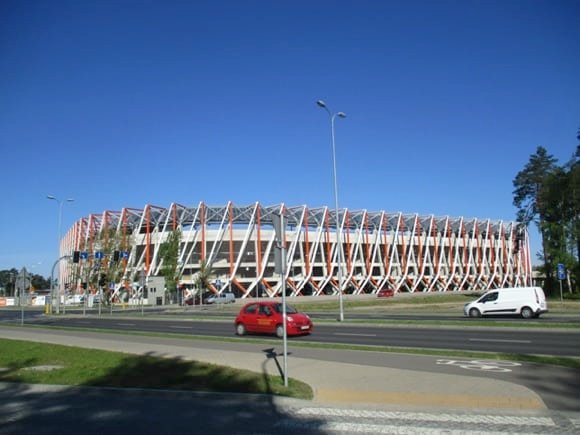
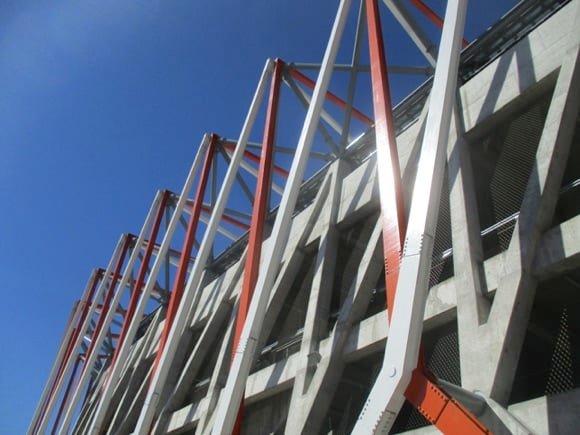
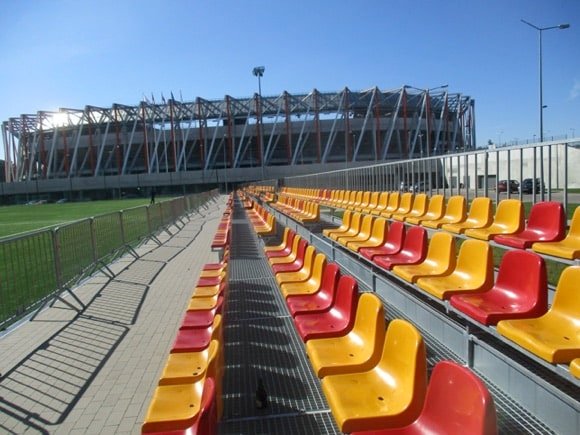
First built for police team, Gwardia, in 1971, the Stadion Miejski lies just inside the city limits, beyond the Zwierzyniecki woods where Białystok’s main sports stadium was opened in 1926. Zwierzyniecki served Jagiellonia and its forerunner in the pre-war era and still operates to this day as an athletics ground.
Once the various Gwardia sports clubs across Poland were disbanded, the Białystok branch became Hetman, whose travails with the economic changes forced the sale of the stadium to the City in 2006, who had it redeveloped – eventually.
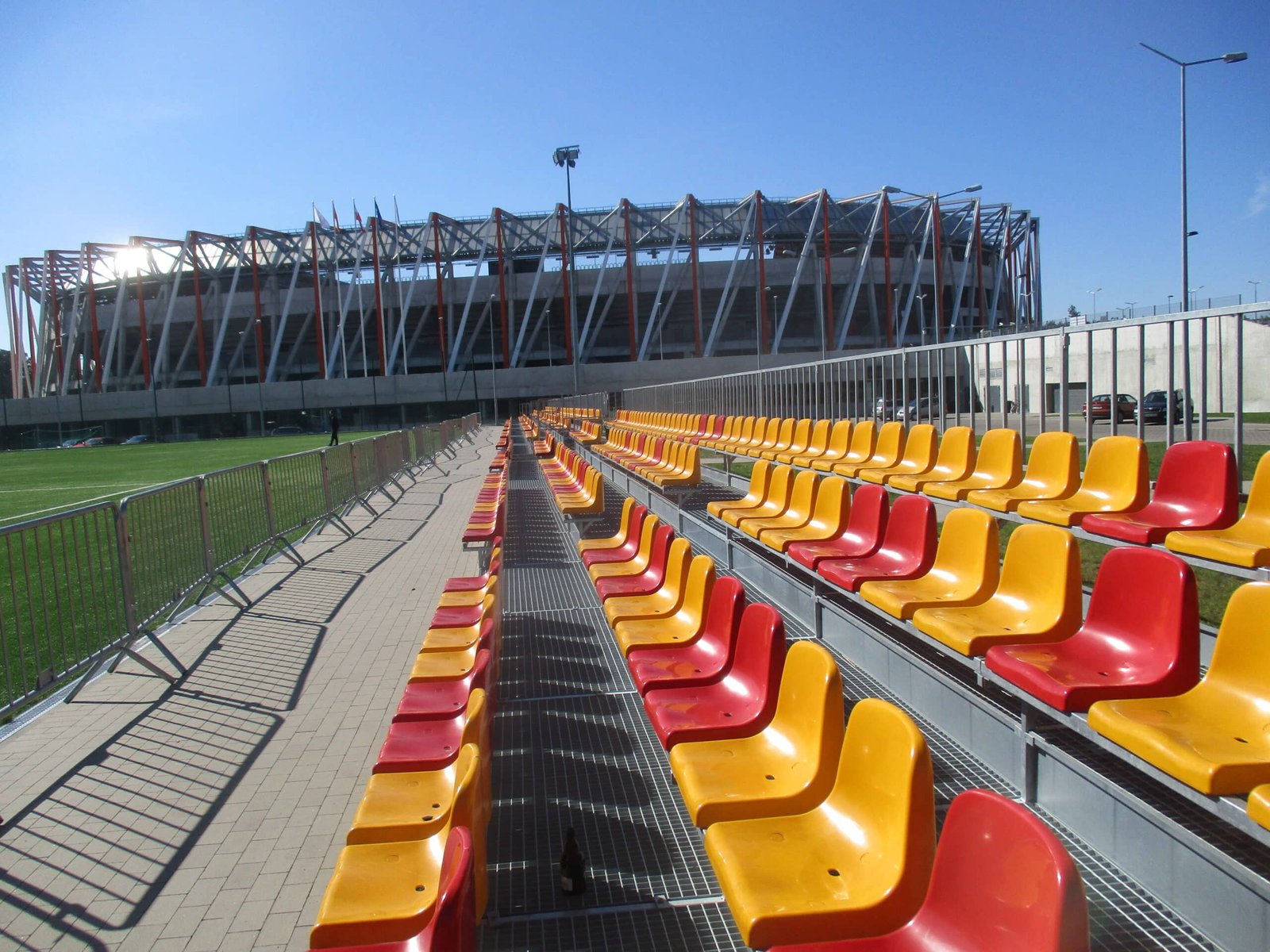
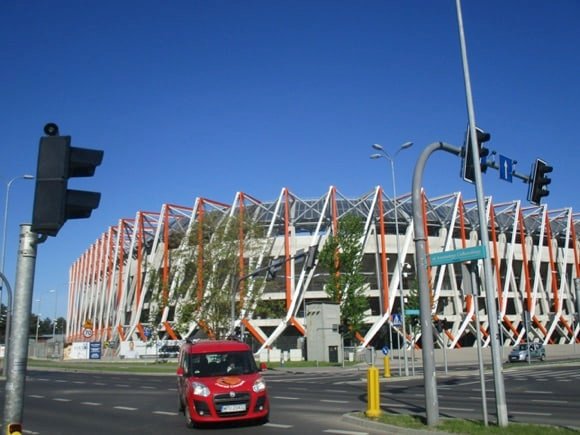
The first stage involved undersoil heating, the bitter winds of winter whipping straight from Siberia across eastern Poland. Then came replacing all four stands, though not in time for use as a training ground for Euro 2012. Completion came in 2014, still with elements of the initial designs by award-winning architect Stefan Kuryłowicz, who also reshaped the skyline of Warsaw before his death in a plane crash in Spain in 2011. The signature cladding, of sloping steel struts offset by red and yellow on a white background, are his legacy.
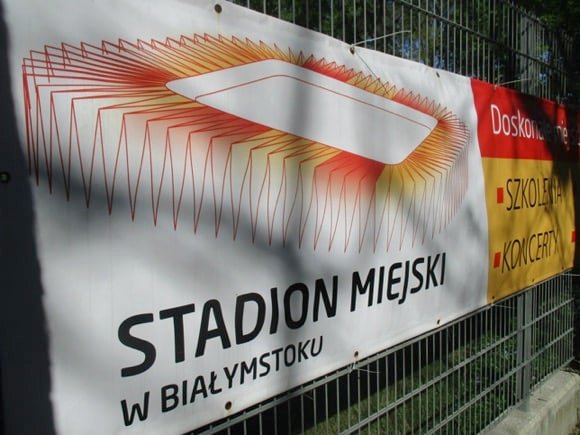
Also in bright yellow and red, 22,394 seats surround a grass pitch, each one filled for the title decider with Legia in May 2017, the record attendance here post-rebuild though no goals were scored. In 2024, a deal was signed with a major Polish retail franchise for a five-year sponsorship, giving the stadium the official name of the Chorten Arena until 2029.
Home fans fill the Słoneczna north end of the ground, sectors 25-28, away ones allocated upper sectors 39-42 (gate K2) in the nearest corner of the Ciołkowskiego south end to the main stand, near a sprawling market. Neutrals are best placed in Prosta on the Wiosenna side opposite, gate 4. All around is semi-urban greenery – signs warn motorists of bounding deer.
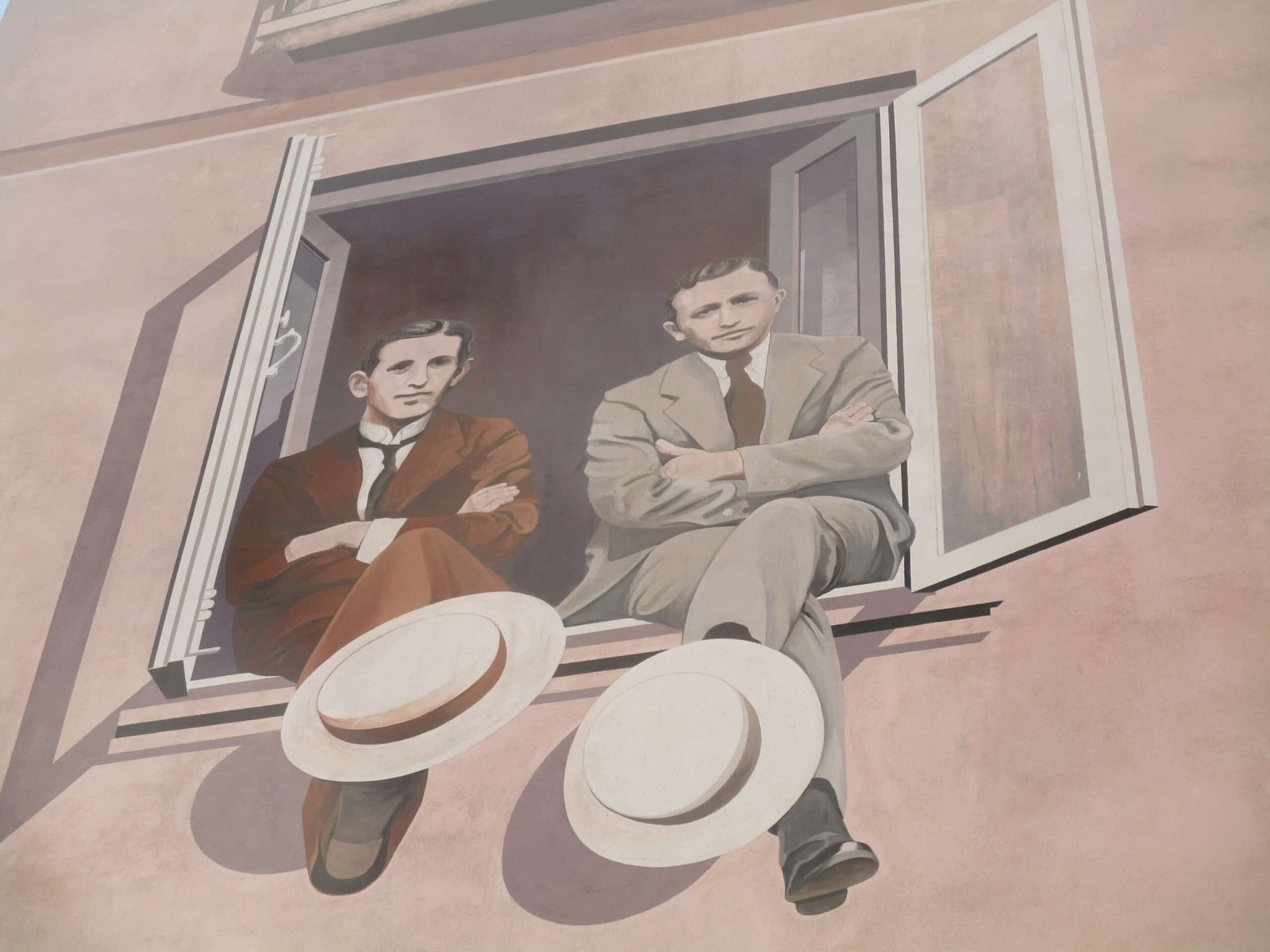
At the north end of the stadium, by the training pitch, a statue commemorates two Jagiellonia heroes from the pre-war era: Julian Buchcik, the club’s former coach murdered by Stalin in the Katyn woods and Antoni Komendo-Borowski, who earned a Polish cap in 1935 and was imprisoned in a POW camp in Hungary.
getting here
Going to the stadium – tips and timings
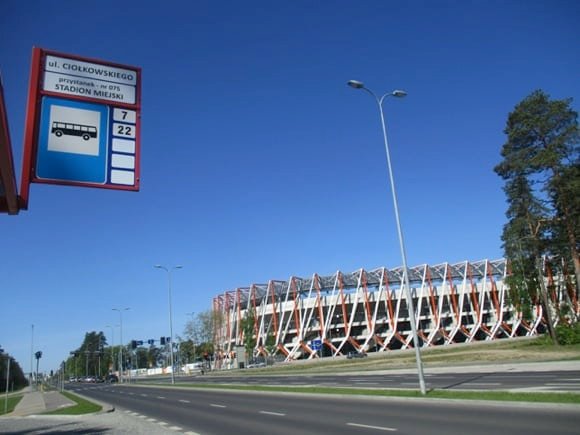
Several buses serve the stadium, which is way south of town and too far to walk from the centre. The 11 sets off from Kolejowa/Dworzec PKP at the station, taking 15-20mins to reach Chorten Arena Stadion Miejski. The 10 also passes by the station, taking 15mins to reach Kawaleryjska/Pułaskiego, a short walk from the roundabout ahead, with the stadium on your left.
The 3 also runs to Kawaleryjska/Pułaskiego but from Sienkiewicza/akademia Teatralna by the theatre in town, taking about 10-15mins. The 22 sets off from outside the station at Centrum Przydworcowe and heads to Chorten Arena Stadion Miejski around 25-30mins away.
A taxi should take 10mins from the station and cost around 30-35zł/€7-8.
getting in
Buying tickets – when, where, how and how much
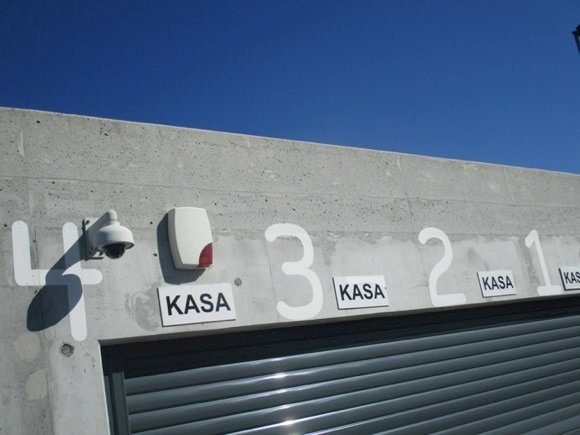
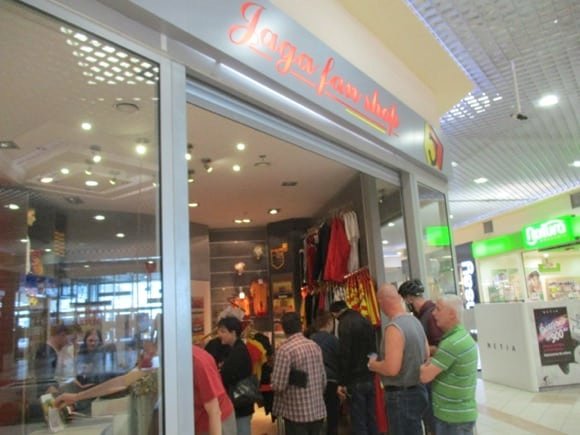
Tickets are distributed at the Jaga Fan Shop at Lipowa 12 (Mon-Fri 10am-6pm, Sat 10am-3pm) – take ID with you to purchase. Windows operate by gates K1 and K6 Słoneczna at the north-west corner stadium on match days. It’s 30zł/€6.75 behind the goals and in the corners (Łuk), 40zł/€9 in Prosta on the sidelines. Again, take ID to purchase. There are also Polish-language online sales.
For bigger European games, such as against Rangers in August 2026, prices rise to 75-90zł/€17-21. Almost no domestic fixtures sell out, though a big international name might push the 22,000 capacity close to its limit.
what to buy
Shirts, kits, merchandise and gifts
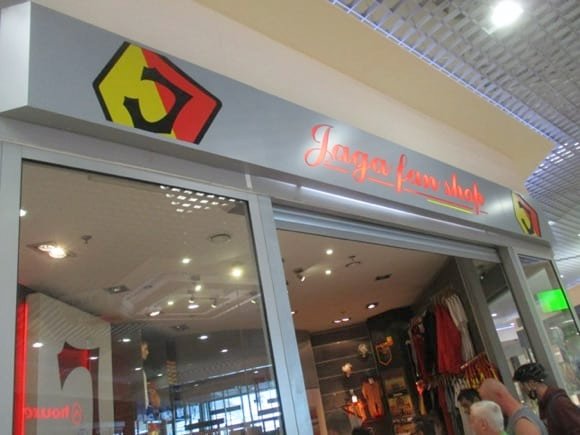
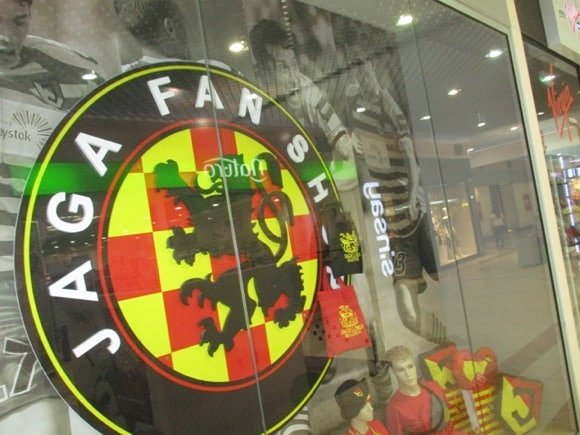
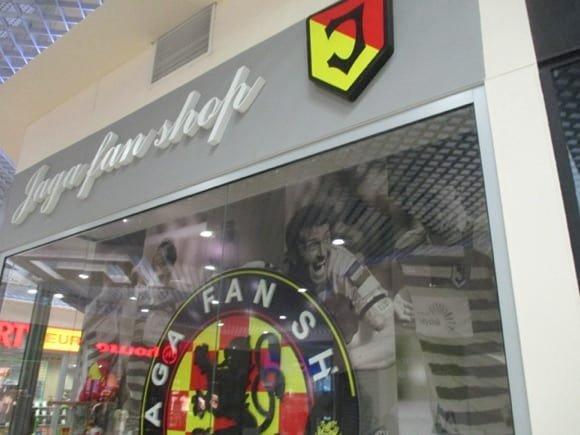
The Jaga Fan Shop is in town at Lipowa 12 (Mon-Fri 10am-6pm, Sat 10am-3pm), with stalls set up around the stadium on match days. The current iteration of the home shirt is in red and yellow hoops, with a folksy fringe around each band, and an open black V-neck collar.
Note the single star over the club badge indicating the 2024 league title win. The city gets a sponsored mention on the all-yellow back. The away top is light cream with maroon detailing and a fold-down collar. There’s also an all-maroon version with the foundation date of ‘1920’ on the nape of the neck.
Note also the retro top in black, with a string-tied collar and ‘Cool Girls Watch Jagiellonia’ tote bag.
Where to Drink
Pre-match beers for fans and casual visitors
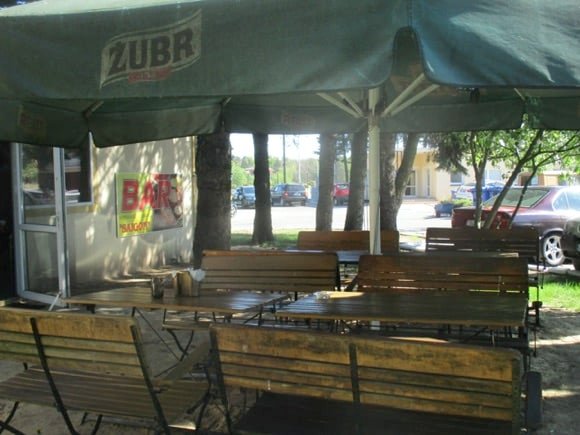
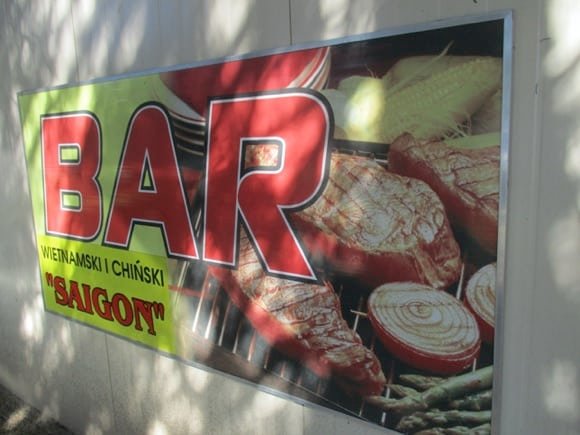
Of all Poland’s stadiums, Jagiellonia’s has the fewest pre-match drinking options nearby. The only outlets are around the market behind the main stand, where affordable Asian eateries offer standard cheap dishes and soft drinks. The Saigon is one – don’t be fooled by the local Żubr beer umbrellas, it’s a dry ship.