Peter Hegarty visits Derry on the eve of a vital Euro clash with CSKA Sofia
With the tie nicely balanced at 3-2, Derry City will be looking to claim a rare European win against CSKA Sofia on Thursday, 20 years after the Candystripes’ famous heroics against Paris Saint-Germain.
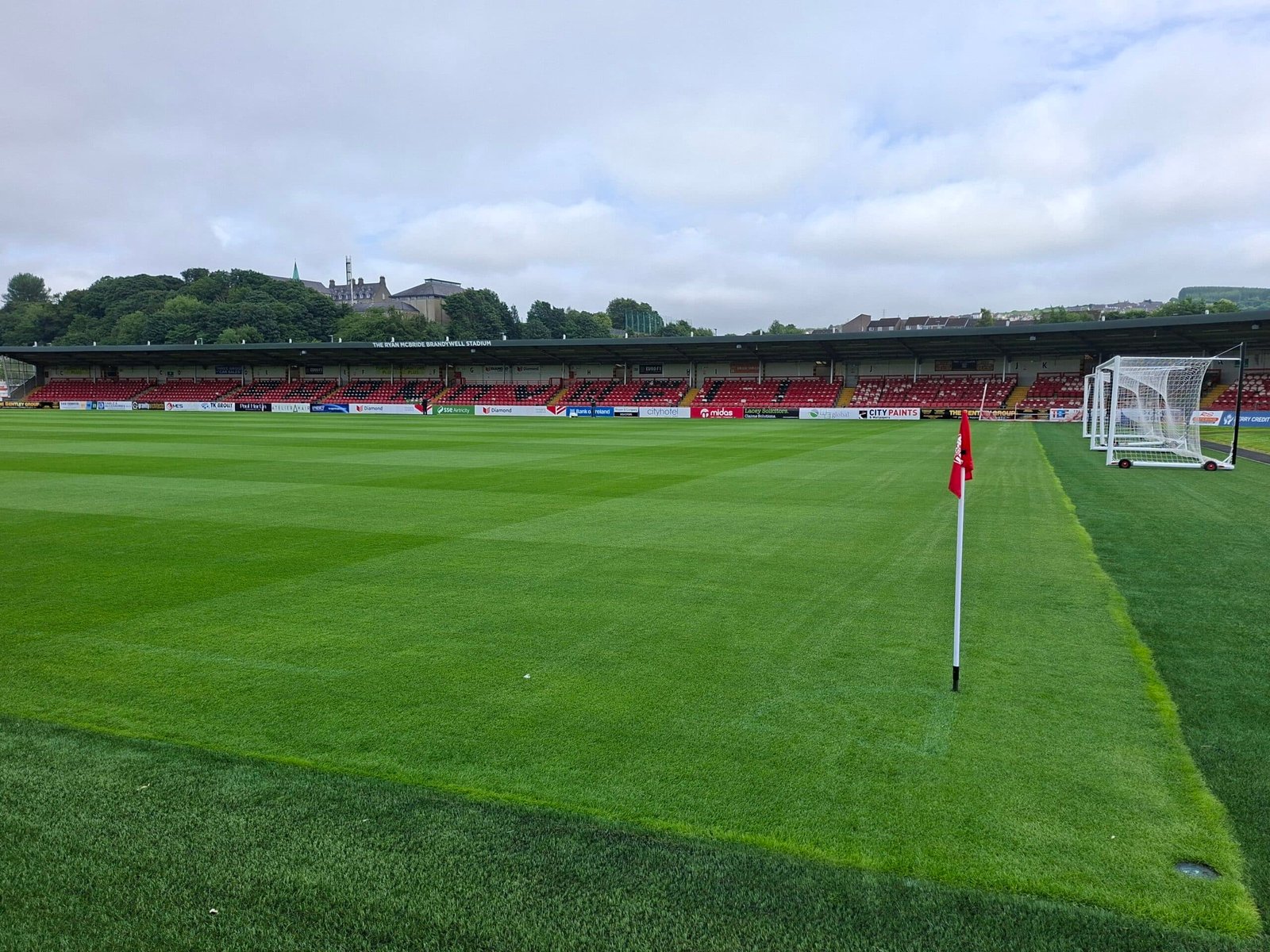
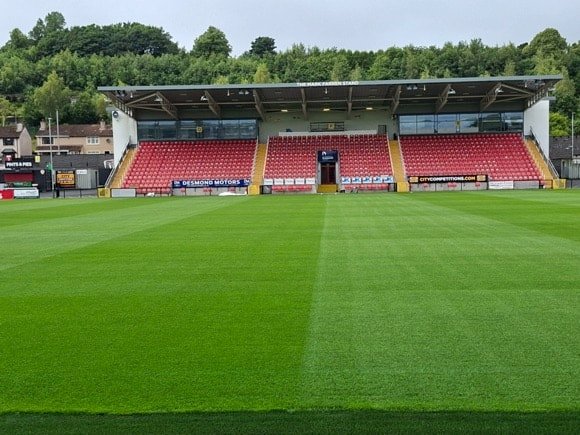
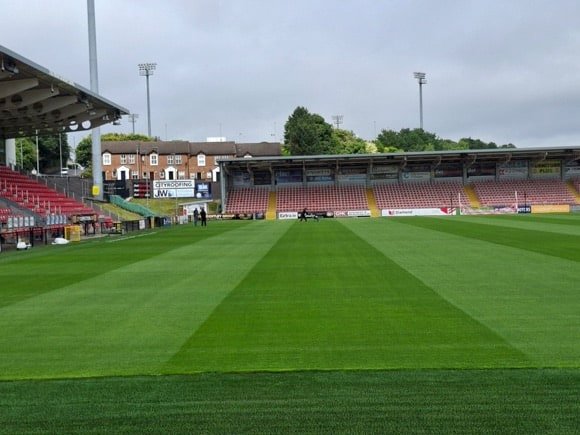
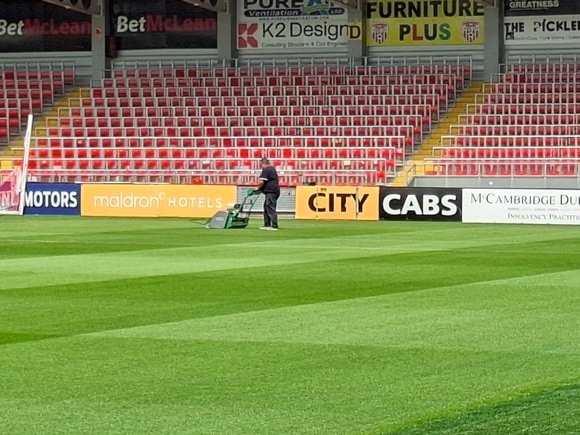
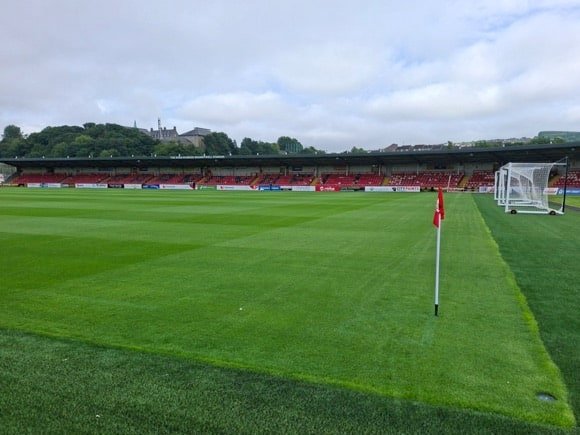
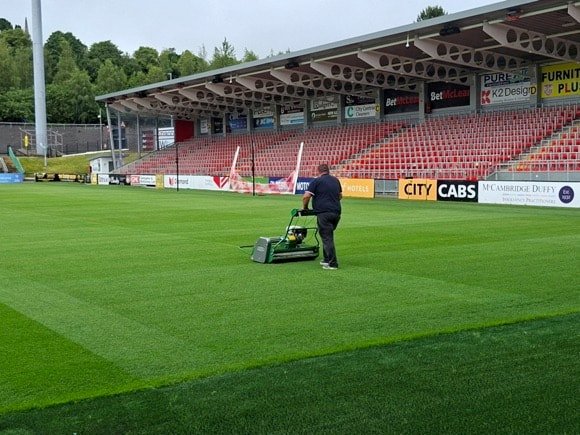
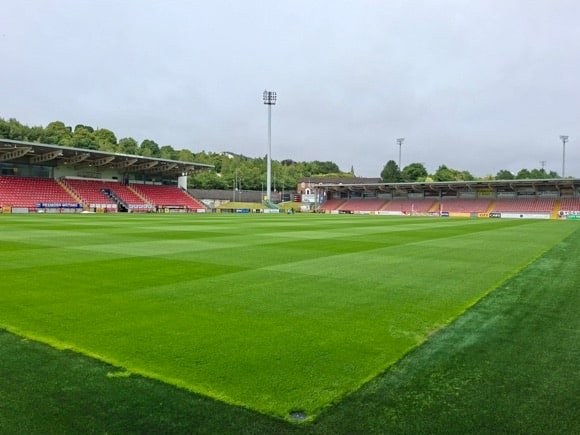
Returning to the Brandywell after the recent £1.4 million installation of a hybrid-grass pitch, Derry can look back on their enforced seven-week stay at nearby GAA ground Celtic Park with reasonable satisfaction, their unbeaten sojourn starting with a memorable 1-0 win over League of Ireland champions Shamrock Rovers in April.
The move allowed the diggers into the Brandywell to do for its much-maligned plastic all-weather pitch, in place since 2018. The worn-out surface had been laid by Derry City Council, which owns the stadium, as a means of maximising public access. Underuse of the surface during the Covid lockdown prolonged its useful life.
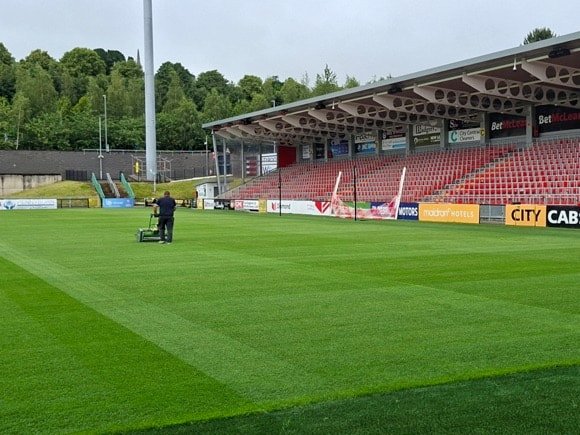
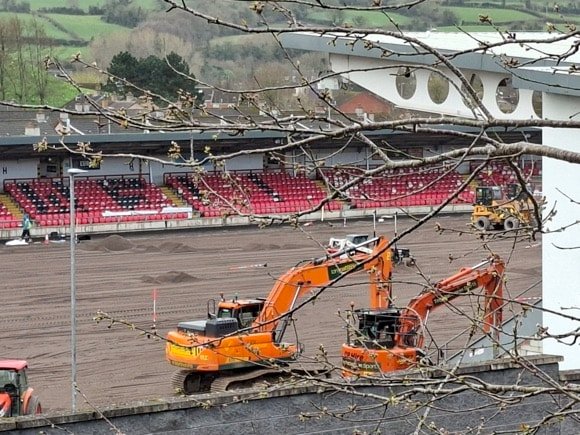
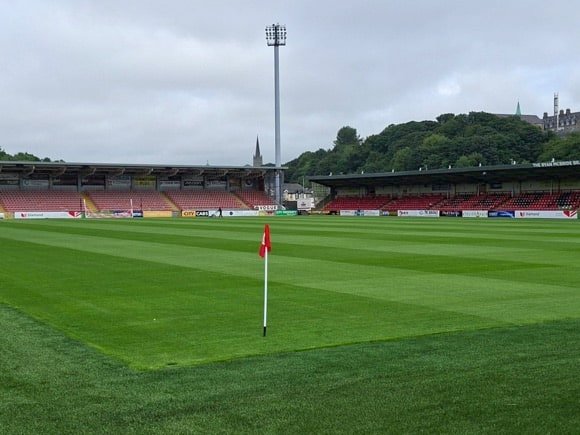
The new pitch, natural grass combined with synthetic grass filaments, has been laid down by Hayden Turfcare, which also worked on World Cup stadiums in North America. Funding the investment has been club chairman, billionaire philanthropist Philip O’Doherty.
Speaking of his determination to wrest the league title from Shamrock Rovers to whom Derry came a close second in 2025, the richest man in the region has lavished money on the club, financing the close-season signings of James McClean, Patrick McClean, James Clarke, Darragh Markey – and James Olayinka. It was the former Arsenal man whose close-range header provided Derry with a vital late lifeline in the first leg of the Europa League tie at CSKA Sofia.
After graduating in engineering from Queen’s University in Belfast, O’Doherty struck out on his own in 1987, founding the engineering company E+1. By the time he sold it to US multinational Vertiv Holdings in 2021, collecting almost $2 billion in cash and stock, his company was operating at 30 locations employing more than 2,000 staff.
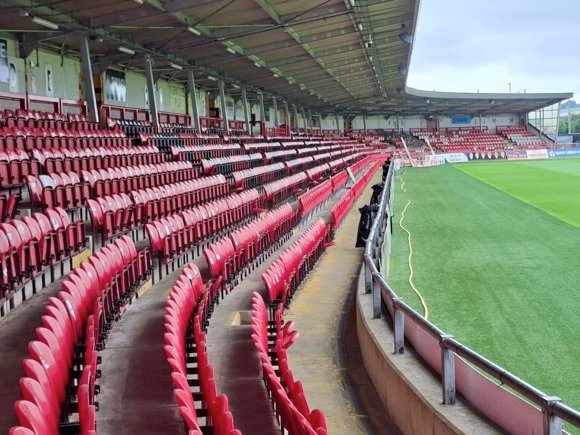
O’Doherty now works full-time at the club after his retirement from business, signing almost 30 new players since taking over. The influx perhaps unsettling a relatively successful squad – on one occasion manager Tiernan Lynch had three forwards on the subs’ bench – O’Doherty has since appointed a head of player recruitment.
O’Doherty is nothing if not ambitious. As Sean Hargan, who played in Derry’s 1997 title-winning team, told the Talking Derry City podcast: “When you look at the investment Philip has put in now, you can’t thank him enough – £1.4 million for a new pitch, a couple of million for a new stand, and a couple of million into the squad. There’s going to be a time when he asks, ‘Where’s the return for all of this?’ And he wants the league title, let’s face it”.
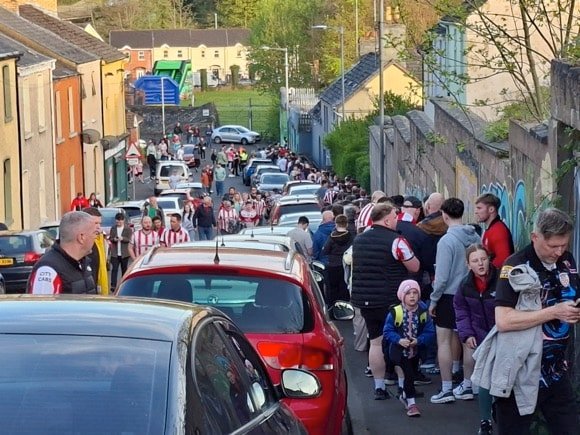
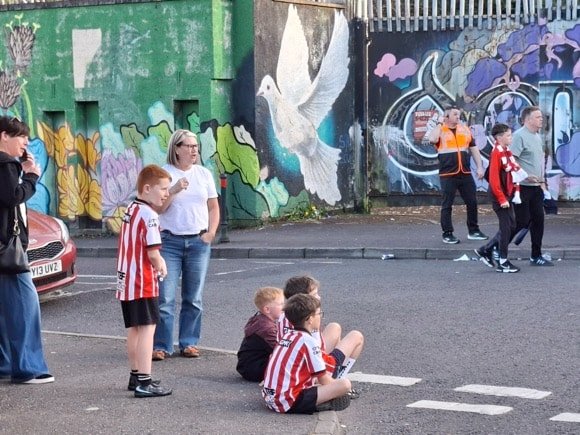
But O’Doherty is looking beyond the title. And like many, he may also be looking beyond the Brandywell. This remains a fractured society, one in which a visit to a tight little stadium, in the heart of a politically partisan district of Derry, does not appeal to everyone.
There has long been talk of building a new bigger stadium on ‘neutral’ territory, a project that would strengthen the club’s civic identity, giving it a sense of direction. Other clubs are further down the road. The model is Shamrock Rovers’ attractively compact, easily accessible, fan-friendly stadium in Tallaght. This contemporary development must account to some extent for Rovers’ record titles and imperious style, the inevitable direction the Irish football season takes these days.
As Rovers lifted five titles in six seasons, many blamed Brandywell’s artificial surface for Derry’s consistent underachievement, and for the team’s tendency to perform better on the road. They won more away games in the 2025 season than on Lone Moor Road in Derry.
The return to grass is also a response to players’ complaints that the plastic pitch stressed their joints, legs and hips. Former manager Ruairdhí Higgins went as far as to argue that the artificial surface is not suitable for professional sport.
The conditions also made attracting talent to the club difficult under Higgins and his successor Tiernan Lynch.
This spring, the team exchanged one tricky home surface for another. The ball didn’t always move smoothly along the sandy, bumpy surface at Celtic Park. The state of the pitch matters less in Gaelic football, an aerial game in which players pass by hand, than in soccer.
Derry continued to struggle to score goals after the move, hitting only 21 in 19 games by the end of May.
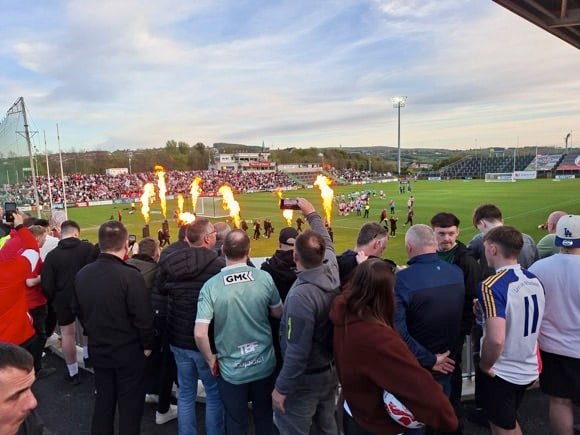
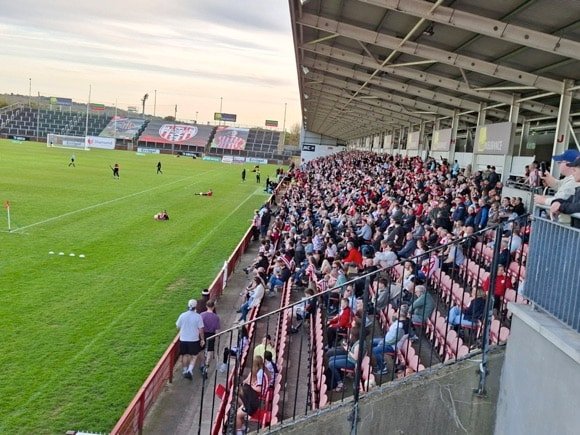
But there were positives to the club’s brief exile, too. Derry reserved their best display of the season before their biggest crowd for decades – 7,100 – at the start of the residency at Celtic Park. James Clarke’s against Shamrock Rovers was the first League of Ireland goal at the home of Gaelic sports in County Derry.
It was a memorable day, the warmest of the year. It had a sense of occasion. Lynch’s players were making history, playing in the first soccer match held in Celtic Park for more than 80 years. The soccer team was returning to its roots: Celtic Park was the home ground of Derry Celtic, the predecessor of Derry City, between 1900 and 1913. The Gaelic Athletic Association bought the ground for £1,000 in 1943.
Derry also used the occasion to trial a Fanzone, which included a beer truck, an O’Neill’s pop-up and a pie shop, and introduce family tickets.
Derry’s final game at Celtic Park, a 4 1 thumping of form team Bohemians, in June, was their best of the season, and an especially memorable for Clarke, who scored twice against his old club. He was back at Celtic Park the next evening to watch his native Meath see off Derry in an inter-county GAA match.
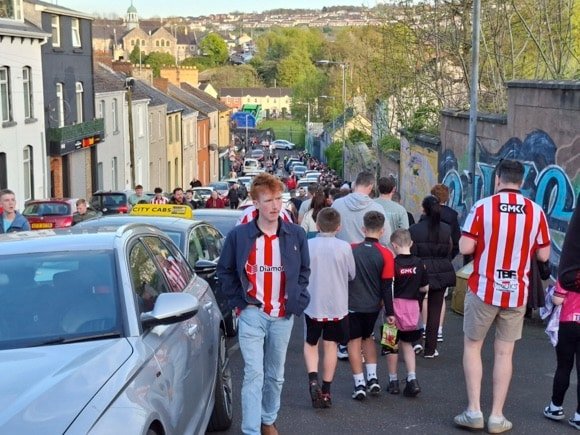
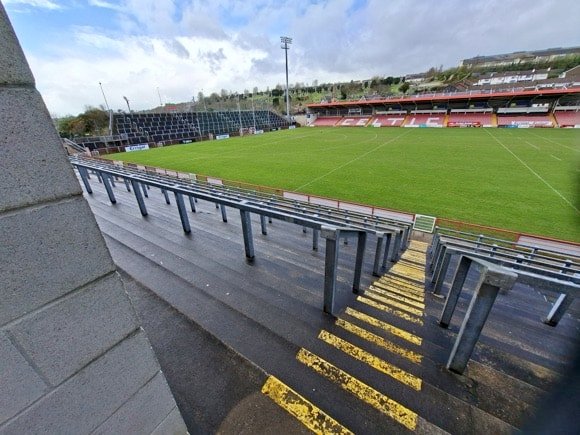
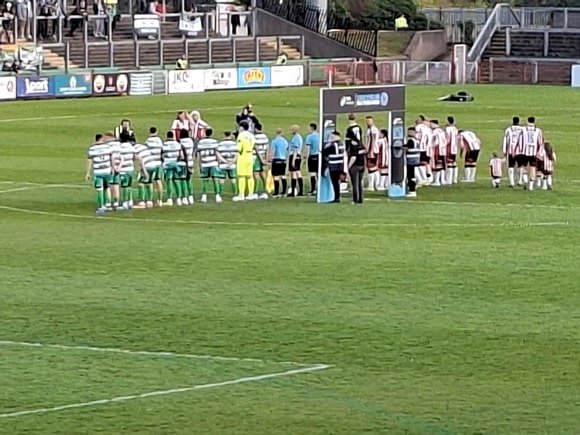
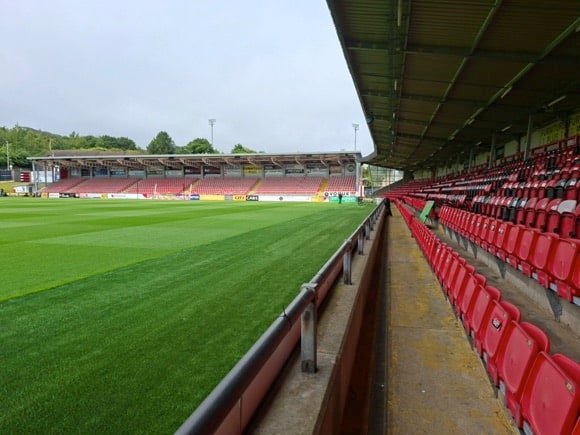
Leaving Celtic Park may prove to be a wrench for some fans. Derry is a soccer town, long indifferent to Gaelic sports. Many of those 7,000 going to the Shamrock Rovers game were also going to Celtic Park for the first time, even though they might have passed the ground a thousand times.
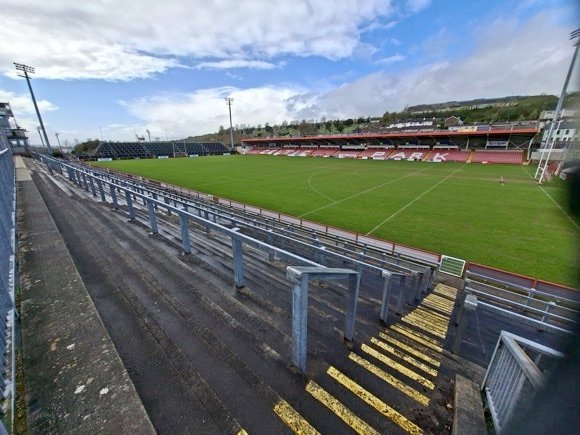
They would have been impressed. A city landmark, the stadium, the primary home of County Derry’s hurling and Gaelic football teams. is much more imposing than the poky Brandywell. At 18,000, its size is more than twice that of the ground a few hundred metres down the Lone Moor Road, although the closure of the south College Field stand during Derry City’s sojourn limited capacity to 12,000.
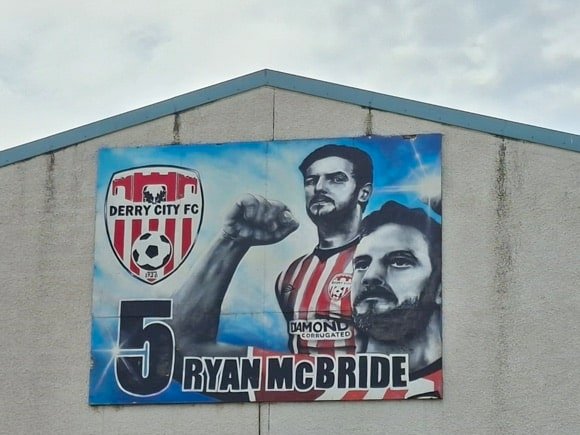
Giant tifos depicting club heroes – record goalscorer Mark Farren and the late Ryan McBride, a former captain – adorned the empty College Field stand for the game against Rovers. Only seating 3,600 spectators, Celtic Park has the classic feel of traditional grounds before the move to all-seater stadiums.
Will finally ditching the plastic pitch make a ‘huge difference’ for Derry, as Tiernan Lynch has claimed? Or will it do no more than remove a handy excuse for the club’s failure to end the recent dominance of the league by the Dublin clubs, Shamrock Rovers in particular? Derry have not won the title since 1997, two decades before the plastic surface was laid.
Derry labour under the great burden of their fans’ perhaps unrealistic expectations. Soccer is simply one aspect of life in a city-state, in a league now dominated by Dublin.
Derry City v CSKA Sofia, Thursday, July 16, 6.30pm. Ryan McBride Brandywell Stadium, 6 Lone Moor Road, Derry BT48 9LA. Tickets £25, discounted £15-£20.