It was a World Cup hero from 1966, Eusébio, who was honoured when the Estadio BBVA was unveiled in 2015. The Black Panther had appeared for stadium hosts CF Monterrey in his twilight years in North America 40 years earlier, and it seemed appropriate, given his sad passing in 2014, that Benfica should be the visitors for the curtain-raiser here.
Each European pre-season, the Eusébio Cup brings pits his former club against stellar opposition – Real Madrid, Internazionale, Milan – at the Estádio da Luz in Lisbon. For 2015, the trophy crossed the Atlantic, where a replica now remains following Monterrey’s 3-0 win over the Portuguese giants in front of a full house of 51,000.
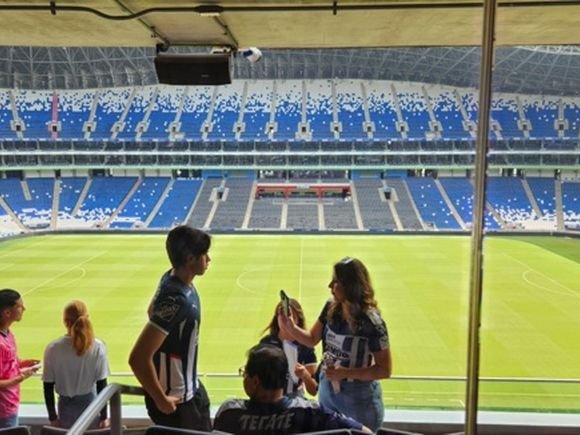
Those taking the 100-minute tour of the stadium – sadly not being run during the World Cup – can gander at the silverware lifted by Monterrey captains over the decades, including five CONCACAF Champions Leagues. This is a big club granted a stage worthy of their status back in 2015.
Estadio BBVA/Stephen Woodman
Estadio BBVA/Stephen Woodman
Estadio BBVA/Stephen Woodman
Estadio BBVA/Stephen Woodman
Estadio BBVA/Stephen Woodman
Estadio BBVA/Stephen Woodman
Estadio BBVA/Stephen Woodman
Estadio BBVA/Stephen Woodman
Estadio BBVA/Stephen Woodman
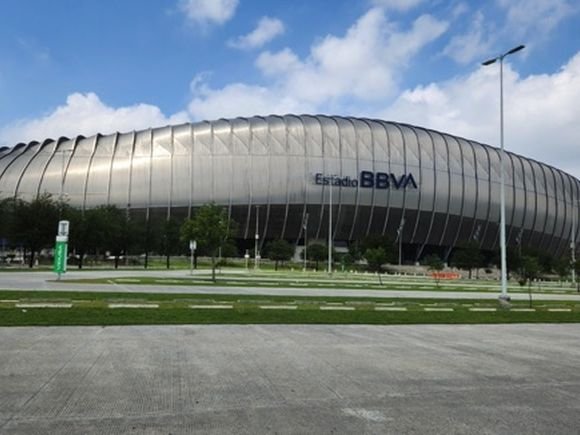
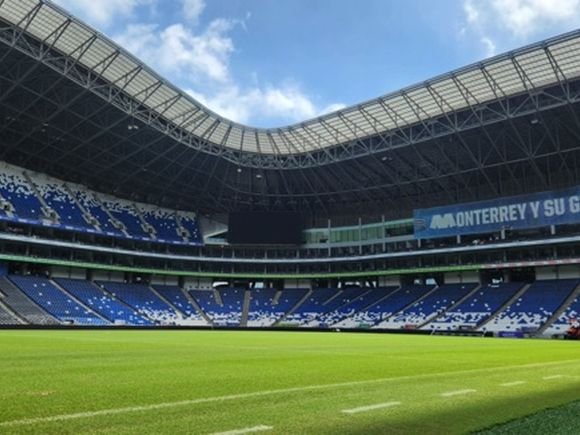
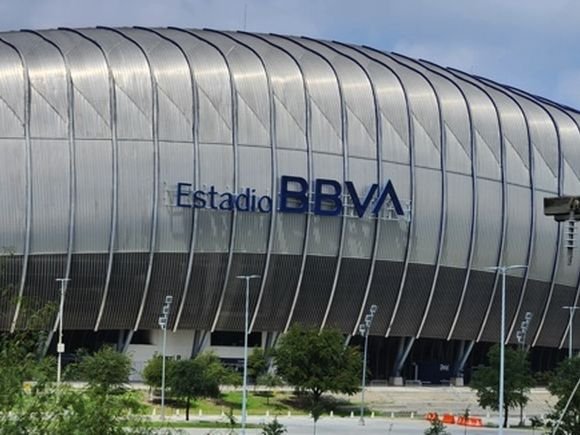
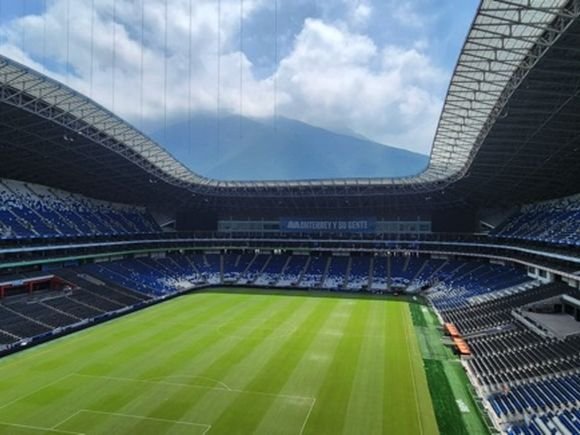
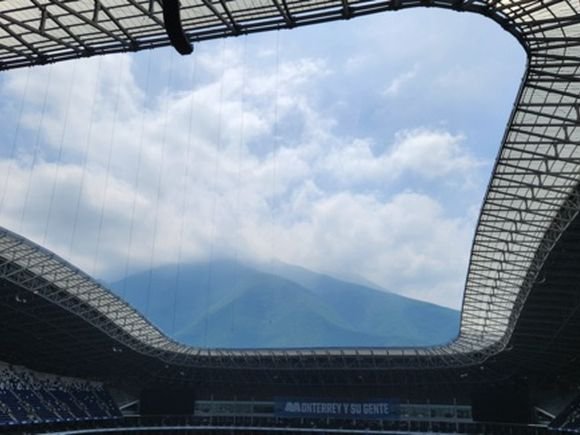
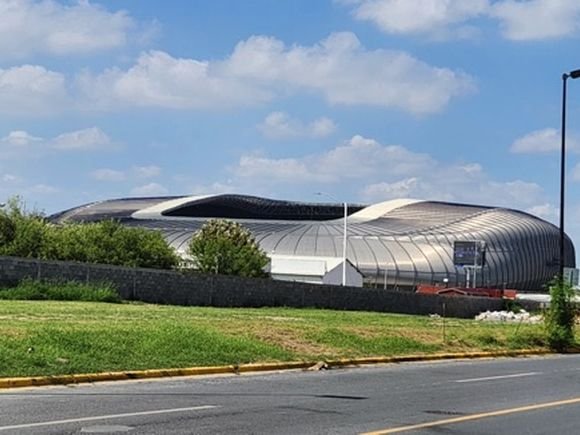
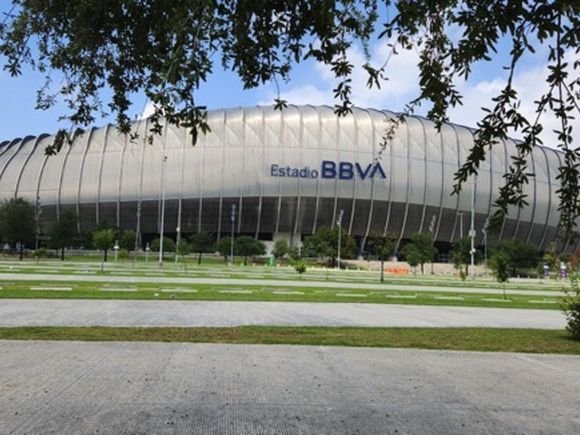
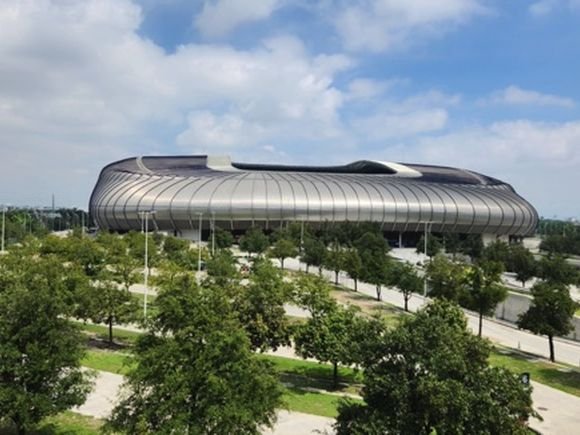
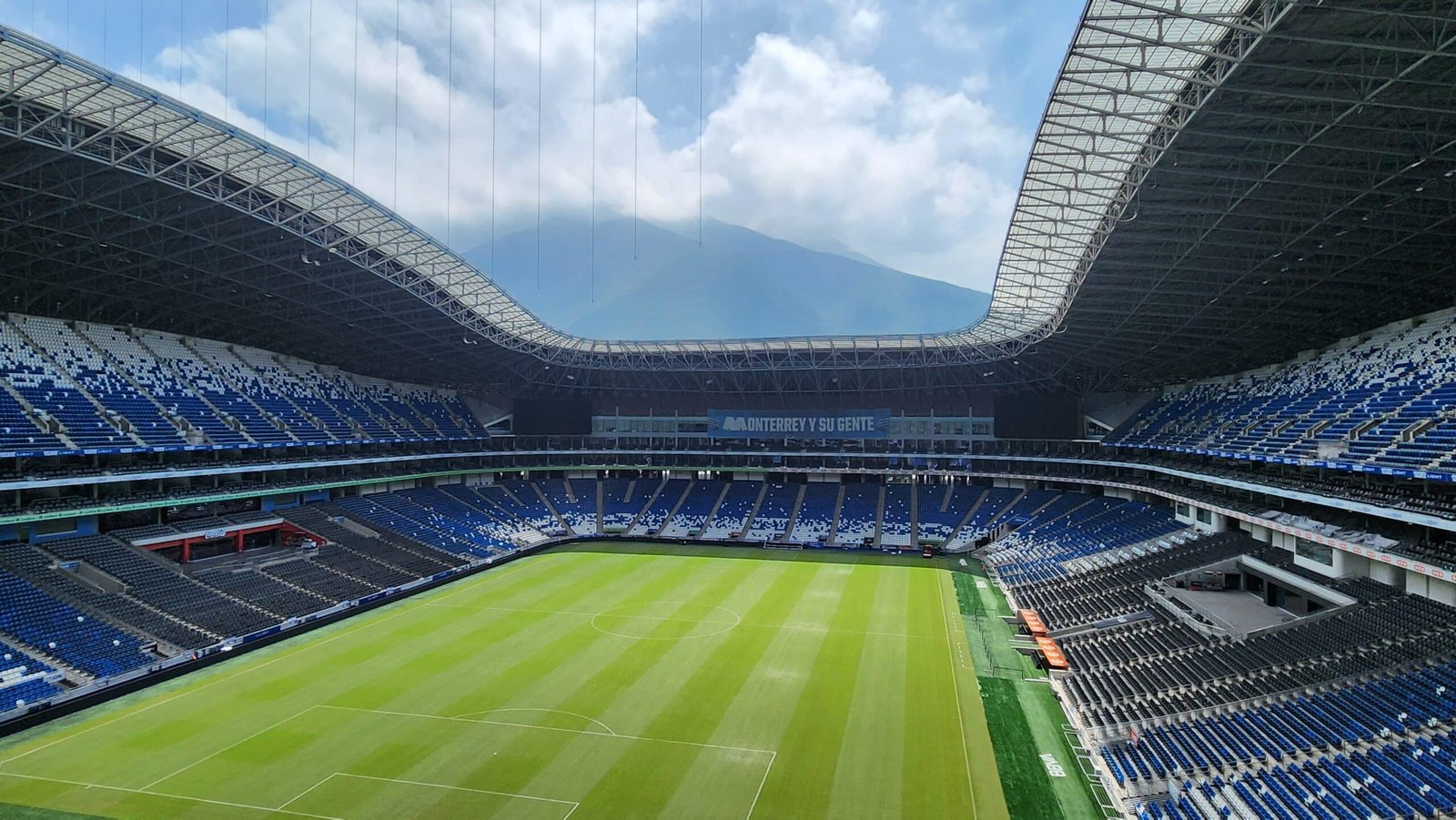
Appropriately nicknamed the Steel Giant, the Estadio BBVA sits just outside the industrial hub of Monterrey in the municipality of Guadalupe, in the looming shadow of the four-peaked Cerro de la Silla.
In order to dissuade the authorities and ecological groups from blocking its construction in an expanse of greenery, powerful multinational FEMSA, which owns CF Monterrey, had architect Federico Velasco, Mexican firm V&FO Arquitectos and Populous of Wembley fame come up with an eco-friendly design that blended in with the landscape. This was also the first stadium in Latin America to be granted LEED Gold status for sustainability.
As a young man, Velasco had planned the Estadio Tecnológico (‘El Tec’) in 1949. The former home of CF Monterrey was also used for the 1986 World Cup, hosting two of England’s group games, their defeat to Portugal and goalless draw with Morocco.
Estadio BBVA/Stephen Woodman
Estadio BBVA/Stephen Woodman
Estadio BBVA/Stephen Woodman
Estadio BBVA/Stephen Woodman
Estadio BBVA/Stephen Woodman
Estadio BBVA/Stephen Woodman
Estadio BBVA/Stephen Woodman
Estadio BBVA/Stephen Woodman
Estadio BBVA/Stephen Woodman
Nearly 60 years later, he was involved in the earliest stages of what would become the Estadio BBVA. The challenges here were much greater, however. As well as being surrounded by trees, the stadium marks the start of a wooded trail that leads up to the ecological park and the slopes of Cerro de la Silla.
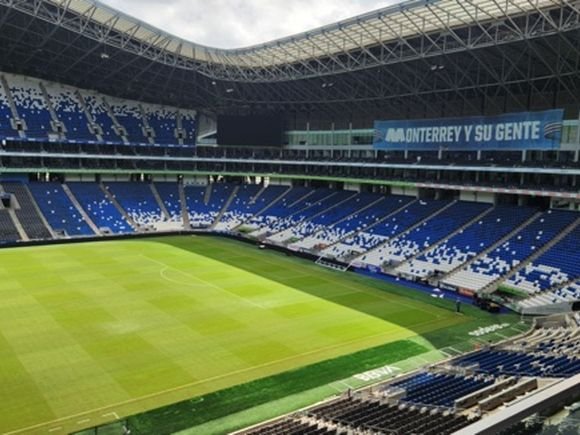
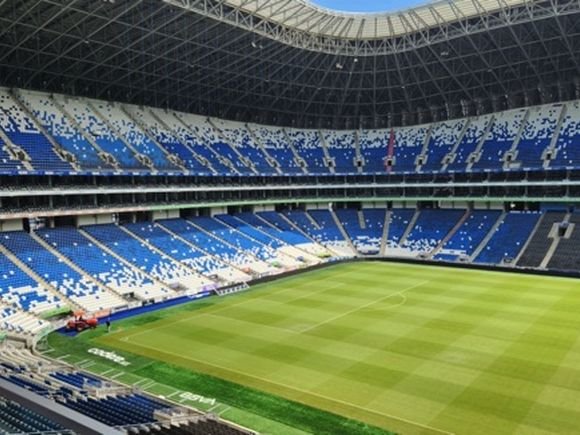
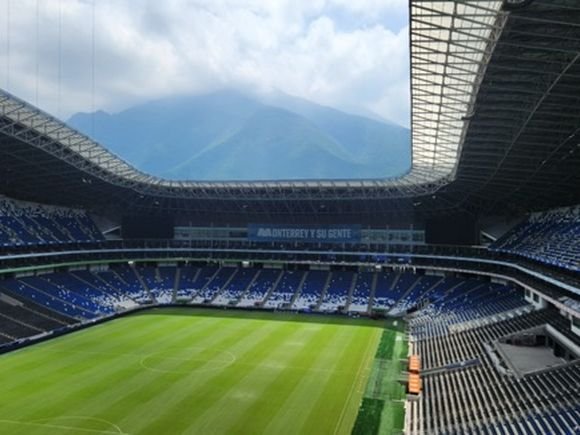
The green zones help with filtering rainwater while the contours of the stadium not only merge with the surroundings but allow the stadium to dip from the north end 46 metres high to the south at 32 metres, giving spectators in the north-west corner a prime view of the mountain peaks.
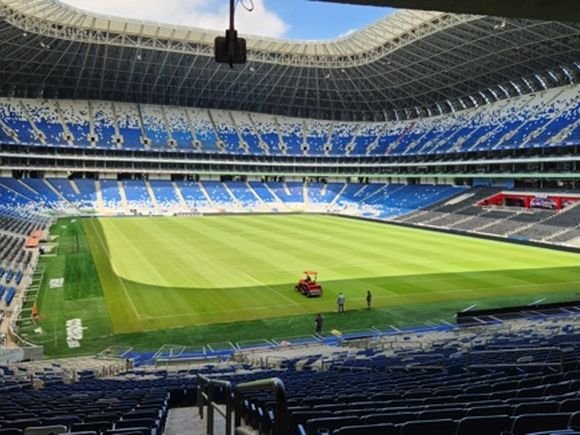
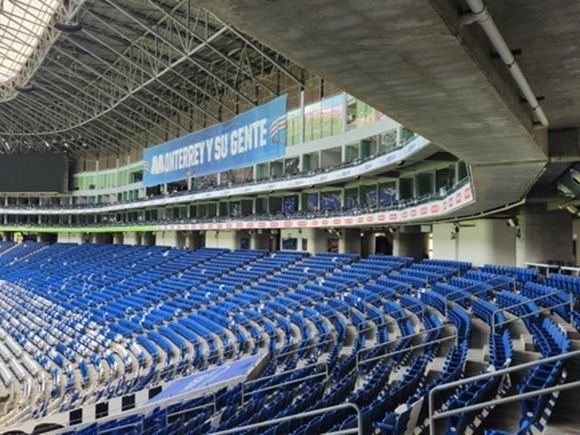
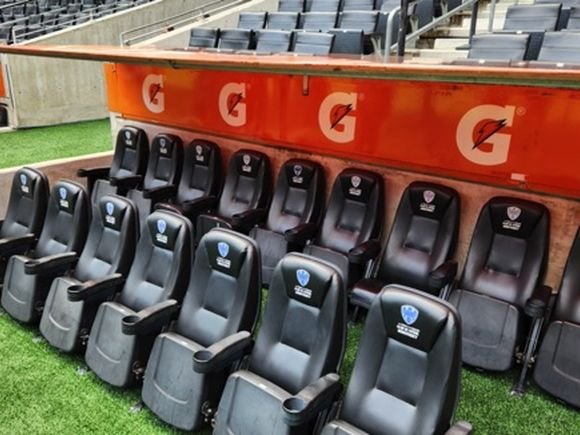
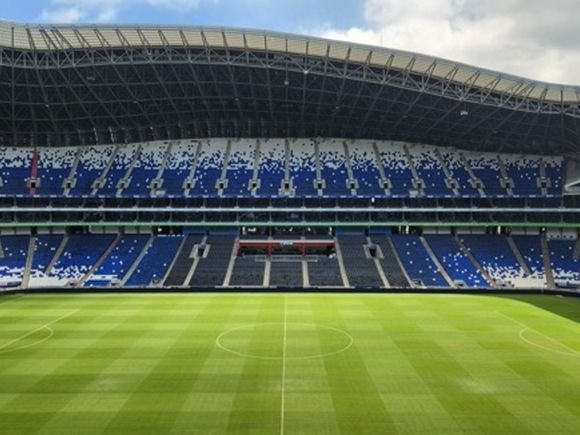
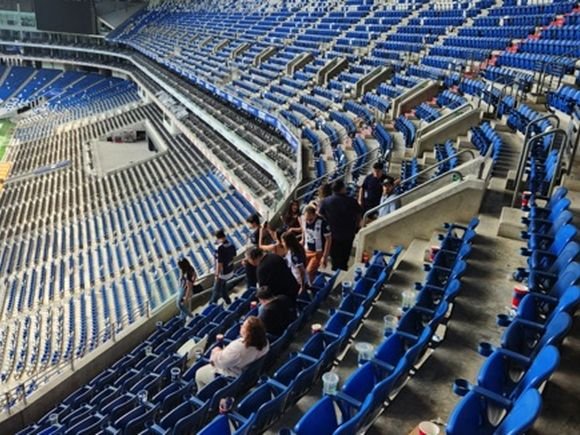
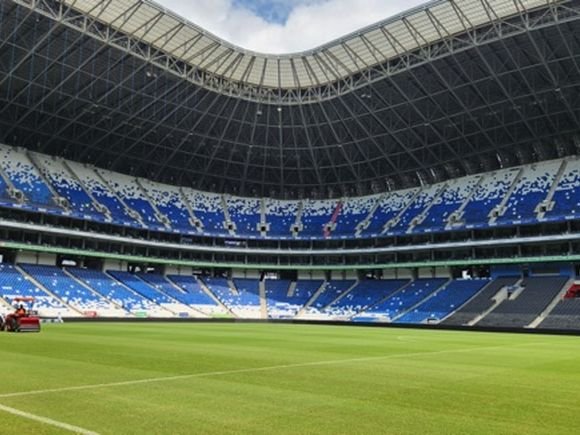
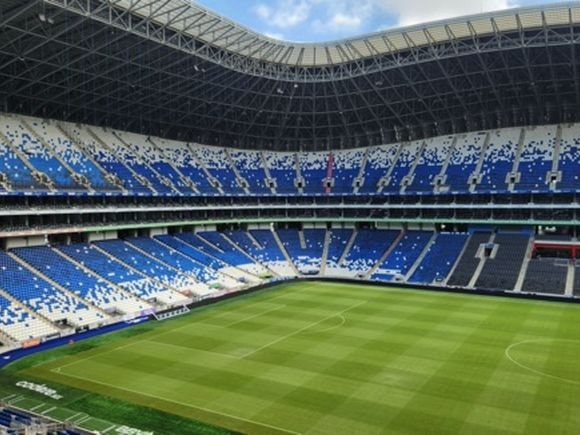
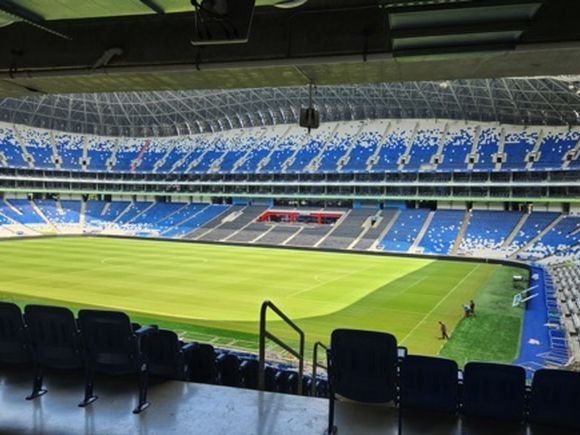
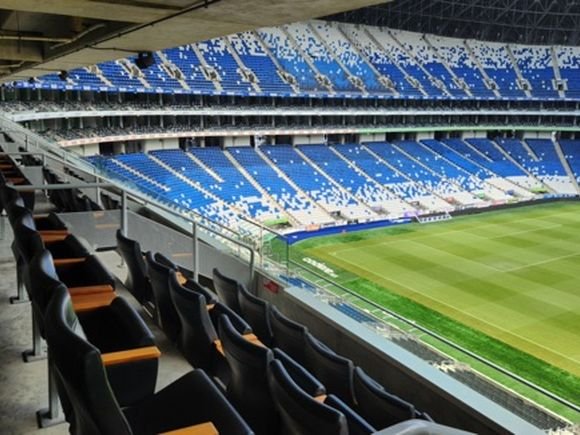
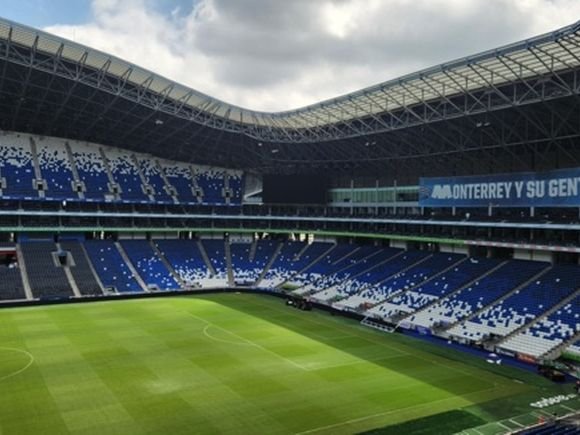
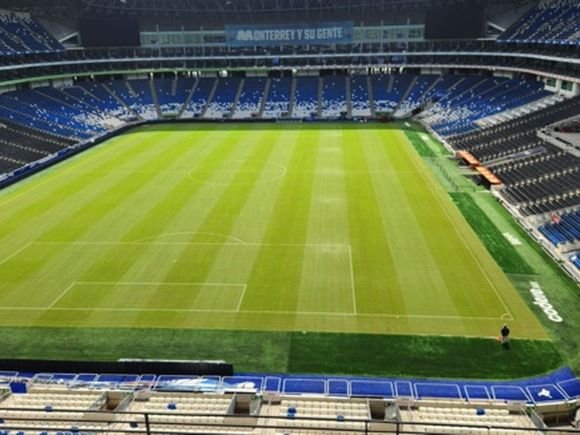
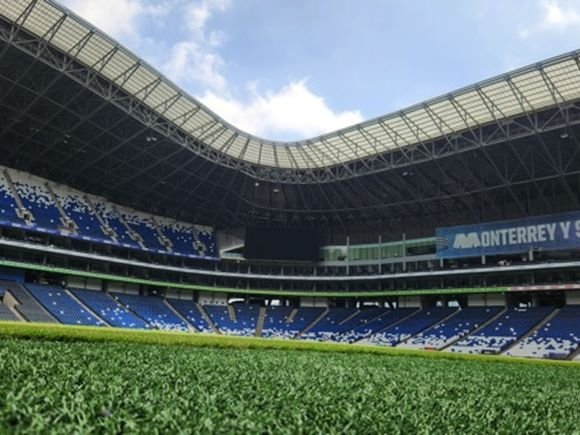
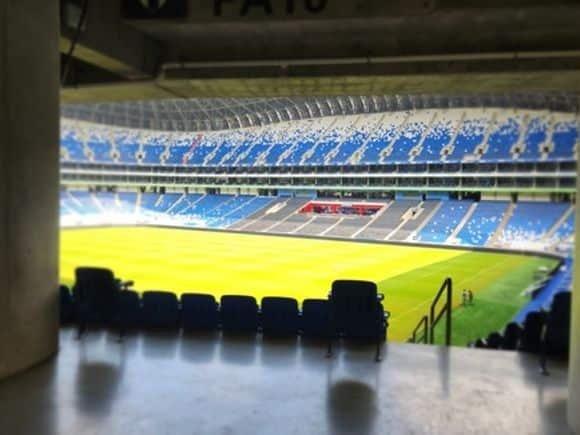
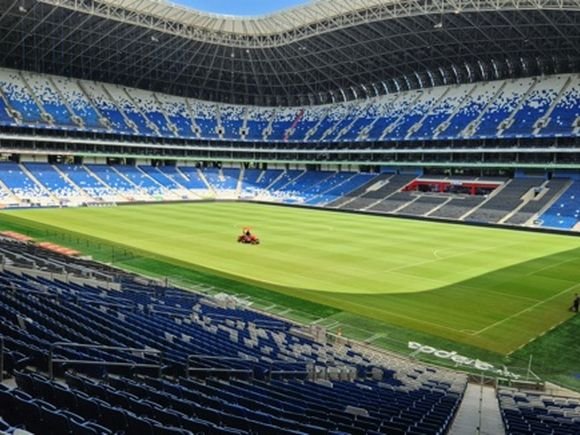
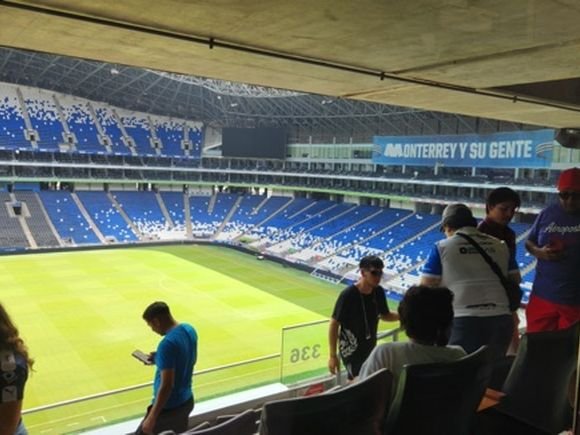
Within the stadium, two tiers of 53,529 seats in the blue and white of CF Monterrey slope at angle of 34 degrees almost to the edge of the pitch, making the Estadio BBVA the most intimate of the 16 venues hosting the 2026 tournament.
The Estadio BBVA has already staged two World Cup fixtures, the inter-confederation play-offs in late March involving Bolivia, Suriname and eventual qualifiers, Iraq. Sadly, Mexico won’t be playing here, not even for the Round of 32 match up, the only knock-out game of the four scheduled here this summer. Note that for the length of the tournament, the stadium will be known as the Estadio Monterrey.
Estadio BBVA/Stephen Woodman
Estadio BBVA/Stephen Woodman
Estadio BBVA/Stephen Woodman
Estadio BBVA/Stephen Woodman
Estadio BBVA/Stephen Woodman
Estadio BBVA/Stephen Woodman
Estadio BBVA/Stephen Woodman
Estadio BBVA/Stephen Woodman
Estadio BBVA/Stephen Woodman
getting here
Going to the stadium – tips and timings
Estadio BBVA/Stephen Woodman
Monterrey International Airport is 17 miles (28km) north-east of the city centre and, until the completion of line 6 of the Metrorreynetwork, is only connected by road. If you’re not in a hurry and on a budget, the Ruta Express bus (MX$15/US$0.90, every 20-30mins, 4.30am-10.30pm) to town sets off from Terminal C and calls at some 20 stops before arriving at José Martí near Estación Y Griega.
From town, it goes from Estación Y Griega to Terminal A. Journey time might be 90mins or might be 2hrs, depending on traffic along main Miguel Alemán. Pay cash on board, purchase a rechargeable Me Muevo card (MX$20/US$1.15) from a metro station or convenience store or download the Urbani travel app for Apple or Google Play. A free shuttle links all three termini at the airport.
Estadio BBVA/Stephen Woodman
Alternatively, also from Terminal C, the Noreste service (MX$140/US$8, every 30-45mins) runs to Monterrey Central bus station (45min-1hr journey time) at Avenida Cristóbal Colón 855 by Cuauhtémoc metro station. The Grupo Sendaruns hourly services from the airport (referred to as ‘Aeropuerto Mariano Escobedo (NL)’ on timetables) Terminal C to Estación Y Griega for about the same price, journey time 90mins-2hrs.
Both Y Griega and Cuauhtémoc are on the same line 1 of the Metrorrey network as Exposición, its terminus and the nearest station to Estadio BBVA a 10-15min walk south, making it an easy transfer. A single metro journey is MX$10/US$0.60, a combined or longer one, MX$15/US$0.90. Alternatively, it’s a good 40-50min walk south-east from the city centre.
From its outlets in the airport terminal, Taxi Seguro (+52 81 1649 2295 )offers fixed rates to various points in town, charging around MX$500/US$29 depending on your destination. It also has a main dispatch office at the Central bus station.
We use cookies on our website to give you the most relevant experience by remembering your preferences and repeat visits. By clicking “Accept All”, you consent to the use of ALL the cookies. However, you may visit "Cookie Settings" to provide a controlled consent.
This website uses cookies to improve your experience while you navigate through the website. Out of these, the cookies that are categorized as necessary are stored on your browser as they are essential for the working of basic functionalities of the website. We also use third-party cookies that help us analyze and understand how you use this website. These cookies will be stored in your browser only with your consent. You also have the option to opt-out of these cookies. But opting out of some of these cookies may affect your browsing experience.
Necessary cookies are absolutely essential for the website to function properly. These cookies ensure basic functionalities and security features of the website, anonymously.
Cookie
Duration
Description
cookielawinfo-checkbox-analytics
11 months
This cookie is set by GDPR Cookie Consent plugin. The cookie is used to store the user consent for the cookies in the category "Analytics".
cookielawinfo-checkbox-functional
11 months
The cookie is set by GDPR cookie consent to record the user consent for the cookies in the category "Functional".
cookielawinfo-checkbox-necessary
11 months
This cookie is set by GDPR Cookie Consent plugin. The cookies is used to store the user consent for the cookies in the category "Necessary".
cookielawinfo-checkbox-others
11 months
This cookie is set by GDPR Cookie Consent plugin. The cookie is used to store the user consent for the cookies in the category "Other.
cookielawinfo-checkbox-performance
11 months
This cookie is set by GDPR Cookie Consent plugin. The cookie is used to store the user consent for the cookies in the category "Performance".
viewed_cookie_policy
11 months
The cookie is set by the GDPR Cookie Consent plugin and is used to store whether or not user has consented to the use of cookies. It does not store any personal data.
Functional cookies help to perform certain functionalities like sharing the content of the website on social media platforms, collect feedbacks, and other third-party features.
Performance cookies are used to understand and analyze the key performance indexes of the website which helps in delivering a better user experience for the visitors.
Analytical cookies are used to understand how visitors interact with the website. These cookies help provide information on metrics the number of visitors, bounce rate, traffic source, etc.
Advertisement cookies are used to provide visitors with relevant ads and marketing campaigns. These cookies track visitors across websites and collect information to provide customized ads.