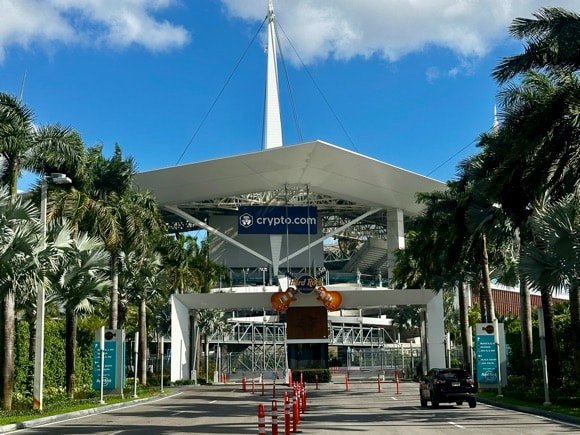
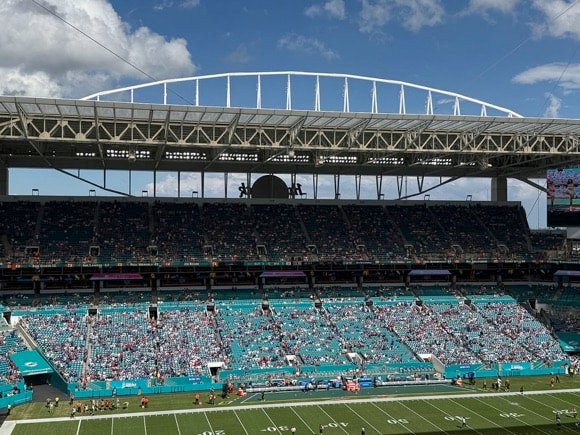
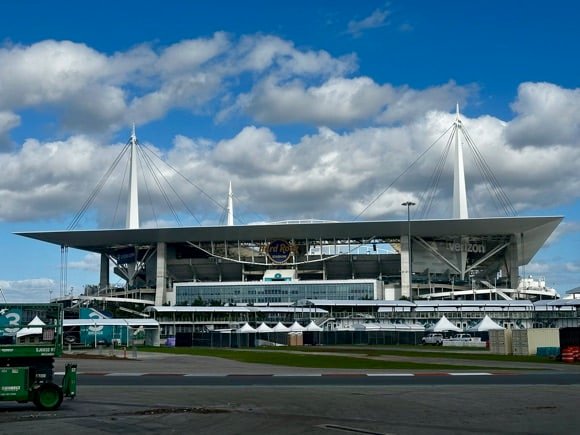
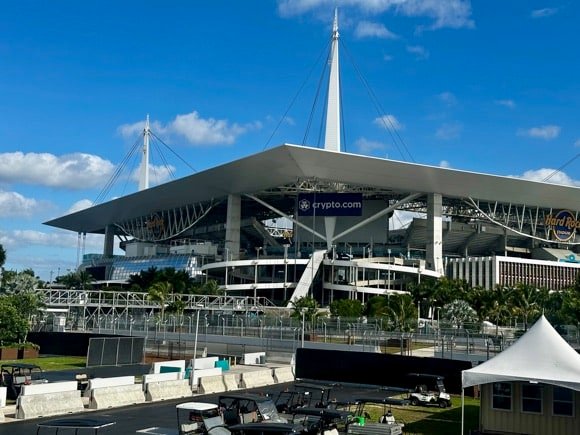
Built for the Dolphins, stage for soccer and Shakira
The field of dreams – and the story behind it
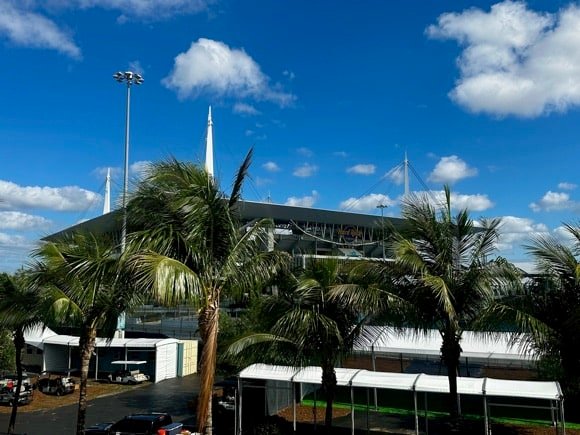
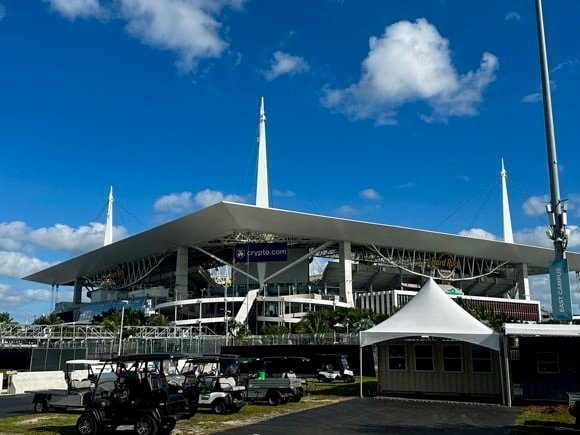
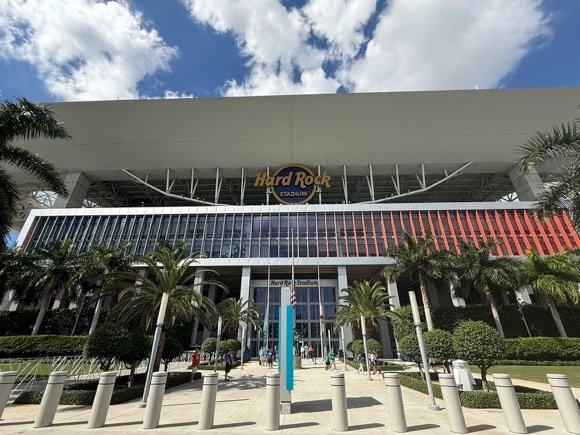
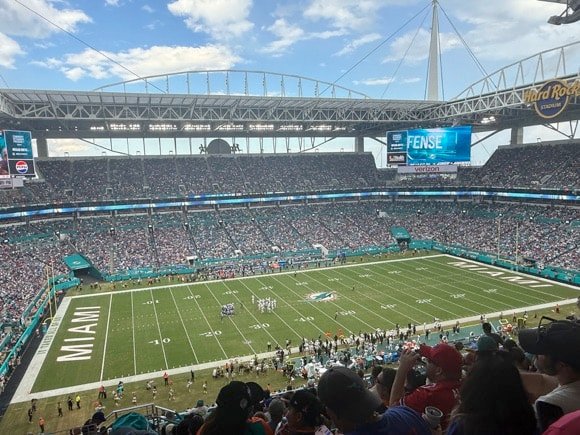
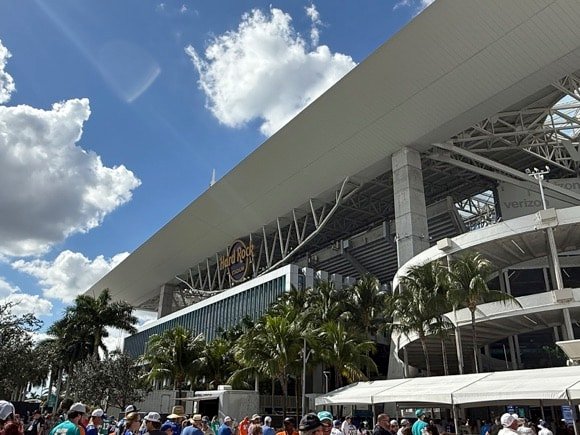
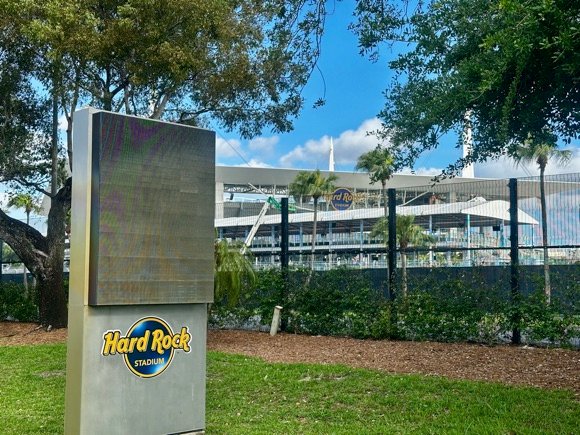
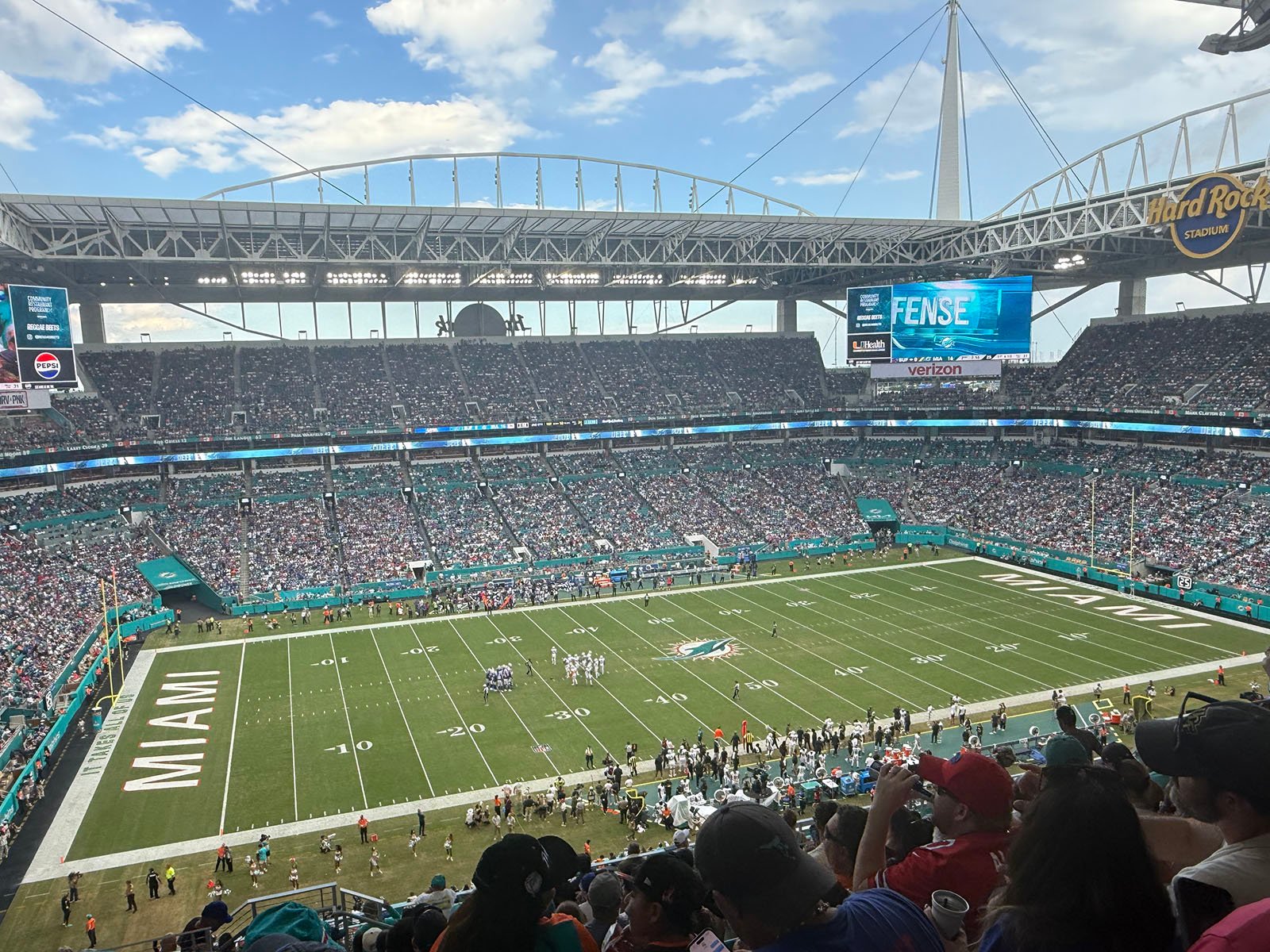
The Hard Rock Stadium owes its existence to the man who created the NFL team that plays there. Decades before David Beckham received an expansion franchise, moved it to Miami then built a stadium there, Joe Robbie did the same.
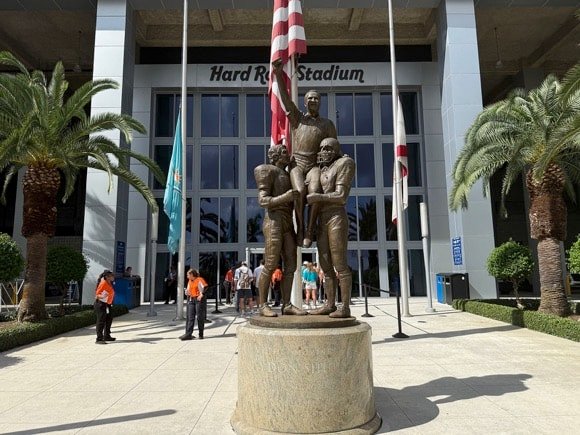
The former lawyer, sportswriter and war hero followed the AFL commissioner’s advice all the way to South Florida, founded the Miami Dolphins, before offering coach Don Shula an unbeatable deal and a share in the ownership. The rest, as they say, is NFL history.
And when the Dolphins started winning Super Bowls and the city-owned Orange Bowl stadium wanted to up the rent, Robbie simply built his own, in what is now Miami Gardens, 15 miles north of Downtown Miami.
Hard Rock Stadium/Joe Stubley
Hard Rock Stadium/Edward de la Fuente – itinerantfan.com
Hard Rock Stadium/Joe Stubley
Hard Rock Stadium/Joe Stubley
Hard Rock Stadium/Joe Stubley
Hard Rock Stadium/Edward de la Fuente – itinerantfan.com
Robbie also had the vision to create America’s first multi-sports arena, vowing to bring baseball to Miami, the soon-to-be Marlins, and owning NASL soccer side Miami Toros.
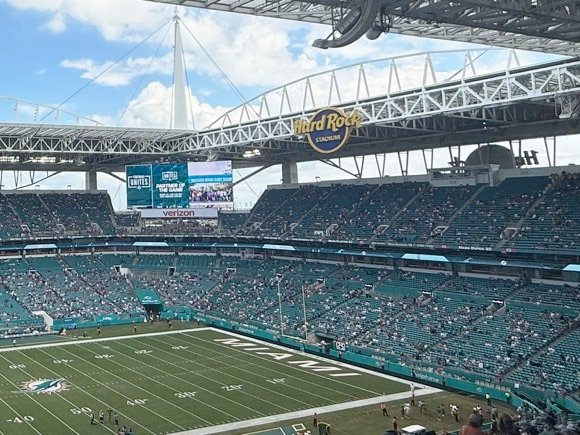
The later named Hard Rock Stadium would be more rectangular in shape, sacrificing intimacy for flexibility, to host soccer showcases such Barcelona v Guadalajara in 2011 before 70,000 spectators, and the chaotic Copa América final of 2024, Messi’s Argentina beating Colombia 1-0, the current capacity of 65,000 swollen by thousands of ticketless fans.
The following June, the Club World Cup proved to be equally chaotic, offset by Inter Miami’s two draws here. While Inter manager Javier Mascherano courted controversy, addressing the poor state of the pitch following two shows by Shakira – the whole field having been taken up then unevenly reinstalled, panel by panel – fans had been left wandering for miles, looking for the right parking lot for their transport service back to town.
Hard Rock Stadium/Joe Stubley
Hard Rock Stadium/Edward de la Fuente – itinerantfan.com
Hard Rock Stadium/Edward de la Fuente – itinerantfan.com
Hard Rock Stadium/Edward de la Fuente – itinerantfan.com
Hard Rock Stadium/Joe Stubley
Hard Rock Stadium/Edward de la Fuente – itinerantfan.com
No wonder, then, that when Inter Miami at last made the MLS Cup final that December, the team staged it at the little 21,550-capacity ground that had served them so well in Fort Lauderdale, rather than shift the event to the Hard Rock Stadium three times bigger. The resulting triumphant farewell proved to be memorable, and a fitting prelude to the opening of Inter’s soccer-specific Nu Stadium the following April.
Meanwhile, the Hard Rock Stadium, aka Miami Stadium, stages six games this summer, involving Scotland, Brazil, Uruguay, Portugal and probably Argentina, not to mention the match for bronze between the last two of the final four.
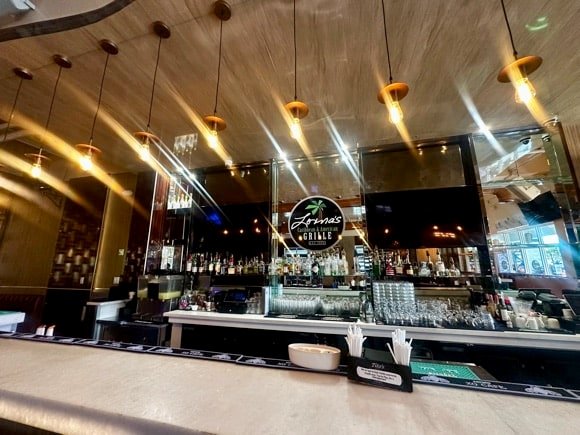
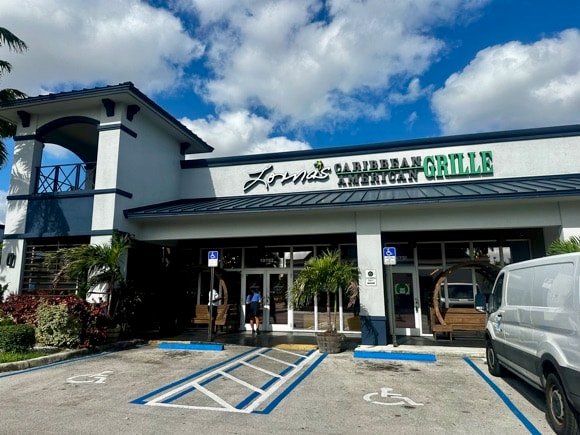
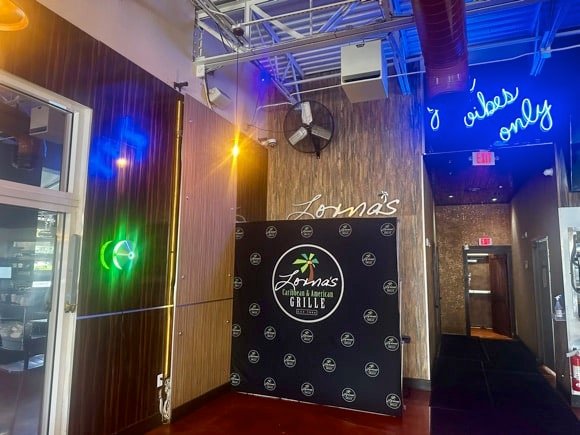
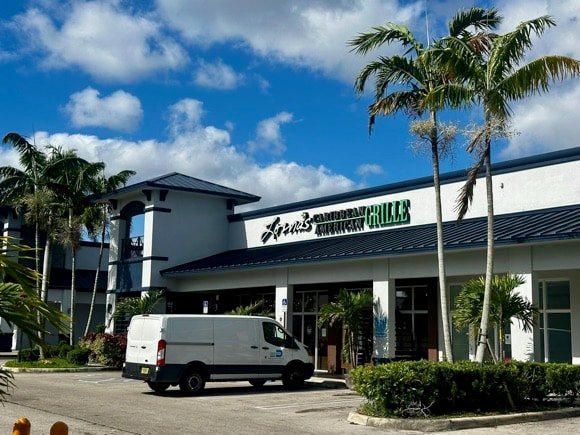
For a relaxed drink nearby, head to the ethnic restaurants on nearby NW 27th Ave, including Lorna’s Caribbean & American Grill, a mother-and-son business first opened in 2006. On the menu are traditional classics such as Atlantic snapper, curry goat and Jamaican-style oxtails, as well as exotic cocktails.
Lorna’s Caribbean & American Grill/Joe Stubley
Lorna’s Caribbean & American Grill/Joe Stubley
Lorna’s Caribbean & American Grill/Joe Stubley
Lorna’s Caribbean & American Grill/Joe Stubley
Lorna’s Caribbean & American Grill/Joe Stubley
Lorna’s Caribbean & American Grill/Joe Stubley
getting here
Going to the stadium – tips and timings
Miami International Airport/Joe Stubley
Inter Miami transport/Joe Stubley
Miami International Airport/Joe Stubley
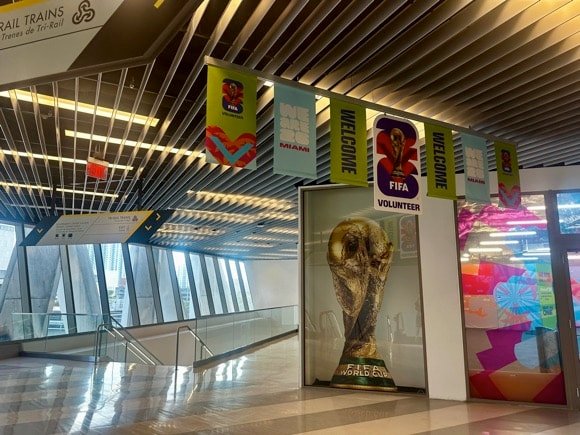
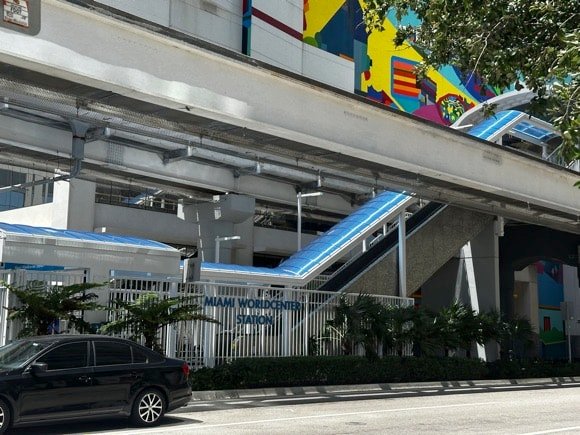
Miami International Airport is eight miles (13km) north-west of Downtown Miami. On Level 3, the free MIA Mover runs every 5-15mins to Miami Intermodal Center 3-4mins away, with Nu Stadium alongside, separated from the airport by State Road (LeJeune) 953. A designated walking route from Miami Intermodal Center takes 10-12mins to Freedom Park and Nu Stadium.
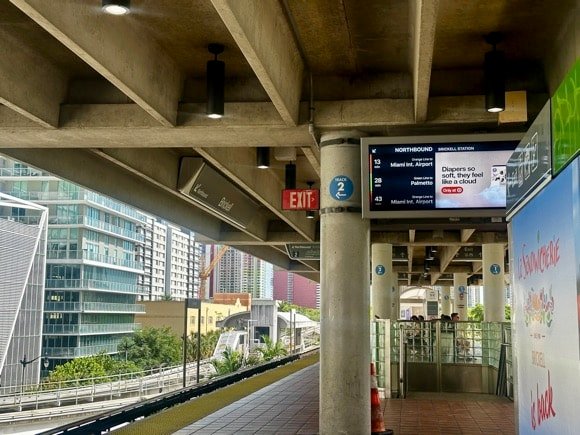
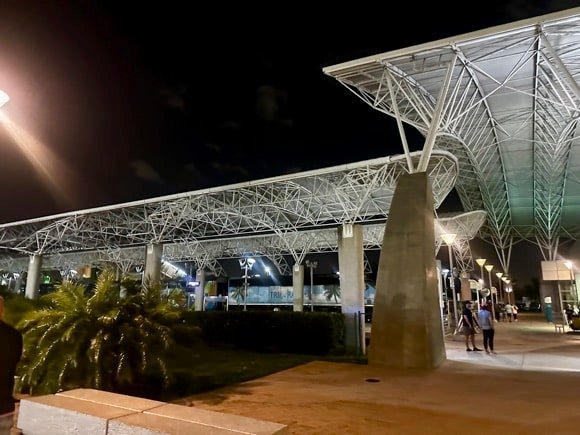
Miami Intermodal Center is where the Orange Line of Miami’s Metrorail (every 15-30mins, 5am-midnight) sets off for Government Center in Downtown Miami. where MiamiCentral serves Brightlinetrains within Florida (including Fort Lauderdale and Orlando) and Tri-Rail commuter rail, which also links direct to the airport.
EASY Cards ($2) for Metrorail, Tri-Rail and the Metrobus network are available from kiosks and vending machines at the airport, stops and stations (tap in and tap off if transferring to/from Tri-Rail). You can also download the GO Miami-Dade Transit App or SoFloGo App for Apple and Android.
Miami trolley/Joe Stubley
MiamiCentralt/Joe Stubley
Inter Miami transport/Joe Stubley
A one-way journey on Metrorail & Metrobus is $2.25, Tri-Rail $2.50 (Sat-Sun & hol $5, weekend day pass $5). Note that Metrorail and Tri-Rail schedules refer to Miami Intermodal Center as ‘Miami (International) Airport’.
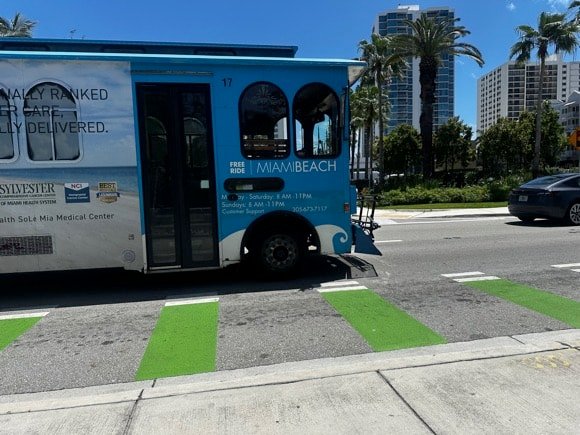
Also from Government Center, a free Metromover service connects to stops around the city center every 3-5mins, including Brickell, while the city’s trolley network is also free, including the four routes (8am-11pm) serving Miami Beach.
The Hard Rock Stadium is in Miami Gardens, 12.5 miles (20km) north of Miami International Airport. The nearest public transportation is Tri-Rail to Golden Glades 25mins away – a 10min taxi hop to the stadium.
If you’re coming from Downtown Miami, the stadium recommends booking an Uber Shuttle from specific pick-up points in Miami Beach and Brickell, with fixed fares. Taxis will drop off on 199th Street, where they await passengers after the game. Note that Rideshare services are subject to surge pricing, and drop-offs are in Lot 44 Betty T. Ferguson Recreational Complex, a 30min walk to the stadium.
Parking spots for the World Cup and other major fixtures can be found here.
We use cookies on our website to give you the most relevant experience by remembering your preferences and repeat visits. By clicking “Accept All”, you consent to the use of ALL the cookies. However, you may visit "Cookie Settings" to provide a controlled consent.
This website uses cookies to improve your experience while you navigate through the website. Out of these, the cookies that are categorized as necessary are stored on your browser as they are essential for the working of basic functionalities of the website. We also use third-party cookies that help us analyze and understand how you use this website. These cookies will be stored in your browser only with your consent. You also have the option to opt-out of these cookies. But opting out of some of these cookies may affect your browsing experience.
Necessary cookies are absolutely essential for the website to function properly. These cookies ensure basic functionalities and security features of the website, anonymously.
Cookie
Duration
Description
cookielawinfo-checkbox-analytics
11 months
This cookie is set by GDPR Cookie Consent plugin. The cookie is used to store the user consent for the cookies in the category "Analytics".
cookielawinfo-checkbox-functional
11 months
The cookie is set by GDPR cookie consent to record the user consent for the cookies in the category "Functional".
cookielawinfo-checkbox-necessary
11 months
This cookie is set by GDPR Cookie Consent plugin. The cookies is used to store the user consent for the cookies in the category "Necessary".
cookielawinfo-checkbox-others
11 months
This cookie is set by GDPR Cookie Consent plugin. The cookie is used to store the user consent for the cookies in the category "Other.
cookielawinfo-checkbox-performance
11 months
This cookie is set by GDPR Cookie Consent plugin. The cookie is used to store the user consent for the cookies in the category "Performance".
viewed_cookie_policy
11 months
The cookie is set by the GDPR Cookie Consent plugin and is used to store whether or not user has consented to the use of cookies. It does not store any personal data.
Functional cookies help to perform certain functionalities like sharing the content of the website on social media platforms, collect feedbacks, and other third-party features.
Performance cookies are used to understand and analyze the key performance indexes of the website which helps in delivering a better user experience for the visitors.
Analytical cookies are used to understand how visitors interact with the website. These cookies help provide information on metrics the number of visitors, bounce rate, traffic source, etc.
Advertisement cookies are used to provide visitors with relevant ads and marketing campaigns. These cookies track visitors across websites and collect information to provide customized ads.