Soccer capital of Texas where the Cowboys ride high
Teams, tales and tips – a football fan's guide toDallas
Shoulder-to-shoulder-pad in the same city as the world’s most valuable sports team, soccer has had to face many challenges to thrive as an MLS franchise in Dallas. As Dallas Burn, this founder member of Major League Soccer played at the Cotton Bowl, as steeped in NFL legend as its former tenants, the Dallas Cowboys, today valued at $9 billion. Based in one of the world’s richest cities, the Burn initially failed to attract investors and had to rely on MLS itself to back the club.
But this is Dallas. Despite no local rival – Houston Dynamo didn’t enter MLS until 2006 – the Burn was turned around by the man whose father inspired the creation of the city’s most famous fictional son. Oil tycoon H. L. Hunt begat J. R. Ewing, central character of TV soap Dallas. In real life, Hunt sired at least 15 children, the tenth of whom, Lamar, went on to steer contemporary soccer in the US.
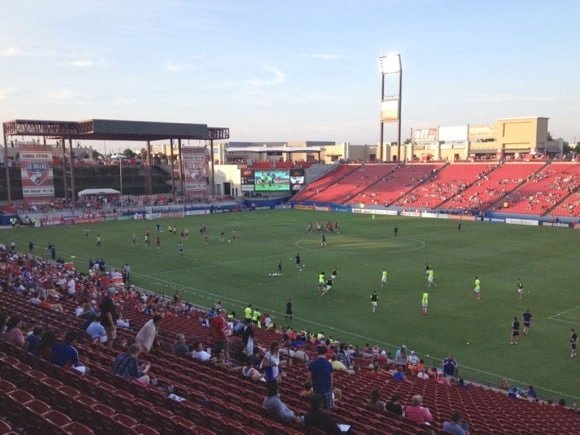
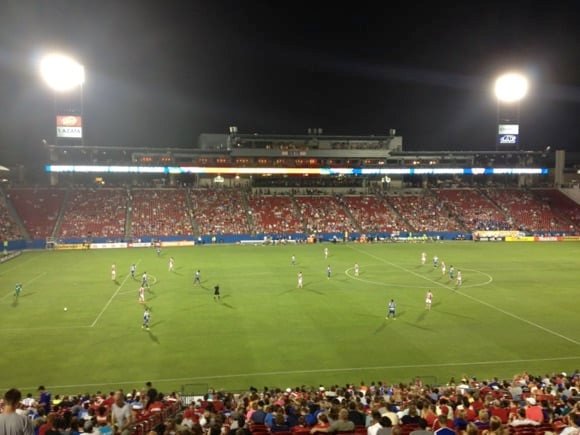
While MLS is still dwarfed by NFL in Big D, soccer has a prominent foothold, the renamed FC Dallas long established at one of the earliest soccer-specific stadiums in MLS. Fans have been making their way up to Frisco, 30 miles north of Downtown Dallas, since 2005.
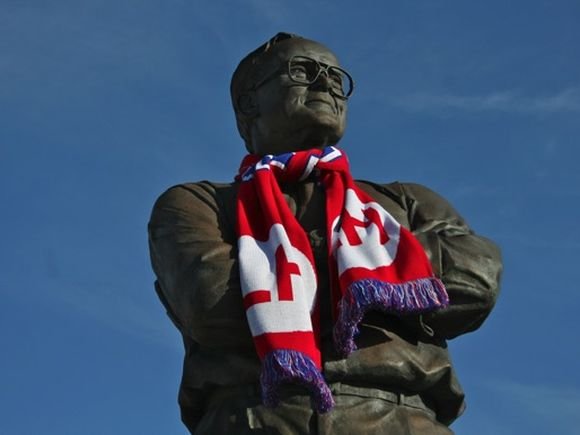
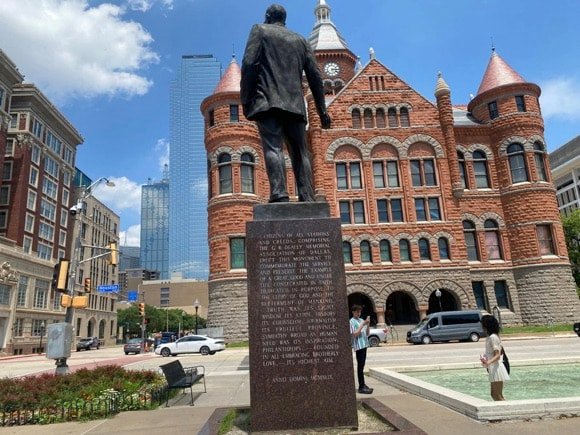
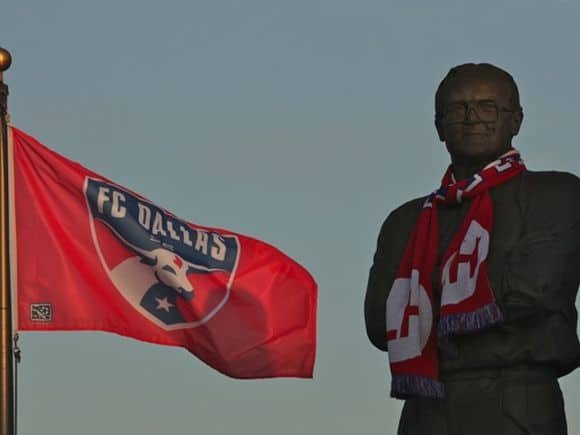
Statue of Lamar Hunt/Ian Thomson
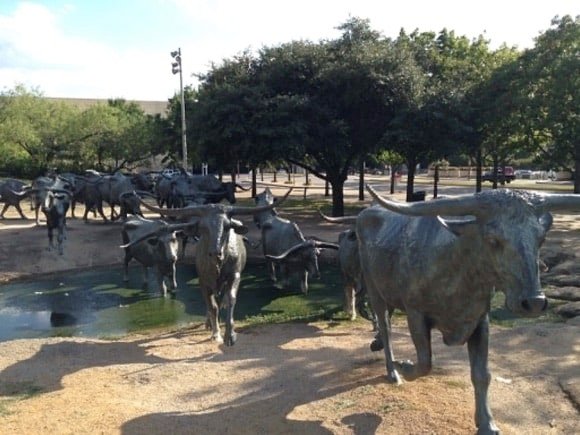
Pioneer Plaza/Jannes Hartkamp
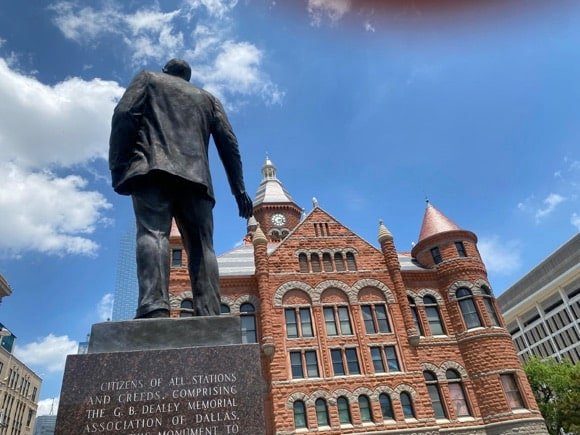
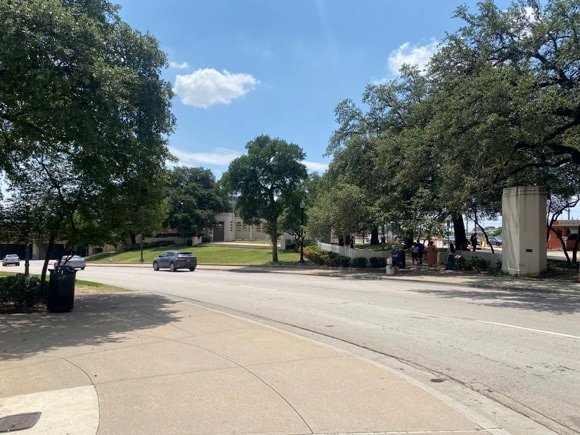
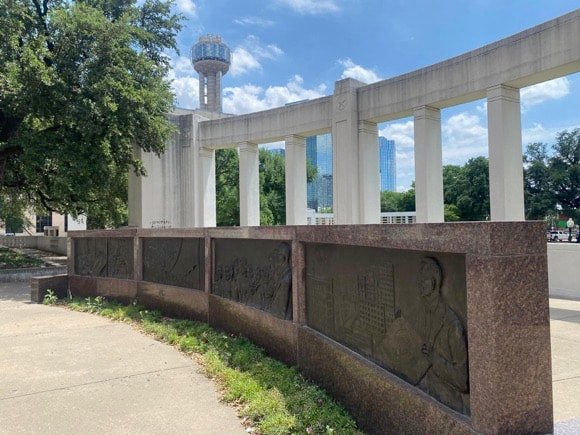
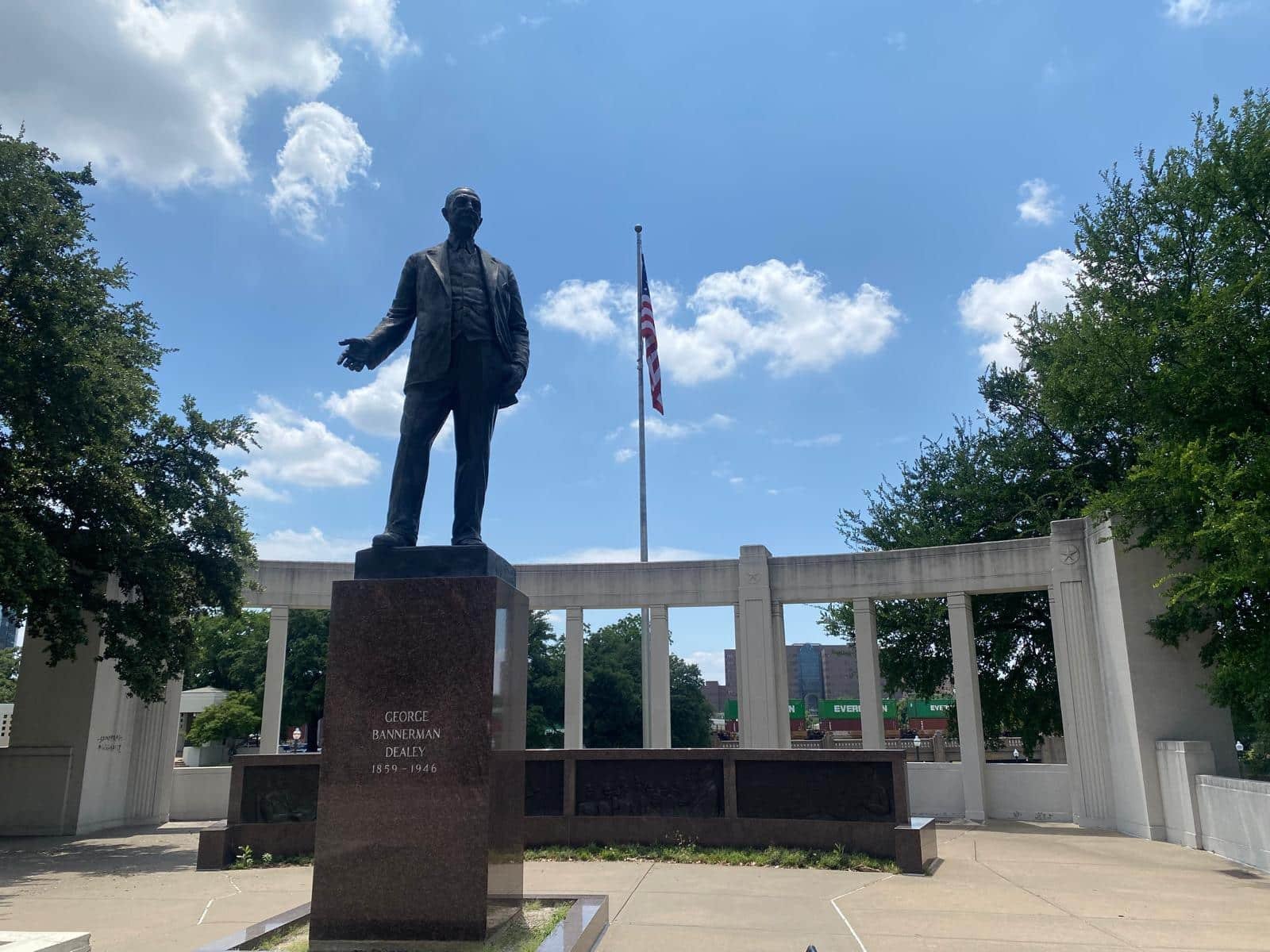
Dealey Plaza/Kate Carlisle
FC Dallas/Ian Thomson
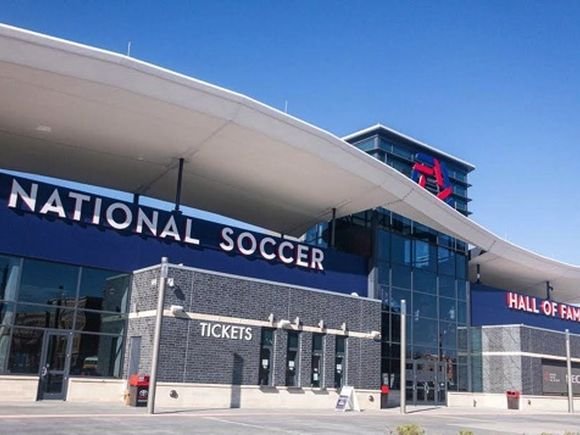
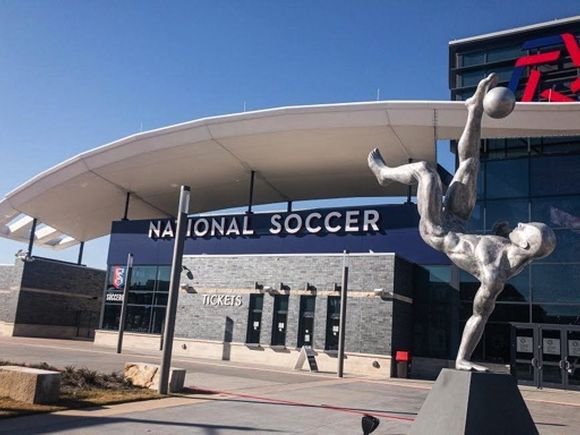
National Soccer Hall of Fame/Kamille Carlisle
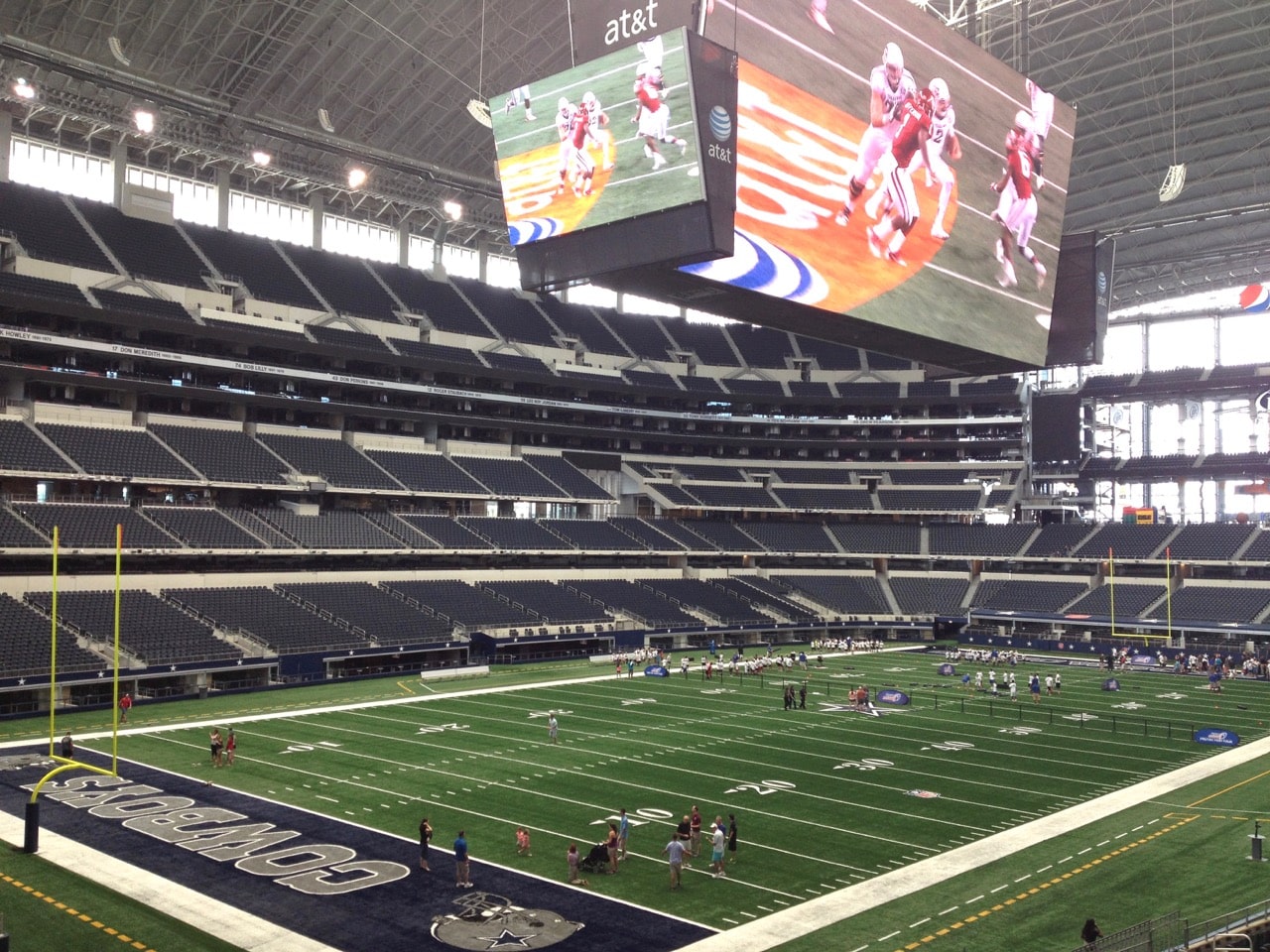
The size of the Cowboys’ AT&T Stadium, at 80,000 among the largest of America’s World Cup venues, was not the only factor that pushed the city’s credible but doomed bid to stage the final – love of soccer also came into play. The prestigious Dallas Cup for youth teams, for example, was set up by the Texas Longhorns Soccer Club to reciprocate the hospitality its teams had received in Europe.
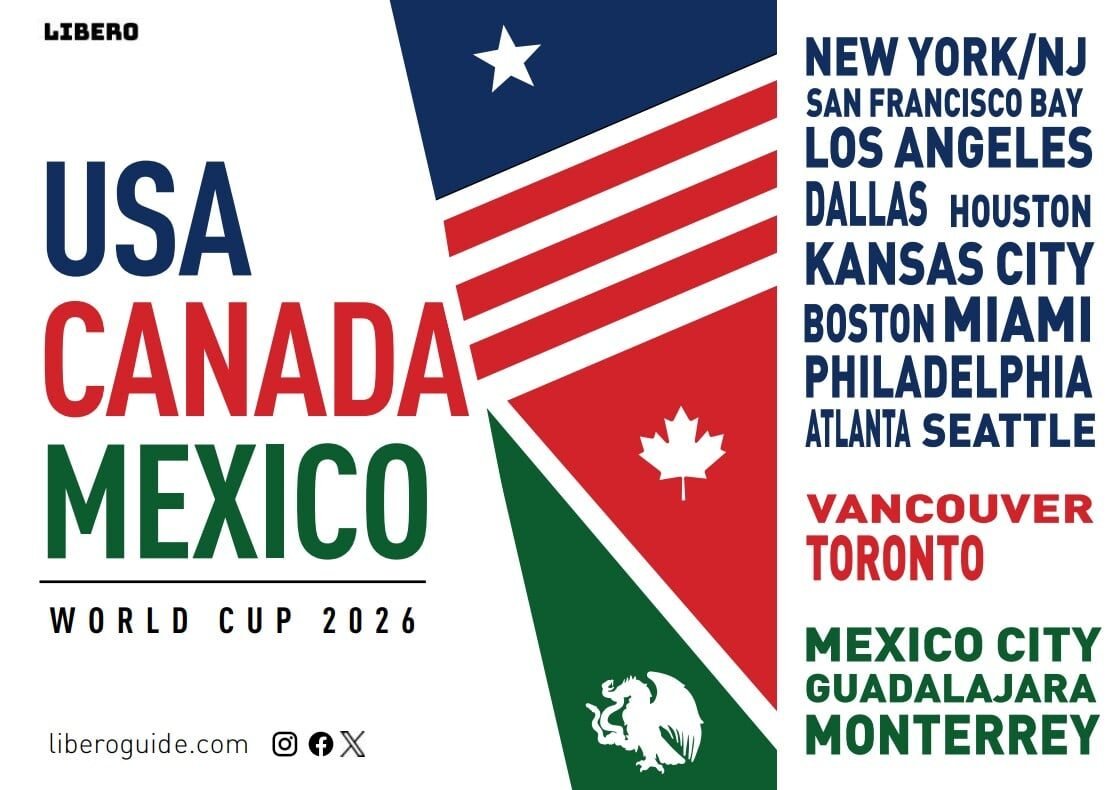
Held every Easter, it has welcomed the likes of David Beckham, Wayne Rooney and Andrea Pirlo. Though New Jersey’s MetLife won the 2026 final vote, Dallas – or rather, nearby Arlington, towards Fort Worth – will host nine matches, more any other venue.
It’s also as many as Wembley witnessed in 1966. That year, Lamar Hunt was just getting into his stride as a sports administrator. Attending his first World Cup, impressed by the passionate crowds in England and hearing of high viewing figures back in the States, Hunt grasped the power of big sports events and commercial potential of TV.
Inspired, he wrote to the NFL commissioner and suggested the term ‘Super Bowl’ for the showdown with the champions of the American Football League Hunt himself had set up in 1959. Then, once back in America, the tycoon helped set up the National American Soccer League (NASL), aimed at launching the sport in the States.
Dealey Plaza/Kate Carlisle
FC Dallas/Ian Thomson
Dealey Plaza/Kate Carlisle
National Soccer Hall of Fame/Kamille Carlisle
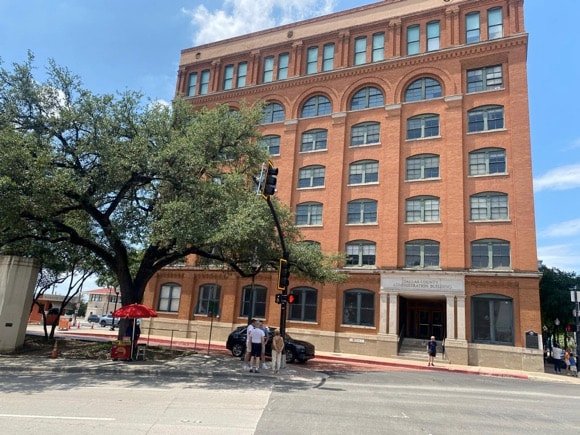
Texas School Book Depository/Kate Carlisle
It proved a slow process. Usurped by the rival National Professional Soccer League (NPSL), a CBS contract in its back pocket, Hunt’s NASL pivoted to become the United Soccer Association (USA).
With no time for the new teams to build a squad and with huge stadiums to fill, the 12 members were each assigned a European or South American club whose players would represent them. Hunt having founded Dallas Tornado, Dundee United came over from Scotland to appear before crowds of under 10,000 at the 75,504-capacity Cotton Bowl.
With a history linked to the Texas State Fair dating back to 1886, a shrine to college football, the home of the Dallas Cowboys through the 1960s did not take kindly to soccer. Even when USMNT played internationals there in the run-up to the 1994 World Cup, crowds hovered around 15,000.
True, Brazilian, Dutch, Argentine and German fans all but filled the place for the six games of the tournament itself, but it wouldn’t be until 2004 that a friendly between the US and Mexico attracted a gate of 45,048.
Dealey Plaza/Kate Carlisle
Grassy Knoll/Kate Carlisle
Statue of Lamar Hunt/Ian Thomson
Dealey Plaza/Kate Carlisle
National Soccer Hall of Fame/Kamille Carlisle
Dallas Tornado lasted two years at the Cotton Bowl, the second as a member of the new NASL. While the NPSL and Hunt’s United Soccer Association worked out their
merger before the inaugural season in 1968, Tornado toured the world to spread the message, playing 45 times in 26 (!) countries, even entertaining homesick GI’s in Vietnam.
By the time the NASL kicked off, a squad of mainly English and Scandinavian players were exhausted and heartily sick of each other. Tornado would go on to win twice in 32 games, setting a negative record that no other NASL team would beat, all the way up to the league’s demise in 1984.
When selected to co-host the World Cup in 1994, the city had not hosted regular professional soccer for a decade. Now Dallas was one of only eight cities with an unbroken record of MLS representation since its beginning in 1996.
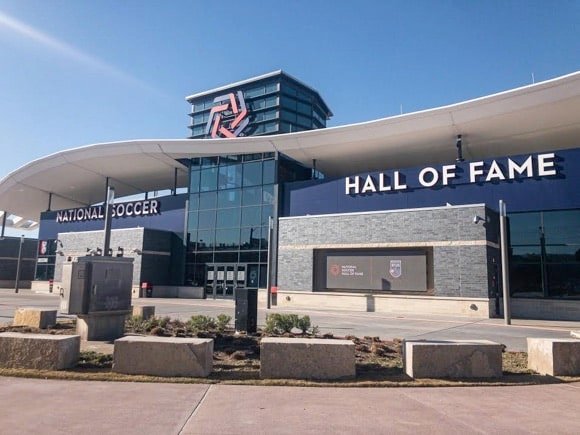
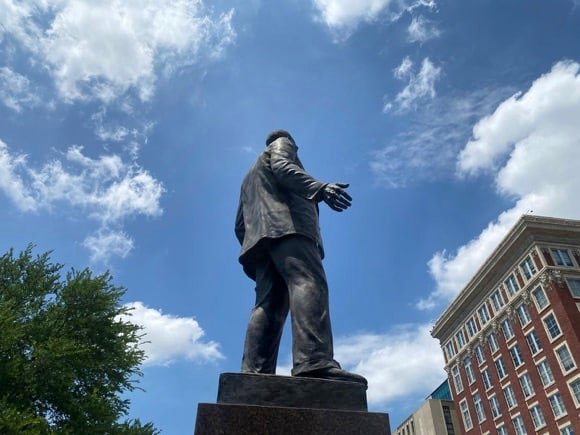
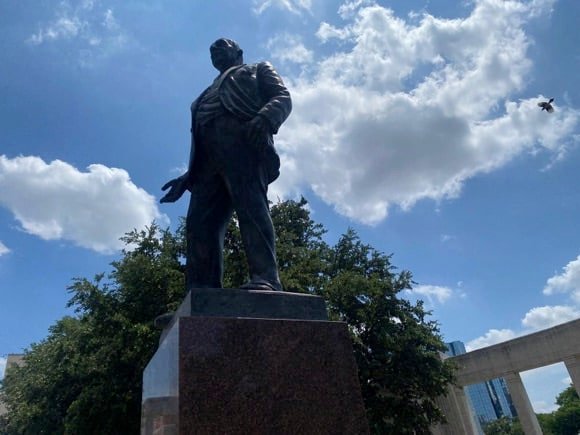
Frisco is also the home of the National Soccer Hall of Fame ($15, seniors & under-12s $12, Wed 1.30pm-9pm, Thur-Fri 1.30pm 5.30pm, Sat 10am-5pm, Sun noon-5pm), installed in 2018 as part of the complete rebuild of the South End of Toyota Stadium. Lamar Hunt, who invested tens of millions of dollars to develop soccer in Dallas, would have approved. His statue stands proudly behind the North End, home of the Dallas ultras.
Fair Park stages the city’s Fan Festival throughout the tournament.
Getting here
Arriving in town and city transport
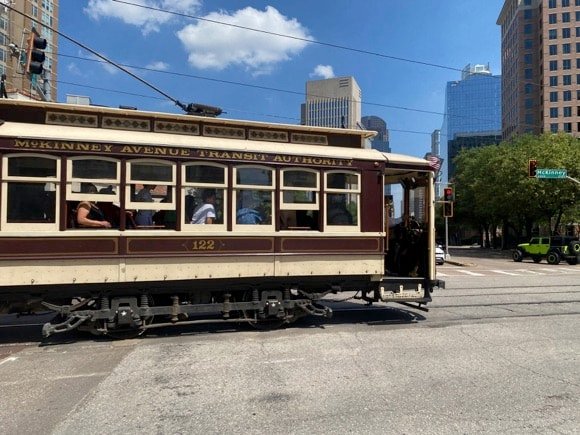
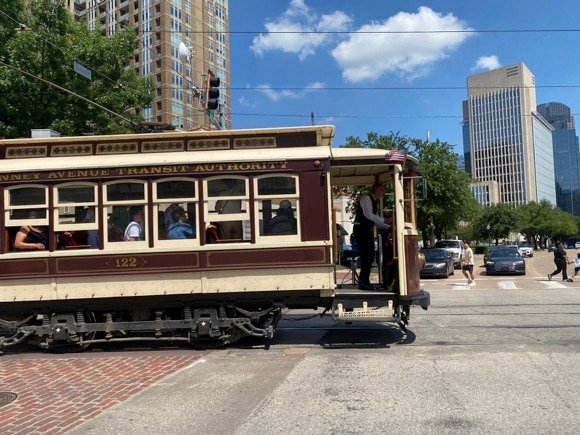
M-Line Trolley/Kate Carlisle
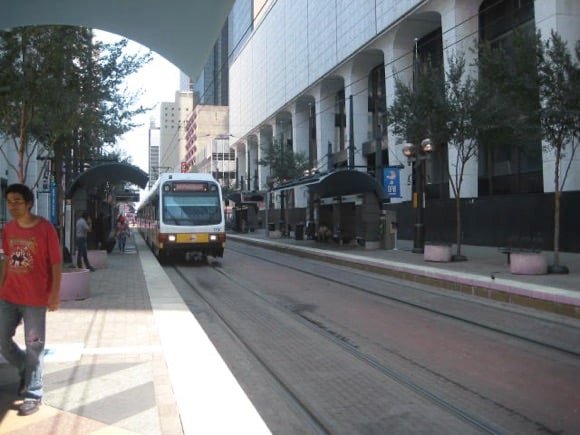
Dallas DART Line/Kate Carlisle
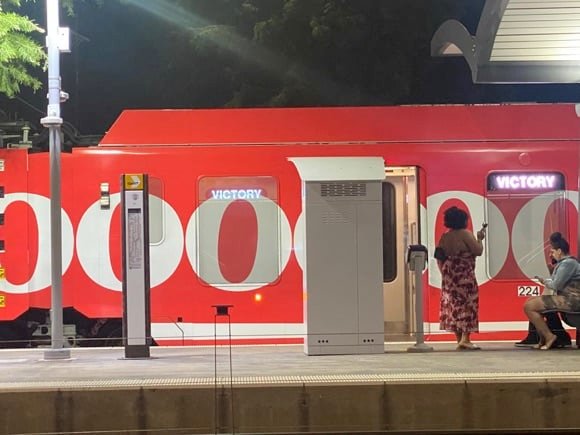
Victory Station/Kate Carlisle
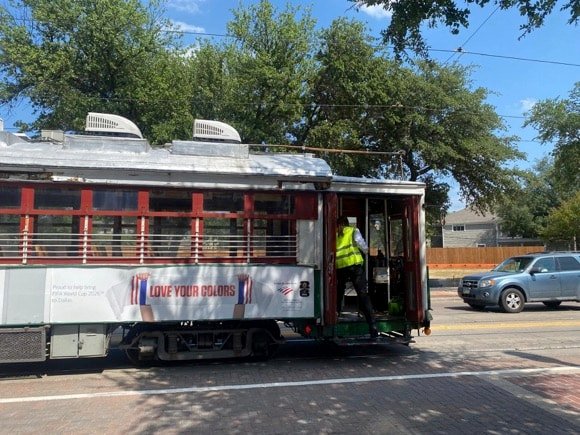
M-Line Trolley/Kate Carlisle
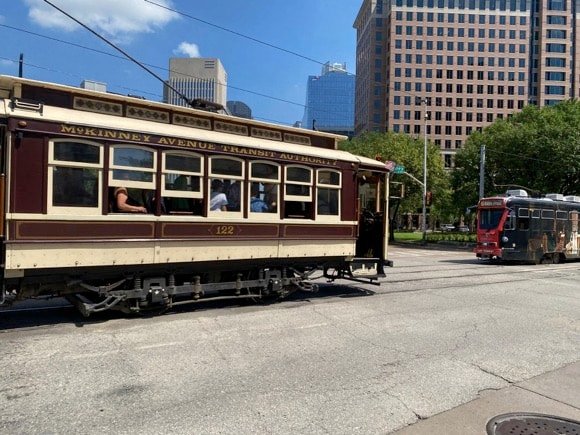
M-Line Trolley/Kate Carlisle
Dallas Fort Worth Airport is 19 miles (31km) from Downtown Dallas. From Terminal A, the Orange Line of the DART light rail network runs to Dallas city center, including transit hub Akard Station (every 20mins, 50min journey time) close to Elm Street.
If you’re going direct from the airport to the stadium, from Terminal D (Lower Level), Trinity Metro LINK buses take 20mins to reach Centreport Station (Centreport/DFW Airport Station), where shuttles head to the game (see below). Tickets are $2. Download the GoPass app for tickets and schedules. You can also tap in or there are ticket machines at main stops and stations. A Day Pass is $6, the Regional One-Day Pass $9, which is also valid for stadium transport. See all fare information here.
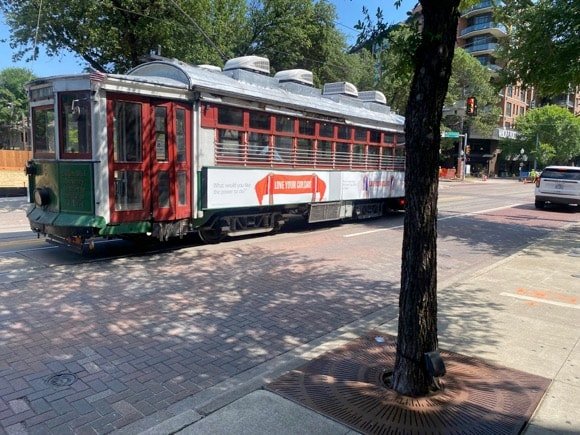
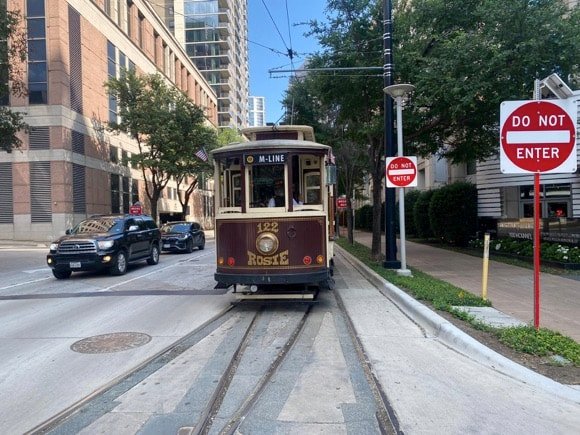
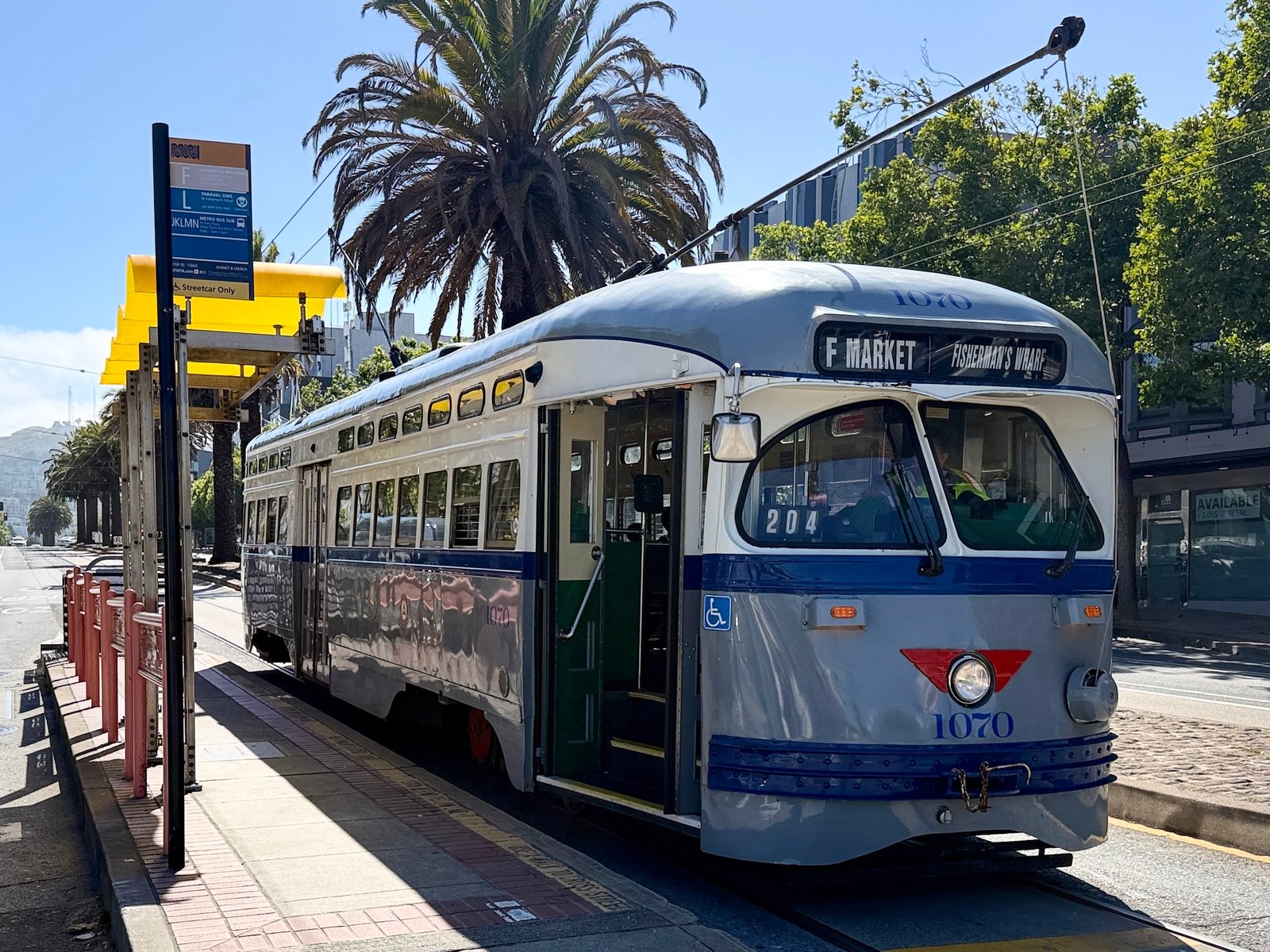
For sightseeing and barhopping, the M-Line Trolley along McKinney Avenue is completely free, although you’ll have to pay once you transfer.
M-Line Trolley/Kate Carlisle
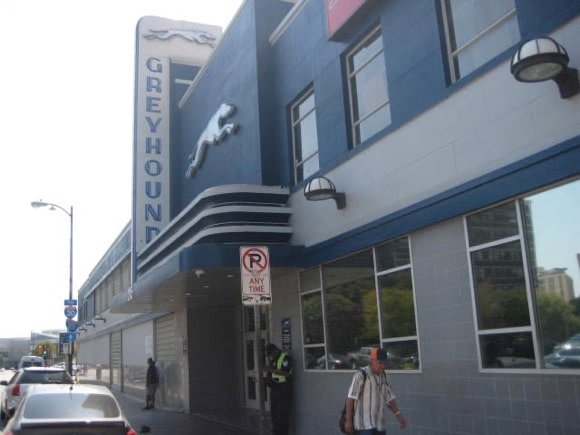
Dallas Greyhound bus station/Kate Carlisle
M-Line Trolley/Kate Carlisle
Smaller Love FieldAirport is six miles (10km) north-west of Downtown Dallas, mainly used by low-cost Southwest Airlines. Free service Love Link bus 005 runs every 15-30mins to Inwood/Love Field Station (8-10min journey time) on the Green and Orange Lines.
From Victory Station in Downtown Dallas and Central Station in Fort Worth, Trinity Railway Express(TRE) trains run to the main transport hub on game days, Centreport/DFW Airport Station, five miles north of the stadium. Free for match ticket holders, stadium shuttle buses then operate from five hours before kickoff and for three hours after the game. Use the GoPass app for TRE tickets and times.
If you’re driving, parking must be pre-booked through JustPark, cheapest spots from $125-$200. Taxis, Ubers and other hired vehicles must pick up and drop off from Arlington Esports Stadium, ten minutes from AT&T Stadium on foot.
Serving Dallas, Fort Worth and Arlington, Texas Yellow Cabs (+1 817-676-3702) promises no surge prices.
Where to Drink
The best pubs and bars for football fans
City Tavern/Kate Carlisle
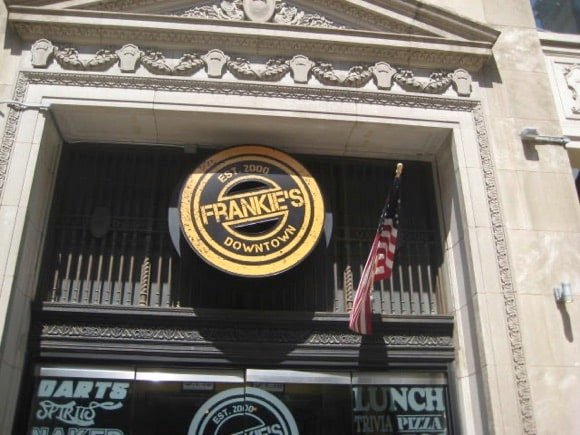
Frankie's Downtown/Kate Carlisle
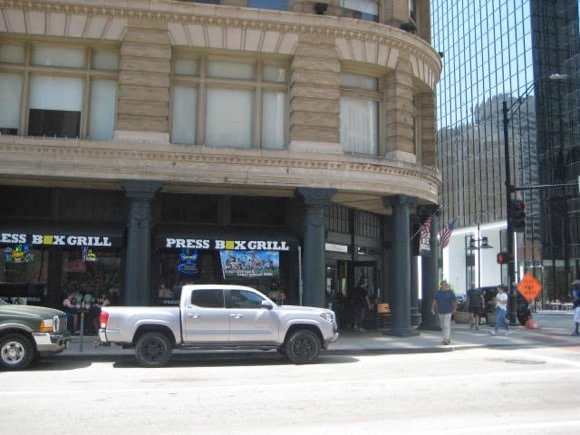
Press Box Grill/Kate Carlisle
Press Box Grill/Kate Carlisle
City Tavern/Kate Carlisle
Owner's Box/Kate Carlisle
City Tavern/Kate Carlisle
Frankie's Downtown/Kate Carlisle
Owner's Box/Kate Carlisle
City Tavern/Kate Carlisle
Record Grill/Kate Carlisle
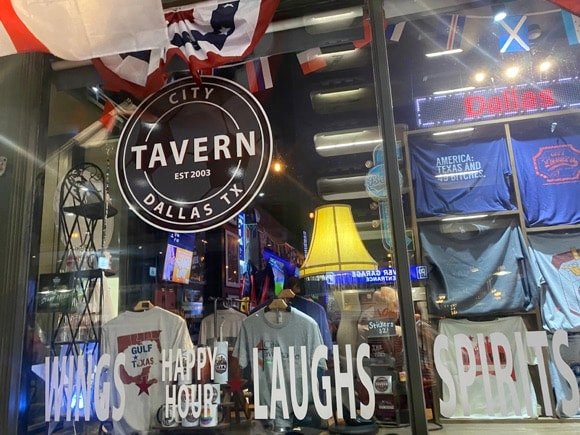
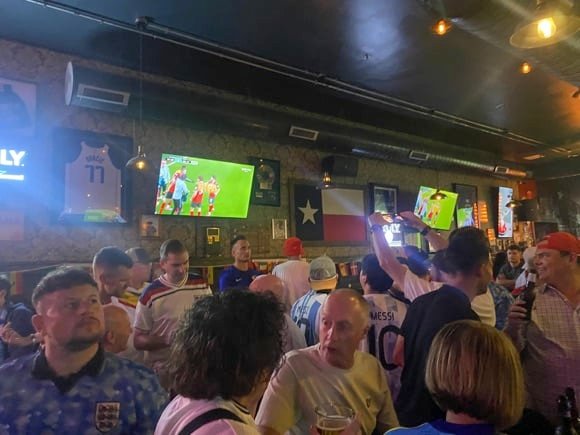
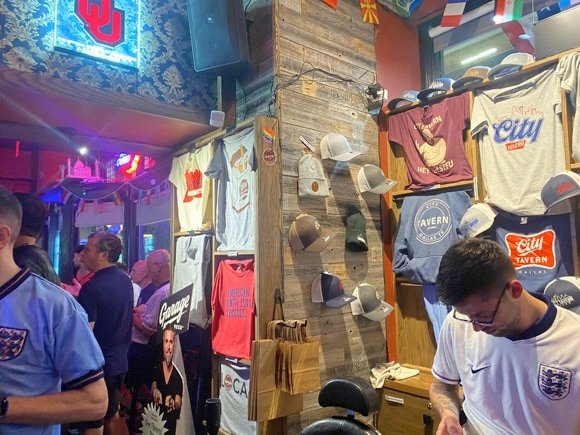
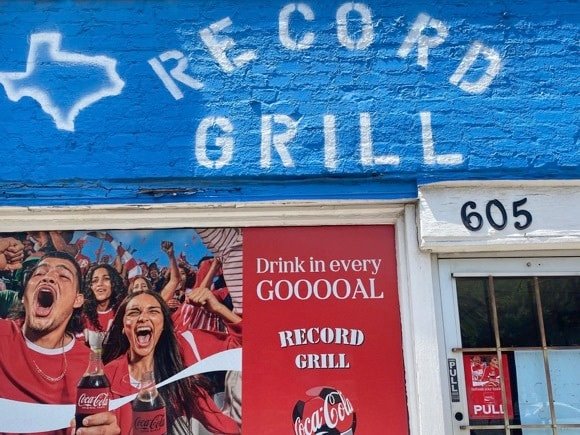
Right on Elm Street – yes, that Elm Street – soccer-focused City Tavern is approaching a quarter-century of showing games and serving beer. These days, you’ll find Yuengling, Blood & Honey from Revolver Brewing in Texas, and Velvet Hammer from Peticolas Brewing in Dallas. Look out, too, for the lunch specials. If you’d rather have a quick, cheap fill-up, Record Grill at No.605 serves up a whole mess of breakfast from 6am, screens promised for the World Cup. No WiFi, no booze, cash-only.
A few blocks over on Main Street, Frankie’s Downtown is not only twice winner of Best Sports Bar in Dallas but also Best Happy Hour, Best Cocktail Bar and Best Wings. And that doesn’t mention the craft beers, currently from local Four Corners, Oak Cliff and Pegasus City.
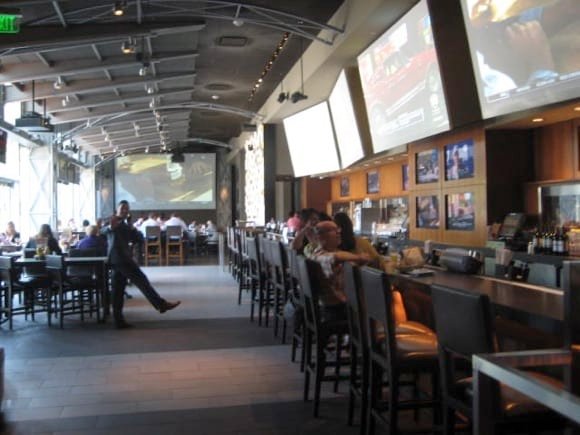
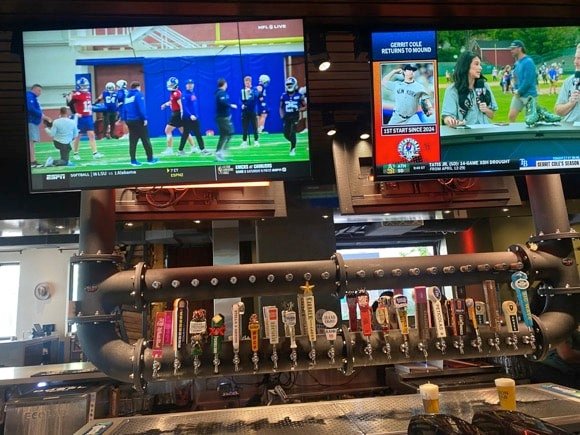
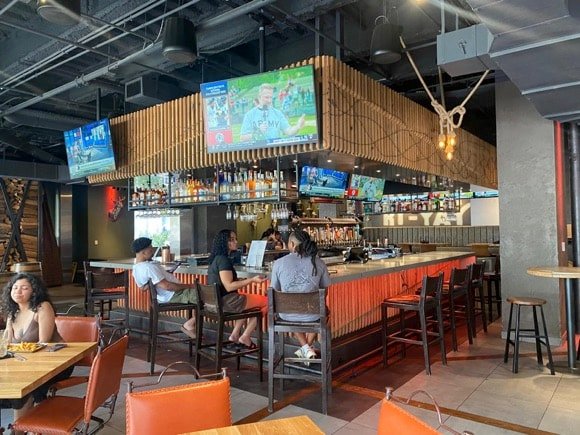
Where Elm Street meets Main, Press Box Grill puts the emphasis on the grill, but the bar counter merits propping up and chugging back while gawping at sports, aided and abetted by 36 tap beers, most from Texas. Action is beamed from a 112-inch HD TV and 16 other screens.
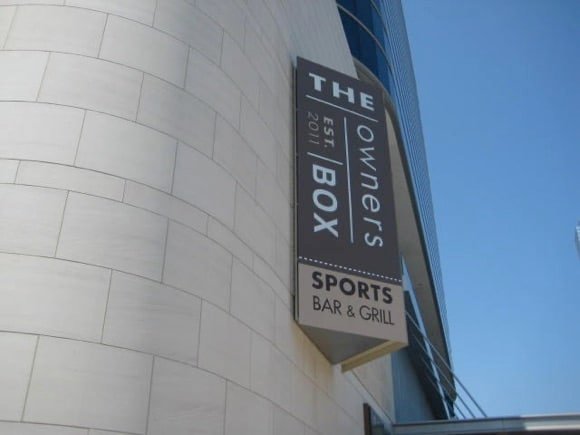
On the first floor of the Omni Hotel a few blocks from Dealey Plaza, Owner’s Boxattracts sports fans and hotel guests with its huge and multiple TV screens. You can book a private table with sound-isolating technology or sip a Curveball cocktail with Garrison Brothers bourbon on the patio.
Backyard/Kate Carlisle
Peticolas Brewery/Kate Carlisle
Cowboy Chow/Kate Carlisle
Backyard/Kate Carlisle
Peticolas Brewery/Kate Carlisle
Cowboy Chow/Kate Carlisle
Peticolas Brewery/Kate Carlisle
Peticolas Brewery/Kate Carlisle
Cowboy Chow/Kate Carlisle
Peticolas Brewery/Kate Carlisle
Backyard/Kate Carlisle
Peticolas Brewery/Kate Carlisle
Cowboy Chow/Kate Carlisle
Peticolas Brewery/Kate Carlisle
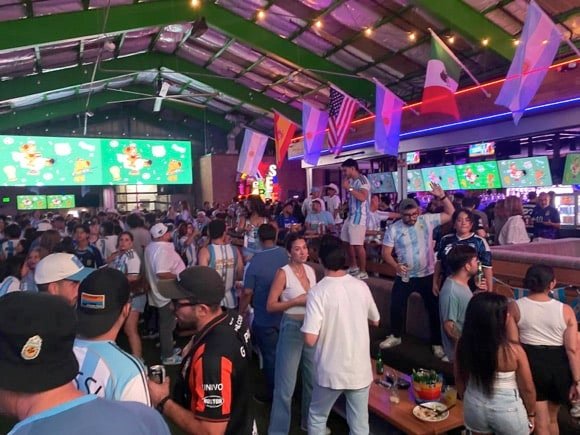
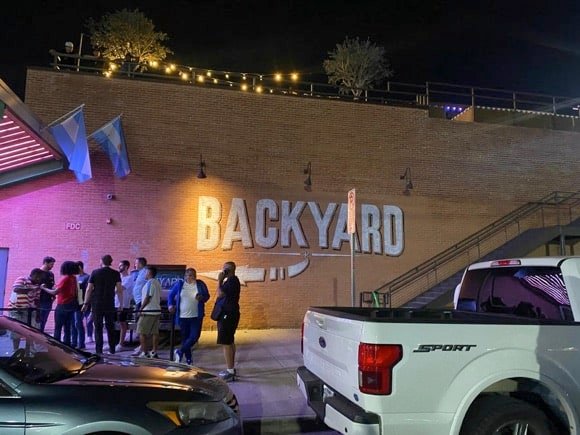
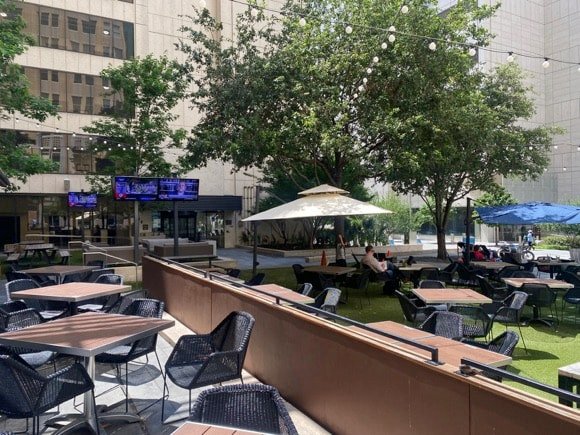
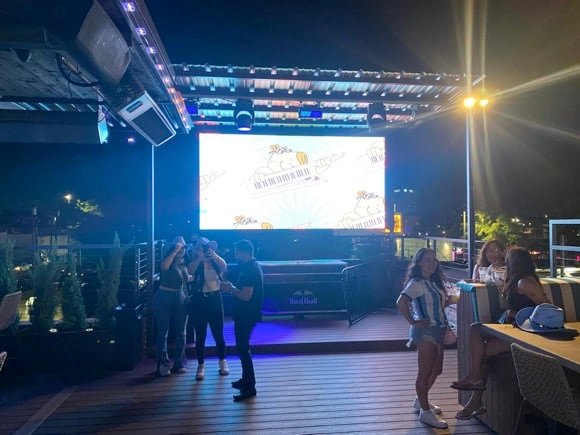
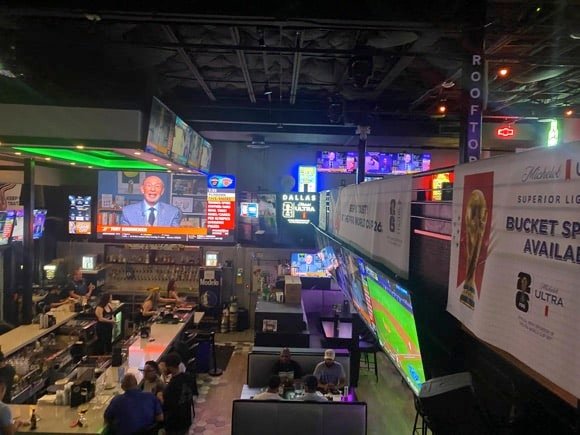
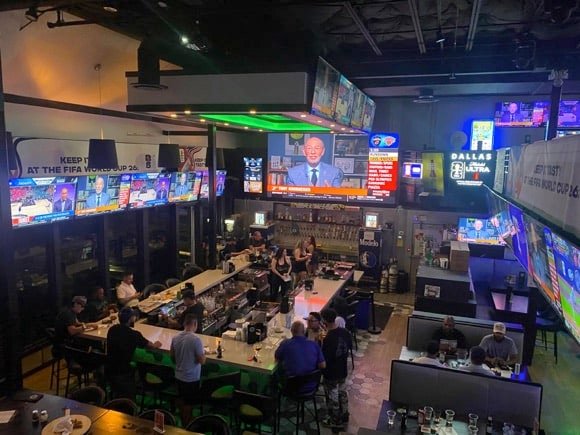
East of Downtown Dallas on N Good Latimer Expy, Backyard takes full advantage of its space by filling it with 45 large TVs, two vast LED screens and a state-of-the art sound system. The result is enough people to create a real stadium atmosphere.
While NFL usually takes precedent over soccer, this summer Backyard operates daily, 11am-2am. With buckets of beer and serious cocktail deals, it’s a pack ’em in and make ’em happy formula that also works in Phoenix and Fort Worth.
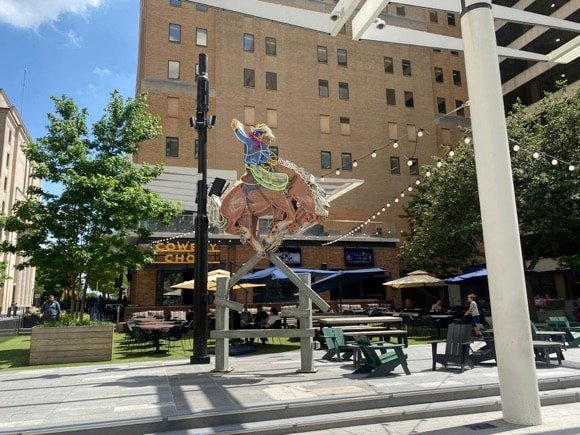
Across in the Discovery District, Cowboy Chow is littered with screens, with special viewing happy hours, and has put up a massive screen outside. Saddle up for the themed dishes and choose from 20 tap beers, including local Peticolas Rotator.
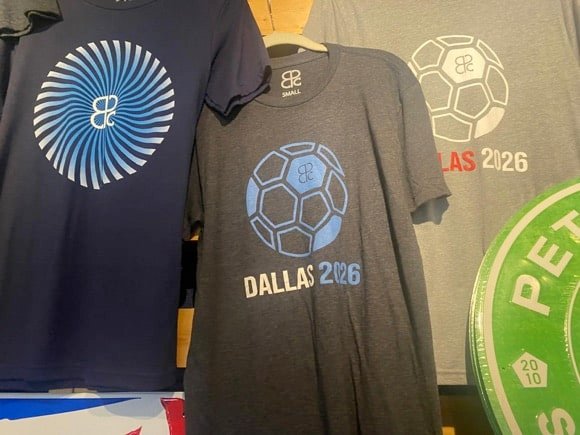
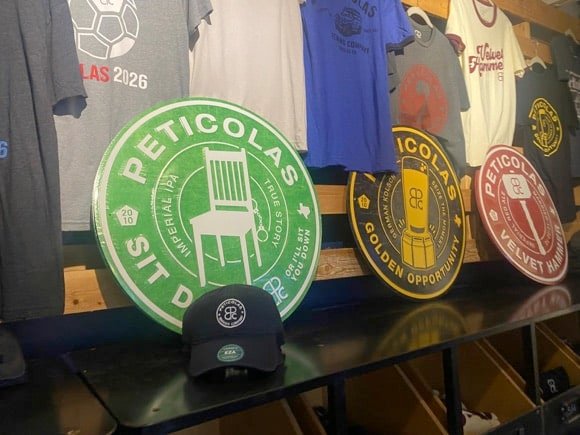
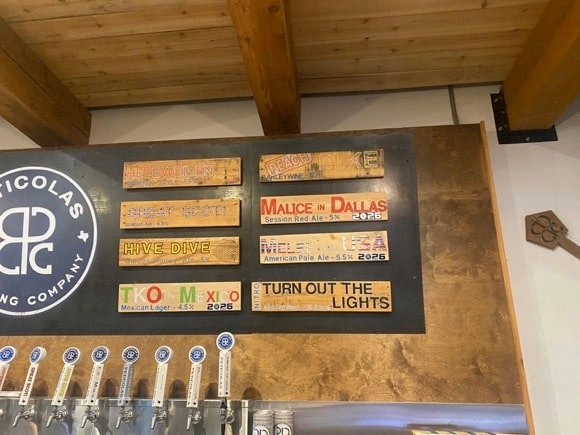
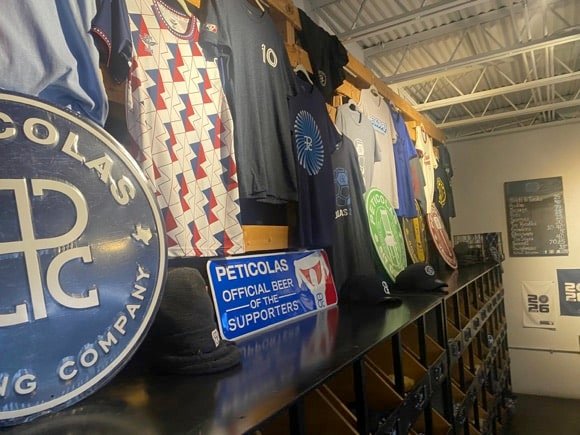
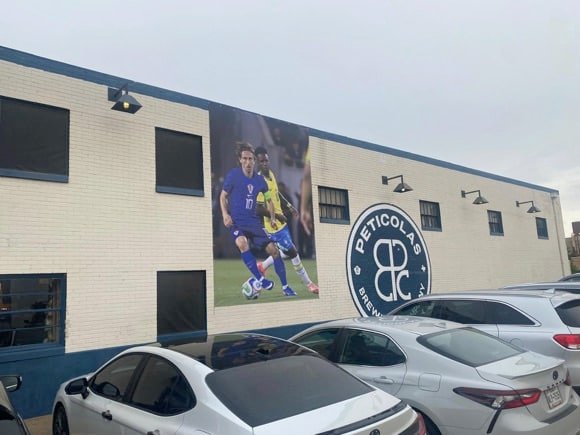
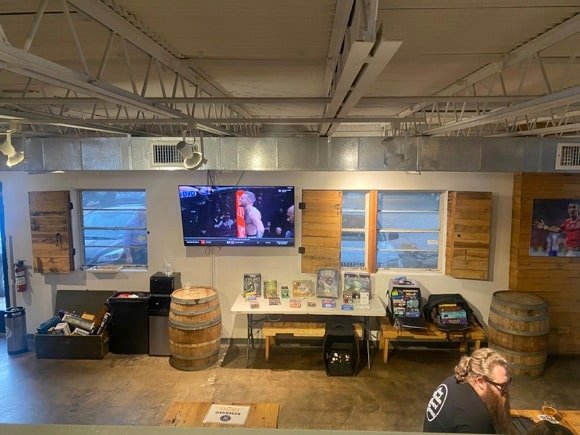
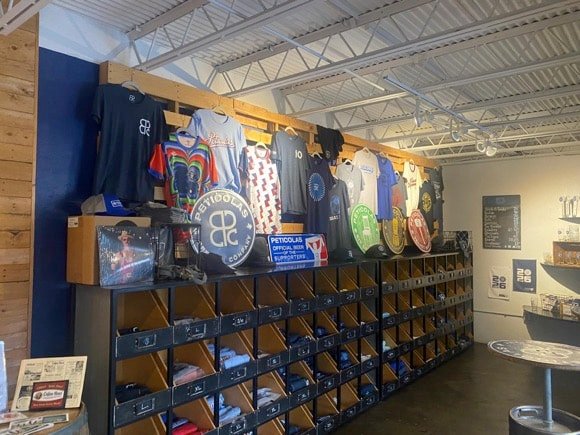
You can sample the real McCoy in-situ in the Design District, where the Peticolas Brewery pours its limited-series World Cup brews such as session red ale Malice in Dallas and Melee in the USA, an American pale ale, these soccer-focused hopheads having created new brews for every tournament since Brazil 2014.
Check out the rest of the selection on the board or ask the knowledgeable staff – it can be nerve-shatteringly loud at times, however, so be prepared. A little out of the way but worth the trek.
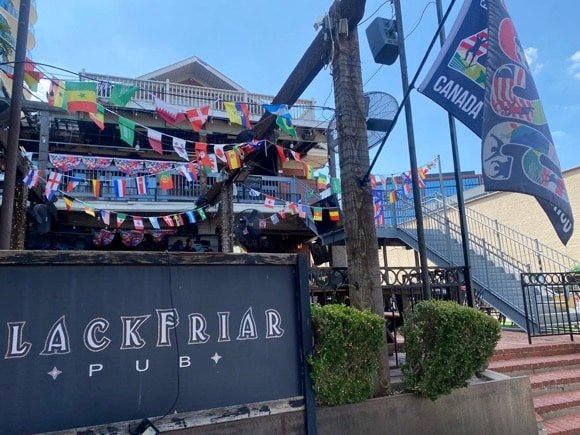
Blackfriar Pub/Kate Carlisle
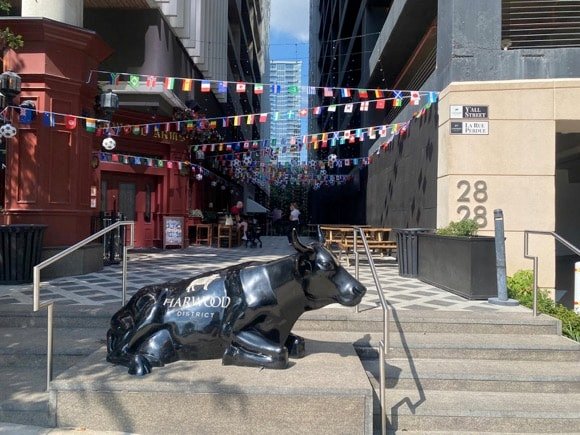
Harwood Arms/Kate Carlisle
Blackfriar Pub/Kate Carlisle
Blackfriar Pub/Kate Carlisle
Harwood Arms/Kate Carlisle
Blackfriar Pub/Kate Carlisle
Harwood Arms/Kate Carlisle
Blackfriar Pub/Kate Carlisle
Blackfriar Pub/Kate Carlisle
Harwood Arms/Kate Carlisle
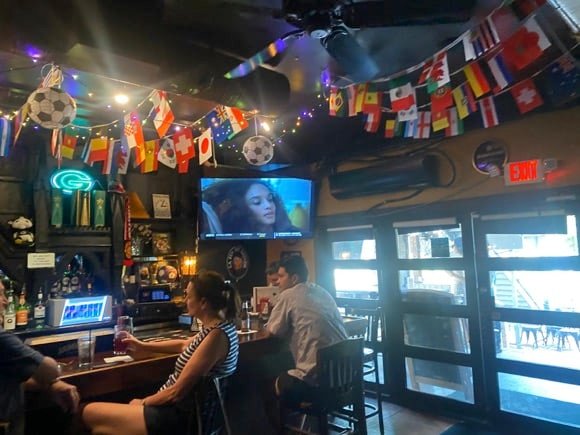
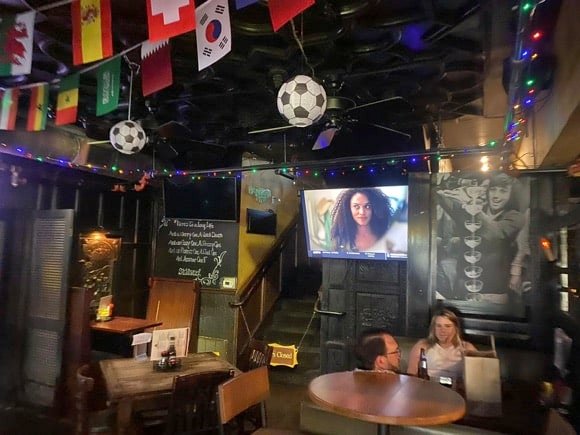
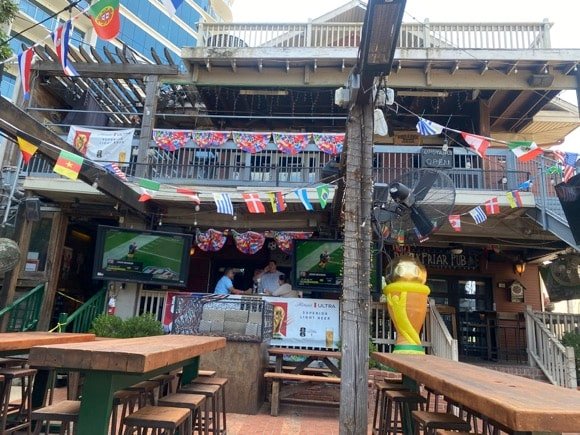
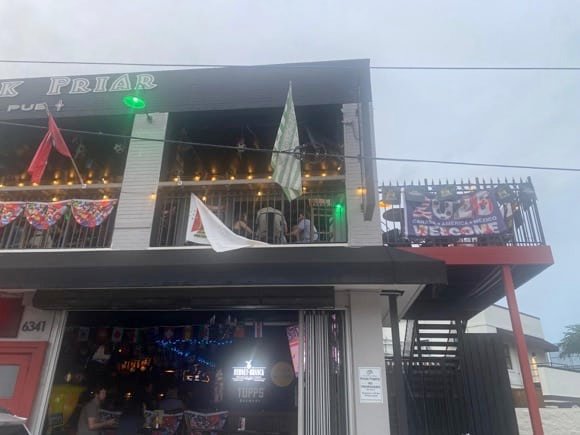
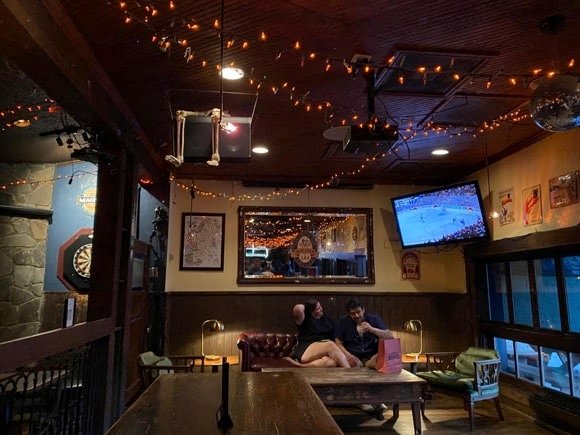
Over in Uptown Dallas, McKinney Avenue is a convivial bar crawl by the free, vintage M-Line Trolley. At No.2621, the long-established Blackfriar Pub is screening all 104 games this summer, this stalwart of the Dallas drinking scene dating back to 2003 well-versed in staging watch parties for Celtic, Barcelona and United fans. These supporters are also regulars at the sister branch out in leafy Lakewood, at 6341 La Vista Dr.
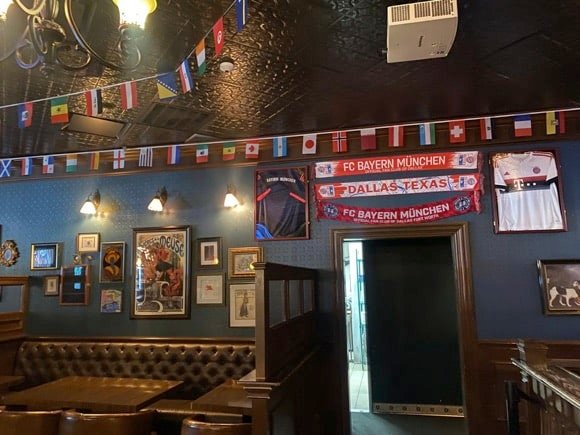
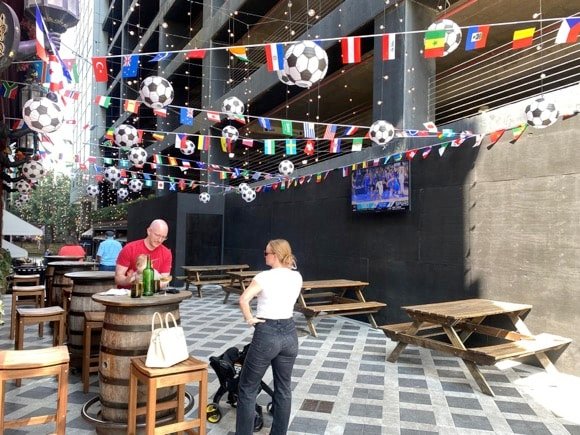
Back on McKinney Avenue, the best spot is in the spacious beer garden, but don’t be afraid to have a gander at the interior décor, some of it taken from the Hard Rock Café that once stood next door – apparently an entire room from Pete Townshend’s posh gaff was shipped across the Atlantic like London Bridge in 1982.
Fare-wise, it’s classic Irish pub food (signature dish fish & chips), complemented by UK and European beers on tap (Paulaner, Stiegl, Chimay, Belhaven), plus Austin Eastciders. UK visitors will be pleased/worried to see Snakebites on the drinks list.
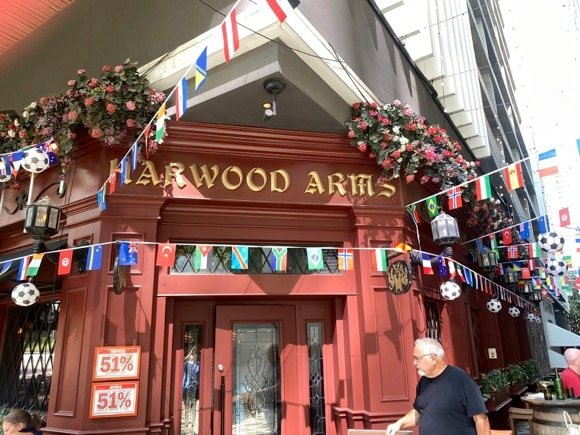
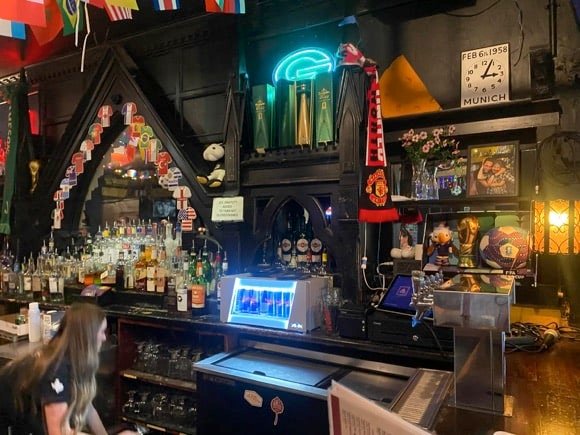
Anglos will also make a beeline for the Harwood Arms nearby, usually a hangout for Chelsea fans but tuned in to every game this summer. Brit enough to call TVs tellies, of which there are many tuned to soccer, and also Brit enough to extend the Poets’ Day of Friday into a happy hour bonanza from 11am to 7pm. Harwood itself is a modern concept, an area of Uptown Dallas kickstarted by the opening of the original Rolex Building in 1984. Here, post-work socialising is a fine art. Plenty of tables outside if it gets too crowded.
Christies/Kate Carlisle
Burritos Bellas/Kate Carlisle
Christies/Kate Carlisle
Dubliner/Kate Carlisle
Christies/Kate Carlisle
Burritos Bellas/Kate Carlisle
Christies/Kate Carlisle
Burritos Bellas/Kate Carlisle
Christies/Kate Carlisle
Fogo de Chão/Kate Carlisle
Christies/Kate Carlisle
Dubliner/Kate Carlisle
Christies/Kate Carlisle
Fogo de Chão/Kate Carlisle
Christies/Kate Carlisle
Christies/Kate Carlisle
Dubliner/Kate Carlisle
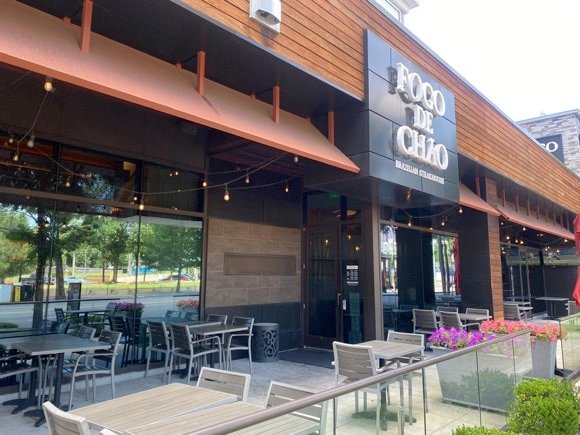
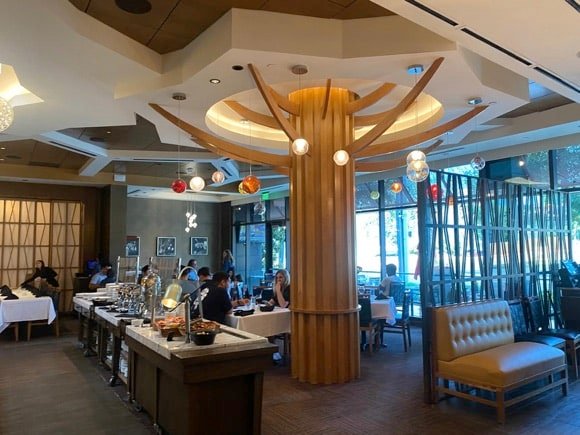
Back on McKinney Avenue near the Blackfriar, Burritos Bellas at No.2523 is not only a culinary mix of Italy and Mexico but a rooftop hangout with a large screen for matches, plus eight more TVs inside. Attracts a more Latin crowd if you fancy a change of scene. Nearby, fancier Brazilian steakhouse chain Fogo de Chão is organising its own viewing parties, upscale prices off-set by all day happy hours. Also serves a limited-edition World Caip cocktail because somebody had to. Valet parking if you need it.
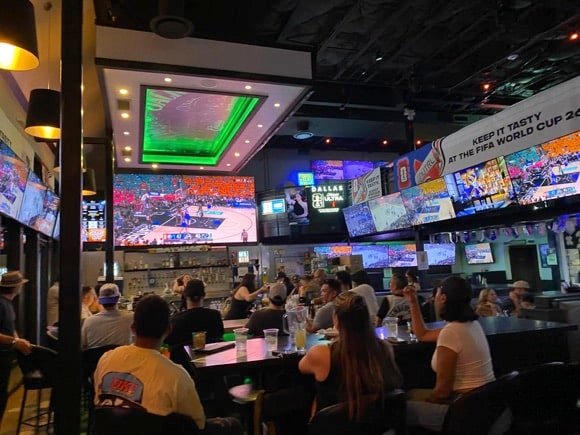
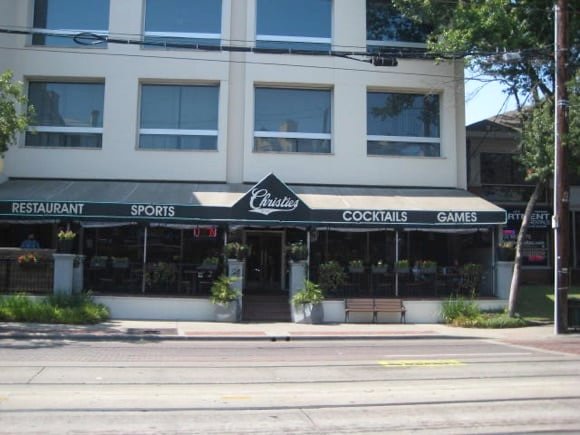
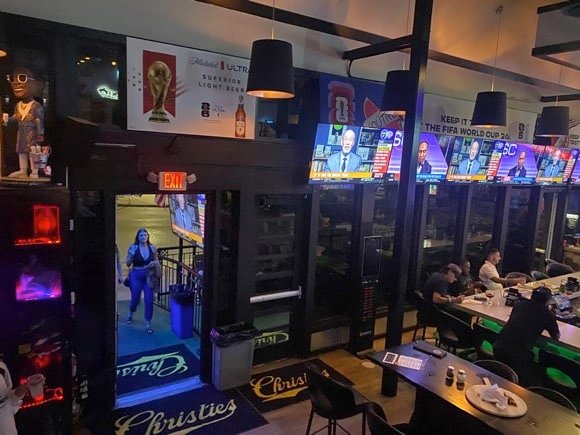
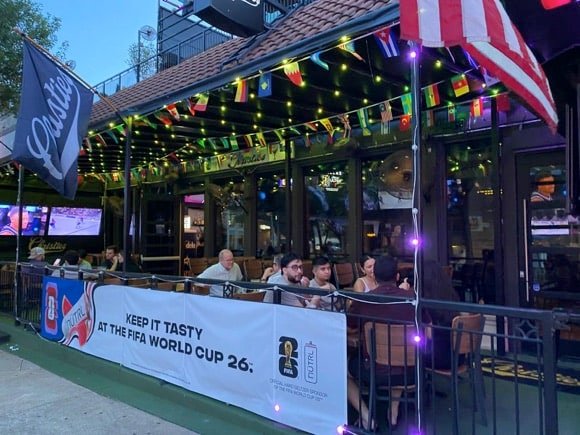
Beyond, up in Lower Greenville halfway to Lakewood, award-winning Christies sealed its reputation in its Uptown days, and remains a top destination for sports watching, partly thanks to its 69 HD TVs and two huge projector screens. Another plus the lively roof terrace and equally popular cocktails on tap.
Across the street, run by a friendly native of the Fair City, Dubliner feels authentic, a little on the boxy side perhaps, something to bear in mind if you’re jumping up to celebrate. Originally opened for the 1994 World Cup, this place has seen the come and go but still pours a quality pint of Guinness and stocks an impressive range of Irish whiskeys.
We use cookies on our website to give you the most relevant experience by remembering your preferences and repeat visits. By clicking “Accept All”, you consent to the use of ALL the cookies. However, you may visit "Cookie Settings" to provide a controlled consent.
This website uses cookies to improve your experience while you navigate through the website. Out of these, the cookies that are categorized as necessary are stored on your browser as they are essential for the working of basic functionalities of the website. We also use third-party cookies that help us analyze and understand how you use this website. These cookies will be stored in your browser only with your consent. You also have the option to opt-out of these cookies. But opting out of some of these cookies may affect your browsing experience.
Necessary cookies are absolutely essential for the website to function properly. These cookies ensure basic functionalities and security features of the website, anonymously.
Cookie
Duration
Description
cookielawinfo-checkbox-analytics
11 months
This cookie is set by GDPR Cookie Consent plugin. The cookie is used to store the user consent for the cookies in the category "Analytics".
cookielawinfo-checkbox-functional
11 months
The cookie is set by GDPR cookie consent to record the user consent for the cookies in the category "Functional".
cookielawinfo-checkbox-necessary
11 months
This cookie is set by GDPR Cookie Consent plugin. The cookies is used to store the user consent for the cookies in the category "Necessary".
cookielawinfo-checkbox-others
11 months
This cookie is set by GDPR Cookie Consent plugin. The cookie is used to store the user consent for the cookies in the category "Other.
cookielawinfo-checkbox-performance
11 months
This cookie is set by GDPR Cookie Consent plugin. The cookie is used to store the user consent for the cookies in the category "Performance".
viewed_cookie_policy
11 months
The cookie is set by the GDPR Cookie Consent plugin and is used to store whether or not user has consented to the use of cookies. It does not store any personal data.
Functional cookies help to perform certain functionalities like sharing the content of the website on social media platforms, collect feedbacks, and other third-party features.
Performance cookies are used to understand and analyze the key performance indexes of the website which helps in delivering a better user experience for the visitors.
Analytical cookies are used to understand how visitors interact with the website. These cookies help provide information on metrics the number of visitors, bounce rate, traffic source, etc.
Advertisement cookies are used to provide visitors with relevant ads and marketing campaigns. These cookies track visitors across websites and collect information to provide customized ads.