Turkish takeover helps Tigers rediscover their roar
A fan’s guide – the club from early doors to today
Fireworks greeted the arrival of new Hull City owner Acun Ilıcalı in January 2022 and fireworks greeted his greatest achievement so far, a last-gasp win over Middlesbrough at Wembley in the play-off final of 2026.
In the decade since Hull’s last sojourn in the Premier League, the Tigers had dipped down to the third tier and severed ties with unpopular Egyptian owner Assem Allam months before his death.
Upon taking the reins, the Turkish media mogul appointed five permanent managers, flirted with play-offs and relegation, and taken fans on holiday to Turkey on a Hull City-branded aircraft through club sponsors Corendon Airlines. He has also been hit by a transfer-fee restriction for breaching EFL rules.
It was at this point that Herzegovinian coach Sergej Jakirović stepped in, unproven outside of his native Mostar or Croatia. Only able to bring in players on loan or by free transfer, Jakirović worked miracles with what he had to take Hull to Wembley. This a club who had only escaped relegation to League One on the last day of the previous season on goal difference.
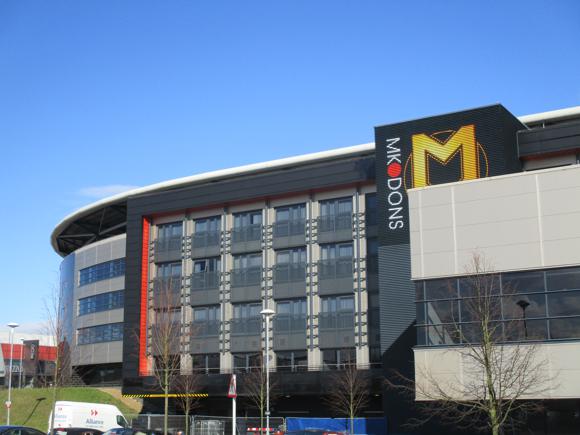
MKM Stadium/Colin Young
MKM Stadium/Colin Young
MKM Stadium/Colin Young
MKM Stadium/Colin Young
Jack Harrison plaque, MKM Stadium/Peterjon Cresswell
MKM Stadium/Colin Young
There was also something a bit fairytale about Hull’s initial unprecedented rise to the top two decades back. Having scaled three divisions in four years, the Tigers made Premier League in 2008 thanks to a goal by local lad Dean Windass. His winning volley in the Wembley play-off with Bristol City was almost written in the stars.
Fate had not always been kind to Hull up to that point. They were founded in 1904, in a town defined by its already-established tradition in rugby league. In 1930, Hull fought through to the semi-finals of the FA Cup. Having triumphed over one great side of the day, Newcastle, they came up against another, Arsenal, succumbing 1-0 after a replay.
In the modern era, though hardly bringing home silverware, the club at least had character – the charmingly dilapidated Boothferry Park – and characters in spades. Ken Wagstaff starred in the team that scored 100-plus goals to win the Third Division Championship in 1966. Four decades later, during which time Wagstaff had run pubs around Hull and the region, fans voted him the club’s best ever player. At career end, he crossed paths, if only just, with Billy Bremner, who had two characteristically fiery seasons at Boothferry Park.
Most of all, though, was Windass, a brave, heart-on-his-sleeve centre-forward whose professional career started at Hull. In 2007, Windass returned on loan, his relegation-saving goal at Cardiff justifying manager Phil Brown’s decision to lure him back.
MKM Stadium/Colin Young
Hull City mural/Colin Young
MKM Stadium/Colin Young
MKM Stadium/Colin Young
Hull City Wall of Fame/Colin Young
Brown had not long been made permanent manager. Almost improbably, within a season came that Windass volley and promotion to the Premier League.
Once they were up, things started to get a bit bizarre. Frustrated at being left out of the first XI, in a side showing extremes of form, Windass was involved in a fight at a casino with team-mate Marlon King. Then the perma-tanned Brown had the whole nation laughing over Christmas when he kept the players on the Manchester City pitch at half-time and lectured to them as if to naughty schoolchildren.
Despite Windass’ departure, and the many FA reprimands as Brown became more enraged, Hull stayed up and Brown serenaded celebrating fans by singing Beach Boys songs. In truth, results elsewhere had kept them up, and the writing was on the wall.
After several consecutive defeats and FA reprimands, a year later Brown was let go as Hull went down.
Few expected them to bounce back. Yet coach Steve Bruce managed to get the Tigers up three seasons later, gaining automatic promotion in 2013. A heart-stopping draw with already promoted Cardiff sealed the deal on the last day. A brave showing in the FA Cup final of 2014, Hull leading Arsenal 2-0 after only ten minutes, won over many a neutral and gained the club a first-ever European campaign in 2014-15.
MKM Stadium/Colin Young
MKM Stadium/Colin Young
MKM Stadium/Peterjon Cresswell
MKM Stadium/Peterjon Cresswell
MKM Stadium/Colin Young
MKM Stadium/Colin Young
MKM Stadium/Colin Young
In 2015-16, Bruce achieved another minor miracle, getting City back into the Premier League after a nail-biting play-off against Sheffield Wednesday. Sadly, his farewell letter to fans before the 2016-17 campaign tells its own tale. After four years of struggle, not least against controversial club owner Assem Allam, Bruce bowed out, leaving the club rudderless just days before the big kick-off.
As Egyptian philanthropist Allam continued to battle to change the club’s name after 110 years (why do owners need to do this?), he brought in fish-out-of-water Russian manager Leonid Slutsky, presumably for comedic value. At last Nigel Adkins, then ex-Northern Ireland international Grant McCann, imposed stability, while on the pitch, Jarrod Bowen shone game after game, tricking his way down the right channel to find the net.
After his lucrative sale to West Ham, Hull dropped down to the third tier for the first time in 15 years. Goals from Bowen’s young replacement, Mallik Wilks, then helped Hull claim the divisional trophy and regain a berth in the Championship at the first attempt. Fans would also have been buoyed by Allam’s sale of the club to Turkish media mogul, football-savvy Acun Ilıcalı, in January 2022.
MKM Stadium/Colin Young
MKM Stadium/Colin Young
MKM Stadium/Colin Young
Hull City merch kiosk/Peterjon Cresswell
MKM Stadium/Colin Young
The first in a long procession of managers, ex-Ajax and Rangers star Shota Arveladze kept Hull in the second tier – just – but wouldn’t last beyond September the following season. Ex-Tigers defender Liam Rosenoir then delivered stability and progress in his first managerial role but failed to get Hull into the play-offs in 2024, without offering the attacking football Acun Ilıcalı was demanding.
After a disastrous campaign in 2024-25, Hull saved only by goal difference and Luton’s tatty defence, Ilıcalı turned to Sergej Jakirović, who had led Dinamo Zagreb to the domestic double in 2024. Unphased by the transfer embargo soon imposed on the club for late payments, the Herzegovinian got to work with what he had, but could welcome forwards such as recent Scottish international Oli McBurnie, ex-Leeds loanee Joe Gelhardt and Enis Destan, once of Trabzonspor, all persuaded to join Hull without transfer fees being exchanged.
After a slow start to 2025-26, vital Gelhardt goals against Birmingham, Leicester, Stoke and Portsmouth pushed relegation candidates Hull into play-off contention that autumn. Losing ground late winter, Hull managed a win at Wrexham, Gelhardt again on target, while a brace from McBurnie, aiming to regain his Scotland place in World Cup year, sealed sixth place at home to Norwich in the last game of the regular season.
A defiant display and another Gelhardt goal saw Hull overcome Millwall at The Den in the play-off semi-finals, setting up a Wembley final with an impressive Southampton. As Jakirović prepared his underdogs for another unlikely win, fate stepped in in the form of Spygate, the Saints stripped of their finalist status for surreptitiously observing their opposition in training.
MKM Stadium/Colin Young
MKM Stadium/Colin Young
MKM Stadium/Colin Young
Hull City Wall of Fame/Colin Young
MKM Stadium/Colin Young
Hull City mural/Colin Young
Now facing north-east rivals Middlesbrough in football’s most lucrative decider, Hull had more problems with the searing heat of Wembley than lack of tactical preparation. The fact that the EFL had brought the kick-off time forward by one hour only compounded the problem. With neither side able to create many chances, extra-time looked inevitable until a low cross curved in by Japanese substitute Yū Hirakawa was only parried out by the Boro keeper to the hungry feet of Oli McBurnie.
Left out of the World Cup squad, the Scot made sure to celebrate his winner in tattooed style, pounding the turf on the final whistle while up in the posh seats, Acun Ilıcalı put his head in his hands. Given Hull’s transfer embargo in July, neither he nor Sergej Jakirović could have expected a Wembley celebration in May.
In what would be Hull’s first Premier League campaign for a decade, Ilıcalı soon spent big, laying out a club record £20 million for young Greek keeper Konstantinos Tzolakis, whose heroics had helped Olympiacos win the Conference League in 2023. Covering all angles, he also paid Rangers £3 million for experienced ex-England No.1 Jack Butland, strength in depth the key to Premier League survival.
Ground Guide
The field of dreams – and the story behind it
MKM Stadium/Colin Young
MKM Stadium/Colin Young
MKM Stadium/Colin Young
MKM Stadium/Colin Young
MKM Stadium/Colin Young
Unexpected promotion to the Premier League in May 2026 has meant a few changes at the 25,596 capacity MKM Stadium, expanded media facilities causing fans to be reseated from their familiar spots in the West Stand Upper.
On the plus side, the introduction of safe standing in both the home and away ends in 2025 has proved a success and should be popular among fans visiting from London, LIverpool and Manchester – although an allocation of only 2,500 should mean that tickets will be at a premium.
Surrounded by parkland and the sites of old grounds iconic to Hull’s sporting past, the ground was opened in 2002.
Shared by Hull City and rugby league’s Hull FC, the arena was the £44-million solution to each club’s falling-apart stadium problem. In City’s case, this was Boothferry Park, just further west from town along the same road, where they had played since 1946.
MKM Stadium/Colin Young
MKM Stadium/Colin Young
MKM Stadium/Colin Young
MKM Stadium/Colin Young
MKM Stadium/Colin Young
In fact, Hull City had begun peacetime football sharing The Boulevard with Hull FC, as local bomb devastation was slowly cleared. The nearby Anlaby Road ground, that City had used for most of their pre-war history, was unplayable.
Also in the immediate post-war period, Hull City used the cricket ground that stood where the KC does today, The Circle. Outside the West Stand, a raised plaque honours 2nd Lt Jack Harrison, top try scorer for Hull FC before the war that killed him in 1917.
When Premier League crowds touched full capacity, Hull City owner Assem Allam expressed interest in buying the venue from the local council who built it, and expanding it – but average Championship gates pre-2020 barely filled half the stadium.
MKM Stadium/Colin Young
MKM Stadium/Colin Young
MKM Stadium/Colin Young
MKM Stadium/Colin Young
MKM Stadium/Colin Young
Since then, talk has turned to an expansion to 34,000 – probably viable for both Premier League and Championship seasons, although rugby club Hull FC usually only average gates around 12,000.
For the moment, surrounded on three sides by one-tiered stands, the main West Stand, with its signature curving roof, rises above in two tiers. Opposite, as at Boothferry, the home faithful occupy the East Stand, with further support in South Stand at one end, and half the North Stand. The East Stand was named after all-time Hull top scorer Chris Chilton following his death in 2021. Chilton and strike partner Ken Wagstaff stand way out in front of the club’s scoring records.
Away fans are allocated a corner between the North and East Stands, sectors N5-N7 and NE, and E1-E3, through gates 1-5 or 47-50, the view usually excellent but the wind bitter in winter. The 2,500 allocation includes around 1,100 safe-standing spaces.
The sponsored acronym MKM refers to a local building-supply firm who arranged sponsorship in 2021. Before then, it was KCOM, which replaced the original name of the KC Stadium.
getting here
Going to the ground – tips and timings
Hull City transport/Peterjon Cresswell
It’s a 20min walk from Hull Paragon station, along Anlaby Road, with West Park to your right after the road bridge.
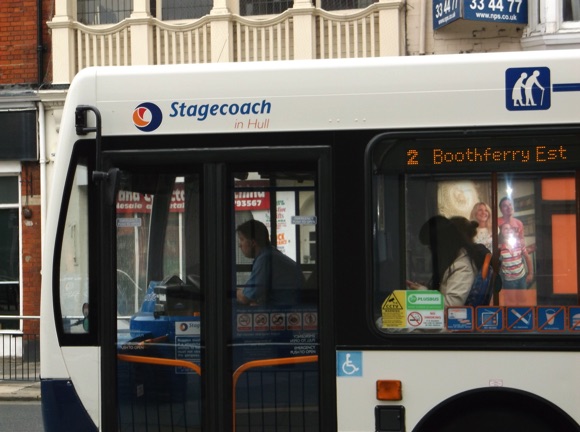
Alternatively, Stagecoach bus 2 leaves from bay 8 at Hull Interchange every 15mins (every 30mins eve/Sun) and Stagecoach bus 350 leaves from bay 34 (every 30mins, every 2hrs Sun), both bound for the MKM Stadium stop, journey time 7-8mins. East Yorkshire bus 56 leaves from bay 12 every 15 mins and takes 15mins to reach Anlaby Road, the ground across the street, surrounded by parkland.
The sat nav code for the MKM Stadium is HU3 6HU. Halfway up Walton Street (HU3 6GA) from Anlaby Road, signposted match-day parking (£6) operates alongside the stadium from 3hrs before kick-off. Try and get space near one of the two exits, ideally the one for Spring Bank West, a right turn as you leave. There are 1,100 parking spots in all.
Because of long waiting times, some use the car park at Pryme Street (HU2 8HR) by the DoubleTree hotel, £3/24hrs. From there, it’s a straight 10min walk along Spring Bank/Spring Bank West to the stadium. Alternatively, there’s a P&R service from Priory Park (HU4 7DY) down by the Humber, from where regular Stagecoach buses run into town via Anlaby Road, stopping by the stadium. Unless special match-day services are in operation, there are no buses after 6pm Mon-Fri, 7.20pm Sat, and none at all on Sundays. Parking is free but the bus journey requires the standard fare.
getting in
Buying tickets – when, where, how and how much
MKM Stadium plan/Colin Young
Hull City tickets/Peterjon Cresswell
MKM Stadium plan/Peterjon Cresswell
Hull City away entrance/Peterjon Cresswell
With memberships sold out for 2026-27, there’s little hope of buying tickets for league games online, only for cup matches and friendlies. Those who do have membership can now take advantage of the club’s ticket exchange programme.
Hospitality packages are also available for certain games – enquire at 01482 358 323 or commercial@wearehullcity.co.uk.
For all other enquiries, contact 01482 505 600 or ticket.office@wearehullcity.co.uk. You can also ask in person at Hull’s two ticket outlets, Tiger Leisure at St Stephen’s shopping centre near the station and the main one at the stadium (Mon-Fri 9.30am-4pm, when the phone lines also operate).
If there is availability for a cup game or friendly, a £3 levy is charged for purchases on the day.
what to buy
Shirts, kits, merchandise and gifts
Hull City store/Peterjon Cresswell
Hull City store/Colin Young
Hull City store/Colin Young
Hull City store/Colin Young
Hull City store/Colin Young
Hull City store/Colin Young
The club oversees two merchandise outlets – Tiger Leisure at St Stephen’s shopping centre (Mon-Thur 9.30am-5.30pm, Fri 9am-5.30pm, Sat 9am-6pm, Sun 10.30am-4.30pm) near the station and the main one at the stadium (Mon-Thur 10am-4pm, Fri 9am-4pm, match-day Sat 9am to kick-off then for 30mins after the final whistle). For midweek games, stadium store opening time is at 10am.
For 2026-27, the home kit celebrates the classic Hull era of the late 1970s, with broad amber-and-black stripes, a white fold-over collar and the initials HCAFC sewn in white on the chest. The key feature, lending the kit its name, is The City Speaks, the first line of a poem by local wordsmith Shane Rhodes, sewn into the inside back neck.
Hull City store/Colin Young
Hull City store/Colin Young
Hull City store/Colin Young
Hull City matchday store/Colin Young
Hull City store/Colin Young
Hull City store/Colin Young
Hull City store/Colin Young
Hull City store/Colin Young
Second kit is white with amber-and-black detailing, including funky shoulder stripes, and the more traditional tiger’s-head badge, centred.
Retro tops include the tiger stripes of 1992 vintage, the plainer, mainly amber number from 2003-04, and the mint-green away kit from 1990. Away shirts down the ages are also displayed on a coffee mug.
There’s a whole range of gear celebrating promotion to the Premier League, including Tigers on tour T-shirts showing the play-off dates and big Wembley show. The club also puts up for auction match-worn shirts and sundry signed artefacts.
stadium tours
Explore the ground inside and out
Hull City stadium tour/Colin Young
Hull City stadium tour/Colin Young
Hull City stadium tour/Colin Young
MKM Stadium/Colin Young
Hull City stadium tour/Colin Young
Hull City stadium tour/Colin Young
Occasional free stadium tours are offered for members and some for non-members during the school summer holidays. Young Hull fans can also sign up for a free guided tour before certain friendlies.
Visitors are guided to the dressing rooms, the players’ tunnel and dugout, the media suite, VIP boxes and interview rooms. Email info@wearehullcity.co.uk for details.
Where to Drink
Pre-match beers for fans and casual visitors
William Gemmell/Colin Young
Silver Cod/Colin Young
Malt Shovel/Colin Young
William Gemmell/Colin Young
New Griffin/Colin Young
Malt Shovel/Colin Young
Silver Cod/Colin Young
William Gemmell/Colin Young
William Gemmell/Colin Young
Malt Shovel/Colin Young
New Griffin/Colin Young
Silver Cod/Colin Young
William Gemmell/Colin Young
New Griffin/Colin Young
Silver Cod/Colin Young
William Gemmell/Colin Young
Anlaby Road, the continuation of Boothferry Road, is lined with pubs which have kept their Tigers’ allegiance and popularity since the move from Boothferry Park some 25 years ago.
Closer to the old ground, the Silver Cod screens Sky Sports, and has a pool table and seats outside on Anlaby Road. Diagonally opposite at No.583, the Malt Shovel also shows sport on several screens, regulars happy to plot up on the large terrace overlooking Anlaby Road. Pitching up at either pub without colours on a match day, sensible fans might be served – get here early for a terrace seat, though.
Closed in 2024, then reopened in 2025 by the landlord of the former Albert Hotel nearby, then closed for a time, the William Gemmell at No.507 also operates as a social club but is at its best pre-match, for either football or rugby. Generally welcoming of sensible away fans without colours – who may also try the Malt Shovel of a quieter match day – the WG also stages live acts.
If its last closure really was its farewell, then next door, the New Griffin was given a major internal overhaul in 2024. Still a friendly community pub with plenty of TV sport, it also stages live music.
Parkers/Colin Young
Parkers/Colin Young
Halfway House/Peterjon Cresswell
Parkers/Colin Young
Kingfisher/Peterjon Cresswell
Parkers/Colin Young
Parkers/Colin Young
Parkers/Colin Young
Prime spot, landmark corner pub Parkers dates back to 1777, and has been a major pre-match pit stop for football and rugby fans ever since the MKM Stadium opened in 2002. Operating under the name of the Boot Room for a while, it reverted back to Parkers and gained a sporty reverb and new owners in 2023.
Now done out half-and-half, in the black-and-amber of Hull City and white-and-black of Hull FC, it’s brimming with pub games though you probably won’t get close to them of a silly busy match day.
it’s just as popular after the final whistle, and has served many a sensible away fan in its time – though probably on quieter match days.
On the other side of the stadium on Spring Bank West, the long-established Halfway House (No.595) has always gone big on sport. It usually serves most visitors, even the occasional barman in a squirrel suit who popped in after a real one made a guest appearance at a game in February 2026.
Also here, Kingfisher is considered the best chippie, with quality fish if you want to go the whole hog.
Many visiting supporters are happy to pay a £1 for match-day entry into the New Walton Club at the Spring Bank West end of Walton Street, where a friendly welcome and wallet-friendly beer await.
We use cookies on our website to give you the most relevant experience by remembering your preferences and repeat visits. By clicking “Accept All”, you consent to the use of ALL the cookies. However, you may visit "Cookie Settings" to provide a controlled consent.
This website uses cookies to improve your experience while you navigate through the website. Out of these, the cookies that are categorized as necessary are stored on your browser as they are essential for the working of basic functionalities of the website. We also use third-party cookies that help us analyze and understand how you use this website. These cookies will be stored in your browser only with your consent. You also have the option to opt-out of these cookies. But opting out of some of these cookies may affect your browsing experience.
Necessary cookies are absolutely essential for the website to function properly. These cookies ensure basic functionalities and security features of the website, anonymously.
Cookie
Duration
Description
cookielawinfo-checkbox-analytics
11 months
This cookie is set by GDPR Cookie Consent plugin. The cookie is used to store the user consent for the cookies in the category "Analytics".
cookielawinfo-checkbox-functional
11 months
The cookie is set by GDPR cookie consent to record the user consent for the cookies in the category "Functional".
cookielawinfo-checkbox-necessary
11 months
This cookie is set by GDPR Cookie Consent plugin. The cookies is used to store the user consent for the cookies in the category "Necessary".
cookielawinfo-checkbox-others
11 months
This cookie is set by GDPR Cookie Consent plugin. The cookie is used to store the user consent for the cookies in the category "Other.
cookielawinfo-checkbox-performance
11 months
This cookie is set by GDPR Cookie Consent plugin. The cookie is used to store the user consent for the cookies in the category "Performance".
viewed_cookie_policy
11 months
The cookie is set by the GDPR Cookie Consent plugin and is used to store whether or not user has consented to the use of cookies. It does not store any personal data.
Functional cookies help to perform certain functionalities like sharing the content of the website on social media platforms, collect feedbacks, and other third-party features.
Performance cookies are used to understand and analyze the key performance indexes of the website which helps in delivering a better user experience for the visitors.
Analytical cookies are used to understand how visitors interact with the website. These cookies help provide information on metrics the number of visitors, bounce rate, traffic source, etc.
Advertisement cookies are used to provide visitors with relevant ads and marketing campaigns. These cookies track visitors across websites and collect information to provide customized ads.